❌

Vue lecture

UK blacklists Slavneft and says it now sanctions all ten of Russia’s top oil producers
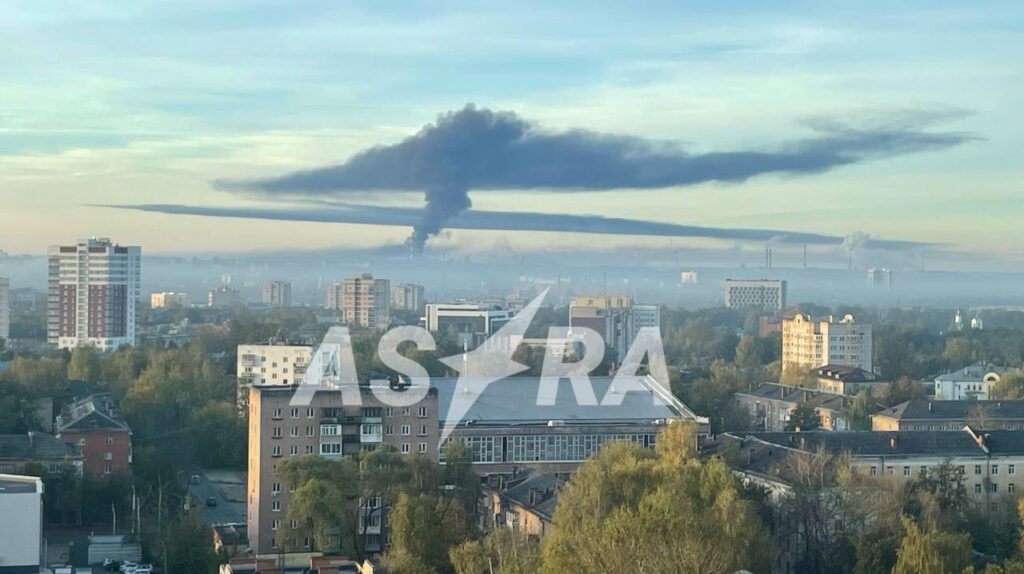
Smoke rises over the Yaroslavnefteorgsintez oil refinery in Yaroslavl, Russia, during a fire in October 2025

The UK sanctioned Russian oil company Slavneft on 12 November, becoming the first country to sanction each of Russia’s ten major oil producers, Downing Street said. The listing is part of a wider package aimed at Russian oil, gas, and coal.

Prime Minister Andy Burnham announced the measures as he arrived at the European Political Community summit in Dublin, which follows peace talks in Abu Dhabi this week. “Peace talks on Ukraine have progressed but now is not the time for complacency,” he said. The aim is war money: oil revenues are vital to Russia’s war economy and made up roughly a quarter of its 2023 budget, the UK government said in January 2025, when it sanctioned Gazprom Neft and Surgutneftegas.

Who is on the list

The sanctions notice adds 20 designations: nine entities and 11 ships. Besides Slavneft, the entities include petrochemical group Sibur Holding, engineering firm Nipigazpererabotka, coal companies SUEK and Kuzbassrazrezugol, as well as Forteza Trading, Patera, and Novus Energy. The UK says it suspects Novus of dealing with ships already under UK sanctions.

They also include LLC Vostok Oil, which Downing Street calls Rosneft’s flagship Arctic venture. It faces an asset freeze, a ban on trust services, director disqualification, and transport sanctions.

Five ships are suspected of carrying Russian oil or oil products to third countries, and five LNG tankers of carrying Russian gas. The eleventh, Koryak FSU, is listed with Novatek as its owner and operator.

How Britain got here

London has widened the list since January 2025. It targeted Rosneft and Lukoil in October 2025 and added Tatneft, Russneft, NNK-Oil, and Rusneftegaz Group that December. In October 2026, it listed Zarubezhneft and INK Capital, saying its sanctions covered over 90% of Russia’s oil production capacity. Downing Street did not say which ten companies make up its count.

Enforcement at sea came later. In March, the UK allowed its forces to board UK-sanctioned vessels in British waters. In June, British forces boarded the shadow-fleet vessel Smyrtos in the English Channel, in international waters, the first UK-led operation of its kind. That interdiction has pushed such ships onto other routes, Defense Secretary Wes Streeting said on 12 November.

  •  

The war’s largest POW exchange is coming, Zelenskyy says after meeting Witkoff and Kushner. Russia won’t discuss sparing the grid

Ukraine's President Volodymyr Zelenskyy shakes hands with US envoy Steve Witkoff as Jared Kushner looks on, in Ireland on 12 November 2026

Ukraine expects the largest prisoner exchange of Russia's war, President Volodymyr Zelenskyy wrote after meeting US envoys Steve Witkoff and Jared Kushner in Ireland late on 12 November. The envoys had flown in from Moscow, where they met Vladimir Putin. The exchange, agreed in principle in Abu Dhabi a day earlier, is the most concrete result of a week of talks.

Russia keeps attacking along the front and has struck Ukraine's energy facilities more than 310 times since the start of November, Zelenskyy said. The talks that resumed this week gave Kyiv a promise to bring prisoners home. Moscow's demands on Europe's security have not moved, and it refused to discuss sparing Ukraine's grid.

The largest exchange still has no date

Zelenskyy called the swap "a real result" and said it would be the biggest since the war began, CNN reported from Dublin. The Kremlin also expects it to be the largest, but says its terms are still being agreed. No date or number has been announced.

In May 2025, Kyiv and Moscow completed a 1,000-for-1,000 swap. Earlier deals promised far more. The 2015 Minsk agreement called for the release of all hostages and unlawfully detained persons. In Istanbul in June 2025, the sides agreed to all-for-all swaps of the seriously wounded and of soldiers aged 18 to 25.

Russia still holds Ukrainians captured years ago. Ombudsman Dmytro Lubinets said in October that freeing civilians and people held since 2014 remains a priority.

Russia refused to discuss sparing Ukraine's grid

In Abu Dhabi, Ukraine's delegation pushed for de-escalation in the Black Sea and a halt to strikes on energy infrastructure, Zelenskyy told European leaders in Dublin on 12 November. Russia's negotiators answered that they had no permission to discuss it, he said. "But what our delegation heard in response was that the Russian boss is angry and wants to keep striking," Zelenskyy said.

Iuliia Osmolovska, Director of the Kyiv office of the international think tank GLOBSEC. Source: Iuliia Osmolovska
Explore further

Why do Abu Dhabi talks resume after nine-month pause? Washington needs progress before new Congress asks questions in January, diplomat says

Moscow tells Europe to choose between peace and war

Kushner said in Dublin that a deal cannot be concluded "without the Europeans being at the table" and that Putin "is willing to give it a try," Interfax-Ukraine reported.

US envoy Jared Kushner, left, Ukraine's President Volodymyr Zelenskyy, and US envoy Steve Witkoff, right, speak to journalists after their meeting in Ireland on 12 November 2026
US envoy Jared Kushner, left, Ukraine's President Volodymyr Zelenskyy, and US envoy Steve Witkoff, right, speak to journalists after their meeting in Ireland on 12 November 2026. Photo: Office of the President of Ukraine

Moscow's own readout set conditions instead. Europeans "must decide whether they want peace or the continuation of the war," Putin's aide Yuri Ushakov said, citing Putin. He called foreign troops in postwar Ukraine "the recipe for endless war." He listed Russia's price for a new security order in Europe: no NATO enlargement and a return of the alliance's forces to where they stood in 1997. Kremlin spokesman Dmitry Peskov warned that European troops in Ukraine would mean fighting on a much larger scale.

Zelenskyy said earlier that day that the US-Russian talk was "more about some kind of new security framework between Europe and Russia."

A "humanitarian mission" for a city Russia could not take

Putin also proposed an Oleshky-style humanitarian mission in Kostiantynivka, a Donetsk Oblast city he called part of Ukraine's strategic defense line. He said Russia needs five days to clear mines from its approaches. The city covers the southern approach to Kramatorsk and Sloviansk.

Ukraine holds Kostiantynivka while Russia tries to infiltrate and build up forces there, DeepState reported. During the Oleshky truce, Russia brought fresh troops, armor, and fuel within nine kilometers of Kherson, according to Ukrainian marines. "It is clear what they want in Kostiantynivka," presidential adviser Dmytro Lytvyn said.

  •  
❌