The world’s largest cryptocurrency exchange has been hit by a record $6.3bn (£4.7bn) hack described as the biggest heist in history, with experts identifying North Korea as the likely culprit.
Binance said it would cover all customer losses as it froze $3bn of the affected assets.
Ukrainian company Robotic Complexes is developing CASEEVAK, an armored module that lets the Murakha unmanned ground vehicle carry wounded soldiers off the battlefield, the company told Militarnyi on 28 October. The casualty rides in a closed capsule with ventilation, heating, lighting, and a first-aid kit, and side and rear doors let medics load and reach the soldier from any side.
Drones that can fly long distances pose a threat to both wounded soldiers and the crews evacuating them, making transportation the main challenge, said Ukrainian military medic Daryna Boiko, The Independent reported. Developers are looking for new ways to counter this threat. The current Murakha model is being equipped with passive anti-drone protection elements, the developers say.
An armored capsule that keeps the wounded connected
After a wounded soldier is loaded onto an evacuation platform, it is important not only to transport them to a safe location but also to protect them and monitor their condition during transit.
The module is built around a closed armored capsule made of 3.5 mm-thick Armox 500T steel with an inner lining of HDPE 1000, the media outlet reports. Side and rear doors allow the wounded to be loaded from different directions and accessed during evacuation.
A military personnel member inside the CASEEVAK module of the Murakha UGV. Photo: Robotic Complexes company
To enable the operator to monitor the person inside and maintain contact with them, the capsule is equipped with a camera with day and night channels and two-way audio communication. The system can be controlled via ELRS, LTE, Starlink, or fiber-optic communications. Militarnyi reports that even if the capsule is detached from the main platform, it retains two independent communication channels.
The developers are also working to integrate vital-signs monitoring systems intended to provide medical personnel with information about the wounded person’s condition during transport.
An electric platform and protection against FPV drones
The evacuation module requires a platform capable of carrying it as it moves through dangerous areas. The Murakha is equipped with two electric motors, delivering a combined torque of 1,600 N·m, and a 35 kWh battery. The system’s stated range is up to 80 km, according to the media outlet.
Another area of development is protection against drones. Measures intended to protect the system include net launchers and electronic warfare (EW) equipment. However, work on a protective cage against FPV drones is still ongoing, according to the report.
The company has already conducted ballistic tests of the armor steel at a distance of 50 meters, using ammunition of various calibers, Militarnyi reports.
The Murakha-Mini logistics platform
The same company previously developed the Murakha-Mini logistics platform. Ukrainian military personnel began using it on the front line to deliver equipment, provisions and other supplies, Militarnyi reported on 24 October 2025.
Ukraine’s Murakha-Mini unmanned ground vehicle. 2025. Photo: Robotic Complexes company
The UGV can carry up to 250 kg and travel up to 40 km on a single charge, the media outlet reported. During one combat mission, it transported 150 kg of cargo and towed a six-metre platform carrying another drone and provisions, covering 16 km in one direction, Militarnyi reported.
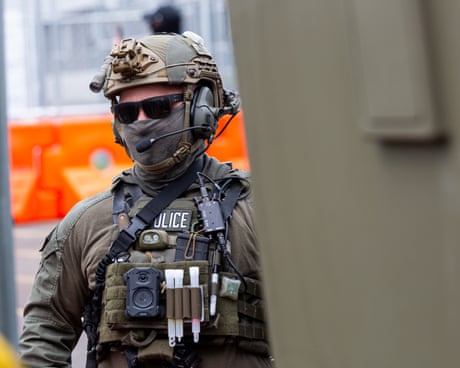
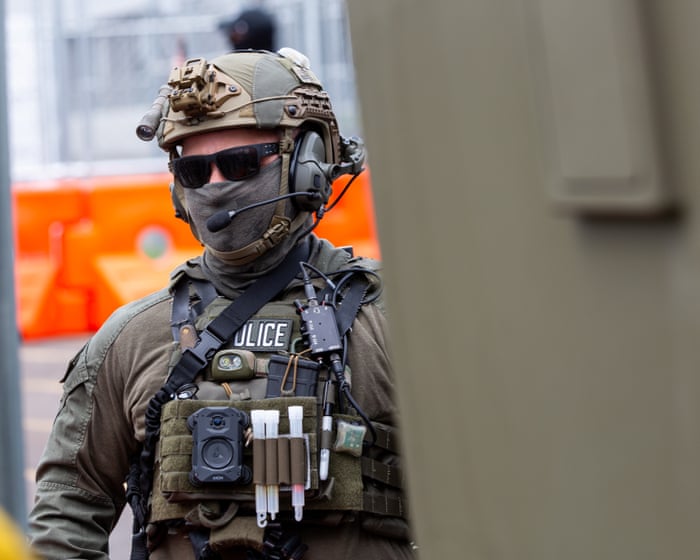
The Department of Homeland Security asked an Icelandic hosting company to take down data obtained through hack
The US Department of Homeland Security (DHS) asked an Icelandic hosting company on Thursday to take down or limit access to data related to thousands of agency personnel, saying the content put them at risk, according to the request posted online by hosting company FlokiNET.
The database “places more than 40,000 identifiable individuals at risk of harassment, stalking and physical harm”, the request said.
The Michigan Senate candidate is calling for public ownership and other reforms, offering a potential antidote to ideological gridlock
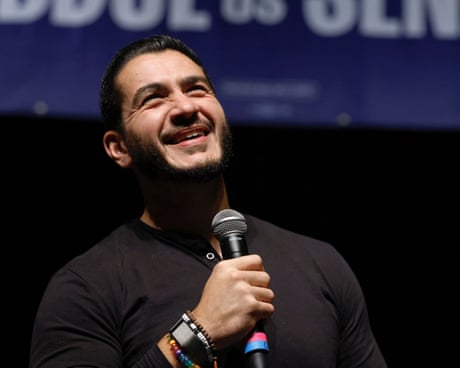
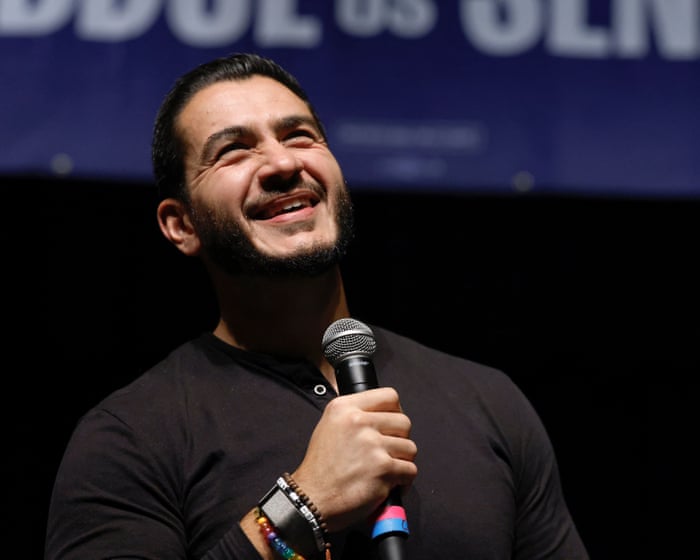
The Michigan senatorial candidate Abdul El-Sayed, a Democrat, occupies a strange but increasingly common place in modern American politics. He’s praised by progressives, begrudgingly tolerated by moderate Democrats and largely demonized by Republicans.
He’s also uniquely positioned to forge an all-too-elusive thread of political kinship between these perpetually-at-odds groups with his bold but contentious plan for reining in AI, called AI Under Democracy.
Regulator demands companies explain how and why they charge different prices for the same product or service
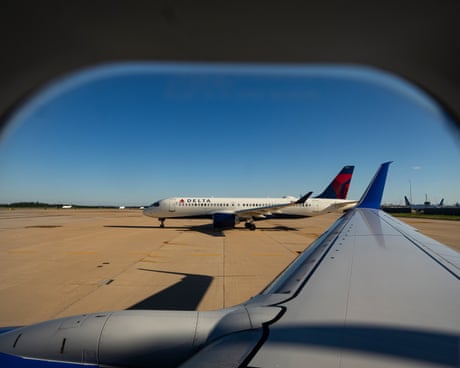
The Federal Trade Commission (FTC) is demanding some of the US’s biggest airlines, ride-share companies and retailers divulge how they are using algorithms and loyalty programs to target customers and drivers with different prices and wages.
Nine companies – Delta, United, JetBlue, Lyft, Uber, DoorDash, Instacart, Target and Walmart – were named in the inquiry, which comes after investigations and lawsuits alleging consumers are charged different prices based on their buying histories and drivers paid different fares based on their personal histories.

 Connexion