No obvious legal authority supports a pre-emptive effort to block the certification of Alaska’s Senate election if the Republican incumbent narrowly loses.
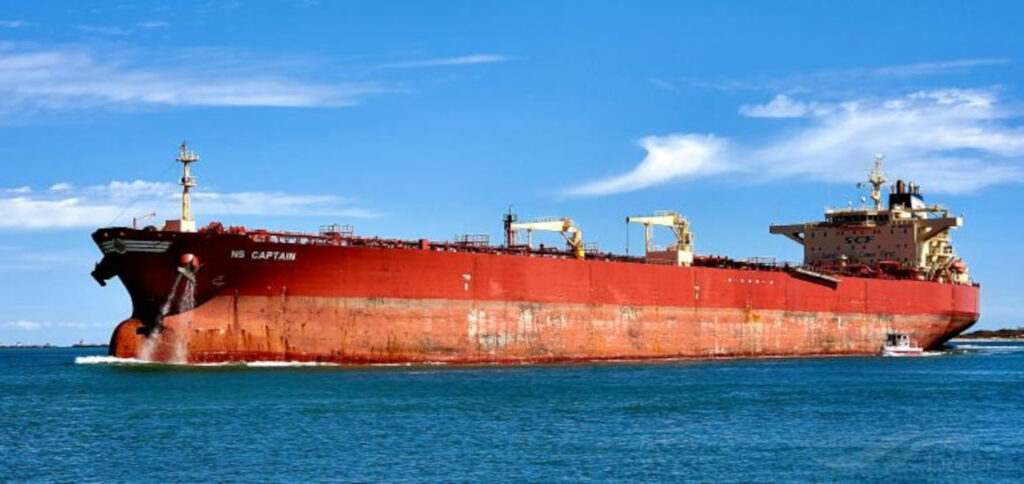
A Malta-flagged tanker carrying Russian diesel is heading for New York after the fuel deal between US President Donald Trump and Russian President Vladimir Putin, Reuters reported in an exclusive on 23 October, citing LSEG shipping data. Two weeks earlier, the US Treasury temporarily waived sanctions on Russian diesel.
The tanker is due in the US on 7 November, four days after Americans vote in the midterms. So the first US-bound cargo cannot reach American pumps before the election. Energy analysts also doubt the deal will lower diesel prices meaningfully. US fuel prices rose mainly because the war with Iran disrupted shipping through the Strait of Hormuz. Trump, however, has blamed Ukraine’s strikes on Russian refineries.
Loaded on the day Moscow promised
The medium-sized tanker Agioi Fanendes took on 40,000 metric tons of ultra-low sulfur diesel at the Baltic port of Primorsk on 22 October, shipping data showed. In March, Ukraine’s General Staff said its drones hit the Transneft oil terminal at that same port.
A day before the loading, Russian Deputy Prime Minister Alexander Novak announced that the first tanker would sail for the US on 22 October. He pledged more shipments and said Russia would meet US needs within its capabilities.
Explore further
Russia resumes diesel exports to Türkiye, Brazil, after Trump lifts sanctions on fuel supplies, boosting Moscow’s war revenue – Reuters
From a pledge to a partial lift
On 9 October, Trump wrote that Russia would immediately supply over 300,000 tons of diesel “to the American and Global Marketplace.” Another 500,000 tons would follow in November, then 1 million tons “immediately thereafter.”
Moscow had banned diesel exports on 8 July, after Ukrainian drone strikes shut down refineries and caused fuel shortages inside Russia. The Russian government stated on 10 October that it had partially lifted the ban, clearing 500,000 tons for the world market at this stage. Russian diesel shipments to Türkiye and Brazil have since resumed, boosting Moscow’s war revenue.
Trump has made other moves to cut diesel prices before the vote, Reuters reported. He waived parts of a new sanctions law against Russia. He also threatened Europe with a US diesel export ban unless countries released more fuel from their emergency reserves.
President Trump says Venezuela is not ready for elections, and he focuses instead on its oil. But Secretary of State Marco Rubio is nudging talks between opposing politicians.
Dinorah Figuera, left, Delcy Rodríguez and Jorge Rodríguez during a meeting at the Miraflores presidential palace in Caracas on Thursday, in a photo released by the Venezuelan presidency.
Wisconsin’s Republican candidate for governor, Tom Tiffany, is talking about nearly anything but President Trump. And as Republicans watch Mr. Trump’s approval ratings plummet, he is hardly alone.
This article was published on Friday, before the Serbian election on Sunday. The conditions it describes led to the unseating of Aleksandar Vučic who has been at the center of power in Belgrade since 2014. Student List, a leaderless party borne out of Serbia's student movement, won a decisive victory, claiming over 52% of votes compared to 39% for Vučic's party. At nearly 69%, voter turnout was the highest in 30 years.
On his last morning as a professor, Vladimir Mihić taught both an ordinary and quite unique class.
It was early June, the final day of the academic year at the Faculty of Philosophy in Novi Sad, Serbia's second biggest city, and Mihić had recently celebrated his 24th year in its classrooms.
The day before, the University Senate had voted — in a secret ballot he and his lawyers say was unlawful — not to reappoint him.
A student asked him to give one more lecture, in public, in front of the Rectorate.
Hundreds attended. There were tears, hugs and gifts.
But it was the quiet morning class with his students, Mihić says, that nearly broke him.
“If you went to the same local tavern for 24 years and it closed down, that would be hard,” he says. “Now imagine walking into a faculty with thousands of students you have taught behind you, and someone tells you: ‘You can't do this anymore’.”
Mihić is one of hundreds of Serbian citizens who have paid for supporting the country's student-led protest movement with their livelihoods.
The movement started on November 1, 2024, when the concrete canopy of the recently renovated railway station in Novi Sad collapsed, killing 16 people — a disaster protesters blamed on corruption, and which ignited the largest demonstrations in Serbia's history.
Nearly two years on, the movement has firmly reshaped Serbian politics. Prime Minister Miloš Vučević resigned all the way back in January 2025. After originally just reshuffling the government, Serbian President Aleksandar Vučić called for snap parliamentary elections — the protesters’ main demand for more than a year at this point — which are finally taking place on Sunday, October 25.
A month before the election, on September 27, Vučić stepped down from the presidency to lead his Serbian Progressive Party’s election campaign and run for prime minister, a job he held between 2014 and 2017. Vučić, who has been President since 2017, resigned eight months before his term was due to end in May 2027. He would have been barred from running for a third term, while no such Constitutional barrier exists for prime ministerial terms. Critics argue Vučić, by looking to remain in power, is behaving in the manner of other Eastern European strongmen.
But, for the first time in his reign, Vučić’s grip on power might slip. His main rival is the so-called Student List, a leaderless movement born out of the protests, and the polls constantly disagree on whether it or Vučić is ahead in the race.
Opposition to Vučić has not been confined to just students, however – and nor has the crackdown against it.
In the wake of the student protests, supportive teachers, professors, civil servants, doctors and workers at state-owned companies have been dismissed, demoted, transferred or pushed out. Officially, trade union and civil society groups say, the reasons for dismissal are almost never stated to be support for the students.
But more than 100 school employees alone lost their jobs or had their contracts not renewed in the 2024/2025 school year, according to the Independent Trade Union of Education Workers. The number now far exceeds that, says Civic Initiatives, a prominent local civil rights organization.
Serbia's Commissioner for Protection of Equality keeps no separate tally for “political discrimination,” but on the two grounds that fit — union or political membership, and political convictions — complaints more than doubled in a year, from 31 and 25 in 2024 to 70 and 76 in 2025.
These complaints about discrimination rarely yield redress: of eight formal recommendations made in last year's 85 employment-related cases, only two employers complied, the office said in an email response to Coda’s questions.
Dismissals are only one of the tools of repression the government has used. Since the start of 2026, at least 14 students, activists and opposition politicians have been targeted with advanced spyware, says digital rights group SHARE Foundation. And some of that spyware was installed while they were in police custody, says Amnesty International. Additionally, Serbia recorded 209 press freedom violations in 2025, compared to 84 in the year before. Protesters have been charged with attacking the constitutional order, civil society groups have been branded foreign mercenaries, and university teachers have had their pay cut over the blockades.
Ana Brnabić, currently the acting president of Serbia, was leader of the National Assembly at the time of the student protests and claimed that state institutions had no information that spyware was used against students. Vučić, for his part, has claimed, without evidence, that the Student List is being financed by foreign agents, its political ascent part of a plot to undermine Serbia.
Student List — whose lead candidate (not quite the same thing, the group insists, as a figurehead or party leader) is cardiologist Ilija Srdanović – claims to represent voters fatigued by traditional politics and politicians. It is a posture acknowledged by several opposition parties which have chosen to sit out the elections and endorse Student List instead.
On Sunday, as in so many recent elections around the world, a deeply divided electorate will go to the polls, with watchdogs already warning about intimidation and alleging surveillance and possible electoral manipulation.
Professors on the front lines
But back to June, and Vladimir Mihić’s last day as a professor in Novi Sad. The purge at the Faculty of Philosophy was already underway before Mihić became a national topic.
The first to go was Jelena Kleut, a media studies professor and one of the most visible academic supporters of the protests: in January 2026, the University Senate refused, by secret ballot, to promote her to full professor, thus ending her employment even though expert bodies had approved her promotion and more than 1,200 professors signed a letter of support.
“Sadly, we have indication that this is just the beginning,” Kleut warned, referring to a colleague whose reappointment was also in question.
That colleague was Mihić.
The social psychologist, a tall man with a few grey hairs in his beard and a calm voice, had been, like Kleut, an active supporter of the student protests.
“I could not watch it on television while just sitting around,” he says.
On paper, his reappointment was beyond dispute, his file reviewed by a committee that included two of the most cited psychologists in the world.
"It was not just that my file was not disputable,” Mihić says, “it exceeded the standards several times over.”
What his unimpeachable file could not survive, though, was an objection lodged twice by Patrik Drid, the dean of the Faculty of Sport and Physical Education and a vocal opponent of the protests.
Drid claims his complaint concerned what he described as Mihić's active political organizing. The chief example of which, Drid said, was a social media call for students to gather in front of Drid's own faculty, “blocking access to those who wished to work and study.” Mihić maintains he organized nothing of the kind, and that Drid’s objections were personal.
On June 4, the University Senate voted, again in secret, which Mihić said the university’s own legal department warned was against the rules. Eight members voted for his reappointment, four against and six abstained. Under the current rules, the abstentions counted against him.
Trade unions from ten faculties called the outcome a brutal attack on university autonomy, but no explanation was given for why Mihić had lost his job.
He appealed, but the expanded Senate confirmed its decision. Now he plans to take his case to the Administrative Court, a legal battle he says could take years.
Filip Stevanovic/Anadolu via Getty Images
Fired for standing still
The unjust dismissals extended beyond university campuses.
Biljana Hrnčić spent 21 years working for the government of Vojvodina, Serbia's northern autonomous province, most recently as head of its press department. She says she had never once faced a disciplinary measure.
That changed after the protests.
Every Friday at exactly 11:52 a.m., the exact time the roof caved in at the Novi Sad station in 2024, Serbians would leave their desks and head out to the streets to honor the dead in silence. Managers walked the halls, watching.
“They went around the offices to see who took part and who didn’t,” Hrnčić said. “At one point they were so malicious that they simply locked people out of the building.”
For Hrnčić, joining in the protests was unavoidable. Both her children are students. “My children are in the streets,” she said. “It is more than natural that I would walk out onto that same street.”
In September 2025, with street demonstrations still ongoing, Hrnčić and six colleagues were moved into a new department at work. Two months later, the government abolished the department and its entire staff became “unassigned.”
The provincial government of Vojvodina did not respond to Coda’s questions for this story.
“It is a horrifying feeling,” says Hrnčić, who still looks harrowed by her ordeal. “20 years of daily work, never a single disciplinary problem, and you find yourself on the street asking what just happened.”
She and her colleagues are living off their severance pay and their savings while they wait for their cases to be heard in the Administrative Court.
For every few hundred dismissals, one court victory
Many of those dismissed have taken their case to Administrative Court, but even winning there guarantees little.
Dragoslav Ljubičić was chief steward of the Nezavisnost union at the Serbian state’s largest thermal power plant. Five years short of retirement, he was a marked man even before the student protests as a rare insider willing, in his words, to call out the mismanagement of the utility.
When the roof fell, he joined the protests immediately, holding 16-minute silences at the plant — one minute for each victim — and organized the first joint rally of students and workers in front of the state-owned electricity company EPS’s Belgrade headquarters.
In January 2025, he received a formal warning citing his Facebook posts. On February 12, managers tried to hand him a dismissal letter at work. He refused to sign it. Six days later, he signed and then sued.
EPS has publicly denied he was dismissed over the protests or his union activity. It said Ljubičić broke its code of conduct, without specifying how. EPS did not respond to questions for this story.
A judge ordered EPS to reinstate Ljubičić until his case could be heard, a decision it could not appeal. But, he said, “they did not give me back my job. They gave me a fixed-term contract and a post that did not match my qualifications at nearly half my previous pay.”
For continuing to complain about his treatment, EPS transferred him to a job that included an exhausting commute from his home.
Ljubičić’s lawyer, Ivan Ninić, who represents a string of dismissed workers, says this is the EPS playbook. Every ruling against the company is automatically appealed, at the expense of the public budget. “We took you back because the law says so,” Ninić said, describing EPS’s attitude. “Now we will make your life hell until you quit on your own.”
Serbian law, he says, is largely on the side of workers; the problem, though, is that the process takes years.
Still, Ljubičić has little patience for the slogan his supporters chant.
“The message ‘Justice for Ljubičić’ misses the point,” he says. “The real message is: stop the dismissals. Mine was the first. And then there came a wave of dismissals across Serbia, most of which the public never heard about.”
Despite the professional and financial hardship, neither Ljubičić, Mihić or Hrnčić expressed any regret. “There has not been a fraction of a second in which I have thought, ‘why did I need to do this.’I could never forgive myself if I hadn't done what I did,” says Mihić.
On Sunday, Serbians will have a long-awaited chance to exorcise their feelings of injustice. The answer to the question of whether it will be enough for a student movement to unseat the populist, autocratic Vučić will reverberate around an embattled Europe.
Far from Rio and São Paulo, small towns like Nanuque, with big agricultural businesses and a surging evangelical Christian movement, are swinging to the right.
Deep in cattle country, voter sentiments in an evangelical stronghold help explain why the country’s leftist president is the underdog in Sunday’s election.
Mr. Eisenkot, an ex-military chief leading in the polls, calls the Israeli prime minister an “anti-leader.” But his low-key campaigning style is worrying supporters.

 Connexion