❌

Vue lecture

Russia holds 2,000 people hostage in Oleshky without food or water—Ukraine flew 4,000 kg of food to locals across the Dnipro
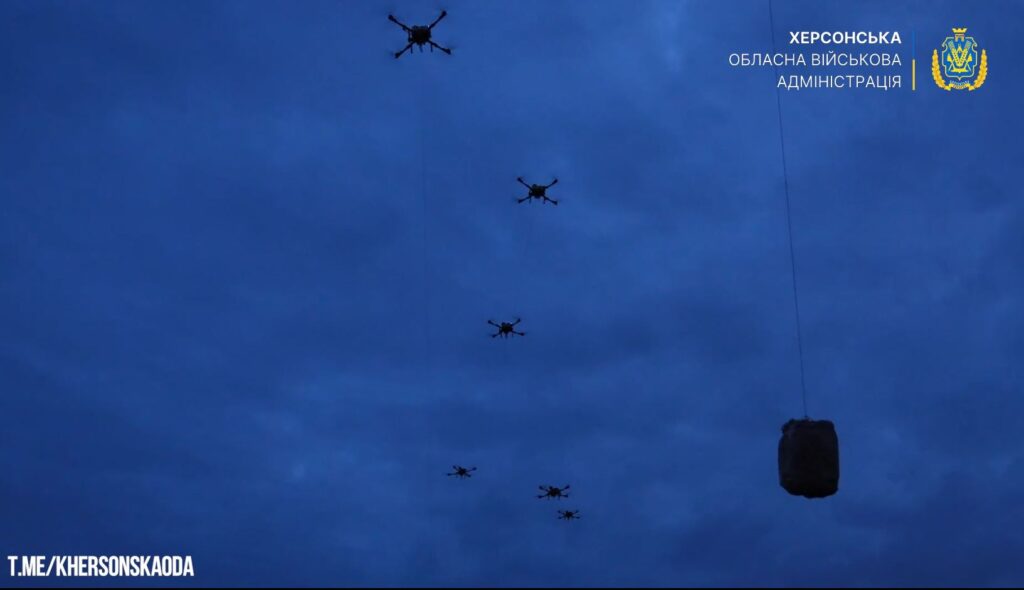
russia holds 2000 people hostage oleshky without food water—ukraine flew 4000 kg locals across dnipro · post drones carry packages starving residents russian-occupied kherson oblast 2026 lifting boxes ukraine news

Ukrainian forces carried out one of the largest drone food delivery operations across the Dnipro to occupied Oleshky, dropping about 4,000 kg of supplies provided by partners at 100 locations across the city where people are trapped without food, electricity, or water, Kherson Oblast head Oleksandr Prokudin said on 27 September. Russian forces punish residents who receive aid—shooting down supply drones, confiscating packages, and beating people caught accepting food, he noted.

Oleshky—a city across the Dnipro from liberated Kherson—has been occupied since 2022. Russia sealed off the city in late 2025, and conditions worsened sharply in early 2026 as occupation forces cut off food supplies, prevented evacuation, and left the dead unburied. The drone flights are now the only humanitarian operation reaching the trapped population, making each sortie both a lifeline and a target for Russian forces that treat civilian starvation as a tool of control.

Multiple military units flew food across the Dnipro

Since March, Ukrainian forces have been systematically delivering food to Oleshky by drone in coordination with the 11th National Guard Brigade's Bolharychi unit and the 34th Separate Marine Brigade Borysfen, Prokudin said.
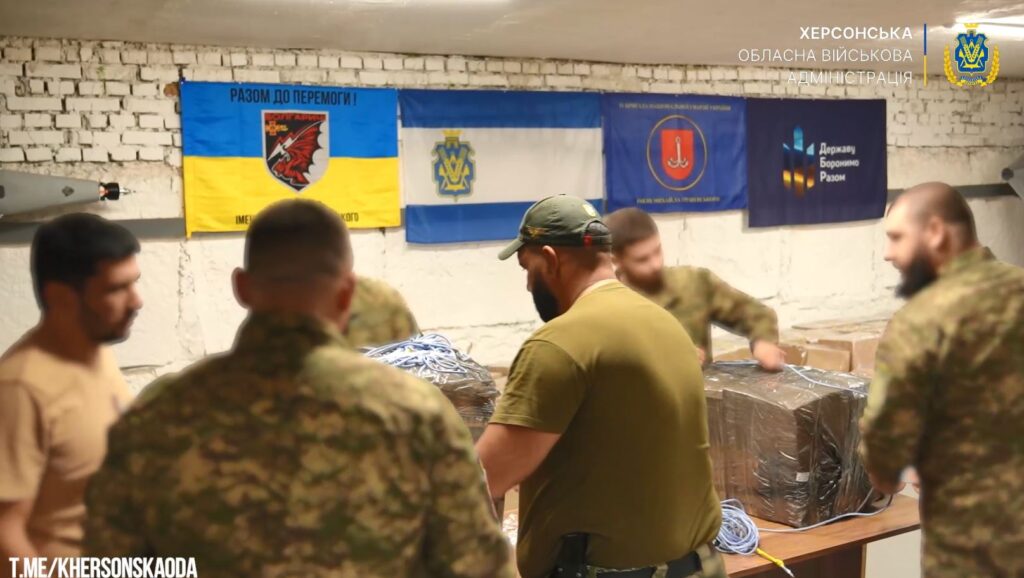
russia holds 2000 people hostage oleshky without food water—ukraine flew 4000 kg locals across dnipro · post ukrainian soldiers prepare packages drone delivery occupied 2026 preparing aid boxes ukraine news
Ukrainian soldiers prepare food packages for drone delivery to occupied Oleshky, September 2026. Screenshot: Kherson Oblast Military Administration via Telegram

The latest operation expanded the effort: the 30th Marine Corps, the Hrim tactical group, the 34th National Guard Regiment, and the 79th Border Detachment joined alongside the Borysfen brigade and the Bolharychi unit.

"Instead of loud statements, we chose the path of concrete action," Prokudin wrote.

russia holds 2000 people hostage oleshky without food water—ukraine flew 4000 kg locals across dnipro · post resident approaches package delivered drone russian-occupied kherson oblast 2026 local walks box still
Resident approaches a food package delivered by drone to Russian-occupied Oleshky, Kherson Oblast, September 2026. Screenshot: Kherson Oblast Military Administration via Telegram

The deliveries fly across the Dnipro and drop food packages at pre-selected locations across the occupied city.
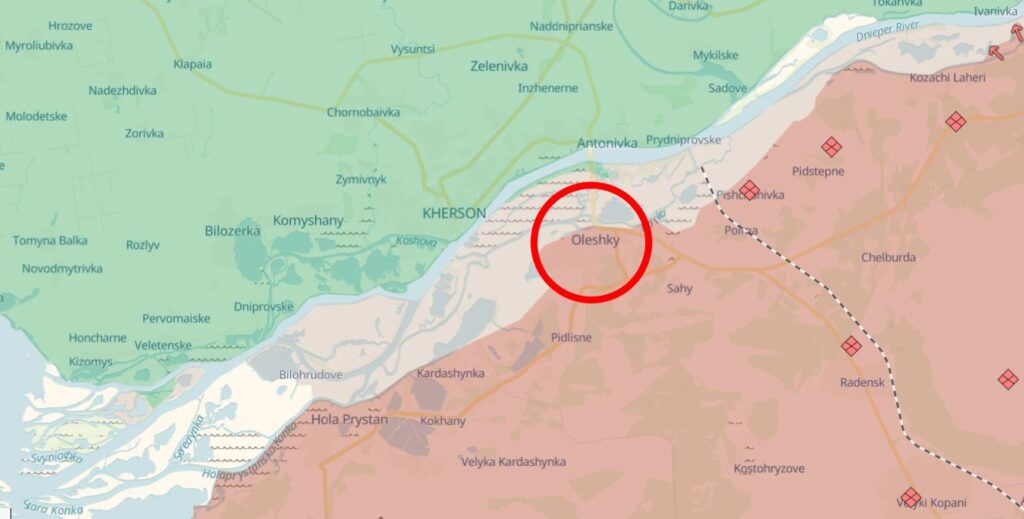
Prokudin said about 2,000 people remain trapped in Oleshky, including nearly 50 children. Ukraine's ombudsman and international monitors have put the figure at up to 6,000, with about 200 children.
Explore further

“There is real hunger there”: Oleshky, occupied town in Ukraine’s Kherson Oblast, turned 942 this week. Behind Russian blockade, its people eat roadside grass

Russia shoots down supply drones and beats residents for receiving food

Russian forces try to disrupt the deliveries. Soldiers shoot down drones carrying food, confiscate or resell packages meant for children and elderly residents, and detain people caught receiving humanitarian aid, Prokudin said. Residents are thrown into basements and beaten.

"Deliberate blocking of aid and creation of famine among the civilian population are war crimes with no statute of limitations. Everyone involved in these actions will face inevitable accountability," Prokudin wrote.

Ukraine prepared an evacuation list, secured the ICRC's readiness, and coordinated a ceasefire on its side, but Russia has not confirmed its readiness to open a route, Ukraine's ombudsman said.

Ukraine delivered 4,000 kg of food by drone across the Dnipro to occupied Oleshky

About 2,000 people, including nearly 50 children, are trapped there. Russia shoots down supply drones and beats residents for receiving aid, Kherson Oblast head Prokudin said.

📹TG/Oleksandr… pic.twitter.com/5AsHemMvCV

— Euromaidan Press (@EuromaidanPress) September 27, 2026

Council of Europe Commissioner for Human Rights Michael O'Flaherty warned on 25 September that the humanitarian crisis in Oleshky is deteriorating rapidly. Civilians, including children, are trapped without food, medicines, medical care, running water, or electricity, and reports indicate a high risk of death, he said. Under international humanitarian law, Russia as the occupying power is obliged to provide the population with food and medical supplies, O'Flaherty noted, and called for an immediate local ceasefire, unimpeded humanitarian access, and safe evacuation of civilians.

  •  

Swiss voters crush neutrality initiative that would have ended sanctions against Russia—70% say No

swiss voters crush neutrality initiative have ended sanctions against russia—69% say · post christoph blocher speaks svp event крістоф блохер фото des kantons zürich fb ukraine news ukrainian reports

Swiss voters overwhelmingly rejected a neutrality initiative that would have banned Switzerland from adopting sanctions against warring states and blocked cooperation with NATO, Swiss public broadcaster SRF reported. The measure failed by 70.2% to 29.8%, with zero cantons voting in favor.

Russia's full-scale war against Ukraine has expanded beyond the battlefield into a campaign of sabotage, political influence, and pressure on European institutions. Every European country that has adopted sanctions or cooperated militarily with Ukraine faces some variant of the same push—to weaken the sanctions regime and fracture the coalition. Russia expressed sympathy for the initiative—which backfired. Opponents warned the measure would benefit Moscow.

What the initiative would have done

The initiative, formally titled "Safeguard Swiss Neutrality," sought to enshrine neutrality as "permanent, armed, and comprehensive," bar cooperation with military alliances unless Switzerland was under direct attack, and ban economic sanctions against warring states—with only UN-mandated measures exempted.

Switzerland currently adopts sanctions autonomously and has largely followed EU sanctions against Russia since the full-scale invasion in 2022. The Swiss government's own explanatory materials stated the initiative would affect sanctions against Russia, SRF reported.

Blocher's Russian connection

Former Federal Council member Christoph Blocher, 85, launched the initiative in autumn 2022—six months into the full-scale war and the same year his daughter Magdalena Martullo-Blocher, who controls Ems-Chemie, decided the two Russian plants would stay. He led the campaign through the organization Pro Schweiz.

Ems-Chemie produces plastics, adhesives, sealants, and technical fibers. Two subsidiaries, operating under the Eftec brand, continued working in Russia after the full-scale invasion, Swiss magazine Republik reported earlier this month. Company and government documents contain strong indications that Eftec products may have been purchased by KamAZ, UAZ, GAZ, and AvtoVAZ—sanctioned companies tied to military vehicle production and financial support for Russian soldiers deploying to Ukraine. Ems-Chemie denies supplying them.

The Federal Council and Parliament both recommended rejection. In the National Council, 124 members voted against and 65 in favor. In the Council of States, the vote was 29 to 10 against.

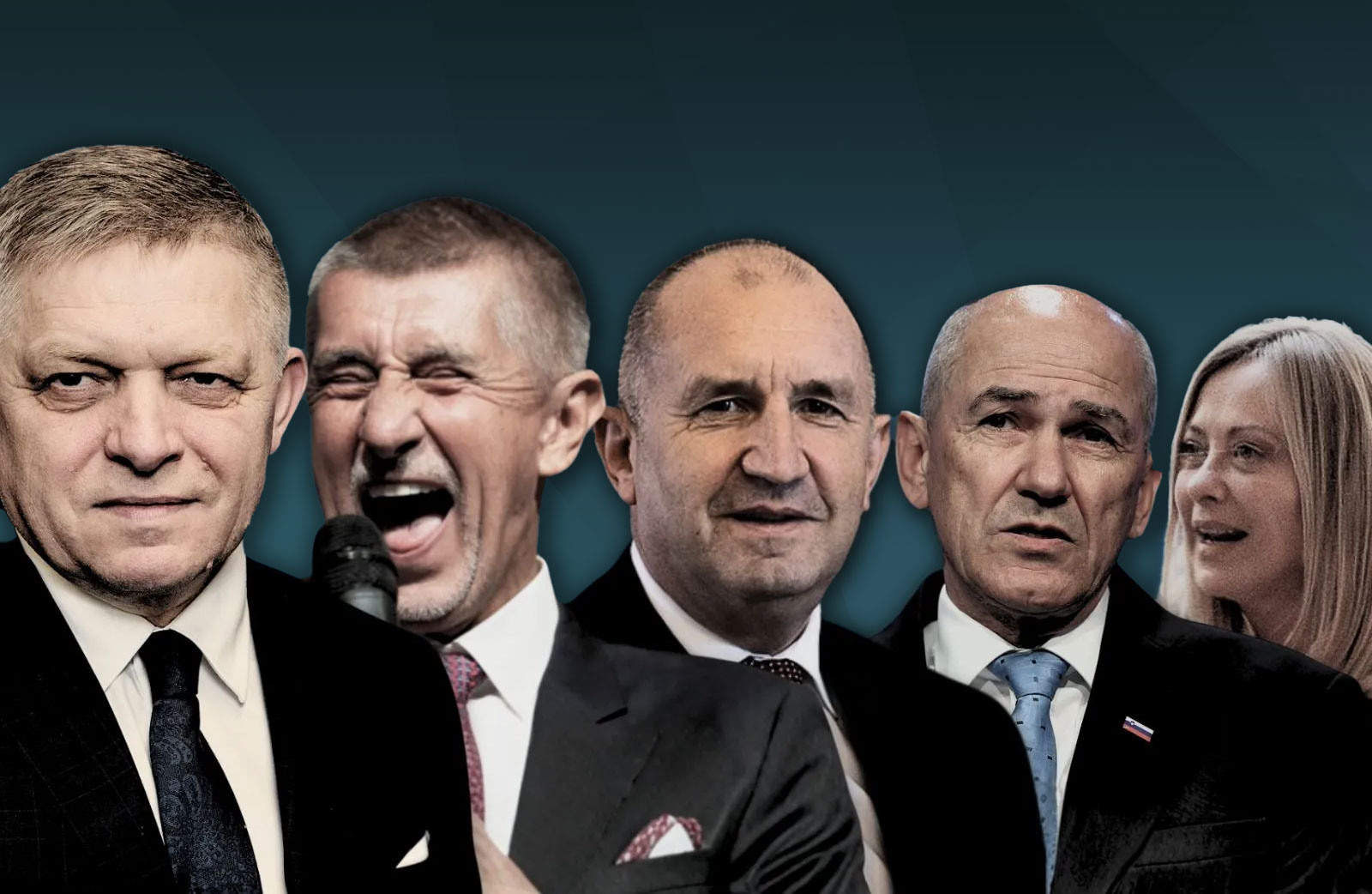
politico fico first line orbán's disruptor crown — brussels has four more leaders worry about · post left right slovak pm robert czech andrej babiš bulgaria's rumen radev slovenia's former
Explore further

Politico: Fico is first in line for Orbán’s disruptor crown — but Brussels has four more leaders to worry about

Drones over Swiss military bases

Unidentified drones were spotted over Swiss military installations this year. In about 20% of sightings over military sites, authorities cannot identify who is responsible, army chief Benedikt Roos said earlier this month. Asked whether Switzerland is a target for Moscow, he said yes—the country holds critical infrastructure vital to Europe that anyone seeking to destabilize the continent could target.

Across Europe, pro-Russian forces continue to push back against sanctions. Germany's far-right AfD won 43.8% in the Saxony-Anhalt state election on 6 September—its strongest result ever, though every other party refuses coalition. In France, Marine Le Pen leads first-round polling for the 2027 presidential election at 36%. Slovakia's Robert Fico earlier demanded the EU lift Russian energy sanctions.

Russia has combined kinetic and political pressure across Europe—drone incursions into NATO airspace, arson at defense-linked sites, and sabotage of critical infrastructure—alongside support for political forces that oppose sanctions and military cooperation with Ukraine. Switzerland's own intelligence service assessed earlier this year that Russia is waging a long war against the West and escalating it.

  •  

Ukraine’s jet-drone kill rate just hit 55%. Russia’s answer: $12 billion to make more of them

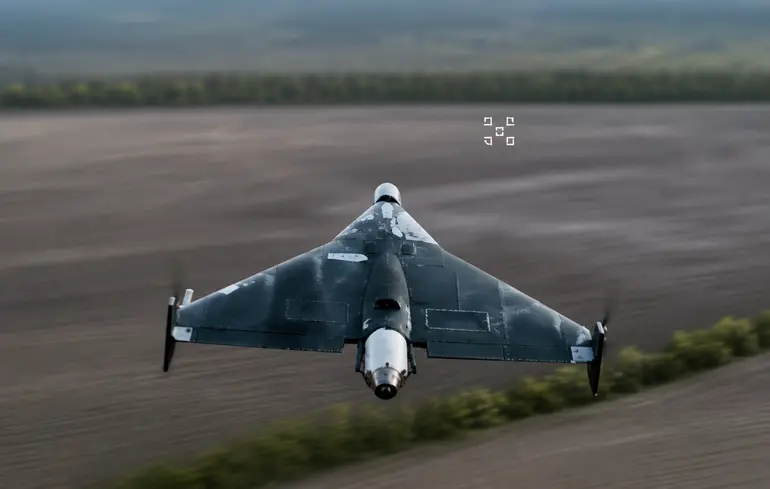
ukraine's jet-drone kill rate just hit 55% russia's answer $12 billion make more · post geran-5 small cruise missile sights sting s interceptor drone герань-5 в прицилі дрона-перехоплювача стоп-кадр з

Ukraine's defense forces intercepted 55% of Russia's jet-propelled drones in September—more than 1,500 out of over 2,730 launched—Ukrainian President Volodymyr Zelenskyy said in his 26 September evening address.

Russia's full-scale aerial campaign has shifted from propeller-driven Shaheds Ukraine learned to shoot down at over 90% to jet-propelled models that fly faster, resist jamming, and often slip past existing defenses.

55% and climbing

Zelenskyy said military intelligence had briefed him on Russian weapons production—not just jet Shaheds but other technological systems. The documents detail what Moscow is preparing for next year: the volumes and the financing. "We are preparing our countermeasures, and for every line item there must be a Ukrainian answer," he said.

Several effective interceptor prototypes are already in combat.

"Interceptors have been identified that can become the main tool of our defense. Production, components—all of this we are scaling up. There will be an answer," Zelenskyy said.

The goal is to match the interception rate for regular propeller-driven Shaheds, which exceeds 90%. At 55%, the jet-drone rate is climbing but still leaves nearly half reaching their targets.

$12 billion for one category

Russia plans to spend $12 billion in 2027 on jet drones and loitering munitions alone, Zelenskyy said. "This concerns not only Ukraine and not only us," he added, warning that multiple intelligence agencies have information Russia wants to expand its war to other countries and regions.

He said this is why Ukraine is pushing for stronger sanctions and the Drone Deal format. Ukraine has signed 11 such agreements, the latest with Finland at the UN General Assembly this week, and is preparing a 12th with what Zelenskyy called "a strong country."

The warning came as Russia struck a Kyiv data center twice on the morning of 27 September, injuring three people including two children, Zelenskyy wrote. Overnight strikes killed three people in Zaporizhzhia Oblast and one man in Kyiv.

In total this week, Russia launched more than 2,200 strike drones, roughly 1,650 aerial bombs, and 38 missiles—a significant share of them ballistic—at Ukraine, he said.

russia steers its long-range drones ground towers—kyiv says hit one occupied crimea · post russia’s new “geran-4 seeker” shahed variant uses machine-vision ai targeting geran 4 ukraine news ukrainian reports
Explore further

A $50 computer just flew Russia’s newest jet drone into a Ukrainian grain ship—and jamming couldn’t stop it

Jet drones are now Russia's main aerial weapon

Russia's jet-propelled Geran-4 and Geran-5 drones have become the dominant threat in Russia's aerial campaign against Ukrainian cities. By August, production of jet Geran-4/5 models exceeded that of propeller-driven Geran-2s, according to Ukraine's military intelligence (HUR). Russian factories produce roughly 3,000 jet models per month alongside about 2,800 of the older type. The Geran-5 is technically a drone but functions as a small cruise missile—faster, harder to jam, and increasingly guided by AI and mesh networking that complicate interception.

Ukraine's answer has been interceptor drones—cheap, fast enough to chase a Geran, and guided by machine vision. A Ukrainian interceptor recently scored its first kills against jet Gerans and is heading into mass production, though a presidential adviser warned that speed alone cannot catch them—machine vision and automatic guidance decide the chase.

  •  
❌