Vue lecture

Can’t intercept the missiles? Hit the factories—Ukraine’s other way to stop Russia’s ballistic missiles
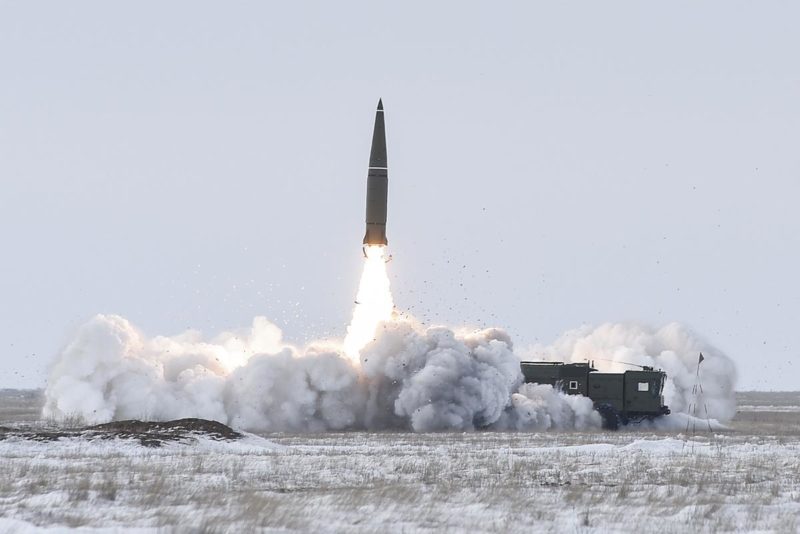
russian ballistic missile launch

Ukraine has nearly run out of the one weapon that reliably stops Russia's ballistic missiles, and no replacement is close, according to The Economist. Now it is betting on cheaper homemade interceptors—and on hitting Russian missiles before they launch.

Russia has spent this year rebuilding its arsenal around the weapons Ukraine can least often intercept and aiming them at cities and the power grid, so the race to field cheap defenses will help decide how many people survive another winter of strikes.

Ukraine's homemade bet

Kyiv is building its own answer. The pan-European Freyja project, led by Ukrainian firm Fire Point with 12 European defense companies, aims for an interceptor near $700,000. That is a fraction of a $7 million export Patriot round. The second track is "left-of-launch": hitting the factories and launchers before missiles fly. In March, Ukraine struck a Bryansk plant making Iskander components. It also hopes to add its own Sapsan and FP-series missiles within months, though catching Russia's mobile launchers is a tall order.
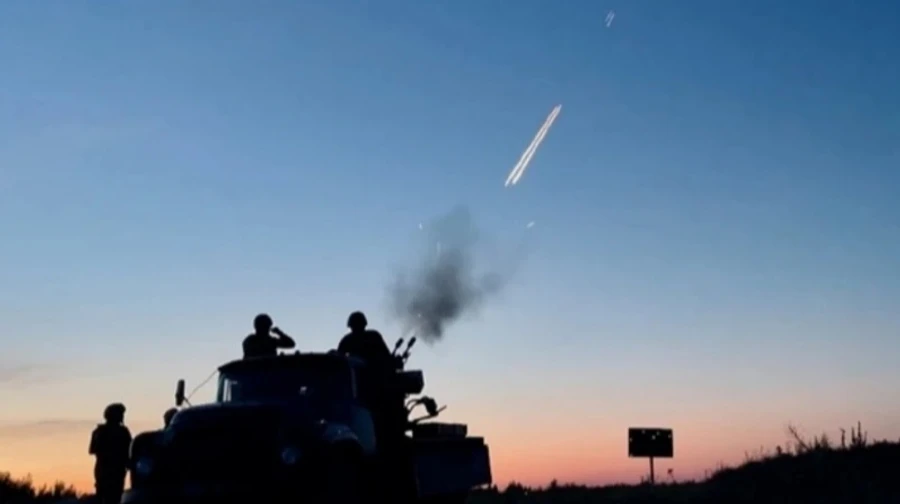
Ukrainian air defense unit. Photo: Western Operational Territorial Command of the National Guard of Ukraine
Explore further

Europe’s answer to the Patriot costs $700,000 a shot—and no foreign government can switch it off

Faster drones, less warning

Russia sends waves of jet-powered Geran-4 and -5 drones to swamp Ukrainian radar, then fires ballistic missiles behind them. The drones fly at up to 600 kph, and 3,000 leave Russian factories each month. Over five days to 1 September, Russia hit Kyiv almost hourly. The barrage paused on 6 September for the visit of American envoys Jared Kushner and Steve Witkoff, who had just met Putin in Moscow. The day after they left, Russia killed three civilians. Ukraine's F-16s, meanwhile, are running low on the American air-to-air missiles they need against cruise missiles.

The shield is empty

Ballistic missiles are the class of Russian weapon Ukraine's air defenses stop least often, which is why Brussels recently cleared Ukraine to spend EU loan money on American interceptors for the winter, and why a cheaper homemade fix carries so much weight.

1000 patriot missiles arrive too late winter so ukraine asked ramstein arms coalition open its warehouses · post ukraine's defense minister yevhenii khmara right commander-in-chief major general mykhailo drapatyi meeting
Explore further

1,000 Patriot missiles arrive too late for this winter, so Ukraine asked the Ramstein arms coalition to open its warehouses

Of 57 ballistic missiles fired in the first eight days of August, Ukraine intercepted only one. Kyiv has almost nothing left of the PAC-3, the one interceptor that reliably downs them. Russia now turns out about 100 of its deadliest missiles a month, 60 of them Iskander-Ms. Resupply looks unlikely, because US President Donald Trump's war on Iran drained America's own Patriot stocks, and no ally wants to give up interceptors it cannot replace.

  •  

Ukraine says drones hit Russia’s gas heartland over 3,000 km from its border—a wartime record

A tall flame rises above an industrial facility in Novy Urengoy at night.

Ukraine's Special Operations Forces (SSO) said the 9 September operation struck the Purovsky and Novy Urengoy gas processing plants in the Yamalo-Nenets Autonomous Okrug.

Kyiv's earlier energy campaign concentrated on oil refineries and export hubs in western Russia. The new operation shifts the target set toward Siberian gas processing and challenges the protection once provided by distance, although its effect on production remains unknown. The SSO said drones operated by its Deep Strike units traveled more than 3,000 kilometers, making the operation Ukraine's deepest strike of the war.

Both the Purovsky and Novy Urengoy plants feed Russia's fuel and petrochemical industries. Ukraine's broader deep-strike campaign aims to cut the revenue and supplies sustaining Moscow's war.

Fire Point, the Ukrainian manufacturer of the FP-1, identified the drones as FP-1s and put the distance to the Novy Urengoy plant at more than 3,200 kilometers. The company reported a hit on the plant grounds but did not describe the damage.

Russian authorities have not confirmed the full Ukrainian account. Yamalo-Nenets Governor Dmitry Artyukhov said Russian forces had repelled the attack, according to The Times. Falling drone debris nevertheless caused a fire at an industrial facility in Novy Urengoy, he said.

Artyukhov reported no injuries but did not identify the facility. Russian officials have not acknowledged any strike on Purovsky.

Ukraine says drones hit two Siberian gas plants over 3,000 km from its border in Novy Urengoy, Russia, 9 September 2026. Map: Euromaidan Press

Fire Point put the Novy Urengoy plant's annual design capacity at up to 19.5 million metric tons of raw material.

CyberBoroshno, a Ukrainian group that analyzes public imagery and data, said the strike hit a gas-processing unit at Gazprom Processing's Urengoy plant. Dnipro OSINT shared the analysis.

Gas condensate is a liquid produced alongside natural gas. The reported target separates ethane-rich gases from it. Those gases can be used to make polyethylene, a common plastic. CyberBoroshno said damage to the unit could disrupt supplies to a nearby chemical plant. Neither its identification of the unit nor the extent of the damage has been independently verified.

At Purovsky, the SSO reported damage but did not identify the equipment hit. Owned by Russian gas producer Novatek, the plant processes condensate into fuels and raw materials for the petrochemical industry. It processed 13.4 million metric tons in 2025, according to the SSO.

The effect on production at either plant remains unknown, as does whether any damage will be lasting.

The wider campaign

Ukraine's deep-strike units repeatedly struck Novatek's Ust-Luga gas-condensate complex on the Baltic Sea. Ukraine says drones hit two Siberian gas plants over 3,000 km from its border earlier in 2026. The facility processes stabilized gas condensate and has a design capacity of over 6 million metric tons a year, according to the General Staff.

A 31 March attack briefly halted port operations, while the 14 August strike was the sixth attack on the port that year. Ukraine has not disclosed how much production those attacks disrupted.

  •  

Ukraine’s Bulava drone can now hunt in the dark—one camera handles day and night

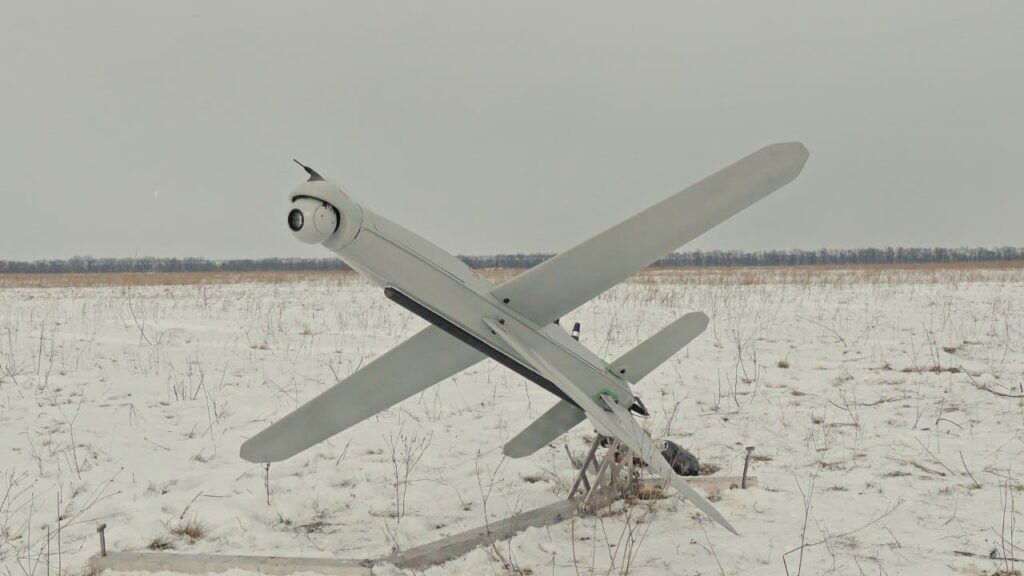
ukraine's bulava drone can now hunt dark—one camera handles day night · post kamikaze “bulava” ukraine news ukrainian reports

Ukraine's Bulava strike drone can now hunt around the clock, its crews no longer switching optics between day and night. Its maker, DeViRo, showed the upgraded drone at a defense exhibition in Poland, the Military news outlet Militarnyi reported. The overhaul brings a new camera and lengthens the drone's flight time, and the developers say they substantially improved its flight characteristics. The company said every future production batch will carry the new optics.

Ukraine's war effort increasingly runs on small private firms that keep sharpening cheap drones in months, reworking weapons already in the fight rather than waiting years for a new model. A drone that sees in the dark can work the same targets after sunset that it hunts by day.

One camera for day and night

The updated loitering munition carries a multispectral optical station that lets it operate at any hour, a company representative told Militarnyi at the MSPO defense exhibition in Poland. The station packs a daytime channel and a thermal-imaging channel into one body, so crews no longer swap in different camera modules depending on the time of day. Operators flip between the two modes in the control station's software while the drone is already in the air.

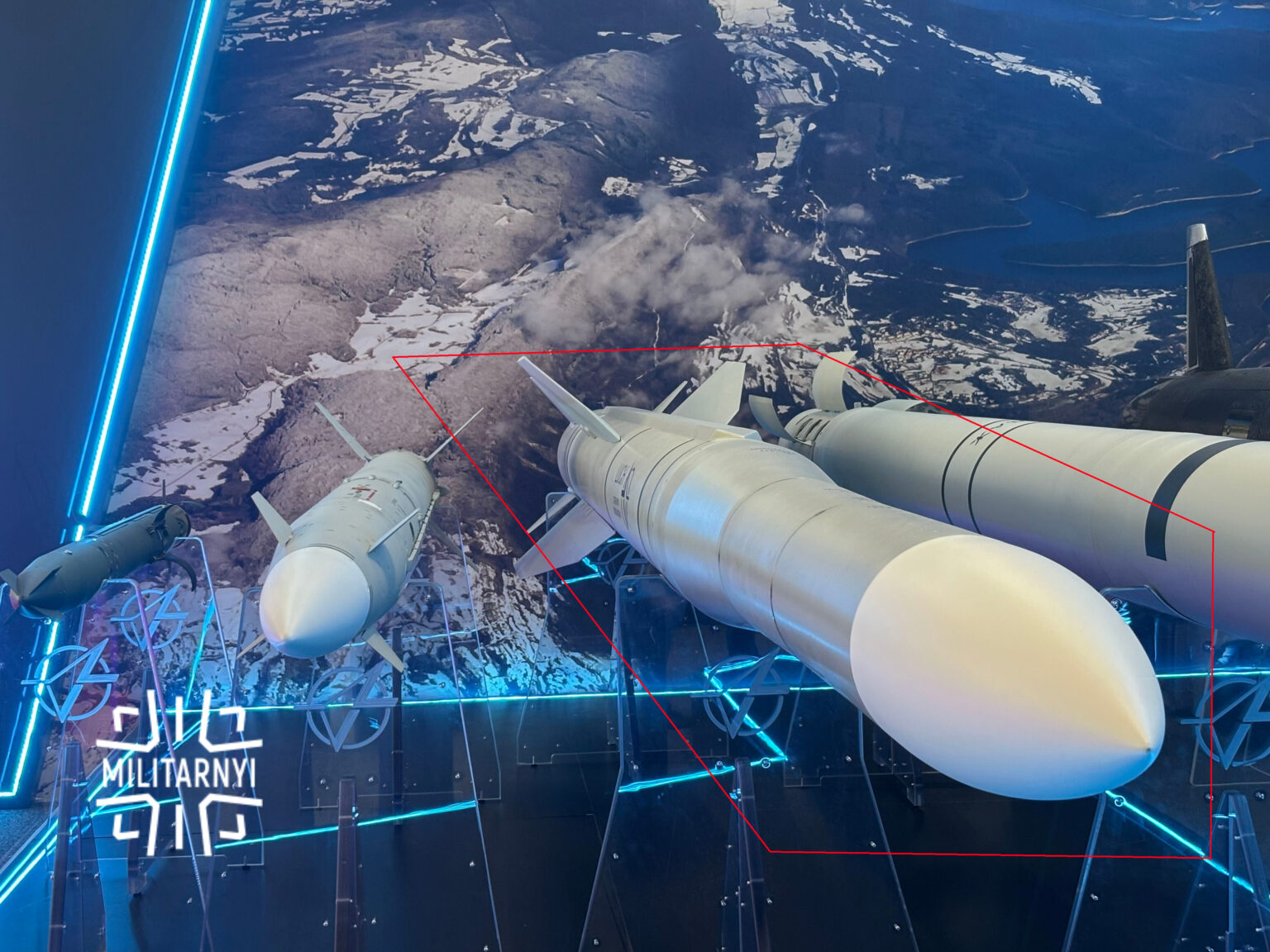
A display model of the "Koral" short-range anti-aircraft missile at the MSPO 2026 international defense exhibition. Source: Militarnyi
Explore further

Ukraine shows a home-built missile designed to hit ballistic targets for the first time, the Koral, at Poland’s MSPO

Longer in the air, 120 to 130 km out

Bulava now stays aloft for up to 110 minutes, and its guaranteed working range runs from 120 to 130 km, with room to grow depending on conditions and crew training.

DeViRo tied the drone to a summer campaign against Russian logistics, in which it says Bulava crews cleared the way for deeper strikes.

"We knocked out enemy radars and air defenses so that deep strikes could fly as deep as possible," the company representative said.

The company says its crews took a very active part in that campaign, which hit Russian supply routes across the south.

An interceptor in the same family

DeViRo builds more than strike drones. In March, it introduced the Sokyra interceptor, a prototype built to shoot down Russian attack drones. The prototype was listed at 240 km/h, a 45 km range, 30 minutes aloft, and a 750-gram warhead at the alpha-testing stage.

  •  
❌