Vue lecture

Ukraine is testing four new drone interceptors as Russia floods its skies with faster Gerans 
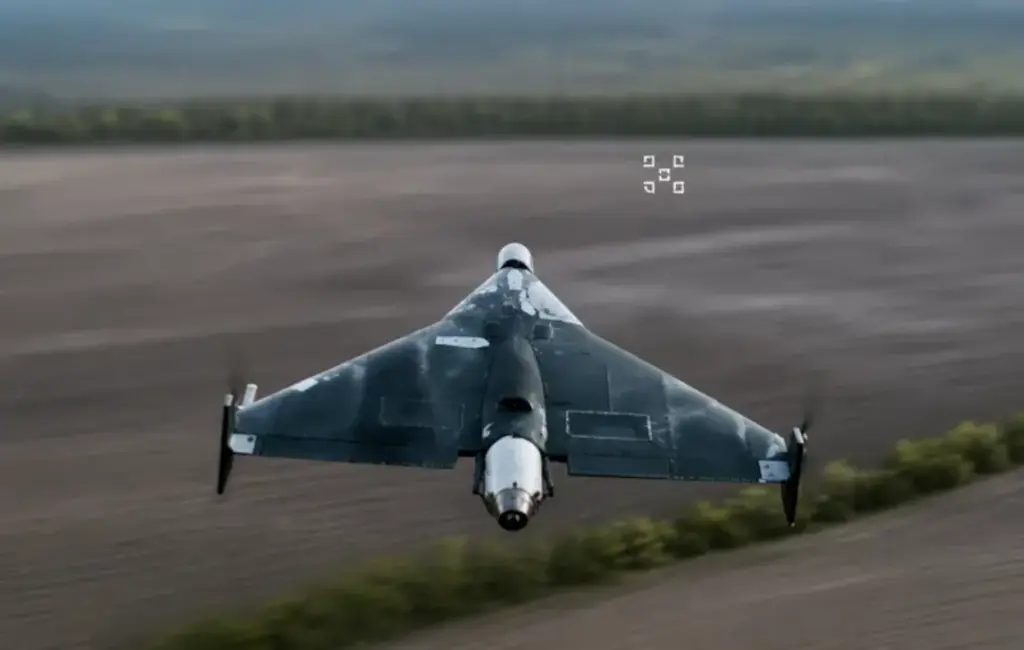
Russia’s new “Geran-4 Seeker” Shahed variant uses machine-vision AI for targeting. Source: Dyki Shershni

Ukraine has four potential interceptor systems that could shoot down Russia’s increasingly common jet-powered Geran attack drones, Ukrainian Defense Minister Yevhen Khmara said on 30 August, according to Suspilne.

Russia has sharply increased its use of the faster drones against Ukrainian cities, causing major damage to civilian infrastructure and many civilian casualties. The attacks are putting near-unprecedented strain on Ukraine’s air defenses.

All four interceptor systems have undergone field testing, Khmara said. Ukraine now aims to bring them to the required level as quickly as possible and scale production to thousands of units.

“The search for countermeasures against jet-powered drones continues,” Khmara told journalists, according to Suspilne. “There are already four potential interceptors that can shoot down jet-powered ‘Shaheds.’ Field tests have already been conducted on them.”

Russia is rapidly expanding Geran attacks

Russia's Gerans are jet-powered adaptations of the Iranian-designed Shahed attack drones that Russia has produced domestically throughout the full-scale war. The faster Geran variants give Ukrainian air defenses less time to detect and engage them.

Ukrainian defense technology adviser Serhii “Flash” Beskrestnov said Russia used more than 2,500 jet-powered Gerans against Ukraine in August, up from about 1,500 in July.

He also said the drones are being launched against Ukraine almost directly from Russian factories, highlighting the rapid expansion of their production and use.

Zelenskyy calls for faster production

Ukrainian President Volodymyr Zelenskyy has made countering the Gerans a priority as Russia sustains repeated attacks on Ukrainian cities.

At a 28 August meeting of Ukraine’s military leadership, Zelenskyy said the country needed to maximize domestic weapons production, with the immediate focus on defending against jet-powered Gerans and increasing Ukraine’s own long-range strikes against Russia.

“[The] main thing is our defense against jet-powered ‘Shaheds,’” Zelenskyy said in his evening address.

He said Russia had adopted a tactic of keeping Kyiv and other cities under repeated air raid alerts, with Gerans reaching the capital as well as cities including Kharkiv and Zaporizhzhia.
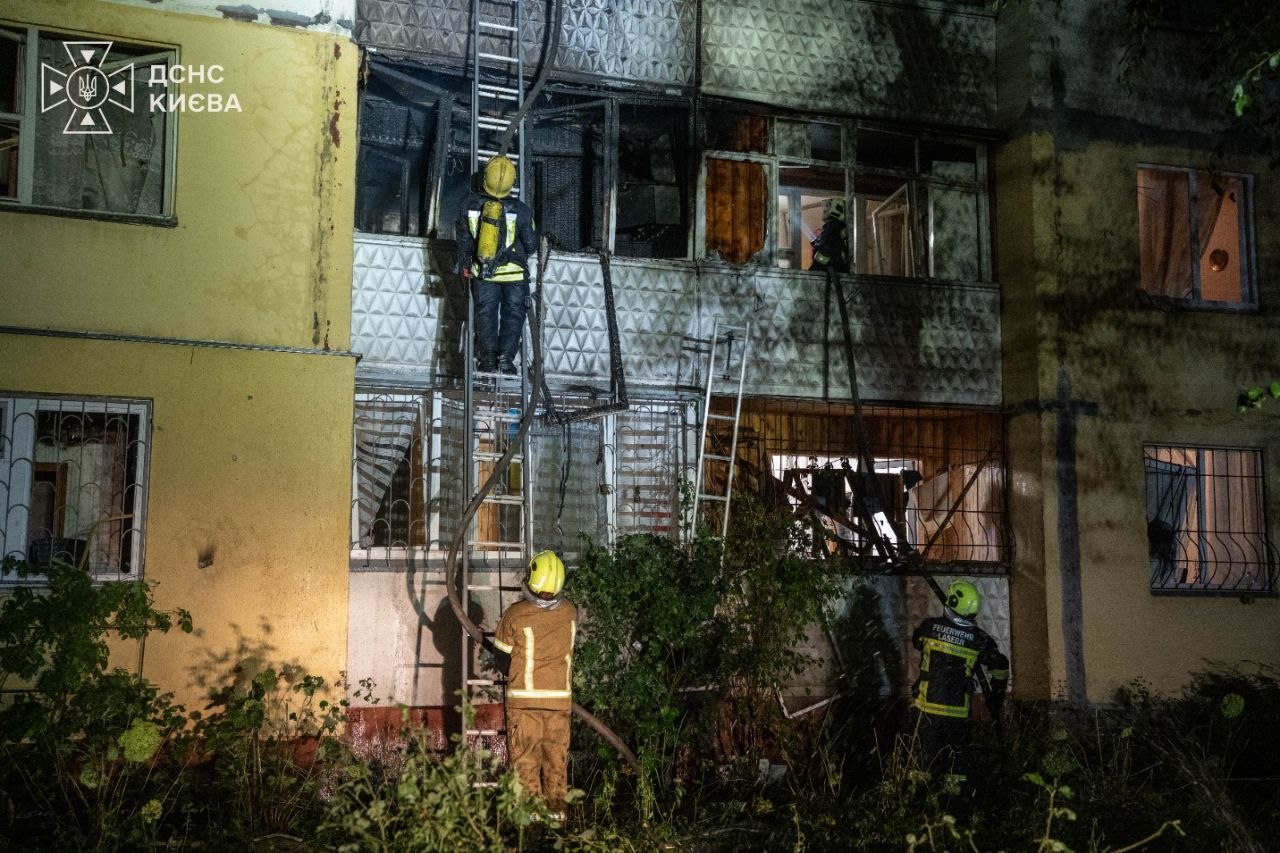
Rescue workers respond to the site of a Russian strike on an apartment building in Kyiv, 30 August 2026. Photo: Ukraine's State Emergency Service
Explore further

Four days of Russian attacks keep Kyiv under near-constant fire. Ukraine is struggling to defend its skies

“All our means of countering [them] are already being used,” Zelenskyy said, adding that Ukraine needs a significant acceleration in production of interceptors specifically designed for the jet-powered drones.

Khmara said the four potential interceptors are now at the field-testing stage, with the next step being to bring them into production at a scale of thousands of units.

For Ukraine, that scale is critical. The country must defend a large territory against increasingly large Russian drone barrages while also preserving limited air-defense resources for ballistic and other missiles that require more advanced interceptors.
  •  

Four days of Russian attacks keep Kyiv under near-constant fire. Ukraine is struggling to defend its skies

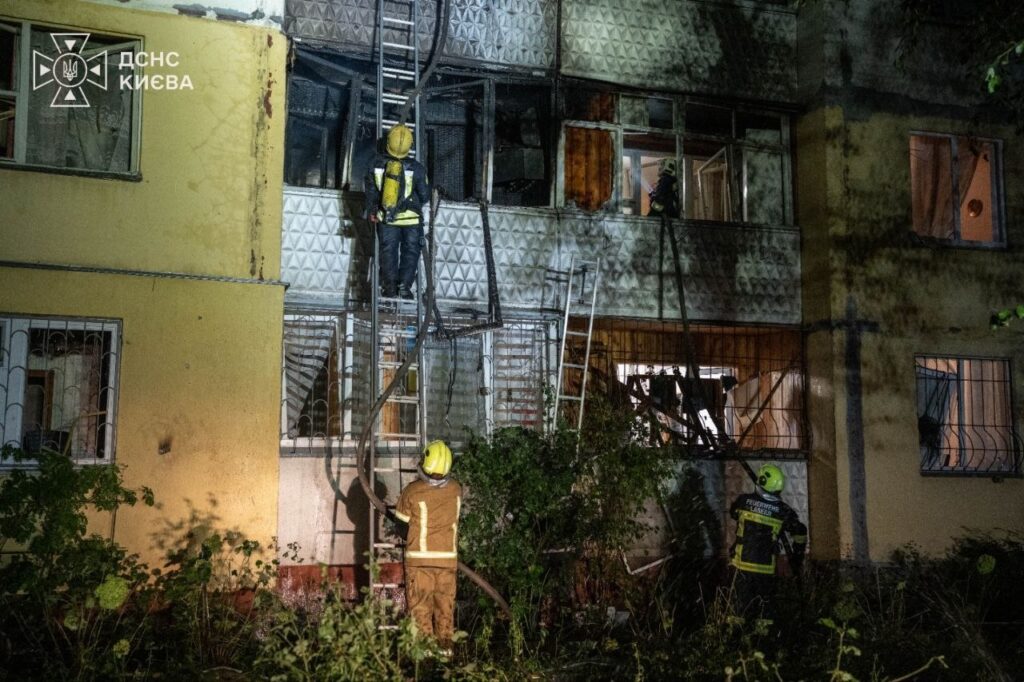
Rescue workers respond to the site of a Russian strike on an apartment building in Kyiv, 30 August 2026. Photo: Ukraine's State Emergency Service

Russia has kept Kyiv and surrounding areas under near-continuous attack for four days, repeatedly sending drones and missiles toward the capital and other Ukrainian regions.

The prolonged attacks have kept air defense crews and emergency workers operating almost constantly, while disrupting civilian life across Kyiv and the surrounding oblast.

Ukrainian President Volodymyr Zelenskyy said on 30 August that Russia had launched nearly 2,000 attack drones, more than 1,600 guided aerial bombs and 31 missiles of various types against Ukraine over the past week. The missiles included North Korean ballistic weapons.

The current attacks follow months of increasingly heavy Russian aerial strikes against Kyiv and other Ukrainian cities. Russia has ramped up its use of ballistic missiles while also expanding its use of newer jet-powered Geran drones, which have repeatedly targeted the capital and surrounding areas.

Four days of attacks

Kyiv and Kyiv Oblast have been under repeated attack since 27 August, with waves of drones arriving throughout the day and night.

The attacks have hit residential buildings, warehouses, businesses and other civilian infrastructure. They have also repeatedly forced firefighters and rescue crews to stop their work and move to safety before returning once the immediate threat passes.

At least three people were injured in a Russian overnight attack on Kyiv, as the capital entered a fourth consecutive day of near-continuous Russian attacks.

In the Obolonskyi district, a strike caused a fire from the second to fifth floors of a 12-story residential building.… pic.twitter.com/rTT5TZvNEA

— Euromaidan Press (@EuromaidanPress) August 30, 2026

In Myla, Kyiv Oblast, rescue workers are still clearing the aftermath of the 28 August attack that killed 38 people, injured 20 and left four people missing.

Rescue crews continue working in Myla, Kyiv Oblast, clearing debris, extinguishing fires, and searching for explosive remnants after Russia’s deadly attack on 28 August.

The attack killed 38 people and injured 20.

Bomb disposal teams are checking roads and nearby areas for… pic.twitter.com/JBL2QOhe66

— Euromaidan Press (@EuromaidanPress) August 30, 2026

The continuing attacks have also affected movement around the capital. Air raid alerts, damaged infrastructure and the threat of further strikes have disrupted traffic and travel both within Kyiv and on routes connecting the city with the surrounding region.

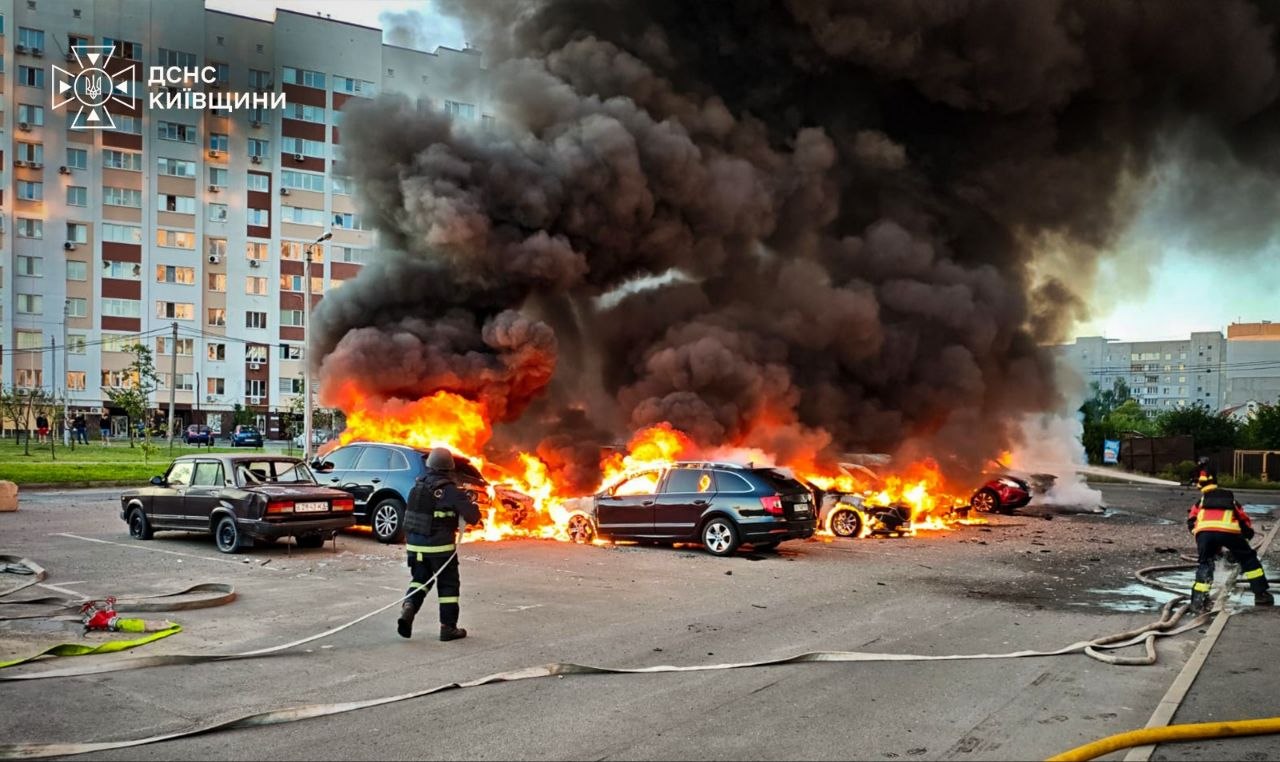
Aftermath of a Russian strike on Kyiv Oblast, 28 August 2026. Photo: Ukraine's State Emergency Service
Explore further

Kyiv has been under attack for 2 days nonstop. Russia is targeting the capital’s civilian supply chains

Air defenses under pressure

The attacks are putting Ukraine's air defense network under some of its heaviest pressure since the full-scale invasion began.

Ukraine has to defend a vast area against increasingly large drone barrages while also dealing with ballistic and other missiles that are more difficult to intercept.

Ukraine relies on US-made Patriot systems to counter ballistic missiles, but limited stocks of Patriot interceptors and insufficient deliveries from partners have left a critical gap in its air defenses, which Russia is now exploiting to cause major damage to civilian infrastructure and greater civilian casualties. 

The repeated use of jet-powered drones adds another challenge. Russia has increasingly deployed these faster Geran drones, adapted from the Iranian Shahed design, in attacks on Kyiv and other Ukrainian cities, including against civilian infrastructure.

Zelenskyy said the government’s priority now is to provide greater protection against the Russian attacks.

Attacks continue across Ukraine

The pressure is not limited to Kyiv.

Zelenskyy said Russian forces are carrying out attacks virtually around the clock against frontline and border communities, including Nikopol, Kramatorsk, Kherson and communities in Kharkiv, Zaporizhzhia, Dnipropetrovsk, Donetsk and Sumy oblasts.

Russian forces attacked Donetsk Oblast 30 times on 30 August, damaging residential areas and causing four fires, Ukraine’s State Emergency Service reported.

In Sloviansk, Russian shelling set balconies and apartments on fire on the fifth through seventh floors of a nine-story… pic.twitter.com/12GbUDsRpL

— Euromaidan Press (@EuromaidanPress) August 30, 2026

Across these areas, the attacks are keeping emergency services active while damaging homes, businesses and civilian infrastructure.

In Kyiv, meanwhile, the fourth day of attacks has left residents dealing with repeated air raid alerts, disrupted movement and the continuing risk of new strikes even as crews are still clearing the damage from previous ones.

  •  

Ukrainian ground-robot maker has moved into air: Ratel’s first strike drone flies 30 kilometers on Starlink link

A Ratel kamikaze drone. Source: Ratel

A Ukrainian maker known for ground robots has built a flying attack drone. Ratel Robotics has unveiled the Ratel K1, a strike FPV drone for ground targets with a tactical range of up to 30 kilometers, according to Defender Media.

The K1 will likely join the number of weapons that clear out Russian logistics. The campaign scales medium-range drone strikes against Russian supply convoys, depots, command nodes, and air defenses 20 to 200 kilometers behind the front. On 29 May, Ukrainian forces destroyed 483 Russian vehicles in a single day, an all-time record that pushed cumulative Russian motor-transport losses past 100,000.

A 30-kilometer FPV sits at the near edge of that fight, reaching supply routes and second-line positions that shorter drones cannot.

The company came from ground robots

Ratel Robotics is a Ukrainian ground robotics maker whose fielded line includes logistics, casualty evacuation, mining, and demining platforms. The K1 is its move into aerial strike, and the company brings a wartime production record to it rather than starting from scratch.

Ratel's ground systems took part in the military parade in Kyiv on 24 August, marking Ukraine's 35th Independence Day, the company said. The firm has also joined a campaign, with the National WWII Museum and the Tallboy brand, to raise nearly $447,000 for a planned museum of modern military technologies, according to Ratel.

The specifications come from the maker

The K1 is built on a 22-inch frame, reaches a top speed of 75 kilometers per hour, remains airborne for up to 35 minutes, and carries up to 2 kilograms.

The drone uses a digital video system and a daytime camera and is controlled via a satellite link through Starlink. Per Brave1 Market, it has no built-in autonomous navigation, no auto-takeoff, and no automatic return-to-home landing.

The manufacturer is currently working on the next iteration of the Ratel K1, refining the system based on test results and operational experience.

  •  
❌