Vue lecture

Zelenskyy names one of the worst consequenceses of Russia’s war. This threat is about to grow everywhere in the world
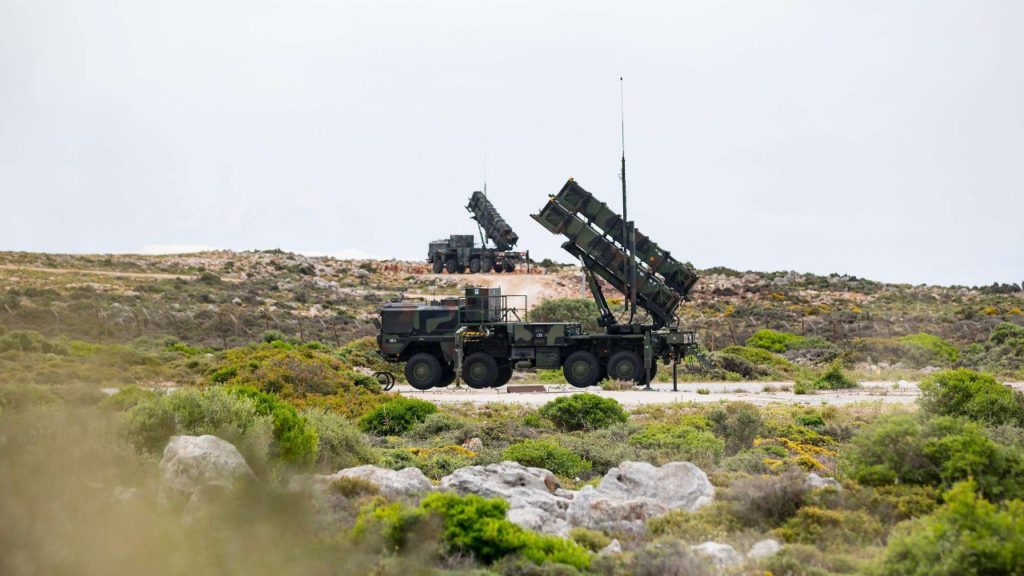
Patriot anti-aircraft missile system launchers

One of the worst consequences of Russia's war, and of Iran's tactics, is that potential aggressors worldwide now see how much damage ballistic missiles can do to human life. So the global ballistic threat will grow, and anti-ballistic defenses must grow with it, Ukrainian President Volodymyr Zelenskyy says, according to UNIAN.

Ukraine has put a number on the shield it wants to build itself against ballistic missiles: 100 systems. These systems are planned to be built as part of its FREYJA anti-ballistic project.

Zelenskyy frames the project as an answer to a threat spreading beyond Ukraine.

FREYJA is Ukraine's own interceptor, recycling a Soviet S-300 missile with a German seeker at roughly $700,000 per shot, a fraction of a $3.8 million Patriot, though its maker, Fire Point, does not target a first ballistic intercept until late 2027.

FREYJA as a shared European system

Zelenskyy pitches the Ukrainian project as Europe's future shield.

"Our FREYJA can become a common system for Europe that provides integrated protection. FREYJA will be fast to produce and tested by war," he said, offering to share all the know-how with partners if the system proves itself.

The project already has a coalition. Ten nations joined the European Anti-Ballistic Coalition in July, per Euromaidan Press, with Ukraine contributing the missile and partners supplying radars, command systems, and components Ukraine does not make.

The shield is a bet against a shortage

The 100-systems goal collides with the interceptor shortage that FREYJA is meant to solve. FREYJA has three tracks, including a transatlantic dimension and Ukraine's relationship with the US, Zelenskyy said, without disclosing details, and Ukraine needs both funding and certain components to build it.

In the meantime, Ukraine leans on the countries that already have Patriots. While Ukraine builds FREYJA and runs short on its current anti-ballistic systems, those partners that lack the production Ukraine needs but hold Patriot missiles today can invest those interceptors into Ukraine's defense, Zelenskyy said, welcoming them into the anti-ballistic coalition. The 100-system shield is the long game, while the borrowed Patriots are what keep Ukrainian skies covered until it exists.
  •  

No siren sounded before drone hit crowded Russian beach near missile maker’s resort, killing six

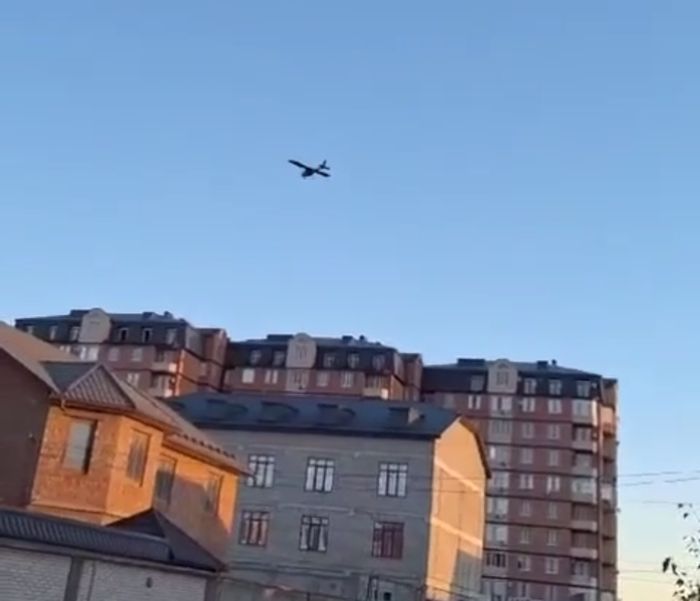
A Ukrainian A-22 long-range strike drone flying on Kaspiysk. Geolocated by Dominik on X.

A drone came down on a beach full of Russian holidaymakers, and the evidence points to Russia's own air defense bringing it there. On 3 August, drones attacked Krasnodar Krai, and one crashed onto a beach in Arkhipo-Osipovka near Gelendzhik, killing at least six people, three of them children, and injuring around 40, Krasnodar Governor Veniamin Kondratyev said.

Russian outlet Agentstvo and OSINT analysts assessed that the drone likely fell because of Russian air-defense fire rather than a direct hit, citing gunfire audible in footage before the drone dived and an abrupt change in its flight path.

The beach sits directly in front of the Rassvet resort, a facility of NPO Mashinostroyeniya, one of Russia's key missile-manufacturing enterprises.

The warning system did not sound

Survivors say they had no notice. Local residents and holidaymakers complained that no air-raid alert sounded at all, though warning systems are installed in the village, and the Russian channel Astra also noted that no alert was heard in the region during the attack, per the reports.

People on the beach were in the open, with little chance to take cover, even if they had been warned. The absence of a siren in a resort packed at the height of the summer season left sunbathers and swimmers with no warning that a drone was overhead and being fired at.

The target was a missile maker's resort

NPO Mashinostroyeniya develops cruise missiles for the Russian army, and its Rassvet recreation base was the apparent target roughly 300 meters from where the drone came down, the Supernova Telegram channel reported.

Ukraine strikes Russian military-industrial sites across the country, and a missile-development enterprise is a legitimate military target. What turned a strike near a defense plant into a mass-casualty event on a beach was, by the analysts' account, Russian air defense knocking the drone down over the crowd rather than away from it. Ukraine had not commented on the strike.

The dynamic is one Ukraine knows intimately in reverse

Russian air-defense missiles and the debris of intercepted drones regularly fall on Ukrainian cities, killing civilians, and Ukraine has long documented how interception over populated areas kills the people it is meant to protect.

  •  

Ukraine’s sea drone that never touched the shore struck two Russian radars in occupied Crimea

two russian radars destroyed crimea one ukrainian sea drone never touched shore · post parol-4 radar interrogator part friend-or-foe identification system seen fpv moments before strike occupied late 2026 video

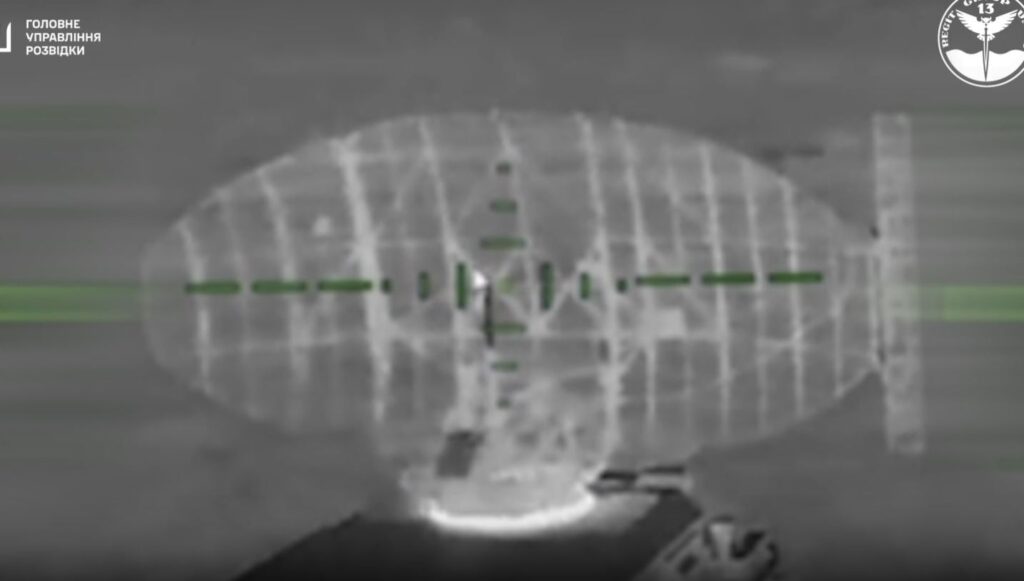
Ukraine's military intelligence turned its newest sea drones into carriers for FPV strike drones and knocked out two Russian radar targets in occupied Crimea, according to Ukraine's Main Directorate of Intelligence (HUR). The strike let its uncrewed boats reach Russian targets on land, a move the unit called a shift of the war to a new plane. HUR released footage of the operation on 3 August.

Ukraine has no significant navy now, so it built a fleet of uncrewed boats to contest a sea Russia once dominated. That improvised force keeps taking on new roles, growing from a way to sink ships into a tool that reaches the occupied peninsula itself. The radar strikes fit a wider push to raise the cost of Russia's hold on Crimea. Ukraine's forces kept hitting Russian depots and other military sites across the peninsula in early August. Every radar Ukraine burns thins the sensors Russia relies on to see and defend Crimea. 

Sea drones that launched FPV drones onto land

HUR's special unit Group 13 ran the operation in occupied Crimea in late July 2026, the agency reported. The operators used the newest versions of Magura naval platforms, this time set up as FPV-drone carriers, to hit Russian ground targets on the peninsula. It was the first operation to show the newest Magura's effectiveness.

two russian radars destroyed crimea one ukrainian sea drone never touched shore · post control vehicle podlyot radar complex seen fpv moments before strike occupied late 2026 video ukraine's defense
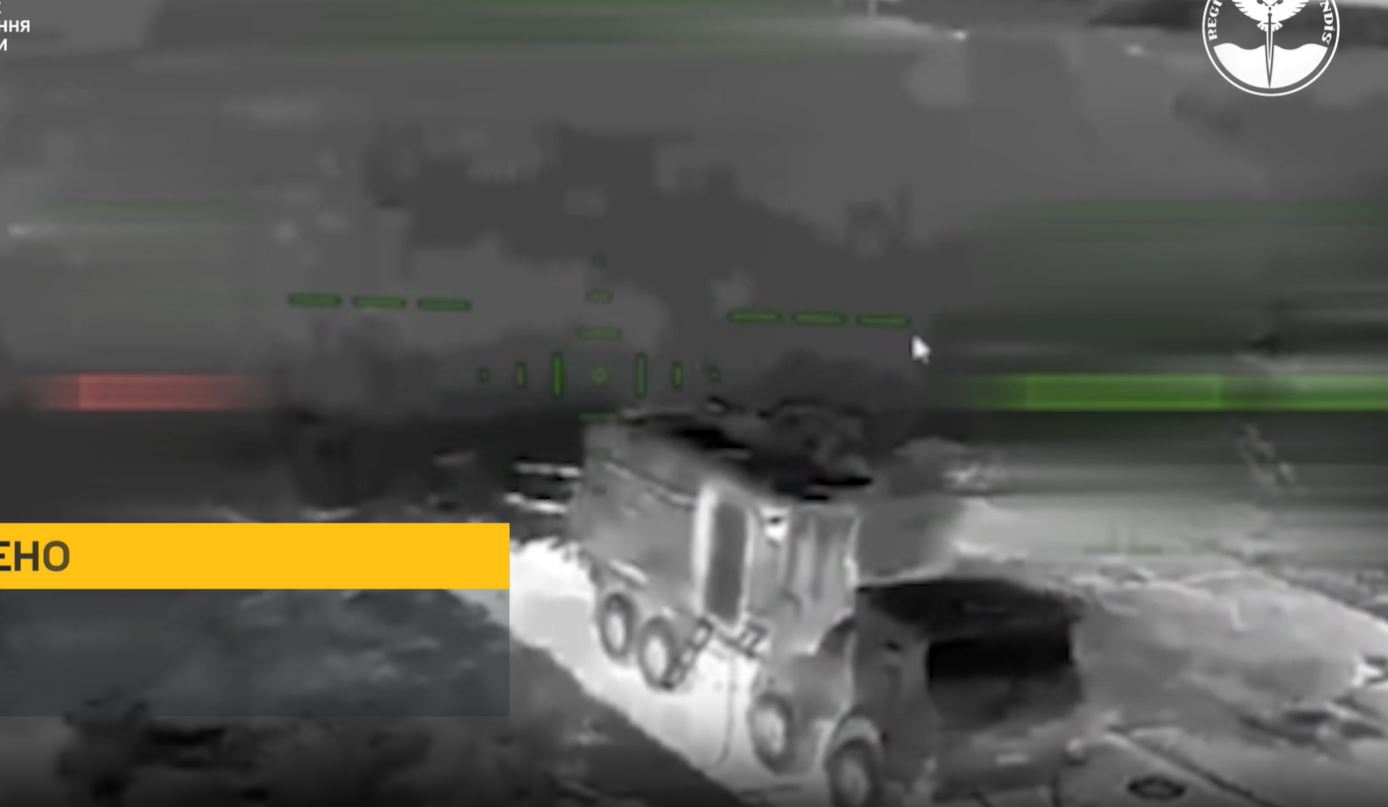
A control vehicle from a Russian Podlyot radar complex, seen from a Ukrainian FPV drone moments before the strike in occupied Crimea, late July 2026. Screenshot from video: Ukraine's Defense Intelligence (HUR)

The aerial FPV drones struck a control vehicle from a Russian Podlyot radar system. They also hit a Parol-4 radar interrogator, part of the system Russian forces use to tell friendly aircraft from hostile ones.

The footage opens with a Russian projectile fired from the Crimean coast. It streaks past a Ukrainian naval drone and misses. After a cut, a naval drone fires anti-air missiles. The video then shows an FPV aerial drone launching from a naval drone. Two FPV drones then dive into the two radar targets.

The Maguras that hunted ships now threaten land

The Group 13 commander, callsign Thirteenth, framed the strikes as a turn in the war. 

"From now on our Maguras threaten the Russian occupiers on land too, a fundamental shift of the fight to another plane," he said. 

At sea, Group 13 has destroyed nine Russian ships and damaged five, HUR says. It has also destroyed three enemy helicopters and damaged one, and destroyed two Russian fighter jets.

The Maguras began as kamikaze boats that were among the Ukrainian weapons that pushed Russia's Black Sea Fleet out of the northwestern sea, then grew into multi-role platforms that even downed Russian jets.
  •  

The most in any month this year: Russia fired 126 ballistic missiles at Ukraine in July

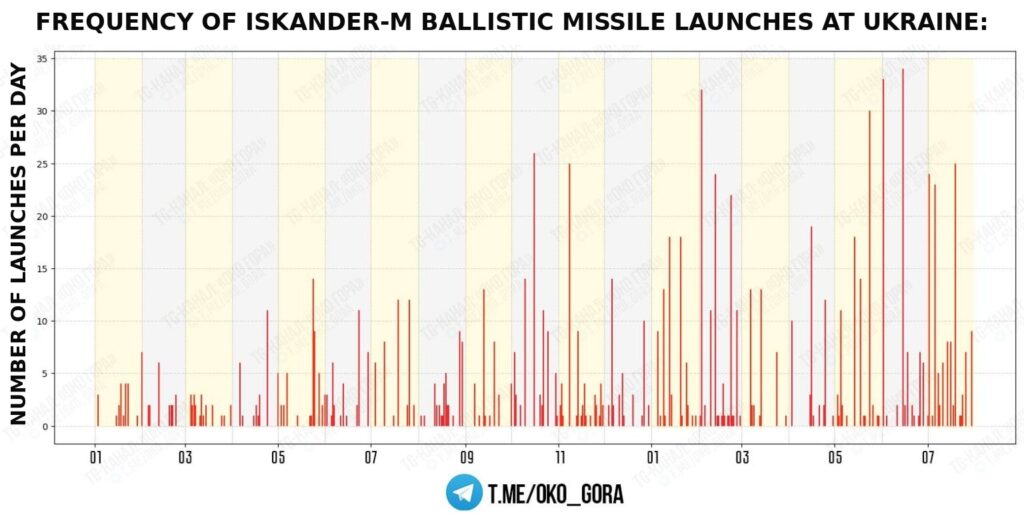
most any month year russia fired 126 ballistic missiles ukraine · post daily number russia's iskander-m missile launches over roughly past russian_ballistic_missile_attacks_infographic_en (1) news ukrainian reports

Russia fired more ballistic missiles at Ukraine in July than in any other month of 2026, around 126 of them, according to the monitoring project Oko Gora. The barrage mixed Iskander-M missiles, North Korean rounds, and air-defense missiles repurposed to hit ground targets. It climbed as Ukraine's shield against exactly these weapons kept thinning.

Russia has spent 2026 tilting its air war toward ballistic missiles, the category air defenses struggle most to stop, and the Ukrainian interceptor gap behind that shift has no fast fix. Only a handful of countries build the interceptors that reliably kill them, and every producer is short.

July outran every month this year

The climb is steep. Russia's monthly ballistic launches ran from 74 in January to 116 in February, then fell to 39 in March, 50 in April, 86 in May, and 96 in June, before last month topped them all, the project countedThe notable addition was the S-300 and S-400 air-defense missiles fired at ground targets alongside the Iskander-M and North Korean ballistic missiles.

ukrainian intelligence russia’s advanced missile arsenal shrinks nearly 50% since russia's iskander-m its mobile launcher iskander domestic pyongyang-supplied kn-23 ballistic stockpile has dropped 580 300 told liga report does mention
An Iskander-M short-range ballistic missile launcher with its missile raised, at the Army-2016 military expo near Moscow, Russia, 8 September 2016. Photo: Vitaly V. Kuzmin

The North Korean missile returned

One weapon stood out for its comeback. On 30 July, Russia used a North Korean KN-23 for the first time in a long while, striking the village of Radushne near Kryvyi Rih. The strike killed five members of one family, and the missile's reappearance suggested a fresh shipment from Pyongyang.

Interceptions returned, then collapsed

Around 14 July, Ukrainian air defenders resumed shooting down Russian ballistics, and on 9 July President Volodymyr Zelenskyy said Ukraine would soon receive a US batch of PAC-3 interceptors. By month's end the gains were gone. Ukraine's Air Force downed one missile out of 27 on 1 August, and one of nine on 30 July. As recently as June, Ukraine had stopped about four in ten ballistics, a rate that has since fallen toward zero as PAC-3 stocks run dry.

  •  
❌