Carel Aaron Van Der Merwe immigrated to US at 14 and has been waiting seven years for asylum case to be heard
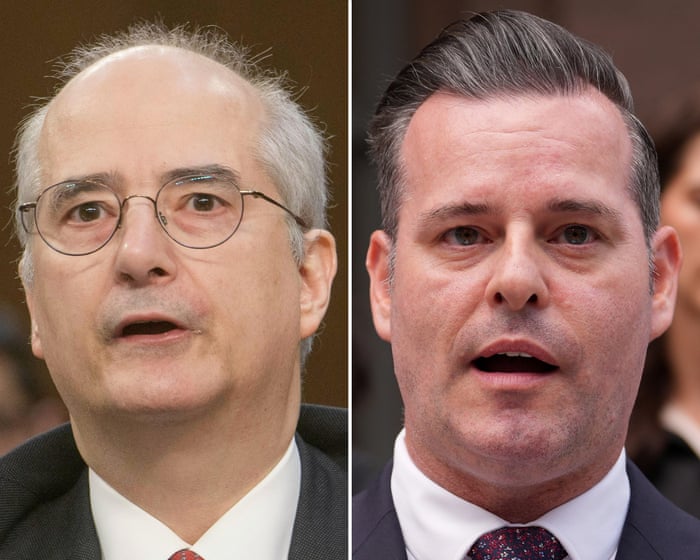
A Wisconsin state patrol trooper, whom federal immigration agents detained on Thursday at an airport, has been released from their custody.
Immigration and Customs Enforcement (ICE) agents approached Carel Aaron Van Der Merwe, a South African national, as he waited to board a domestic flight, according to his law firm Christopher & De León.
White says he has meeting with Trump in Washington DC on Monday, without saying whether he will accept the job
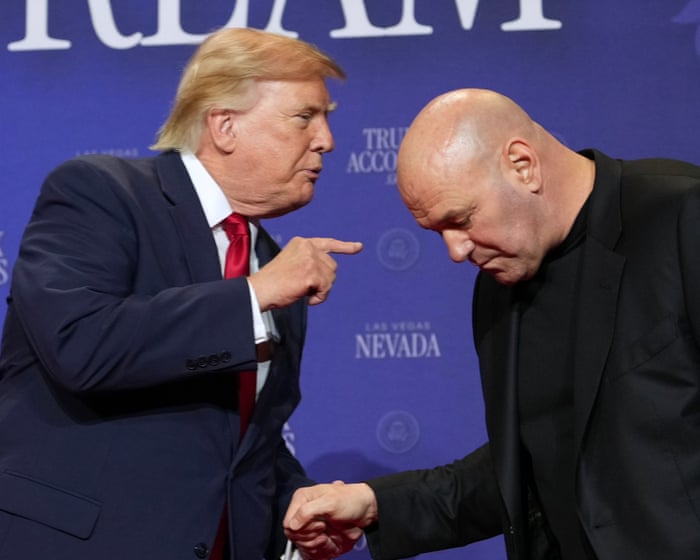
Donald Trump has offered the job of White House press secretary to Dana White, the chief executive of the Ultimate Fighting Championship, the president said in a social media post on Saturday.
Trump described White, who staged a cage-fighting spectacle at the White House to mark the president’s 80th birthday in June, as “a violent Fighter and Warrior”, credentials unlike any ever used to describe previous press secretaries.
Ana Reyes wants to know whether federal officials lied about extent of renovation plans at East Potomac golf course
A federal judge said on Saturday that she intended to appoint an ex-top federal prosecutor who served during Donald Trump’s first term to investigate whether she was purposely misled by lawyers and administration officials over changes to a historic public golf course in Washington DC.
Jessie Liu, a former US attorney for the District of Columbia, would examine whether officials with the interior department and the National Park Service and attorneys with the Department of Justice violated ethics or misled US district judge Ana Reyes during the course of the civil case that was initiated with a lawsuit in February by the DC Preservation League and two golfers.
After helping Trump to victory in 2024, young voters swung decisively toward Democrats, helping deliver a wave of midterm victories
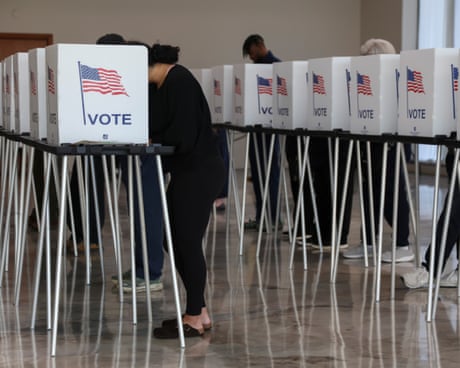
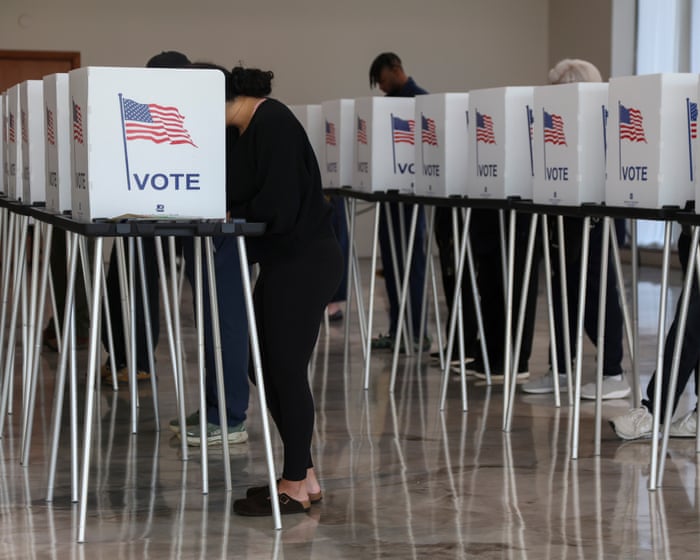
The 2026 blue tsunami owes a lot to the youth vote.
According to data from Tufts University’s Center for Information & Research on Civic Learning and Engagement (Circle), which monitors youth civic engagement, early estimates show the second-highest youth turnout in a midterm election in 30 years, second only to 2018, when an estimated 31% of young voters turned out during Donald Trump’s first presidency.
Voters approved two measures to save the region’s financially distressed public transit agencies
Voters in the San Francisco Bay Area overwhelmingly approved two transit measures this week that advocates hope will save the region’s financially distressed public transit agencies from a potential death spiral that could have had massive repercussions for the area’s residents and its economy.
The Regional Transit Measure (RTM), a 0.5% sales tax across four Bay Area counties and a 1% sales tax in San Francisco, will generate approximately $1bn annually to fund the region’s four largest transit operators. It received a strong 62.2% support across all five counties that voted on the measure, winning with a landslide of 78.6% in San Francisco.
Hardline aide offers ‘unwavering commitment’ to president amid fears White House will double down on far-right immigration agenda
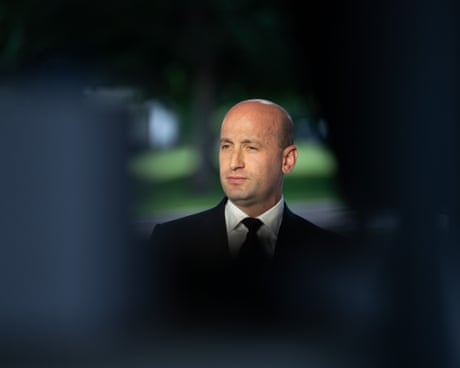
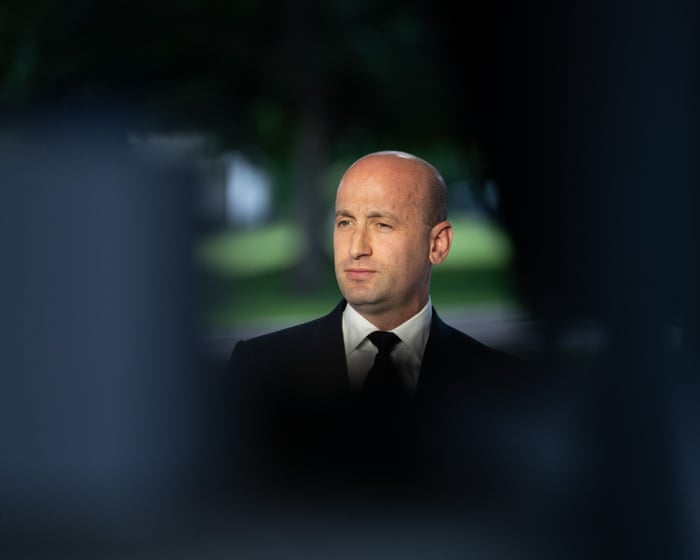
Stephen Miller, Donald Trump’s most controversial aide and the architect of his sweeping immigration crackdown, has lavished praise on the president after his appointment as White House chief of staff.
In his first public remarks since the move was announced, Miller – who begins the role on Monday – pledged “total devotion” to Trump amid concern the administration is now poised to double down on its far-right, nativist immigration agenda.
Democratic socialists won the mayorship, a US House seat and powerful positions in Los Angeles – and a large network of volunteers helped them do it
As a blue tsunami overtook US politics this week, Los Angeles saw a major shake-up of its own with a wave of democratic socialists elected to key offices.
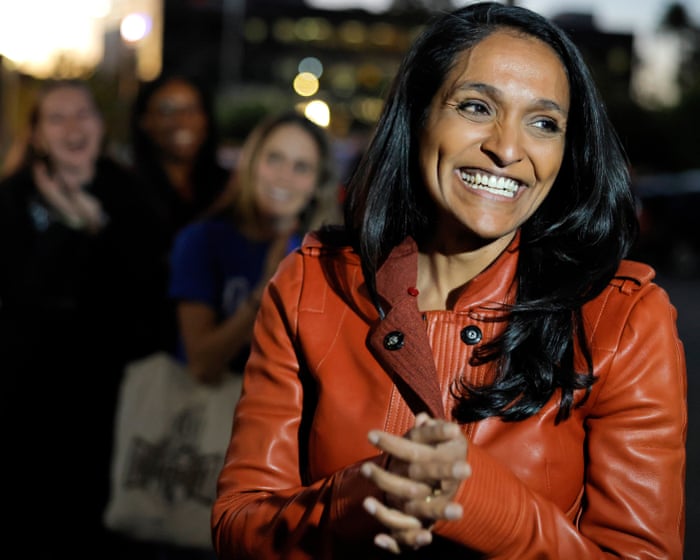
Most notably, Nithya Raman, the first democratic socialist to serve on the Los Angeles city council, prevailed over incumbent Karen Bass to become the next mayor. Even in the deep blue city, Raman’s victory was hardly a given, and marked a stunning win for the progressive wing of the party. With her election, America’s two largest cities will now be run bydemocratic socialist mayors.
Architect of Trump’s far-right immigration agenda is now most powerful unelected figure in government – it suggests White House is moving to a war footing
Donald Trump just gave the middle finger to millions of American voters.
Any other president who suffered the kind of drubbing at the polls that Trump did this week might have felt at least a sliver of humility – and perhaps even anobligation to work with the new opposition in Congress.
The ‘secretary of war’ and his shameful history are facing bipartisan scrutiny
Can you smell the schadenfreude in the air?
Watching some of the worst people in the world get their comeuppance this week has been deeply satisfying. And the show isn’t over yet. While the midterms have wrapped up, the blame game is only just getting started, with Republicans desperate to find scapegoats for their shellacking.
Maga’s regret voters were all-in for Trump’s racism. Then they found out they couldn’t afford it
For the first time in a decade, election predictions far exceeded public expectations. What pollsters anticipated as a blue wave billowed into a blue tsunami. Wins that held ground for already blue seats eased nerves, and the flips of swing states such as Georgia, North Carolina and Ohio – and the victory in Michigan – energized the blue base. But red-belt-busting wins in Republican strongholds like Texas, South Carolina and Kansas alongside pending races in Alaska and Mississippi left mouths agape. The explanation was that Democrats turned out far more supporters than their regulars, and that the “regret voter” (both swing voters and partisan Republicans) expanded the wave across districts Trump previously won. Elation and sighs of relief rolled over consistently Democratic voters who suffered multiple sucker punches from recent years of Republican upsets. Regret voters, who run the gamut from gen Zmen to Latinos, farmers and the white working class, hope a different party can deliver on the economy Trump promised them.
Blue voters look at the dismantling of democracy, multiple wars, mass deportations and Trump’s unchecked power in these last two years and see how it all could have been avoided. Regret voters, however, either co-signed or conceded to Trump’s naked racism and brutish bullying of marginalized people, but switched their votes as soon as the consequences hit their pockets. While some of the president’s backers may have been turned away by Immigration and Customs Enforcement (ICE) gunning down American citizens, the final straw for most wasn’t ICE’s brutality, but rather the price of eggs. Some may have been upset by the Tomahawk missile assault that killed 120 schoolgirls in Iran, but most fumed at the rocketing costs at the gas pump that followed. Few demanded answers for the nearly 60 deaths of innocent people detained in DHS detention centers since the start of 2024, but many felt scorned by lost immigrant labor that cut into owners’ profit margins. Maga’s regret voters were all-in for Trump’s racism. Then they found out they couldn’t afford it.
In a reversal of longstanding assumptions, strong criticism of Israel’s actions may have helped put candidates over the top
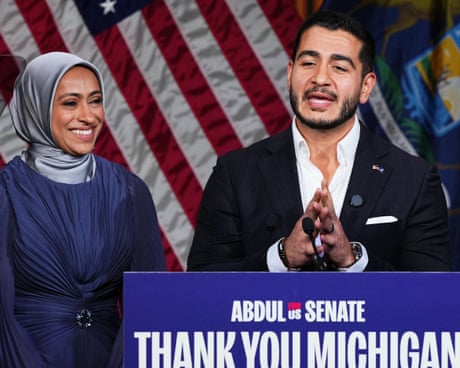
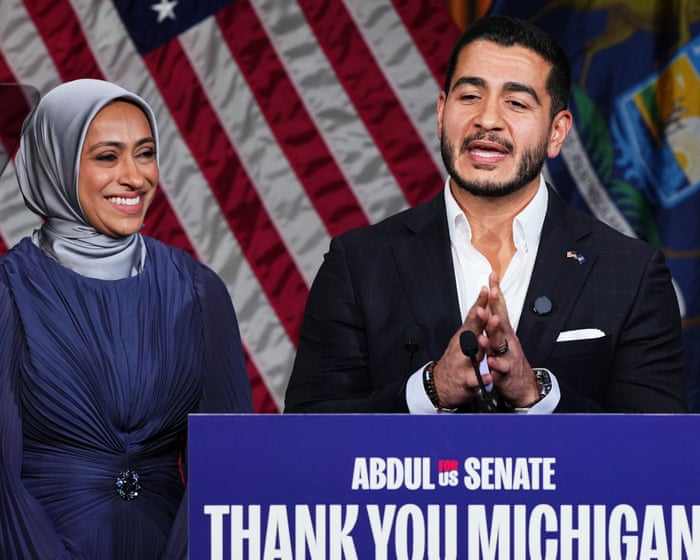
“You took a chance on the unlikeliest of candidates,” Abdul El-Sayed told a Detroit crowd on Wednesday, declaring victory in Michigan’s hard-fought, often ugly, Senate race. In what was predicted to be a squeaker, the Democrat beat his Republican opponent, Mike Rogers, by a healthy seven points.
In some ways, El-Sayed was an unlikely candidate. At 34, in his first Congressional run, he set his sights almost cockily on a US Senate seat. He ran on what has become an uncontroversial affordability platform but also championed the socialist-adjacent Medicare for All.
From North Carolina to Arizona, Democrats with almost no public profile were stunned at their election triumphs
One candidate had dropped out in September. One had no campaign staff. One was a 19-year-old and halfway through the fall college semester.
Across the US, Democratic candidates with almost no public profile and long odds of winning their midterm races were stunned to find they had outperformed their opponents on Tuesday. They were swept into Congress and statehouses in the blue wave that knocked out Republicans from seats considered untouchable in deep-red districts.
The GOP tried to dilute their power, but Black voters helped Democrats get elected in Alabama, Texas and Florida
Black voter turnout surged across US southern states where Republicans were accused of redrawing electoral maps to “diminish Black political power” in the wake of a seismic supreme court ruling.
Democrats flipped or held seats in Alabama, Texas and Florida with the support of this voting bloc, building on a decades-long, dedicated movement to protect and build Black political power in the region.
There’s not much they can do over the next couple of years to alleviate angry voters’ stress over prices
It was the economy, again. Although Donald Trump largely ignored it, voters’ acute concerns over the rising cost of living fuelled a political upheaval for the ages that is likely to deliver the biggest swing toward Democrats since Watergate, granting them the largest House majority in nearly four decades alongside their biggest edge in the Senate since 2008.
Still, having come to power promising to restore affordability, the new crop of Democrats are soon to discover that there is not much they can do over the next couple of years to alleviate angry voters’ stress over pricey gas and groceries, exorbitant mortgages and unaffordable healthcare.
Eduardo Porter is a journalist focused on economics and politics. He writes the newsletter Being There on Substack
On Friday afternoon, the US president abruptly announced via his Truth Social platform that Miller – the architect of his sweeping immigration crackdown – would replace Susie Wiles, whom he confirmed had been ousted.
Senior British politicians and officials highlight potential to end Iran war but warn US president is not yet ‘a spent force’
Andy Burnham was having dinner at the Commonwealth summit in Antigua when the results of the US midterm elections started rolling in.
UK government officials in the Caribbean with the prime minister scrolled through their phones with growing incredulity as the scale of the Republicans’ defeat became clear.
US voters repudiated mass deportation campaign, but choice of new chief of staff is an ominous signal that Trump is driving ahead at full speed
On Tuesday, US midterm voters resoundingly rebuked Donald Trump and his brutal mass deportation campaign that sent military tanks and masked agents though residential streets.
But on Friday, the president doubled down. He named Stephen Miller – the architect of the administration’s most aggressive immigration policies – as his chief of staff.
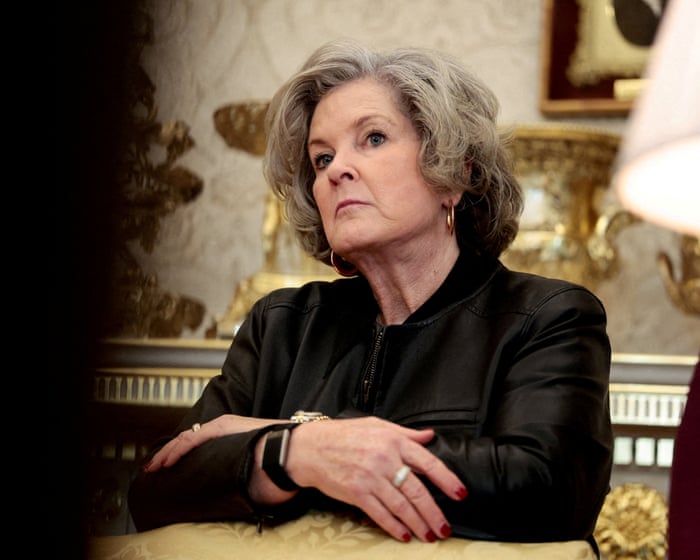
Donald Trump on Friday said Susie Wiles, the first woman to serve as White House chief of staff, will leave her post, a major shake-up of his inner circle that comes amid a steady exodus of senior female officials from his administration.
The president announced her ouster – and her replacement, by the immigration hardliner Stephen Miller – in a post on Truth Social, days after a sweeping blue wave gave Democrats control of both chambers of Congress in the midterm elections. Wiles’s departure leaves behind an overwhelmingly male leadership team.
Tech industry fears delays to its multi-trillion dollar infrastructure buildout meant to power artificial intelligence
Several newly elected Democrats and Senator Bernie Sanders have renewed calls for datacenter moratoriums in the days after the US midterm elections. The sweeping Democratic victory, which was buoyed in part by backlash to the tech industry, has added momentum to efforts to slow down the multi-trillion-dollar buildout of the controversial facilities.
On the social media platform X, Sanders posted a call for an immediate national datacenter moratorium this week. “Americans don’t want Big Tech oligarchs wrecking the environment, gutting jobs and threatening humanity’s future,” Sanders said on Wednesday.
Democrat James Talarico won a Senate seat in Texas, breaking a 38-year drought for his party in the Republican stronghold and delivering a stunning blow to Donald Trump. The race became one of the most expensive Senate contests in US history, with advertising spending topping $500m, according to estimates. GOP-aligned groups poured hundreds of millions of dollars into efforts to elect Ken Paxton, including substantial funding linked to multibillionaire Elon Musk, whom Talarico accused of trying to buy a Senate seat.
New lawmakers from Annie Andrews and Adam Hamilton to Abdul El-Sayed indicate they will not support him
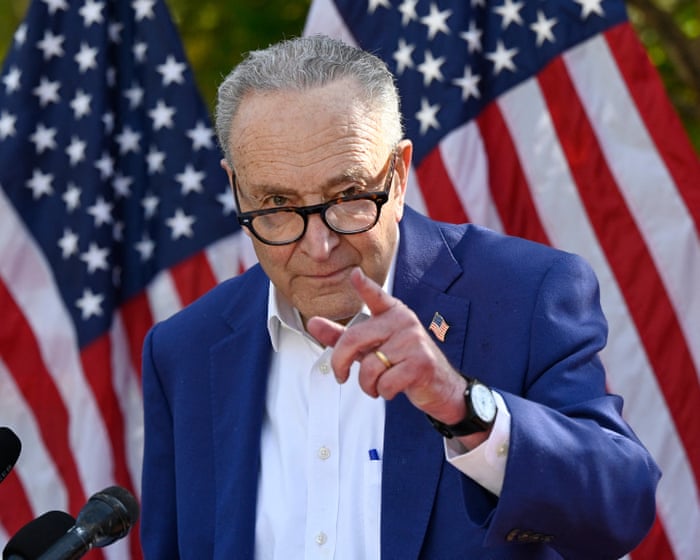
Incoming Democratic senators want someone other than Chuck Schumer to become the next majority leader in the US Senate, althoughSchumer likely still has enough votes in his caucus to remain the top Democrat.
Annie Andrews, the Democratic senator-elect from South Carolina, told Fox News’s Bret Baier on Thursday that the Democratic party needs new leadership. When asked whether she would support Schumer’s leadership bid, she replied: “I still very much believe it’s time for generational change on both sides of the aisle.”
Mayor said only immigrants that ‘pose a danger’ would be referred to ICE, after Democrats gain control of governor’s seat
The mayor of Houston on Friday said the city would limit cooperation with federal immigration authorities, heralding “a new model” of immigration enforcement after Democrats won power in Texas for the first time in decades.
Houston’s mayor, John Whitmire, said the city would go after immigrants “that pose a danger, not those that are going about their family business, work and education”.
US president confirms Susie Wiles, current chief of staff and first woman to serve in the role, will step down
Stephen Miller, Donald Trump’s most controversial aide and the architect of his sweeping immigration crackdown, will become his new White House chief of staff days after Republicans lost control of the US Congress in US midterm elections.
The president announced the extraordinary appointment on Friday, confirming that Susie Wiles – his current chief of staff, and the first woman to serve in the role – had been ousted.
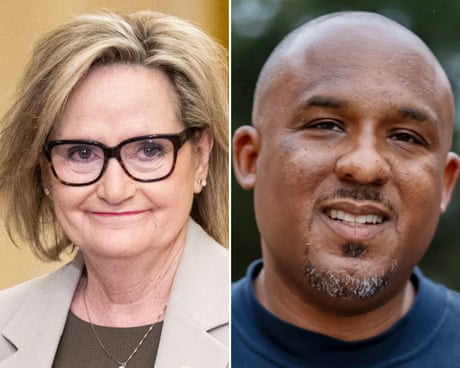
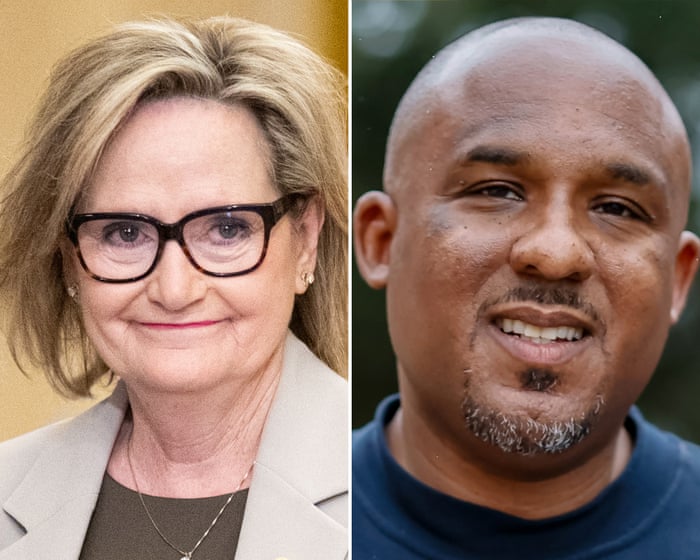
Democrat Scott Colom is on the verge of winning a Senate seat in Mississippi in a stunning upset, but ballots are still being counted in a close race where Colom holds a lead of just under 2,000 votes over Republican incumbent Cindy Hyde-Smith. Losing ruby-red Mississippi would be the final straw for Republicans after a midterm sweep by Democrats that turned Texas blue and saw a Democrat elected to the seat once held by the late South Carolina Republican senator Lindsey Graham.
A possible legal fight is also brewing, as both sides trade sharp legal letters about the procedures for counting remaining ballots. National voting groups and attorneys have descended upon the magnolia state, joining the local groups that worked to mobilize voters. Democratic and Republican groups, including Democratic Senatorial Campaign Committee (DSCC) and Democratic election attorneys from the Elias Law Group, have deployed hundreds of volunteers and lawyers to all the state’s 82 counties to oversee the final rounds of counting.
Jason Reding Quiñones led investigation into whether Trump’s rights were violated during 2020 election inquiry
A US attorney overseeing the so-called “grand conspiracy” investigation into Donald Trump’s rivals announced on Friday he is leaving the Department of Justice, one of several officials to leave the department in recent days after sweeping Democratic wins in the midterm elections.
Jason Reding Quiñones, the US attorney for the southern district of Florida, and John Eisenberg, who led the justice department’s national security division, are both leaving. Democrats have pledged to use their majorities in the US House and Senate to conduct aggressive oversight of the justice department, among other agencies.
After midterm wins, Democratics plan comeback for when new Congress is sworn in, including pushback against Trump and his policies
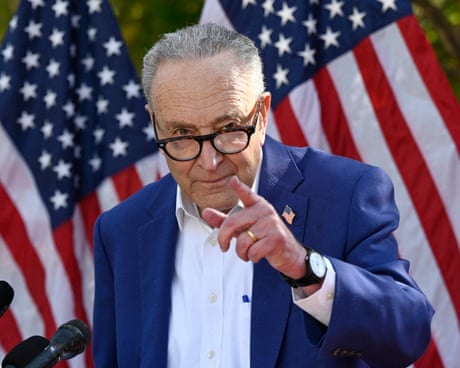
Donald Trump will be blocked from putting a “rightwinger” on the US supreme court, according to Chuck Schumer, the soon-to-be Senate majority leader, in remarks that were a preview of how Democrats intend to wield their power come January.
In an interview with the Associated Press, Schumer said Democrats would not confirm “any crappy nominees” to the supreme court, lower courts or Trump’s cabinet.
US politics always makes people emotional, but I heard from friends and colleagues many times this year that speeches, campaigns and underdog success stories moved people in unexpected ways, whether it was this ad of Michigan senator-elect Abdul El-Sayed doing bedtime, a photo of newly elected Texas Democrats James Talarico and Gina Hinojosa at a Whataburger, or Georgia’s Keisha Lance Bottoms becoming the first Black female governor in the entire country.
In the tense final hours before his dramatic election as senator for Michigan in this week’s midterms, Abdul El-Sayed had a heated encounter with a British TV journalist that rapidly went viral.
As James Matthews, of Sky News, tried to ask him a question, El-Sayed bit back. “Why would I care to have a conversation with you?” he demanded of Matthews, placing both hands on the reporter’s shoulders in a gesture of emphasis.
A decade of political misery does terrible things to the mind. Tuesday’s wins came with a sense of unreality
Late on Tuesday night, the comedian Alex Edelman asked a poignant question on social media: “I know we’ve never had to ask this before tonight, but what’s the opposite of doomscrolling?”
I don’t have a definitive answer to that, though I did offer the term “boomscrolling”, accompanied by a gif of the social media sensation and Costco enthusiast Big Boom AJ.
Democrats won over rural voters from Maga in the midterms by focusing more on working people and less on culture wars
Long before Jamie Ager entered politics, he was making a name for himself in a very different place: the meat counter of a grocery store in Boone, North Carolina.
It was the early 2000s, and Ager owned and operated Hickory Nut Gap, a regenerative farm near Asheville. Over the next 20 years, he helped build a regional food system that delivered healthier food to thousands of people, improved land stewardship and made farming a bit more profitable.
Yes, the Republicans suffered humiliating defeat. But the fact that a Trump presidency was even possible means something like it could happen again
He’s down, but not quite out. Barring divine or other intervention, Donald Trump will remain in the Oval Office for a further two years and 10 weeks. Or, as the White House put it in a plaintive social media post brimming with neediness: “PSA [Public Service Announcement]: Trump is still your president.” But that’s not the only reason why the global celebrations that greeted the Democratic tidal wave that swept Republicans out of even their deepest heartlands should be tempered, if only a tad.
Don’t get me wrong, the results of Tuesday’s midterm elections are cause for genuine international jubilation. The defeats of Trump allies in Serbia and Brazil were delicious appetisers, but this was the feast. No mere electoral setback in line with midterm tradition, this was a thorough repudiation of the second Trump presidency and of Trumpism. The 16% swing to Democrats in the popular vote for the House of Representatives was greater even than the 11.2% swing recorded in the Watergate midterms of November 1974, following the resignation in disgrace of Richard Nixon. Trump had worked hard for many months to undermine these elections, either by gerrymandering districts in his favour or preparing the ground for a later claim the vote was rigged, but to no avail: the democratic system proved too resilient, and the American public too determined to have their say. And have it they did, in a voice loud and clear.
Even Donald Trump has acknowledged that support for Israel is increasingly a political liability in US politics. Will the Democratic leadership listen?
Abdul El-Sayed’s victorious path to the US Senate must become a wake-up call to the Democratic party. It shows us, yet again, that Democratic voters care about Gaza, that Palestinian demands for freedom are increasingly connected to American demands for freedom, and that the old smears and accusations against Palestinians and their supporters are fast losing potency.
Even Donald Trump has acknowledged that support for Israel is increasingly a political liability in American politics. Will Chuck Schumer and the rest of the Democratic leadership listen?
Trump wooed Latino voters in 2024, then alienated them, with ICE tactics shifting Latino voters toward Democrats
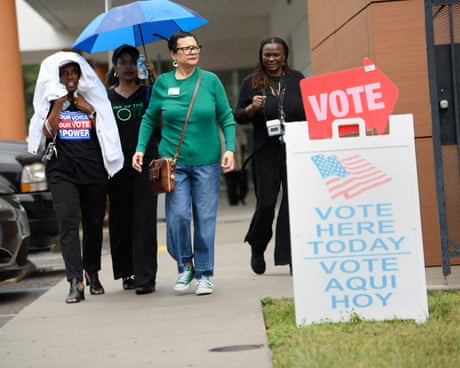
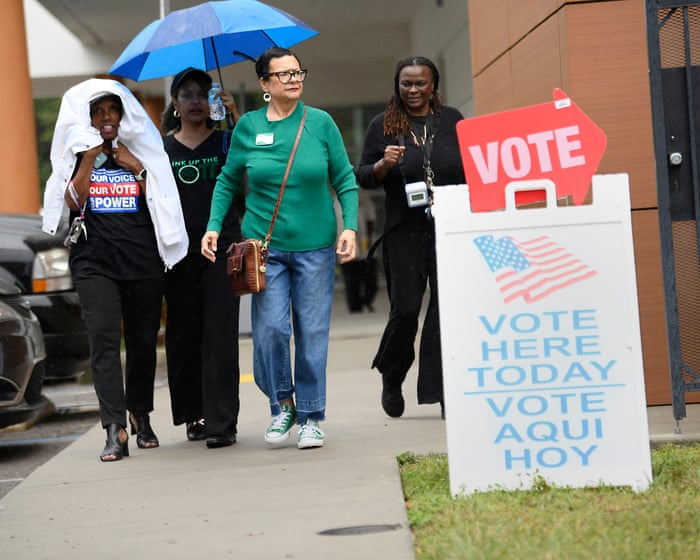
Tuesday night’s explosive rout of the Republican party was supercharged by the fury of Hispanic Americans who turned out in record numbers in key battlegrounds to protest the Trump administration’s anti-immigrant assault on their communities.
“Trump went against us,” said Benny Melendez from Weslaco, Texas. “He made us the target of ICE operations, so we decided to punish him by voting against his party. That’s what happened.”
Donald Trump will begin the day in Washington today.
He has closed door meetings for much of the day, and will take part in a Diwali celebration at the White House at 1:30pm ET. While that’s currently not open to the press we’ll let you know if that opens up.
US judge issues 14-day block on construction on DC monument after it was approved by planning commission
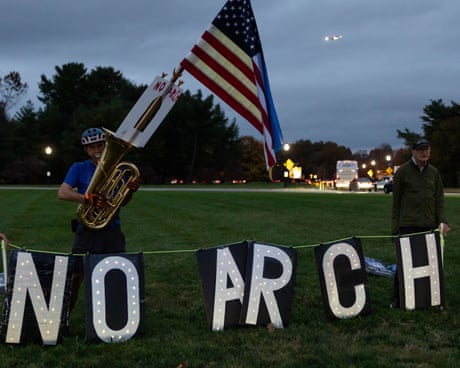
A federal judge in the early hours of Friday blocked any construction work from beginning on Donald Trump’s towering triumphal arch for 14 days, a major setback for one of the president’s most prominent projects in his vision to remake the nation’s capital.
The temporary restraining order was issued by US district judge Tanya Chutkan in a Washington DC court that has regularly proved to be a thorn in the US president’s side, such as in previous cases involving election subversion and the January 6 insurrection by Trump supporters.
The president seems to accept this is his last White House stint and is focused on renovating whatever he can get his little hands on
As you’d expect, the right is in a shambles right now. Elon Musk is making jokes about his “election-interfering space lasers” and pretending that he really, really doesn’t care that he threw away nearly half a billion dollars trying to influence the midterms. JD Vance is writing long essays on social media about how he agrees the Iran war was a bit of an oopsie.
Donald Trump, meanwhile, seems to be going through his own idiosyncratic grieving process about the Republicans’ historic midterm beating. The president has skipped all the way past shock, denial and anger and landed at the “admiring my beautiful renovations” stage of grief.
The Reform UK leader said he did not think Putin would launch an all-out assault on Ukraine, but ‘understood’ why he acted in Crimea and the Donbas region
The British government says it will double the wait time for many immigrants to settle permanently, although key workers and higher earners will be exempted
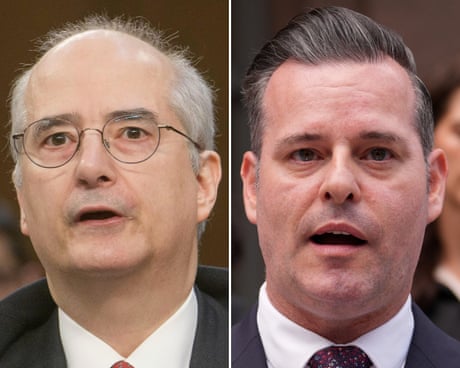
Two former FBI officials charged with lying to Congress about their participation in investigations involving Hunter Biden, the son of former President Joe Biden, are due back in court
From the 17th to the 20th century, Ukrainian lands were split between empires and states. Their rulers tried to assimilate Ukrainians and block their self-determination by going after what set them apart: their language and culture.
Nobody has an exact count of the bans. Historian Pavlo Hai-Nyzhnyk says there were more than 100 and that the real number is likely higher, because governors issued local bans too.
These measures differed in purpose and reach. Some restricted publishing, schooling, or official use; others suppressed cultural institutions or pushed assimilation. Most served the forced Russification of Ukrainians in the Russian Empire and the USSR. The timeline below is a selection of documented events, not a count of bans.
Russia has not stopped. Since 2014, schooling in Ukrainian has collapsed in the territories it occupies, and in 2025 it removed Ukrainian from the federal school programs it imposes there.
Here are some of the most important restrictions on Ukrainian language and cultural life imposed by the regimes ruling over Ukraine.
Graphic by Ganna Naronina from the article A short guide to the linguicide of the Ukrainian language. Click to enlarge.
17th century
1627: Muscovy. Moscow church authorities condemn Kyrylo Trankvilion-Stavrovetskyi’s Didactic Gospel, a collection of sermons printed in Ukraine in 1619, and order copies burned in Moscow.
1697: Polish-Lithuanian Commonwealth. An act requires tribunal and court decisions in the Grand Duchy of Lithuania to be written in Polish, displacing Ruthenian in those courts.
18th century
1720: Russian Tsardom. Peter I’s decree restricts the Kyiv and Chernihiv presses to approved reprints of church books and requires them to conform to Russian editions, suppressing local textual and linguistic differences.
1728: Russian Empire. Under the Decisive Points (Reshytelni punkty), the legal texts used in the Hetmanate’s courts are to be translated into Russian and compiled into a single code.
1730s: Russian Empire. Under Empress Anna, Kyiv’s archbishop is instructed to replace older locally printed church books with Moscow editions.
1769: Russian Empire. The Holy Synod refuses the Kyiv-Pechersk Lavra permission to print primers in the local language and tells it not to submit such requests again.
1775: Russian Empire. A Russian army destroys the Zaporozhian Sich, the Cossacks’ last stronghold and one of Ukraine’s own political institutions.
1780s: Russian Empire. Samuil Myslavskyi, metropolitan of Kyiv from 1783, insists on literary Russian as the only language of instruction at the Kyiv-Mohyla Academy.
1789: Polish-Lithuanian Commonwealth. The Commission of National Education orders the Ukrainian parish schools of Right-Bank Ukraine Polonized.
19th century
1847: Russian Empire. After suppressing the Cyril and Methodius Brotherhood, a secret society that called for a federation of free Slavic peoples, the authorities ban and withdraw from sale specified works by Taras Shevchenko, Panteleimon Kulish, and Mykola Kostomarov.
1859: Austrian Empire. Austrian officials back a plan to replace the Cyrillic alphabet used for Ukrainian in Galicia with a Latin one. Ukrainian opposition defeats the plan in what became known as the “alphabet war.”
1862: Russian Empire. The authorities close the Sunday schools, free schools for working adults and young people, including Ukrainian ones. They begin reopening under tighter control in 1864.
1863: Russian Empire. Interior Minister Pyotr Valuev’s circular tells censors not to approve Ukrainian religious, school, and popular-reading books, while still allowing fiction under censorship. It claims that most Little Russians themselves argue that “there was not, is not, and cannot be any special Little Russian language.”
1864: Russian Empire. The 1864 statute requires Russian as the teaching language in the elementary schools it regulates.
1869: Austria-Hungary. Polish becomes the internal language of administration and the courts in Galicia. The 1867 school arrangements had already strengthened Polish dominance, while leaving limited room for Ukrainian-language schooling.
1876: Russian Empire. Alexander II’s secret Ems Ukaz severely restricts Ukrainian publishing and bans Ukrainian publications from abroad, Ukrainian stage performances and public readings, and Ukrainian lyrics printed with music. Exceptions allow historical documents in their original spelling and fiction in Russian spelling under censorship.
1881: Russian Empire. New rules ease parts of the Ems Ukaz: Ukrainian plays may be staged with a governor’s special permission. Theater troupes performing only in Ukrainian stay banned.
1883: Russian Empire. Kyiv Governor-General Aleksandr Drenteln bars Ukrainian theater troupes from performing in the Kyiv, Podillia, Volhynia, Poltava, and Chernihiv governorates.
1910: Russian Empire. A circular from Pyotr Stolypin’s interior ministry tells governors to refuse registration to non-Russian national societies, Ukrainian ones included, and to review existing ones for closure. Kyiv’s Prosvita is dissolved the same year.
1914–15, 1916–17: Russian Empire. Russian occupation authorities suppress Ukrainian institutions and publications in Galicia and Bukovyna. The first occupation brings mass arrests and deportations, the destruction of Ukrainian books, and the arrest of Metropolitan Andrei Sheptytskyi.
1923: Soviet Ukraine. Dmytro Lebid, second secretary of the Communist Party of Ukraine, sets out the “theory of the struggle of two cultures,” which holds that the Russian culture of the city is more advanced than the Ukrainian culture of the village. The party rejects it and adopts Ukrainization the same year.
1924: Poland. Three laws of 31 July make Polish the state language of administration and the courts, keep limited rights for minority languages, and set school rules that favor Polish-Ukrainian bilingual schools over separate Ukrainian ones.
1924: Romania. The primary education law requires citizens of Romanian origin who have “lost their mother tongue” to send their children to Romanian schools. Ukrainian historians say it was applied to Ukrainians in Bukovyna.
1925: Poland. The Lviv Underground Ukrainian University, which had taught clandestinely since 1921, stops teaching after police raids and the Polish state’s refusal to recognize it.
1926: USSR. In a letter to Kaganovich and the Ukrainian Politburo, Stalin attacks Oleksandr Shumskyi and Mykola Khvylovyi and rejects Ukrainizing Russian workers “from above,” while still backing controlled Ukrainization of official institutions.
1932–33: USSR. A secret resolution of 14 December 1932 orders the Ukrainian-language paperwork and press of the North Caucasus switched to Russian at once and its schools prepared for teaching in Russian. In Soviet Ukraine, it puts Ukrainization under tighter party control and demands purges of “nationalist” elements. The repression of 1933 dismantles Ukrainization.
1938: USSR. A decree of 13 March makes Russian a compulsory subject in the non-Russian schools of the national republics and regions.
1947: Poland. In Operation Vistula, Polish authorities forcibly resettle about 150,000 Ukrainians to northern and western Poland, under an assimilation policy that sought to keep them below 10% of any locality.
1958–59: USSR. The school reform expands parents’ choice of teaching language and makes the study of Ukrainian optional in Russian-language schools in Soviet Ukraine.
1960s–70s: Romania and Poland. Romania nearly eliminates Ukrainian-language schooling from the mid-1960s. In Poland, Ukrainian schools and Ukrainian classes shrink.
1972: USSR. The party’s resolution on the USSR’s 50th anniversary promotes the “new historical community, the Soviet people,” an idea first voiced in 1961. Soviet ethnographers wrote that the spread of Russian among non-Russian peoples played the paramount role in forming this community.
1978: USSR. The USSR Council of Ministers orders wider study of Russian in the union republics. Ukraine’s implementing resolution of 2 November requires Russian from first grade in Ukrainian-language schools from the 1980/81 school year.
1983: USSR. A resolution of 26 May gives specified teachers of Russian in non-Russian schools in villages and small towns a 15% pay raise from 1984.
1984: USSR. The school reform resolution of 12 April adds two to three hours of Russian a week in grades 2 to 11 of non-Russian schools.
1989: USSR. The Communist Party’s party platform of 20 September calls for making Russian, by law, the language of the whole country alongside the republics’ state languages.
1990: USSR. The April 1990 law on the languages of the peoples of the USSR makes Russian the official language of the Soviet Union, while letting the republics set their own state languages.
21st century
2014–18: Crimea. Under Russian occupation, schooling in Ukrainian collapses. In 2013/14, 12,694 children studied in Ukrainian in 7 schools and 829 classes; by 2017/18, 318 children did, in one school and 13 classes, the UN human rights office reports, noting the figures conflict in places.
2020: DNR and LNR. The so-called DNR votes to amend its “constitution” on 6 March, dropping Ukrainian as a “state language” and leaving only Russian. The so-called LNR does the same in June.
2022: Occupied Kherson and Zaporizhzhia oblasts. Russia’s Education Ministry says on 12 August that schools in newly occupied areas will teach in Russian, with Ukrainian allowed only as an optional “native” language. Occupation authorities then cap Ukrainian at three hours a week, Human Rights Watch reports.
2023: Occupied Donetsk and Luhansk oblasts. Russia removes nearly all Ukrainian literature from local libraries, most likely destroying it, Ukraine’s National Resistance Center reports. The so-called LNR publishes a list of banned books.
2024: International Court of Justice. On 31 January, the court ruled, 13 votes to 2, that Russia violated the UN convention against racial discrimination in how it ran school education in Ukrainian in occupied Crimea.
2025: Russia. Education Ministry Order No. 729, in force since 15 December, removes Ukrainian language and literature from Russia’s federal primary and lower-secondary programs, the UN human rights office reports. Russia imposes these programs on schools in the occupied territories, where about 582,000 children study, the Almenda center says.
What we changed in October 2026
Editor’s note, 27 October 2026: We first published this timeline in 2017. Like many lists of bans on Ukrainian that circulate online, it repeated some claims that have no document behind them. In October 2026, we went back to historians’ work and to the decrees themselves.
We removed about fifteen entries. Most we could not confirm; a few were not about language. We corrected others where the documents say something different: some bans had exceptions, some dates were off by a year, and the end of Ukrainization came in 1932–33. We replaced the old count of 60 bans, which we could not trace, with a historian’s estimate. And we added what Russia has done to the Ukrainian language in the territories it has occupied since 2014.
If you have a document for something we left out, write to us.
A ceasefire in Russian-occupied Oleshky will begin October 29 to allow humanitarian aid and evacuations of elderly residents, the White House announced this week

 Connexion