❌

Vue lecture

“We don’t need to hit the entire plant”—Ukraine’s drones go for refinery parts sanctions make hard to repair
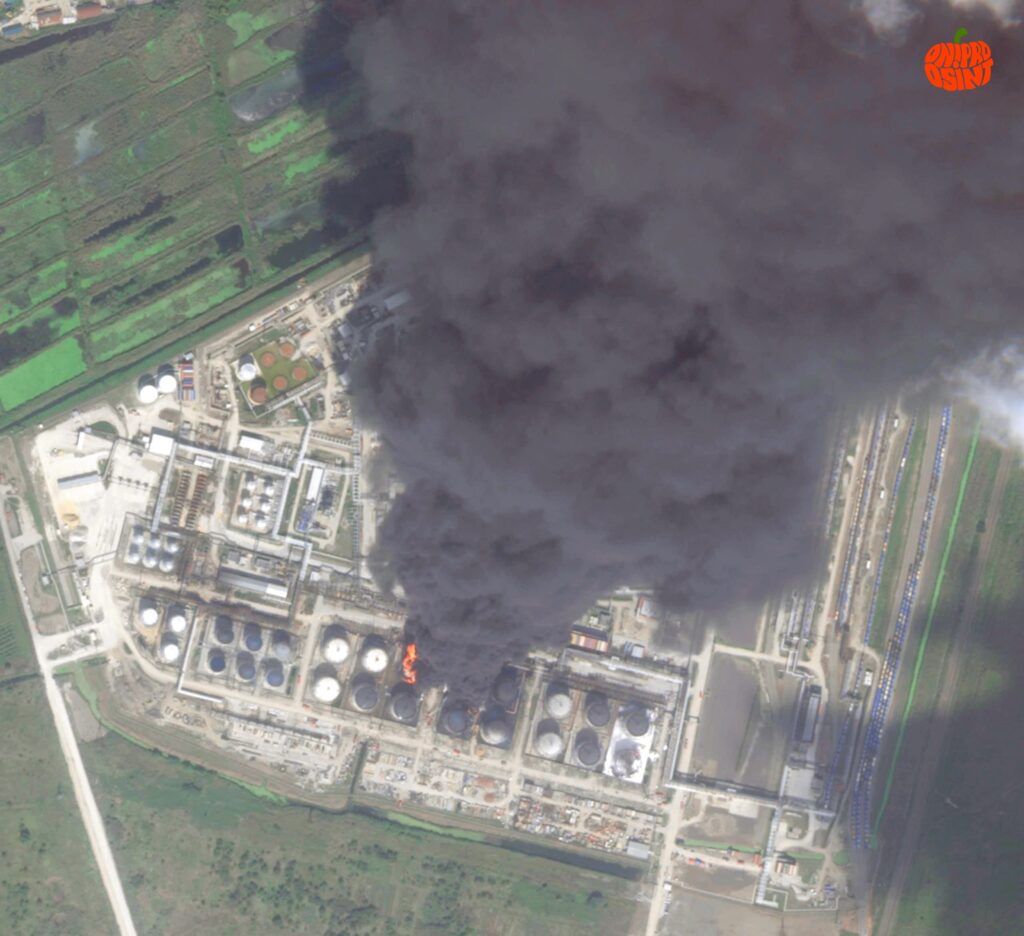
Satellite imagery of the Slavyansk oil refinery after a nighttime UAV attack on 13 September. Part of the refinery is obscured by thick smoke from a fire in the tank farm, Krasnodar Krai, Russia. Photo: Dnipro Osint

Ukrainian drones have helped push Russia into its worst fuel crisis since the Soviet Union fell, The Washington Post (WaPo) reported on 11 October.

Diesel is where this war reaches American drivers. US President Donald Trump blames rising diesel prices mostly on Russia’s war in Ukraine, while experts blame mainly the US war with Iran. Some of his allies now accuse Kyiv of trying to sway the US midterms.

Drones go for the first stage of refining

The Washington Post looked at dozens of strikes between 1 April and 31 August. Three refinery experts then examined satellite images of 54 strikes with visible damage. In over half, the damage seems to be to the desalting and distillation units, known by the Russian acronym ELOU-AVT. These units clean the crude of water and salt, then split it into separate compounds, the first steps toward gasoline and diesel. More than a third appear to have hit secondary units, which turn those compounds into jet fuel, gasoline, and liquefied petroleum gas.

From April through August, drones struck two-thirds or more of the 36 big Russian refineries that S&P Global Energy tracks, a strike every third day. Some took as many as five hits. On 16 June, drones set the Moscow refinery’s distillation towers on fire. That strike and a second one days later kept the plant offline into September, WaPo reported, citing data firm Kpler. Ukraine targeted the refinery again on 20 September.

The White House in Washington DC, USA. Illustrative image: Wikimedia Commons.
Explore further

Trump’s Russian diesel deal, which drew fury in Ukraine, is unlikely to lower prices, experts say

“We don’t need to hit the entire plant,” a Ukrainian drone battalion commander with the call sign Tango told The Washington Post. Ukraine knows where to strike so that a refinery stops and stays down, he said. His unit, Ukraine’s 1st Separate Center of Unmanned Systems, runs long-range strikes deep inside Russia.

Sanctions slow the repairs

The EU banned exports of oil-refining equipment to Russia the day after the 2022 invasion, and the US followed days later. WaPo reported that the bans cover the distillation and secondary processing units Ukraine keeps hitting. The bans make spare parts hard to get, Alexander Kolyandr of Eurasia Group told the paper, and the strikes come faster than repairs.

Since last year, Ukraine has doubled the size of each wave, decoys included, a person involved in the strike campaign told WaPo. The decoys are unarmed and draw Russian fire, wasting air-defense ammunition, WaPo explained. Without them, the person said, Ukraine would simply lose expensive systems. András Rácz of the German Council on Foreign Relations told WaPo that even if only 2–3% of drones get through, the damage is significant.

  •  

Drone attack forces Yandex to shut down its data center on the grounds of a sanctioned Russian machine-tool plant

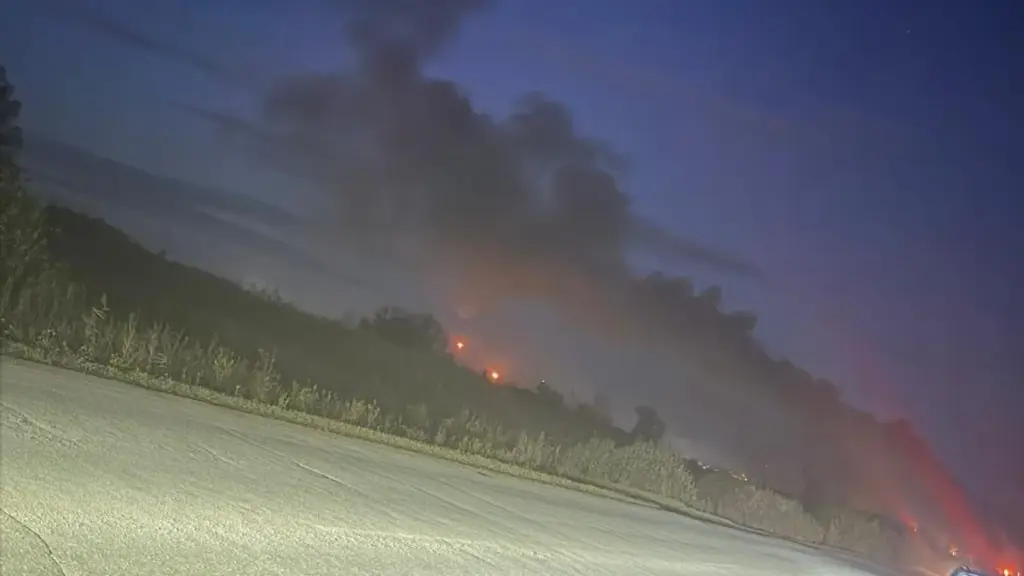
Smoke over Salavat following an attack on the night of October 8.

A drone attack overnight on 8 October caused a fire that hit part of Yandex's data center in Sasovo, Ryazan Oblast, about 580 km from Ukraine, and the site is fully stopped, the Russian tech company told Russian media. The data center sits on the grounds of Sasta, a sanctioned machine-tool plant, Russian outlet Astra said, citing Wikimapia data. Astra's OSINT analyst found from eyewitness footage that the fire hit the plant.

Since late September, Russia has been striking data centers in Kyiv that keep Ukraine's internet and online services running. Now a drone attack has stopped one of the data centers that Russia's largest tech company relies on.

Fires reported at a refinery in Salavat and a machine-tool plant in Sasovo after overnight attacks on 8 October 2026.
Fires reported at a refinery in Salavat and a machine-tool plant in Sasovo after overnight attacks on 8 October 2026. Map: Euromaidan Press

Yandex counts the damage

Yandex warned that some services may be unavailable, while its core services kept running and no one was hurt. Ryazan Oblast Governor Pavel Malkov claimed two drones were downed, a roof caught fire at an enterprise in the Sasovo district, and windows were blown out in several homes.

The power failure took down a wide range of Yandex Cloud infrastructure, including computing capacity, networks, data storage, databases, Kubernetes, cloud services, AI, and security and monitoring systems, Ukrainian outlet ZN.ua reported, citing Exilenova+.

Ukrainian monitoring channel Exilenova+ reported that the plant was hit, without naming an attacker. The channel said Sasta, which claims a place on Russia's register of defense-industry companies, makes computer-controlled machine tools, including five-axis machining centers, and previously supplied the Tactical Missiles Corporation (KTRV) and Roscosmos. The plant's value to the arms industry lies in machines that cut precision parts, not in finished weapons, the channel said.

Citing Exilenova+, Militarnyi reported that Ukraine's Defense Forces hit the plant. It also linked Sasta to Iskander missile supply chains. No source has said whether the plant or the data center was the target, and no Ukrainian official has claimed the Sasovo strike. Sasta has been under US sanctions since November 2023, UK sanctions since February 2024, and Ukrainian sanctions since April 2025, a sanctions database shows.

Salavat: Kyiv reports a hit

Ukrainian forces hit the Gazprom Neftekhim Salavat complex in Bashkortostan, about 1,380 km from the front line, causing a fire, Ukraine's General Staff said. It said the complex processes up to 10 million metric tons of hydrocarbons a year and serves Russia's armed forces. Its key unit, the ELOU-AVT-6 primary oil refining unit launched in 2012, can process 6 million metric tons a year, Militarnyi reported. Astra's analyst placed the fire a few kilometers outside Salavat, possibly near the refinery.

Salavat oil refinery moment of attack pic.twitter.com/bUxuRshSK1

— Exilenova+ (@Exilenova_plus) October 8, 2026

Salavat Mayor Marat Zagidullin claimed that debris from several drones fell in the industrial zone that morning and started a fire.

"The enterprise continues to work," he said.

Astra noted earlier hits on the complex on 24 September 2025, on 14 July 2026, when refining fully stopped, and on 13 August 2026.

Russia's strikes on Ukraine's data centers

Russia has repeatedly hit data centers in Kyiv since 23 September. Strikes hit the COSMONOVA data center twice, the second time knocking it out, and the Parkovyi data center stopped working completely on 1 October after a series of strikes. In early October, Russia destroyed the dline.ua data center in Kyiv.

  •  

Drones hit Russia’s Volgograd and Samara overnight—fires near a Lukoil refinery, a chemical plant, and likely Europe’s largest oil tank farm in Samara

drones hit russia's volgograd samara overnight—fires near lukoil refinery chemical plant likely europe's largest oil tank farm · post fire area kaustik russia 2 2026 пожежа ймовірно в районі волгоградського

Drones attacked Russia's Volgograd and Samara oblasts overnight on 2 October, sparking fires near an oil refinery, a chemical plant, and likely a major oil-transport hub, Ukrainian and Russian monitoring channels reported. Regional officials acknowledged the attack but not the fires, and the extent of any damage remains unconfirmed.

Explosions and a glow over Volgograd's refinery district

Explosions sounded for a long time in Volgograd itself and around the refinery's industrial zone, Ukrainian Telegram channel Exilenova+ wrote.

Residents reported drones flying over and blasts "in all districts of the city," and complained that no air raid alert sounded, Russian news Telegram channel Astra reported. Its OSINT analysis of eyewitness footage placed the glow near the Lukoil refinery and the neighboring Kaustik chemical plant, though the available videos do not show which facility caught fire.

Volgograd Oblast Governor Andrei Bocharov claimed a "massive drone attack" on the region's industrial infrastructure. He mentioned a fire in an apartment building and one person hospitalized, but no fires at plants.

Lukoil-Volgogradneftepererabotka is one of Russia's largest refineries. It processes 14.8–15.7 million tons of crude a year, about 5% of Russia's refining, and makes gasoline, diesel, jet fuel, fuel oil, and bitumen, according to Astra.

lukoil’s norsi refinery in kstovo, nizhny novgorod oblast
Explore further

Fifth drone-related NORSI shutdown in under five months leaves all major Lukoil refineries offline

Drones have hit the plant repeatedly. In May 2025, strikes damaged its ELOU-AVT-1 and ELOU-AVT-6 primary processing units. A 29 May 2026 strike halted production at the plant, about 500 km east of the war zone, Ukraine's General Staff said. On 31 July, drones set the refinery ablaze again, and Astra reported the AVT-1 and AVT-6 units stopped.

Kaustik sits in Volgograd's southern Krasnoarmeysky district. It is one of the region's leading plants and makes basic chemicals with dual civilian and military use, Astra wrote. The outlet called that output critical to Russia's military industry. The plant runs chlor-alkali production built on salt electrolysis. It makes hydrochloric acid, plastics, synthetic resins, and industrial gases, according to OSINT-Varta. Such products can serve military industry too, including polymer parts and protective coatings for hardware, Militarnyi noted.

Europe's largest tank farm likely on fire near Samara

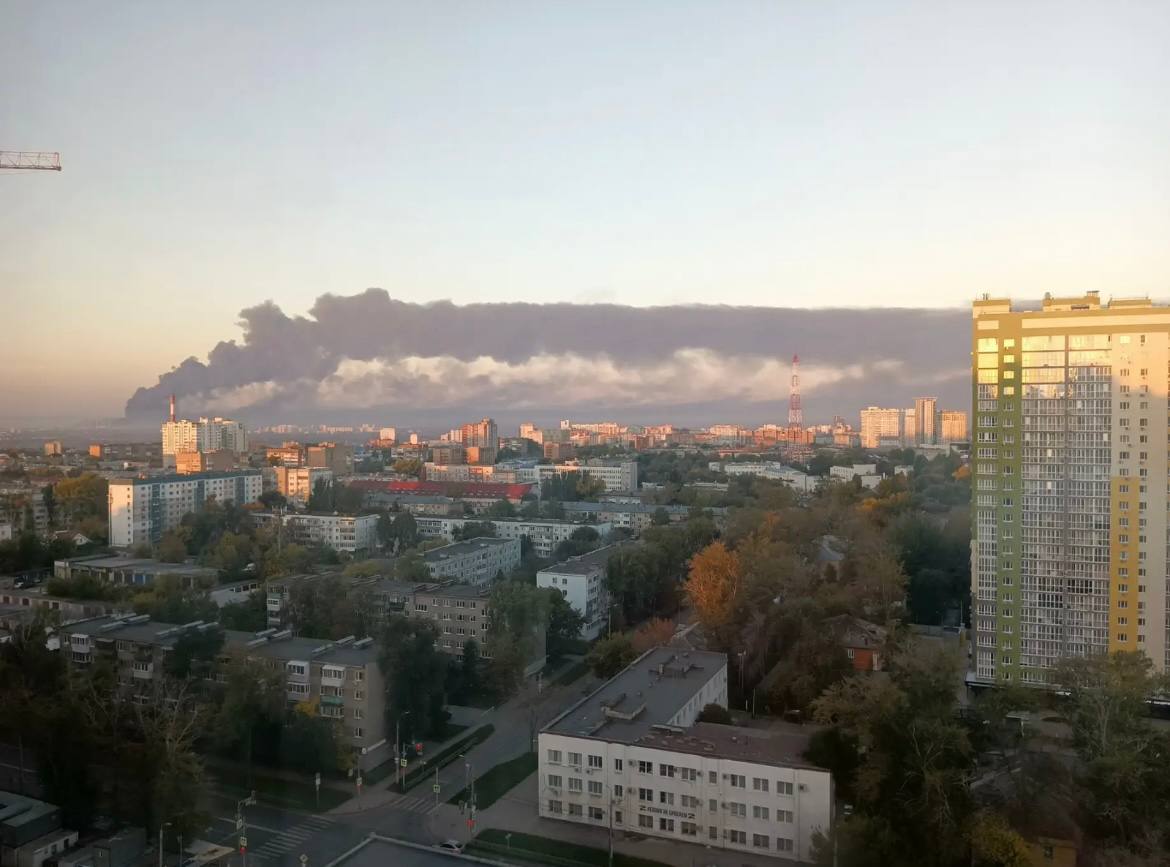
Explosions also rocked Samara, with an especially strong one around 06:30, Astra reported. Its OSINT expert linked reader photos to a fire at the Samara linear production dispatch station in the settlement of Prosvet.

Ukrainian monitoring channel Supernova+ shared video of thick black smoke on the horizon and reported a fire at the station. Exilenova+ reported explosions in Samara followed by a fire.

The station belongs to Transneft, Russia's state pipeline operator. It covers more than 216 hectares and holds 71 tanks with a combined capacity of over 1.6 million m³ of crude. Astra called it Europe's largest tank farm.

Four trunk pipelines converge there, carrying oil from Western Siberia, Tatarstan, Orenburg Oblast, and Kazakhstan. The station blends high- and low-sulfur crude into Urals, Russia's flagship export grade, according to Militarnyi.

Samara authorities did not comment on the fire. Mayor Ivan Noskov stated only that ground public transport was suspended. Samara Oblast Governor Vyacheslav Fedorishchev did not report an attack at all.

The station has been hit before. Operators of the 14th Regiment of Ukraine's Unmanned Systems Forces struck it again overnight on 23 September 2025. On 21 April 2026, drones of the Security Service of Ukraine's Alfa special operations center hit it, reportedly damaging five crude tanks of about 20,000 m³ each.

one refinery night moscow ufa now samara—ukraine working through russia's fuel chain · post smoke plume burning kuibyshev stretching across samara skyline 22 2026 exilenova 5877644049043362820 ukraine news ukrainian reports
Explore further

Ukraine shut down this Samara refinery in June—now its drones are back, and both distillation units are burning again

Ukraine's long-range drones have already pushed Russia's fuel shortages into Central Asia, and Washington has pressed Kyiv to stop, so every hit on processing or export logistics tests how long oil can fund Moscow's war.

  •  

Trump demanded Zelenskyy stop hitting Russian refineries—for the second time in a week

again trump presses zelenskyy stop russian refinery strikes · post ukrainian president volodymyr meets donald ankara türkiye 8 2026 presidentgovua ukraine news reports

US President Donald Trump repeatedly asked Ukrainian President Volodymyr Zelenskyy to stop attacks on Russian oil refineries during a phone call on 20 September, Axios reported, citing a person familiar with the conversation. The two leaders are due to meet in New York today, 22 September, during the UN General Assembly.

For Ukraine, the strikes are a way to disrupt the fuel supply supporting Russia's military. Trump is now linking the attacks to global diesel prices. The International Energy Agency (IEA) said disruptions to Russia's refining system following intensified Ukrainian attacks have compounded diesel supply losses.

Trump backed the strikes two months ago

At a NATO summit on 8 July, speaking alongside Zelenskyy, Trump said Ukrainian strikes on Russian oil refineries could help end the war. "It's an escalation, but it's also an escalation that can help lead to an end," he said. Secretary of State Marco Rubio said Ukraine's ability to strike deep into Russian territory was one of the changes in the war in recent months and said the escalation could create space for negotiations.

On 13 September, Trump called on Zelenskyy to stop the attacks.

"Mr. Zelenskyy has to do one thing: he has to stop knocking out diesel fuel in Russia," Trump said. "There are plenty of other targets. Don't hit diesel fuel. That's hurting the world."

Trump added that the rise in prices was not caused by the Iran conflict. "This isn't done by the Middle East, this is done by what's happening with Russia and Ukraine," he said.

On 20 September, Trump raised the demand again in his call with Zelenskyy. "The word diesel came up many times" during the conversation, a person familiar with the call told Axios.

What is driving diesel prices

US diesel prices had reached $6.06 per gallon by 13 September, up from $3.71 a year earlier. The IEA said in June that global energy markets were contending with their largest supply disruption in history because of the near-closure of the Strait of Hormuz, though it also noted that a US-Iran agreement to reopen the strait had begun easing prices from their April peak. A Bipartisan Policy Center analysis attributed the diesel surge to the Iran conflict and did not address Ukrainian strikes.

Ukraine's refinery campaign has also disrupted Russian fuel production. The General Staff of the Armed Forces of Ukraine said on 4 July that attacks had disabled 42.7% of Russia's oil-refining capacity. Russia's gasoline production fell an estimated 25% year-on-year in the week of 15–21 June, while Moscow has extended its ban on diesel exports through at least September.

Zelenskyy confirms Tuesday meeting

After the call, Zelenskyy said it had been "an important conversation" and that today's meeting "could change a lot." He said there was "diplomatic momentum" and that Ukraine was ready "to take really serious steps." He also said the call covered ideas for de-escalation and fundamental security issues including energy and food security.

Rustem Umerov, head of Ukraine's Foreign Intelligence Service and Kyiv's chief negotiator, told Axios that US envoys Steve Witkoff and Jared Kushner had helped with the peace talks, where the number of stumbling blocks had fallen from "dozens to essentially one or two key issues." Umerov was rebutting a Kyiv Independent report that Kyiv was frustrated with Witkoff, which he called false.

  •  

Russia has warned its cities about every strike for years. During the heaviest raid yet, on election day, it left the sirens silent

Vladimir Putin voted in the presidential election in Russia

Russian authorities left residents in and around Moscow without air raid sirens or phone alerts during Ukraine's largest combined strike on Moscow Oblast, apparently to guard turnout at Russia's parliamentary elections, the Institute for the Study of War (ISW) said. The silence angered residents and even pro-war commentators as a major oil refinery burned.

For most of this war, Russia has handled strikes on its cities as a routine to be announced, warned about, and waited out. Withholding warnings during the heaviest raid yet, in the middle of a national vote, suggests authorities will trade residents' safety for the look of a calm election when a political milestone is on the line.

Sirens stayed off during the biggest raid

Ukraine hit strategic sites across the Moscow area overnight on 19-20 September, the last day of Russia's State Duma vote. Moscow Oblast officials did not switch on air alert sirens or send the SMS warnings they had used during far smaller attacks. They quietly restricted mobile service without major public notice. Ukraine struck oil and logistics targets, not polling stations, according to the experts, and authorities appeared to place high turnout above protecting civilians.

Moscow Oblast residents complained that no alert reached them, some posting on the Telegram channel of regional Governor Andrei Vorobyov before it closed comments. A prominent Kremlin-linked military blogger attacked the official response, saying it erodes public trust and that cutting mobile service does "not really help."

What the drones hit

Ukraine's General Staff reported striking the Gazpromneft-Moscow Oil Refinery in the city's Kapotnya district, one of Russia's largest plants, causing a large fire. Ukrainian manufacturer Fire Point said its FP-1 drones completely shut down the refinery, with all primary processing units damaged.

Governor Andrei Vorobyov claimed air defenses countered 249 drones across 17 municipal districts. The strike was part of Ukraine's widening campaign against the fuel sector funding Russia's war, with about a fifth of Russian refining capacity offline.

  •  
❌