Vue lecture

Dolly Parton was the polar opposite of our bullying president | Robert Reich

Terrified of being seen as a loser, Donald Trump is nonsensically lashing out – even against our old friend Canada

I’m still grieving Dolly Parton. I never met her and always wanted to. She was almost exactly my age and my height and had values I deeply admired. Her death leaves a hole in the firmament.

Which brings me to the person whose values are as far from Dolly Parton’s as any human could possibly be and still claim to be human. I’m referring, of course, to the current occupant of the Oval Office.

Continue reading...

© Photograph: Brandon Bell/Getty Images

© Photograph: Brandon Bell/Getty Images

© Photograph: Brandon Bell/Getty Images

  •  

Le Québec se retrouve au cœur de la guerre commerciale 

Mark Carney avait expliqué la semaine dernière que plusieurs raisons l’avaient poussé à suspendre les négociations commerciales avec les États-Unis. 

Parmi ces raisons, Carney a cité la volonté de Washington d’exempter les entreprises américaines des règles sur l’étiquetage bilingue et l’affichage en français.

Donald Trump et plusieurs membres de son gouvernement ont soutenu depuis qu’ils n’avaient jamais fait une telle demande. 

Howard Lutnick, ministre américain du commerce, a même laissé entendre hier que le gouvernement canadien aurait suspendu les négociations pour nuire au Parti québécois et à son projet d’indépendance, à l’approche des élections québécoises. 

[L'article Le Québec se retrouve au cœur de la guerre commerciale  a d'abord été publié dans InfoBref.]

  •  

How Mark Carney’s speeches have become political earthquakes | Ted Widmer

The quiet-spoken Canadian prime minister has spoken unutterable truths

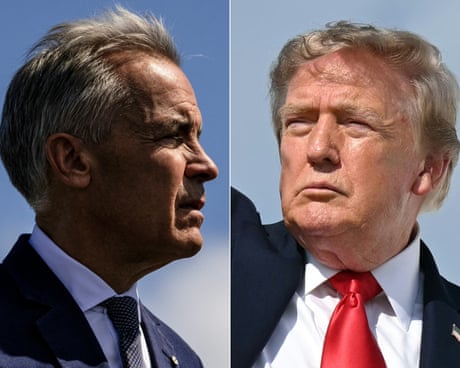
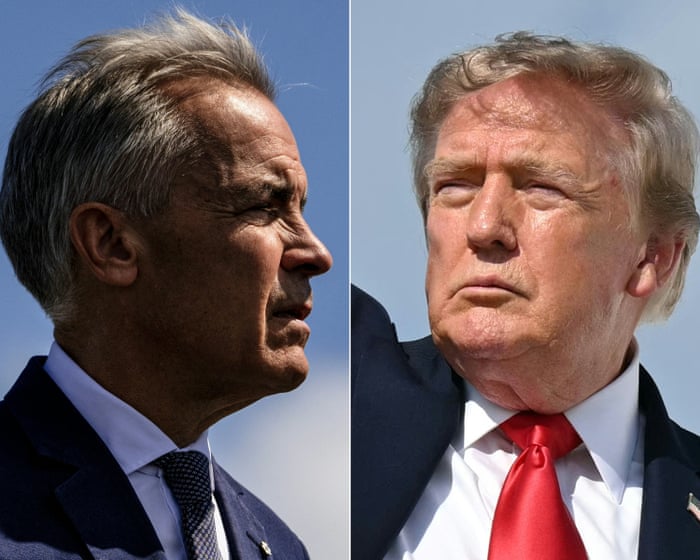
Is it perhaps a sign of the times that Mark Carney, the prime minister of Canada, has become a thrilling orator? A sober banker, he speaks calmly, without many vocal inflections. We expect Canadians to be somewhat flat; even a little boring, and yet Carney has already delivered two remarkable speeches in 2026, and the year is far from over.

The first, at Davos, described a “rupture in the world order”, and “the end of a pleasant fiction”. By that, he meant that the world could no longer depend on the United States to lead the Pax Americana that has largely kept the peace since the end of the second world war.

Continue reading...

© Photograph: Andrej Ivanov,saul Loeb/AFP/Getty Images

© Photograph: Andrej Ivanov,saul Loeb/AFP/Getty Images

© Photograph: Andrej Ivanov,saul Loeb/AFP/Getty Images

  •  

With no friends left to burn, Trump is running out of diplomatic ammunition | Rafael Behr

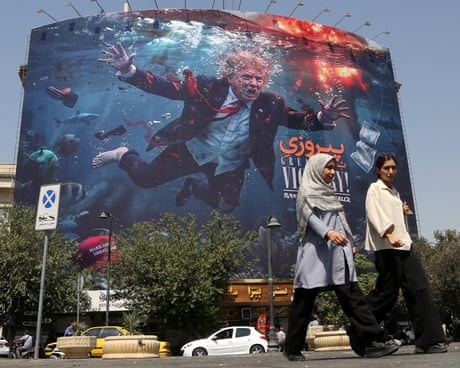
Everyone can see that the Iran war has been a strategic disaster for the US, while a failing president pretends he is winning

Now is the twilight of Donald Trump’s supremacy. The US is still the richest and most heavily armed nation on Earth. That status is secure. The current president, contemptuous of law and indulged in lawlessness by a supine Congress, enjoys even greater power than the constitution allows.

With those advantages it takes a special talent for incompetence to look as thwarted and impotent as Trump does with more than two years of his second term still to run.

Rafael Behr is a Guardian columnist

Continue reading...

© Photograph: Anadolu/Getty Images

© Photograph: Anadolu/Getty Images

© Photograph: Anadolu/Getty Images

  •  

Riposte canadienne aux tarifs douaniers américains – voici l’essentiel 

Le gouvernement fédéral a présenté des mesures en représailles aux droits de douane américains entrés en vigueur samedi dernier. 

À compter du 8 septembre, le Canada imposera des taxes à l’importation de 15%, 25% ou 50% sur environ 700 produits américains.

Secteurs les plus touchés 

  • acier
  • produits laitiers
  • électroménagers
  • matériel agricole
  • pâtes et papiers 
  • électronique

Ces contres-tarifs ne visent que des produits frappés par des tarifs américains. 

Ils s’appliqueront à presque 28 milliards $ d’exportations annuelles des États-Unis vers le Canada.

  • C’est un montant équivalent à celui des exportations canadiennes vers les États-Unis visées par les nouveaux tarifs américains. 

Réponse américaine à la riposte canadienne 

Donald Trump avait dès lundi, avant qu’on connaisse le détail des contre-tarifs, menacé de porter à 50% en janvier prochain les tarifs américains sur les voitures, les camions, les pièces automobiles et l’acier canadiens.

[L'article Riposte canadienne aux tarifs douaniers américains – voici l’essentiel  a d'abord été publié dans InfoBref.]

  •  

The Guardian view on Trump’s economic threats: bullies can overplay their hand | Editorial

Par : Editorial

Tariffs on Canada, threats against Iran’s partners and bond market intervention show a president weaponising US power while making Americans poorer at home

Three moves in the last week have exposed the limits of Donald Trump’s economic bullying. The US slapped 50% tariffs on another $20bn of Canadian goods – then threatened the same rate on the cars, trucks, parts and steel that America Inc depends on. On Monday, the Treasury secretary, Scott Bessent, menaced Iran’s trading partners with exclusion from the US financial network, hoping that coercion can deliver what months of war have not. And as the costs of war, tariffs and pro-billionaire tax cuts helped send US bond yields higher, the Treasury stepped in to tame long-term rates. These are not contradictory policies but a gamble: that US economic power can be repeatedly weaponised without reducing others’ willingness to depend on it.

The Trump administration’s “D-day” sanctions are potentially the most consequential because they expose the scaffolding of American financial power. While markets shrugged off the immediate threat, that calculation might change were the US to target a major Chinese refinery or bank. Such an escalation could spark a trade war with Beijing. The US has leverage. But China has pressure points – especially farmers in Republican states – that make using it costly. In the long run, there is a price to pay. Nations hold one another’s currencies partly because they trust the political relationship. Mr Trump is testing what happens when they don’t.

Continue reading...

© Photograph: Will Oliver/UPI/Shutterstock

© Photograph: Will Oliver/UPI/Shutterstock

© Photograph: Will Oliver/UPI/Shutterstock

  •  

Le gouvernement fédéral commande ses brise-glaces au Québec

Mark Carney a annoncé que le gouvernement fédéral avait confié à Chantier Davie, à Lévis, dans Chaudière-Appalaches, la construction de six brise-glaces.

Le gouvernement veut remplacer les brise-glaces vieillissants de la Garde côtière canadienne. 

Ces imposants navires:

  • ouvrent les voies commerciales maritimes;
  • répondent aux appels de bateaux en détresse.

Les nouveaux brise-glaces seront construits à partir d’acier et d’autres matériaux canadiens.

Selon Ottawa, le premier sera prêt dans 5 ans et l’ensemble de la flotte, avant 2038.

Le montant total du contrat s’élève à plus de 11 milliards $. 

[L'article Le gouvernement fédéral commande ses brise-glaces au Québec a d'abord été publié dans InfoBref.]

  •  

La guerre commerciale reprend entre le Canada et les États-Unis

Mark Carney a suspendu vendredi soir les négociations commerciales avec les États-Unis.

Il a expliqué que des modifications demandées par Washington étaient «inéquitables, non rentables et remettaient en cause la fiabilité de tout accord».

Selon Carney, les négociateurs américains voulaient: 

  • restreindre les ententes commerciales que le Canada pourrait conclure avec d’autres pays; 
  • maintenir des droits de douane trop élevés sur le secteur automobile; 
  • exempter les entreprises américaines de l’obligation d’afficher et d’étiqueter leurs produits en français.

Le premier ministre fédéral a résumé samedi: «quand vous êtes attaqués, c’est que vous êtes en guerre», avant d’affirmer: «nous avons été attaqués».

[L'article La guerre commerciale reprend entre le Canada et les États-Unis a d'abord été publié dans InfoBref.]

  •  

Washington a finalement imposé ses droits de douane de 50%, Ottawa va riposter

Le gouvernement américain applique depuis samedi des tarifs douaniers de 50% sur de nombreux produits canadiens:

  • les produits laitiers
  • les alcools 
  • des matériaux de construction
  • d’autres produits très variés, dont des appareils électroniques, des meubles et des bâtons de hockey

Ces tarifs affecteraient 5% des exportations canadiennes aux États-Unis.

  • La proportion est de 9% pour les exportations venant du Québec.

Le gouvernement canadien a l’intention d’imposer le 8 septembre des droits de douane d’un montant total équivalent, «au dollar près», sur les exportations américaines vers le Canada.

Ces contre-tarifs viseraient notamment les produits laitiers, l’acier et les appareils électroniques. 

[L'article Washington a finalement imposé ses droits de douane de 50%, Ottawa va riposter a d'abord été publié dans InfoBref.]

  •  

Que sait-on sur le futur accord commercial Canada–États-Unis? 

À la suite du report de l’instauration de nouveaux droits de douane américains, le gouvernement fédéral a confirmé hier qu’il finalisait un accord avec Washington.  

Mark Carney s’est toutefois contenté d’évoquer des «progrès substantiels», en soulignant qu’«il reste encore du travail important à accomplir».

Aucun des deux gouvernements n’a dévoilé le contenu de l’accord qui serait en cours de finalisation. Seules indications:

  • Dominic LeBlanc, ministre responsable du commerce Canada–États-Unis, a indiqué que le système de gestion de l’offre resterait intact.
  • Tim Houston, premier ministre de la Nouvelle-Écosse, a dit que Carney avait demandé aux provinces de remettre en vente l’alcool américain.

[L'article Que sait-on sur le futur accord commercial Canada–États-Unis?  a d'abord été publié dans InfoBref.]

  •  

Donald Trump a annoncé une entente de principe avec le Canada sur les tarifs douaniers

Dans une publication sociale en fin de soirée mardi, le président américain a indiqué qu’il reportait de trois jours l’instauration de nouveaux droits de douane américains sur de nombreux produits canadiens.

Ces tarifs douaniers, de 50%, avaient été annoncés le mois dernier et devaient entrer en vigueur aujourd’hui.

D’intenses négociations commerciales entre le Canada et les États-Unis ont eu lieu ces derniers jours.

Trump a justifié le report de l’entrée en vigueur par le fait que les deux pays seraient parvenus à une entente, qui resterait cependant à finaliser par écrit.

[L'article Donald Trump a annoncé une entente de principe avec le Canada sur les tarifs douaniers a d'abord été publié dans InfoBref.]

  •  

Churchill Falls: Québec et Terre-Neuve-et-Labrador vont faire une annonce cet après-midi 

Christine Fréchette est à Saint-Jean, la capitale de Terre-Neuve-et-Labrador, avec Mark Carney.

Ils s’apprêtent à présenter, aux côtés du premier ministre terre-neuvien, un deuxième contrat d’approvisionnement d’Hydro-Québec à partir de la centrale de Churchill Falls, au Labrador, pour remplacer le contrat actuel en vigueur depuis 1969.

En 2024, après 4 ans de négociations, les gouvernements du Québec et de Terre-Neuve avaient signé une entente de principe pour un nouveau contrat qui devait aller jusqu’en 2075.

Mais le gouvernement terre-neuvien avait ensuite demandé de renégocier l’entente.

[L'article Churchill Falls: Québec et Terre-Neuve-et-Labrador vont faire une annonce cet après-midi  a d'abord été publié dans InfoBref.]

  •  

Canada reportedly set to announce new military aid for Ukraine at G7

Canada reportedly set to announce new military aid for Ukraine at G7

Canada's Prime Minister Mark Carney is expected to announce additional support for Ukraine during the G7 summit, CBC News reports on June 16, citing government sources.

Canada, which holds the G7 presidency in 2025, invited President Volodymyr Zelensky to participate in what will be his fourth — and arguably most fragile — G7 Leaders' Summit since the outbreak of the full-scale invasion in 2022. Carney is also expected to hold a one-on-one meeting with the Ukrainian president.

As part of Carney’s pledge to boost defense spending this year, Ottawa has allocated two billion Canadian dollars ($1.46 billion USD) for military aid to Ukraine and the expansion of broader defense partnerships. According to one source, the government is set to disclose on June 20 how much of that funding will be directed specifically to Ukraine and what it will support.

Canada has been a strong ally of Ukraine, providing 19.5 billion Canadian dollars ($13.5 billion) in assistance, including 4.5 billion Canadian dollars ($3.1 billion) in military aid.

Following their bilateral talks, G7 leaders will join outreach countries for discussions on Ukraine’s ongoing fight against Russia.

Meanwhile, European Commission President Ursula von der Leyen and European Council President Antonio Costa urged G7 nations to ramp up pressure on Moscow through tougher sanctions, arguing that it is key to securing a ceasefire in Russia’s war against Ukraine.

"To achieve peaceful strength we must put more pressure on Russia to secure a real ceasefire, to bring Russia to the negotiating table, and to end this war. Sanctions are critical to that end," von der Leyen said at a press briefing on June 15, attended by a Kyiv Independent journalist.

Von der Leyen emphasized that economic sanctions have been effective since the start of Russia’s full-scale invasion. She pointed out that joint G7 and European Union measures have reduced Russian oil and gas revenues by nearly 80% since February 2022.

"(T)he sanctions are working, and we will do more," she said.

  •  
❌