Vue lecture

Sweden says it stopped Russian operation to discredit country and EU. But no one will be prosecuted
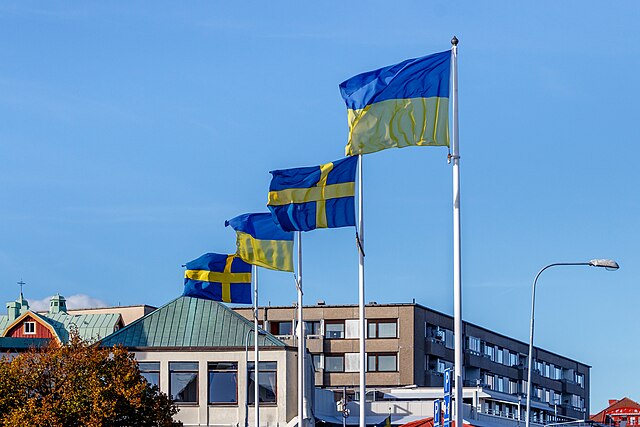
Ukrainian and Swedish flags in strong wind at the south harbor in Lysekil, Sweden.

Sweden says it caught and stopped a Russian spy operation. Säpo Security Service has exposed the intelligence operation aimed at discrediting the country, Sweden Herald reported.

The operation is one strand of Russia's hybrid campaign against Europe. Since the full-scale war in Ukraine, Russia has run espionage, sabotage, and influence operations across European states, from undersea cable damage in the Baltic to disinformation. The Swedish case is one such effort, aimed at undermining Swedish decision-making and discrediting Sweden and the EU.

The agent worked from a diplomatic mission

For the operation, Russian intelligence recruited its source inside a foreign embassy. The agent, recruited at a foreign diplomatic mission in Sweden, gathered information on the decision-making processes of Sweden's central government bodies and the kingdom's relations with other countries.

The goal was influence, not just information. The operation was meant to give Russian intelligence the ability to influence contentious issues, undermine Swedish decision-making, and discredit Sweden and the EU. It is the classic shape of a Russian influence operation: acquire inside knowledge of how a target state decides, then use it to steer or discredit those decisions.

Säpo watched it for a long time

The service said it tracked the operation before shutting it down. Säpo long monitored and documented the operation, recording meetings at which the agent passed information to two officers of Russia's Foreign Intelligence Service (SVR). It knew the tasks the agent was given and the questions he put to his handlers, Christoffer Wedelin, a deputy operations chief, said.

Säpo said it acted to contain the damage.

"Our assessment is that we have prevented the Russian intelligence operation. They have not succeeded in their mission," Wedelin said.

No one can be prosecuted

The case ends without arrests. The agent and the two Russian officers have left Sweden, and because all three hold diplomatic immunity, they cannot be arrested or prosecuted.
  •  

Satellite images show expansion at 5 Russian nuclear sites near Europe

Satellite images show expansion at 5 Russian nuclear sites near Europe

Satellite images reveal that Russia has expanded and modernized at least five nuclear-related facilities near European borders in recent years, Swedish broadcaster SVT reported on June 16, citing new imagery obtained from Planet Labs.

One of the most notable developments is in Kaliningrad, where the suspected nuclear weapons storage site has undergone significant reconstruction.

Images taken in May 2025 show the addition of triple-layered fencing, new buildings, and advanced communications equipment. Polish Foreign Minister Radoslaw Sikorski previously said that up to 100 tactical nuclear warheads might be stored at the site.

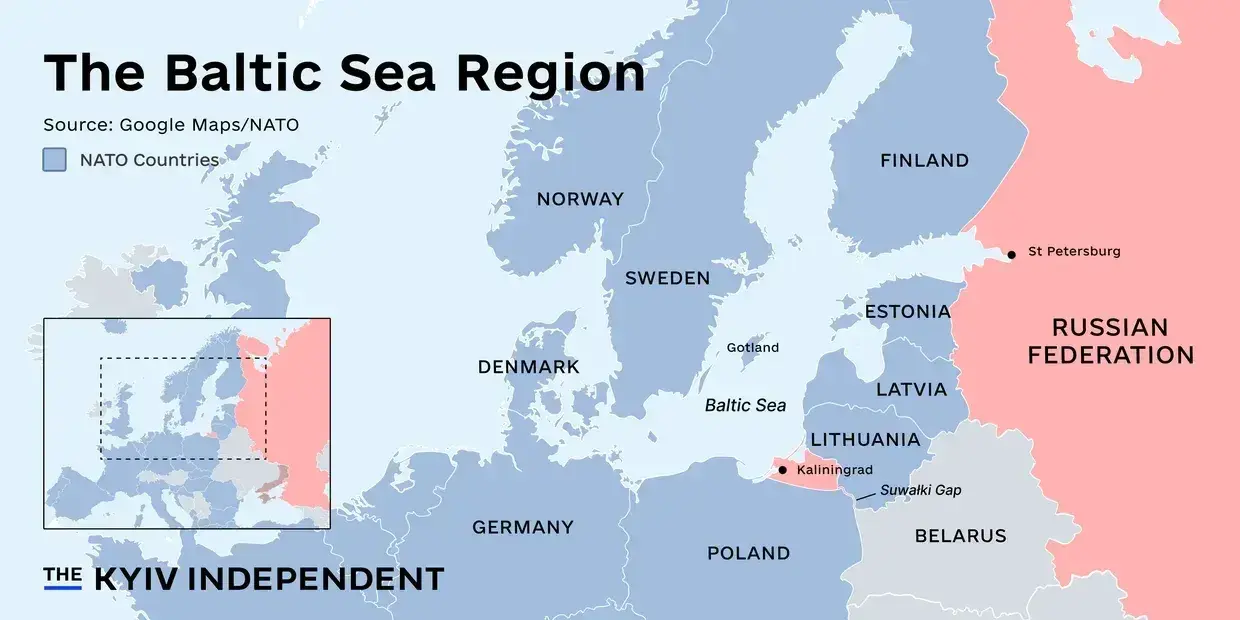
Kaliningrad, a militarized Russian exclave between Poland and Lithuania, is a key concern for NATO because of its advanced missile systems and expanding nuclear infrastructure.

Satellite images show expansion at 5 Russian nuclear sites near Europe
A map of the Baltic Sea Region. (Lisa Kukharska / The Kyiv Independent)

The Osipovichi base in Belarus, a former Soviet nuclear storage facility, is also being renovated. Satellite imagery shows new air defense installations and a modernized loading platform for rail-based logistics.

In Novaya Zemlya, a remote Arctic archipelago long linked to Soviet-era nuclear testing, several new buildings have appeared, reinforcing its role as a potential site for future test activities.

On the Kola Peninsula, near the borders with Finland and Norway, Russia has built about 50 storage bunkers for submarine-launched ballistic missiles and constructed a specialized pier for loading those missiles onto submarines, according to the imagery.

Swedish Defense Minister Pal Jonson responded to the findings, saying Stockholm is "closely monitoring" Russian nuclear capabilities. Sweden officially joined NATO in March 2024 after years of non-alignment, citing escalating Russian threats as a primary reason.

The Kremlin has repeatedly used nuclear threats to pressure Ukraine and Western countries since the start of its full-scale invasion in February 2022.

‘Russians lie about everything’ — Ukraine hits out at Kremlin claims after yet another drone strike on Kyiv
“This is a deliberate tactic of terror,” Tymur Tkachenko, head of the Kyiv City Military Administration, said.
Satellite images show expansion at 5 Russian nuclear sites near EuropeThe Kyiv IndependentTim Zadorozhnyy
Satellite images show expansion at 5 Russian nuclear sites near Europe
  •  
❌