 Connexion
What to Know About Fires Caused by Lightning in the Pacific Northwest
Dozens of fires ignited in Oregon and Washington as more than 14,000 lightning strikes hit the region during thunderstorms this week.

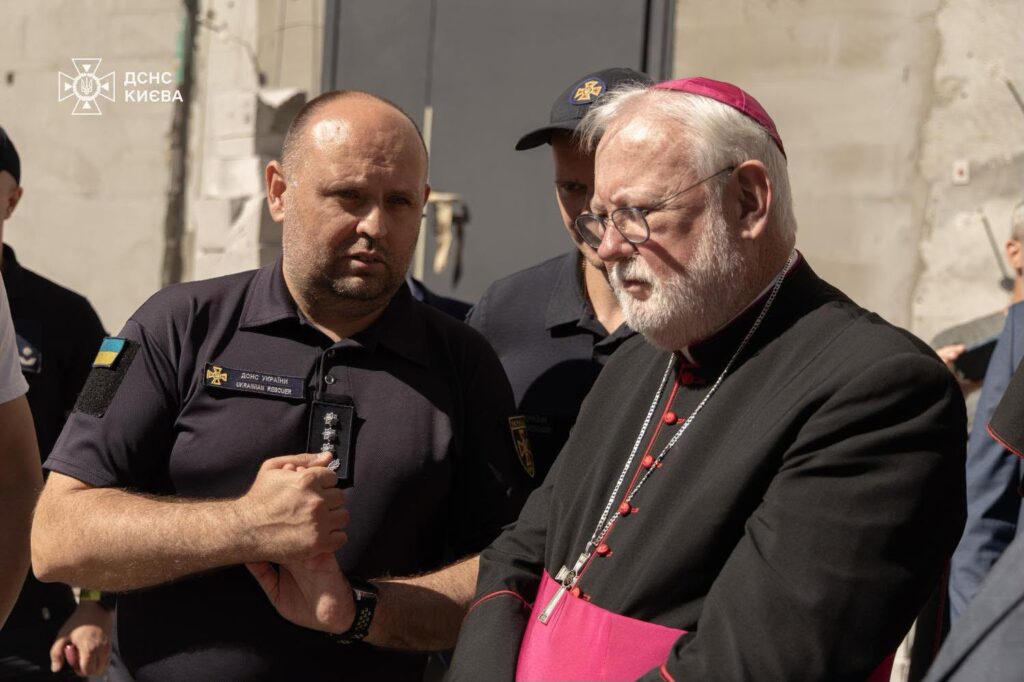
The Vatican's foreign minister stood in the rubble of a Russian strike in Kyiv. Archbishop Paul Richard Gallagher, the Holy See's Secretary for Relations with States and International Organizations, visited the site of a Russian missile strike that destroyed residential buildings and killed civilians, Ukraine's State Emergency Service (SES) said on Facebook.
Ukraine's rescuers work those sites under the threat of the double-tap, which is a Russian tactic of striking a location a second time after emergency crews arrive, which Ukraine's prosecutors have documented repeatedly.
It came days after Cardinal Matteo Zuppi, the pope's peace envoy, met Ukrainian Foreign Minister Andrii Sybiha in Kyiv on 16 July, where Sybiha pressed for a humanitarian corridor to evacuate civilians from Russian-occupied Oleshky, where UN and Human Rights Watch monitors say thousands are trapped without food or medical care.
The SES thanked the Holy See for its humanitarian aid to the Ukrainian people and for its solidarity, and said such visits are important evidence of international attention to the consequences of Russian aggression.
The Holy See's engagement has focused on humanitarian work rather than mediation. Zuppi has run the Vatican's efforts on prisoner exchanges between Ukraine and Russia and on the return of Ukrainian children abducted to Russia, and the Ukrainian Greek Catholic Church has said plainly that the Vatican performs no mediating mission.
Pope Leo XIV, elected in 2025, has taken a sharper line on the war than his predecessor. Meeting Zelenskyy in December 2025, Leo appealed to Russia to make a gesture toward peace and warned that excluding Europe from peace talks on Ukraine was unrealistic.
Zelenskyy has invited him to visit Ukraine, which the pontiff said he hoped to do without committing to a date.

© Jordan Vonderhaar for The New York Times

© Christopher Lee for The New York Times

© Doug Mills/The New York Times

© The New York Times

© Zack Wittman for The New York Times
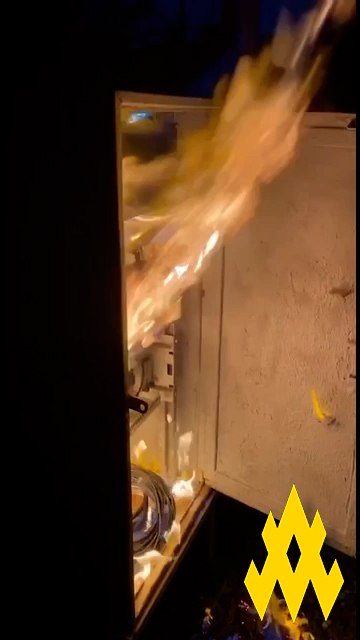
Ukrainian partisan movement ATESH says it burned electronic warfare towers in Russia's Bryansk Oblast, the region Russia uses to launch ballistic missiles at Kyiv. ATESH agents targeted communication and EW nodes in the cities of Fokino and Karachev in a coordinated operation, the group reveals.
Ukrainian Volunteer Army spokesperson Serhii Bratchuk said on Kyiv24 TV that Russia has moved its launchers up to the Bryansk border, reducing flight time to the point that the air raid siren in Kyiv sounds after the first explosions ring out in the capital. Ukraine cannot intercept most of these strikes due to an acute shortage of Patriot missiles.
The past week's Russian ballistic strikes on Kyiv have all come from Bryansk. Russia fired six Iskander-M or S-400 ballistic missiles from Bryansk on the night of 11 July, which all six struck four Kyiv districts and wounded 10 people. The first explosions were heard more than a minute and a half before the air raid siren sounded.
On 8 July, five ballistic missiles hit Kyiv. On the night of 5-6 July, 23 Iskander-M/S-400 ballistic missiles launched from Bryansk, Oryol, and Kursk struck Kyiv, killing at least 16 and injuring 58.
The towers held EW complexes designed to suppress drones and their navigation systems, per ATESH. The claims have not been independently verified.
Fokino is a closed city in Bryansk Oblast about 100 kilometers from the Ukrainian border. Karachev is about 180 kilometers from the border. Both cities are within the zone where Russia has concentrated the ballistic-missile launchers that have been hitting Kyiv.
ATESH said the destruction of the Fokino and Karachev EW towers created a gap in Russian border defense and blinded local air defense, depriving it of the ability to target Ukrainian drones. Without EW cover in the Fokino-Karachev area, a direct tactical corridor opened for Ukrainian drones to strike deeper into the central regions of Russia. The strategic implication runs both ways: the EW towers ATESH burned also protected Russia's ballistic launchers from Ukrainian counterstrikes.
ATESH has hit Bryansk targets before. In October 2025, the group disabled a communications tower responsible for coordinating Russian occupation forces and border units in Bryansk Oblast.
ATESH is a Ukrainian-Crimean Tatar partisan movement founded in September 2022 in response to Russia's full-scale invasion. The group operates in occupied Ukrainian territories and in Russia itself, with members including Crimean Tatars, Ukrainians, and Russians who were mobilized into the Russian army but now work for Ukraine.
ATESH's operational template through 2026 has been consistent: burn EW towers, damage air-defense transformers, and Ukrainian drones exploit the newly created corridor. In March 2026, ATESH burned three EW towers in Novgorod Oblast, opening a route for Ukrainian drones to reach a military aircraft repair plant in Staraya Russa.
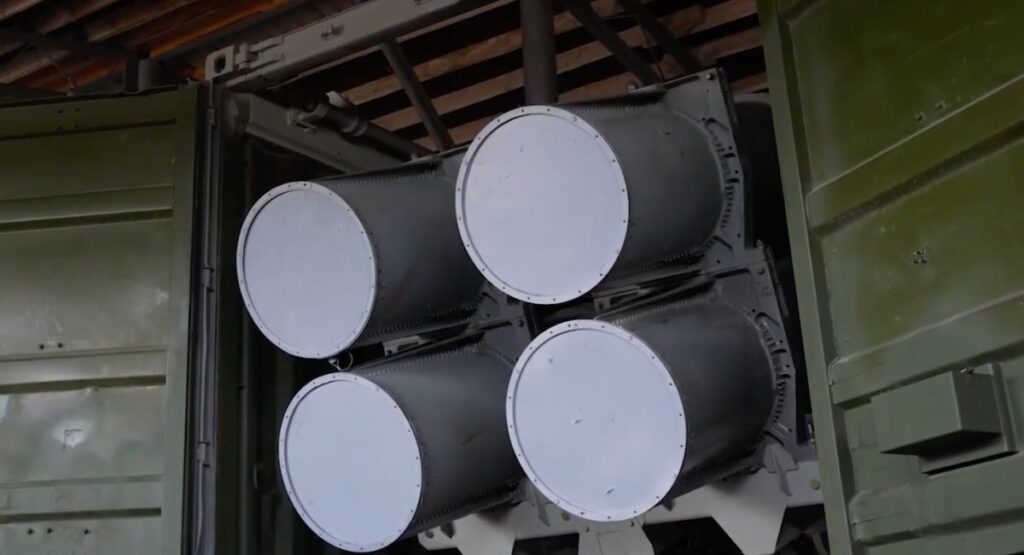
Ukraine showed its Harpoon for the first time on 4 July. The launchers appeared in a video from Zelenskyy's working trip to Odesa Oblast, during which he held a coordination meeting with the Ukrainian Navy Command on missile and drone threats, sea threats, and Ukrainian deep strikes.
The Harpoon has been in service with the Ukrainian Navy since 2022 and has destroyed Russian ships, but its launcher configuration has been classified.
Defense Express experts spotted the launchers in the released footage. In addition to the Harpoon, photos were also released showing the launcher of the Norwegian-made NSM (Naval Strike Missile) anti-ship missile system developed by Kongsberg.
Norwegian NSM deliveries to Ukraine had never been officially announced and were only reported at the media level.
Ukraine's anti-ship inventory has expanded throughout the war. Ukrainian forces used domestic Neptune missiles to sink Russia's cruiser Moskva in April 2022. The US and its allies considered both Harpoon and NSM transfers to Ukraine that same May. The Ukrainian Navy confirmed the combat debut of the Swedish RBS 15 anti-ship missile in April 2026.
Ukraine received a Harpoon variant installed inside a sea container, with four transport-launch canisters. Although Harpoon missiles are not young, Boeing has been modernizing the platform, and in 2025, the company tested an updated Harpoon Block II variant.
The NSM launcher shown in Ukraine has a distinctive Ukrainian paint scheme that does not match any documented source country. Poland was reported in 2023 as a potential source, with Ukraine possibly buying a battery or even a battalion of the NSM Coastal Defense System from Warsaw. But the Ukrainian variant's different painting leaves the actual source unknown.
The system was jointly developed by Kongsberg and Raytheon, with a coastal-launched range of 250 km. Kongsberg has expanded its presence in Ukraine through 2025 and 2026, including NASAMS integration and a planned joint venture for interceptor missile production.
