Vue lecture

EU reportedly eyes riskier investments for frozen Russian assets to boost Ukraine aid
EU reportedly eyes riskier investments for frozen Russian assets to boost Ukraine aid

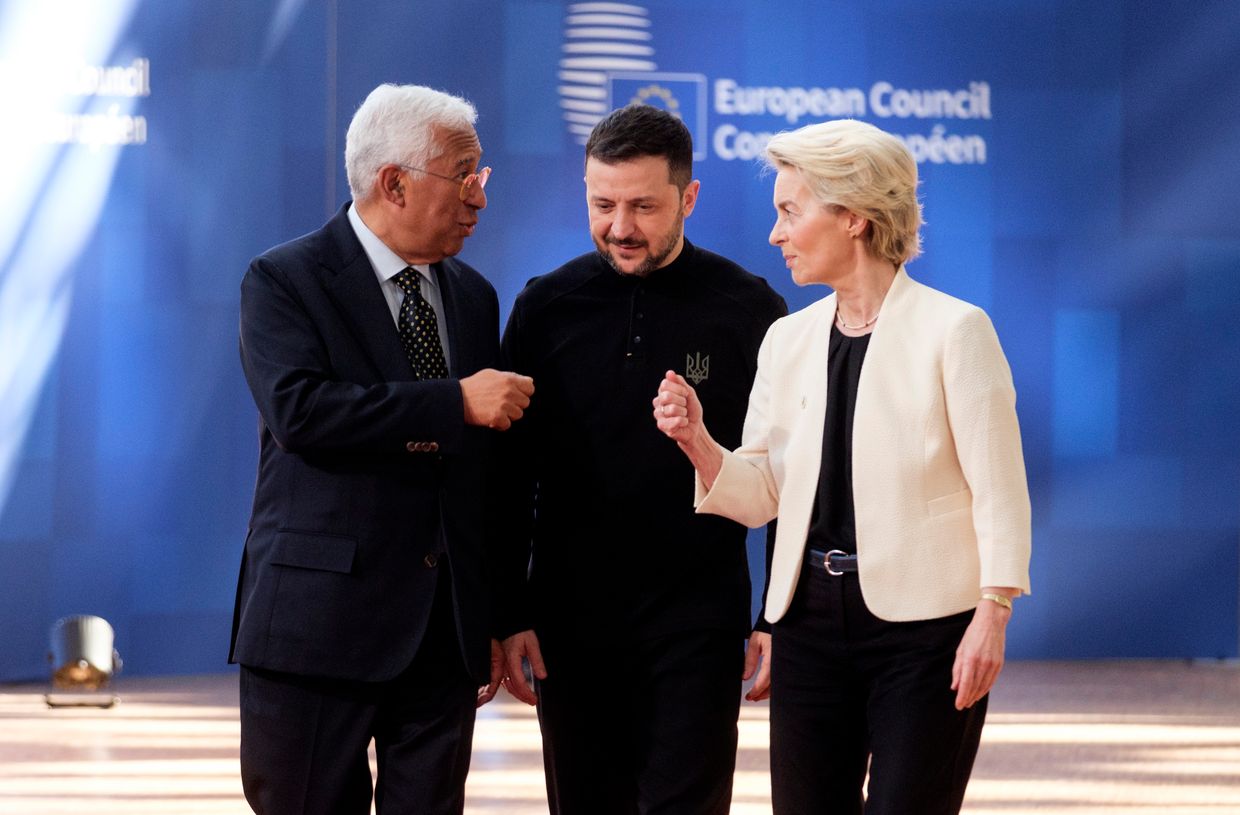
The European Union is developing a plan to generate more revenue for Ukraine by shifting nearly 200 billion euros ($215 billion) in frozen Russian assets into higher-yield, riskier investments, Politico reported on June 19, citing unnamed sources.

The assets, largely held by Belgium-based clearinghouse Euroclear, have been immobilized since 2022 under EU sanctions imposed following Russia's full-scale invasion of Ukraine.

Under the current framework, the funds are invested conservatively with the Belgian central bank, generating low but steady returns. In 2024, this approach yielded around 4 billion euros ($4.3 billion) in windfall profits, which the EU allocated to help service a G7-backed 45-billion-euro loan for Ukraine (around $50 billion).

Now, with that loan largely disbursed and concerns mounting over future financing, especially amid signals from U.S. President Donald Trump that American support could be scaled back, EU officials are under pressure to find new funding streams.

According to Politico, the proposed plan would redirect the frozen Russian assets into a special investment fund under EU control, allowing for higher returns without confiscating the assets — a move designed to sidestep legal and political opposition.

As part of the current G7-led funding framework, Ukraine has already received 7 billion euros ($8 billion) from the EU under the Extraordinary Revenue Acceleration (ERA) initiative, which uses profits from frozen Russian sovereign assets to fund loans.

Prime Minister Denys Shmyhal confirmed on June 13 that a fifth tranche of 1 billion euros ($1.1 billion) had been disbursed to support Ukraine's state budget. The ERA mechanism, part of the broader $50 billion G7 program, aims to ensure stable financing for Kyiv while making Russia shoulder the cost of its aggression.

According to Politico, finance ministers from all 27 EU countries are expected to debate the idea during an informal dinner in Luxembourg on June 19.

Poland, which currently holds the Council of the EU's rotating presidency, emphasized the urgency of the discussions, writing in an invitation letter seen by Politico that "further steps regarding the sanctions regime" and the potential use of frozen Russian assets "must be addressed."

The European Commission has also been holding informal consultations with a group of member states, including France, Germany, Italy, and Estonia, to explore legal options for keeping the Russian assets frozen in case Hungary exercises its veto power during the semiannual sanctions renewal process. So far, no workaround has been finalized.

Hungarian Prime Minister Viktor Orban has repeatedly threatened to block sanctions extensions as a gesture of goodwill toward Moscow, raising concerns the assets could be unfrozen and returned to Russia by default.

By now, much of the EU's 50-billion-euro ($57 billion) Ukraine Facility, agreed in 2023 and intended to last through 2027, has already been spent. The bloc's broader 1.2-trillion-euro ($1.37 billion) budget is stretched thin, and any additional top-ups would also require unanimous support.

Russia just accidentally admitted to its staggering troop losses in Ukraine
A senior Russian official on June 19 inadvertently confirmed the staggering troop losses incurred by Moscow’s forces during its full-scale invasion of Ukraine. In an interview with CNN, Russian Ambassador to the U.K. Andrey Kelin was asked about Moscow’s maximalist intentions in Ukraine and its ability to recruit enough
EU reportedly eyes riskier investments for frozen Russian assets to boost Ukraine aidThe Kyiv IndependentChris York
EU reportedly eyes riskier investments for frozen Russian assets to boost Ukraine aid
  •  

Germany to supply new Iris-T air defense systems to Ukraine, rules out Taurus missiles

Germany to supply new Iris-T air defense systems to Ukraine, rules out Taurus missiles

Editor's note: This story has been updated to include Germany's announcement to supply Ukraine with $2.2 billion in additional military aid.

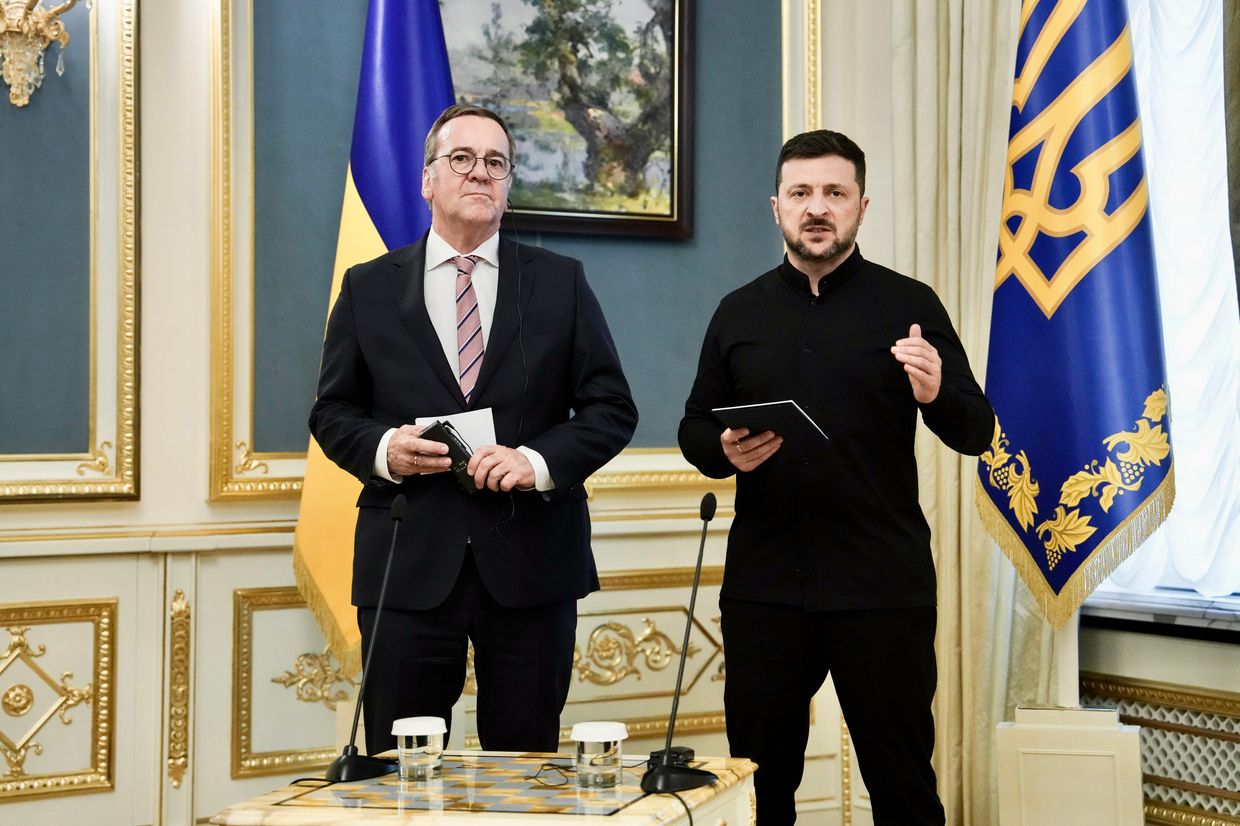
Germany will deliver new IRIS-T air defense systems to Ukraine under a three-year supply plan, President Volodymyr Zelensky said during a joint press conference with German Defense Minister Boris Pistorius, who added Berlin has no plans to provide Taurus long-range missiles.

The announcement comes amid escalating Russian aerial assaults, including a June 10 missile and drone strike on Kyiv, one of the largest since the start of the full-scale invasion.

"We are grateful for the supply of IRIS-T air defense systems," Zelensky said on June 12. "We understand that deliveries are currently being planned... for the next three years. This is very important assistance."

The IRIS-T is a German-made medium-range surface-to-air missile system capable of intercepting drones, aircraft, and cruise missiles.

Pistorius confirmed the delivery timeline but firmly ruled out the possibility of sending Taurus missiles — weapons Kyiv has repeatedly requested to strike deep into Russian territory.

"You asked me whether we are considering this, and my answer is no," Pistorius said.

Before taking office, German Chancellor Friedrich Merz signaled openness to lifting former Chancellor Olaf Scholz's ban on the missiles. That stance has not yet resulted in a policy shift.

Ukraine has already received long-range missiles — including ATACMS from the U.S. and Storm Shadow and SCALP from the U.K. and France. Initially restricted to use within Ukrainian territory, Western allies only began easing those limitations in late 2024.

Germany is Ukraine's largest military donor in Europe. Pistorius said that Berlin will provide 9 billion euros ($10.4 billion) in aid this year, with investments in defense production being considered. The total includes an additional commitment in military aid worth 1.9 billion euros ($2.2 billion).

"Today, we discussed that this aid will continue," he said. "We agreed on additional investments in production... both in Ukraine and in Germany."

Zelensky visited Berlin on May 28 for talks with Merz, part of an ongoing effort to bolster Ukraine's defense industry amid uncertainty over U.S. support under President Donald Trump.

Why can’t the West match Russia’s ammunition production?
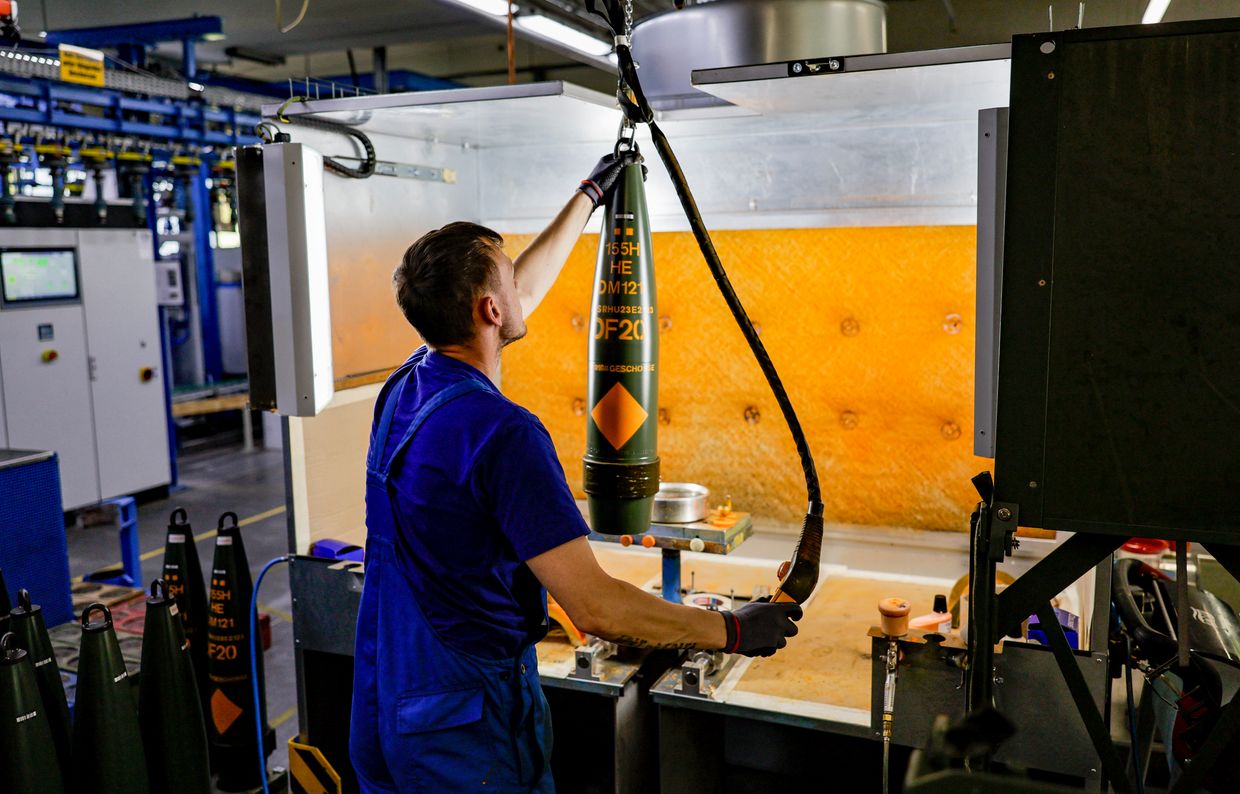
The West is failing to catch up to Russia’s production of the most basic unit of war for the past half-millennium — gunpowder. The modern propellants and explosives that power war have largely been offshored. While Western manufacturers are churning out shell casings, they are short on the materials to fill
Germany to supply new Iris-T air defense systems to Ukraine, rules out Taurus missilesThe Kyiv IndependentKollen Post
Germany to supply new Iris-T air defense systems to Ukraine, rules out Taurus missiles
  •  
❌