Vue lecture

Some ten robot boats. Five hundred Russian air sorties. One very lopsided hunt
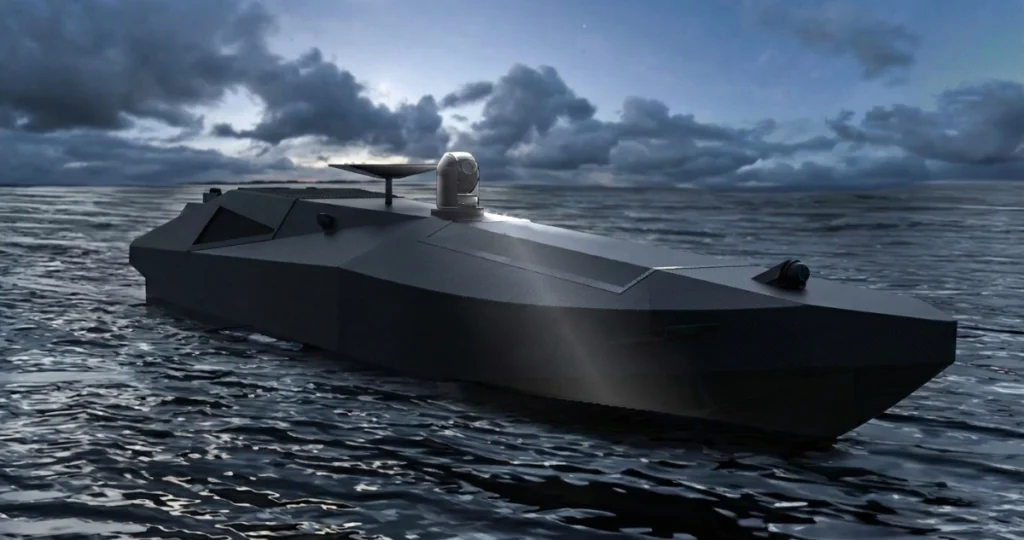
Ukraine's Magura 5 naval drone at sea, a stealthy black unmanned surface vessel equipped with sensors and used by Group 13 to strike Russian Black Sea Fleet ships

Russia flew hundreds of warplane sorties against a small group of Ukrainian sea drones, according to the ArmyInform. The drones belong to Group 13, a Ukrainian military-intelligence unit. The unit is running out of Russian warships to sink and now strikes land targets from the sea, its commander, known by his call sign Thirteenth, said.

Years ago, Russia entered its all-out war against Ukraine with a commanding navy and treated the Black Sea as its own. A country left with almost no warships has since answered with cheap robot boats, turning expendable machines into the tool that now contests that sea.

More than 500 sorties to hunt one small drone group

Group 13 hunts Russian warships with Magura sea drones—uncrewed attack boats. Russia flew more than 500 aircraft sorties against a group of eight to 10 Magura drones at the time, the commander said. Moscow spent more on locating the drones than the unit's entire mission cost, he added. Missions have grown longer, too. What once took a day now takes three, four, or five days.
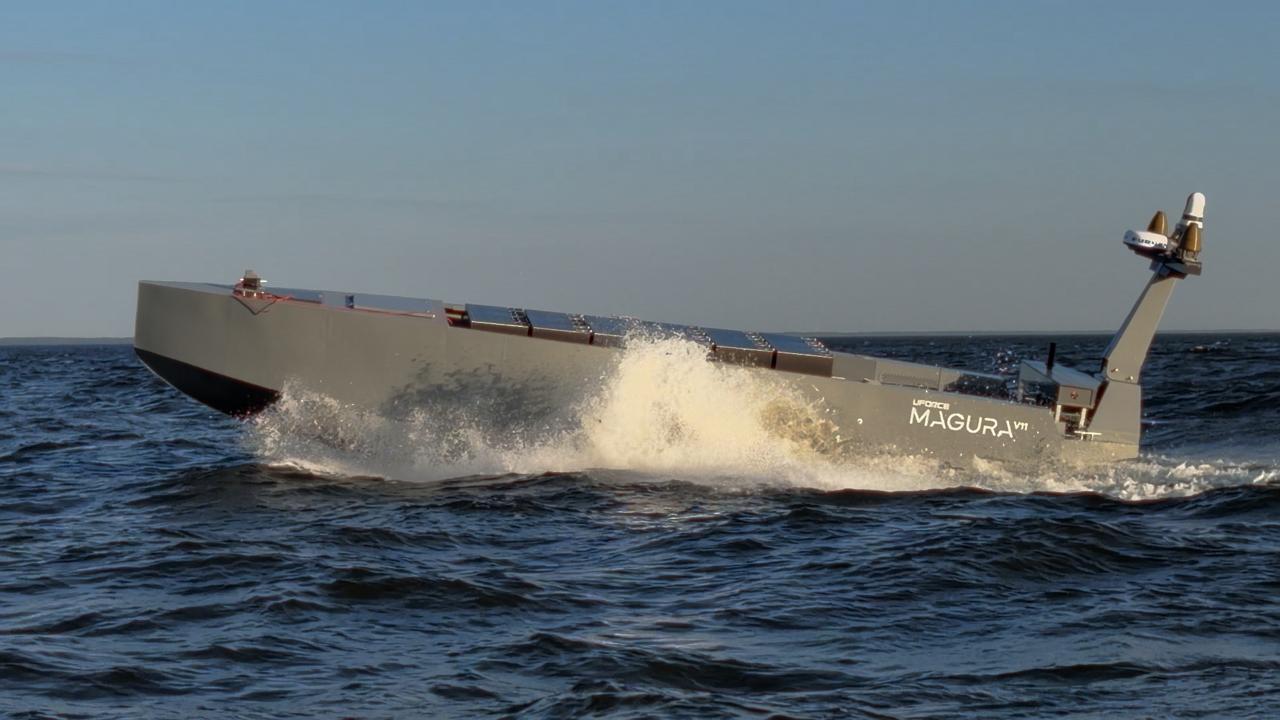
MV11 from the MAGURA family
Explore further

Biggest Magura sea drone doesn’t ram ships. It carries other drones and stays out seven days

The commander split the unit's rise into three stages: victory at sea, an end to Russian air dominance over the water, and now strikes on land from the sea. The bar set in 2023 and 2024 is unrealistic to hold in the Black Sea today, he said, because there are no ship targets left, and what remains is harder to reach. A struck S-400 air-defense system does not pay off like a sunk warship, he added.

The bill for Russia

The damage runs past destroyed hardware. Each Russian sailor killed leaves a family pension to pay and training to write off, the commander said. He pointed to the Syrian Express, Russia's sea supply line to Syria. It once ran a short route and now goes through the Baltic Sea, and the whole bill runs into the millions, he said.

ukraine’s new magura w6p naval drone won’t kamikaze—but can patrol 1000 km militarnyi patrols offering longer range smarter sea reconnaissance reports latest model shifts strike operations focus maritime intelligence gathering
Explore further

Ukraine’s new Magura W6P naval drone won’t kamikaze—but it can patrol 1000 km

The unit's capabilities came together in a strike on the Ivan Khurs, a Russian reconnaissance ship, its first target. The later sinking of the missile boat Ivanovets killed 40 Russian crew in minutes, the commander recalled. He expects the unit to be remembered as revolutionaries, likening its sea drones to the first tanks more than a century ago.
  •  

Biggest Magura sea drone doesn’t ram ships. It carries other drones and stays out seven days

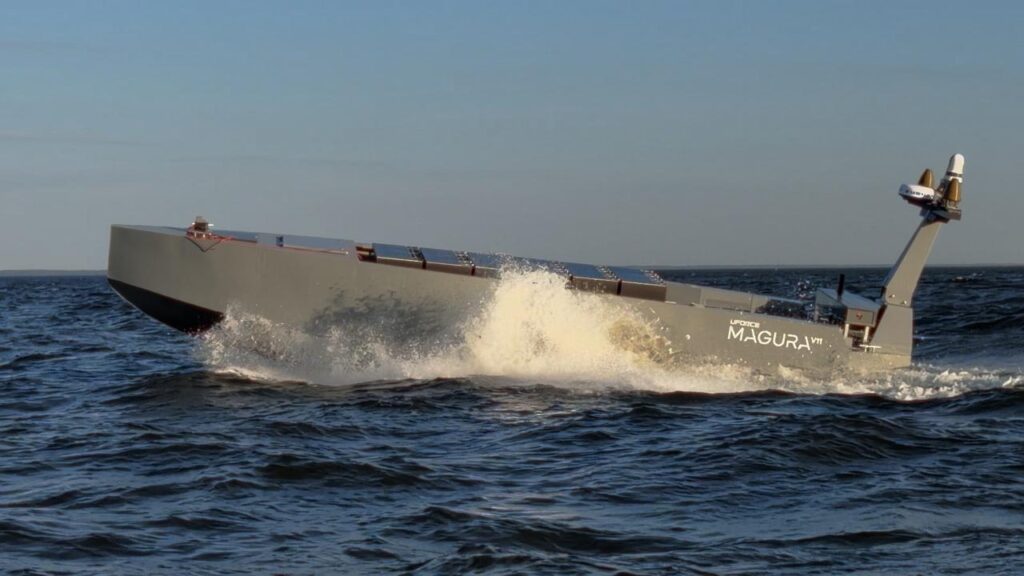
MV11 from the MAGURA family

Ukraine has unveiled the largest robot boat in its Magura sea-drone family, and this one is built to carry and launch other drones instead of ramming enemy ships, the company UFORCE told Militarnyi. UFORCE showed the new V11 during Ukraine's Independence Day drone parade, signaling a move from single-use attack craft toward a floating base at sea.

Ukraine has fought its Black Sea war with throwaway robot boats—cheap, one-way, built to hit a ship and go down with it. Shifting toward reusable platforms that keep other machines running far from any coast marks a different bet.

A floating base, not a battering ram

The V11 is the biggest drone in its class. Earlier, Magura boats were made to hit warships. This one is a transport platform that carries other unmanned systems and gear. Its main feature is the ability to launch a larger number of unmanned systems straight from its deck, turning one boat into a mobile base for them. The company refers to the drone as both the V11 and the MV11.

australia spending billions drones — ukraine says can make money count new ukrainian maritime magura v7 (left) older v5 2025 militarnyi has offered share its combat-tested drone technology battlefield expertise
Explore further

American defense company Red Cat announces serial production of copy of Ukraine’s Magura V7 and says it’s their own development

What the V11 can do

UFORCE says the drone carries up to 2,200 kg (about 4,850 pounds) and can stay at sea for up to seven days. The company built it for reconnaissance, surveillance, support of landing operations, and resupplying fuel and equipment to other naval drones.

"It is a platform that provides multi-domain capability: one carrier that carries and launches other unmanned systems far from shore for operations across all domains," said Oleh Rogynskyy, CEO of UFORCE.

He said the investment the company attracts works for Ukraine's Defense Forces.

From strikes to a US production line

UFORCE's design and engineering office in Portugal developed the V11, drawing on international investment and aiming at the needs of Ukraine's Defense Forces. Its work there was first reported in September 2025.

meet magura w6 ukraine's latest threat russian warships drone funded pumb bank being presented hur 2025 5398010383781982294 ukrainian military intelligence has received new-generation maritime part its continued efforts challenge naval
Explore further

Meet the Magura W6: Ukraine’s latest threat to Russian warships

In July, the company and the US firm ReconCraft signed a memorandum for the licensed production of Magura naval drones in the US. Ukraine's Magura boats have forced Russia's Black Sea Fleet back to safer ports, and some versions have even shot down Russian fighter jets.

  •  

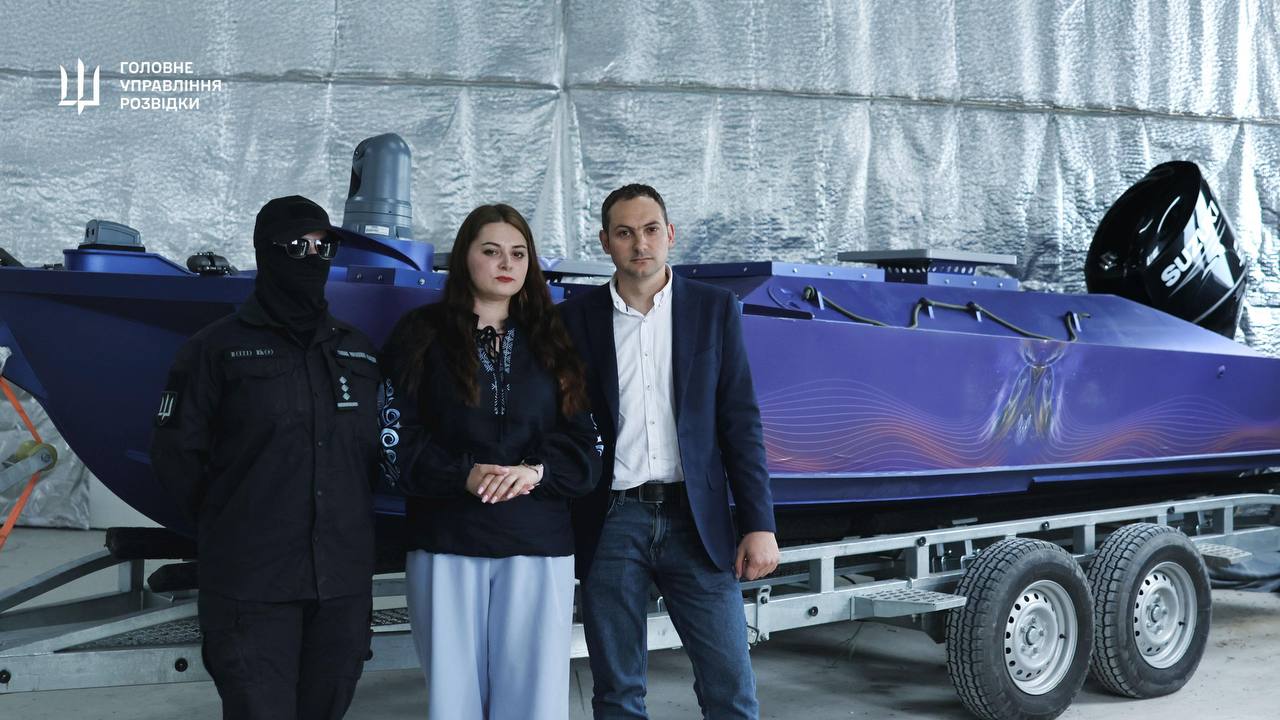
Russia cannot launch 500 drones every day, Ukraine's intel chief says

Russia cannot launch 500 drones every day, Ukraine's intel chief says

Russia has the capacity to launch as many as 500 Iranian-designed Shahed attack drones at Ukraine in a single attack, but doing so on a daily basis is not possible, Ukraine's military intelligence chief Kyrylo Budanov said on July 2, according to Suspilne.

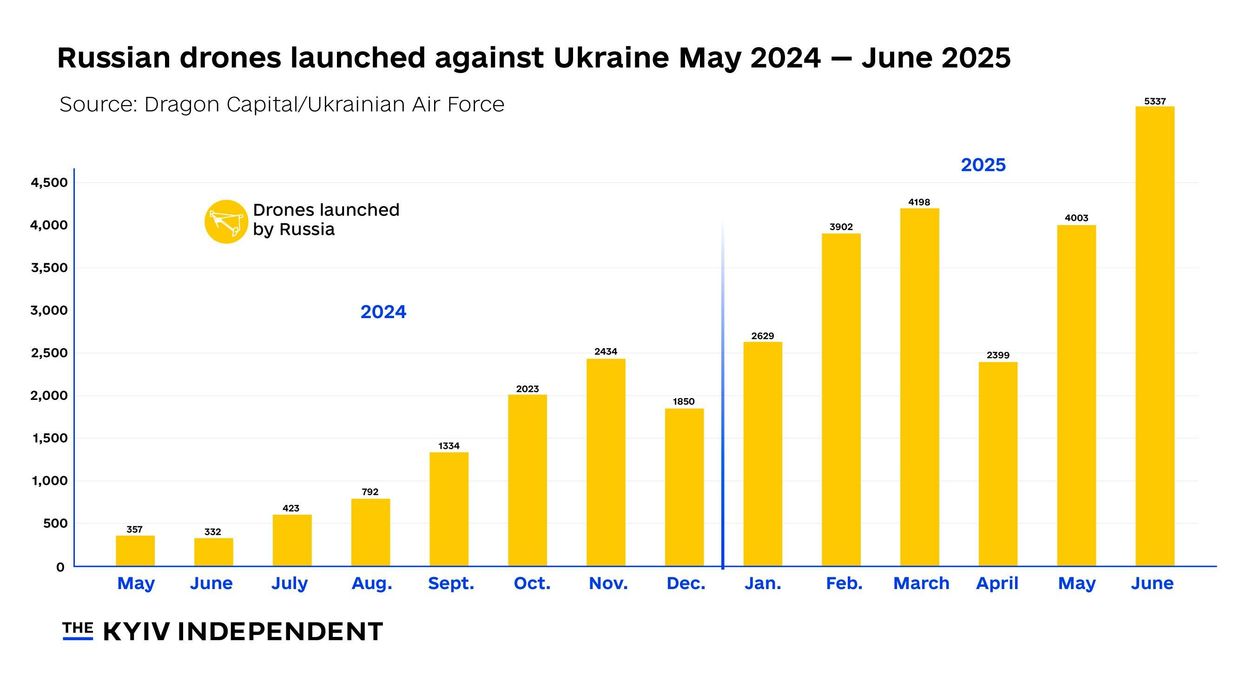
In recent weeks, Russia has intensified its drone assaults on Ukrainian cities, often launching hundreds in a single day. The largest aerial attack since the start of the full-scale invasion occurred overnight on June 29, when Moscow launched 477 drones and 60 missiles across Ukraine.

"Launching 450–500 Shaheds every day — it's just not realistic," said Budanov during a ceremony recognizing five Ukrainian intelligence achievements in the national record book, according to public broadcaster Suspilne.

"But unfortunately, they do have the ability to do it periodically. They can realistically launch up to 500 in one strike," Budanov added.

Budanov also said Russia is upgrading the capabilities of the Shahed-type drones by improving their CRPA (Controlled Reception Pattern Antenna) systems, which protect the drones from GPS jamming. He noted that Russian engineers are now producing 16-channel CRPA antennas, which are harder to counter electronically.

Russia cannot launch 500 drones every day, Ukraine's intel chief says
Russian drones launched against Ukraine by month (Nizar al-Rifai/The Kyiv Independent)

"These antennas are currently produced in Russia, but the engineer who developed this CRPA antenna was here in Ukraine," Budanov said.

"Back in the early 2000s, no one here needed it, so the engineer moved to Russia. One (of the two engineers involved in the development) has already died under unclear circumstances. The other is still alive, though probably not for long."

Russia has used thousands of Shahed-type drones throughout its full-scale invasion to strike Ukrainian cities and infrastructure, often in large overnight waves. Ukrainian air defenses have adapted over time but face growing challenges as Moscow improves drone resilience and electronic warfare capabilities.

President Volodymyr Zelensky said that Moscow has launched 28,743 Shahed-type drones at Ukraine since the start of Russia's full-scale invasion.

Budanov also said Russia has made unsuccessful attempts to develop its own naval drones. The last known effort came in early June, when experimental models detonated before reaching Ukrainian territorial waters, he said.

"They didn't achieve results. Based on our information, they were heading toward the city of Yuzhne, searching for targets," he said.

Ukraine has been using domestically developed Magura naval drones to target Russian military assets in the Black Sea, keeping much of Russia's fleet pinned in port.

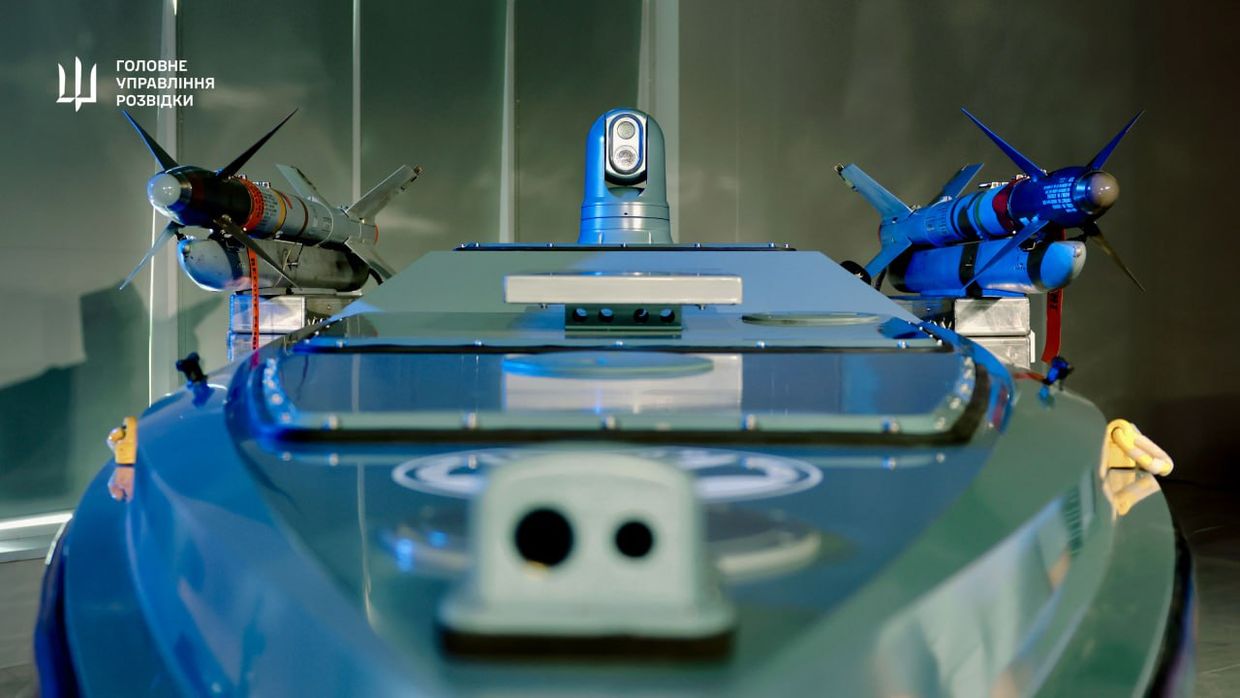
Despite their small size, the unmanned surface vessels have proven effective, including in a May 2 operation when Ukraine's military intelligence used Magura-7 drones armed with air-to-air missiles to shoot down two Russian Su-30 fighter jets near Novorossiysk. It was the first recorded instance of fighter jets being downed by naval drones.

Ukraine shows its latest ‘ship-killer’ Magura drone series to the public for the first time
The Magura drones, as well as the Sea Baby drones of the Security Service of Ukraine (SBU), were pivotal in turning the tide of the war in the Black Sea, destroying or damaging Russian ships and other assets.
Russia cannot launch 500 drones every day, Ukraine's intel chief saysThe Kyiv IndependentMartin Fornusek
Russia cannot launch 500 drones every day, Ukraine's intel chief says
  •  
❌