❌

Vue lecture

Sanctions keep catching Russia’s gas tankers, so Moscow is building new ones, UK says

The LNG carrier Aleksey Kosygin

Russia is attempting to build a new "shadow fleet" to "circumvent sanctions and sustain revenues from its gas exports," the UK Foreign Office said on 1 October. Britain sanctioned eight vessels linked to the trade, including some that entered service this year, as part of a 31-designation package.

The sanctions come as the EU prepares to end imports of Russian liquefied natural gas (LNG), which arrives by tanker, from the beginning of 2027. London presented the package as part of a push to increase economic pressure on Moscow before winter, noting that Russia launched more than 3,100 jet-powered drones at Ukraine in September, beating the wartime record it had set in August.

The UK sanctions target three shadow fleet vessels, two vessels providing them with bunkering services, and three Russian-owned ice-class vessels, according to the UK Foreign Office.

Russian-built ice-class tankers

The sanctioned vessels include the Russian-flagged Aleksey Kosygin and Konstantin Posiet, which are among a new generation of LNG tankers, The Telegraph reported. The vessels were assembled in Russia and are designed to break through ice up to two meters thick. The Aleksey Kosygin was delivered in December 2025 before entering service this year, according to the paper.

The other sanctioned vessels are the Pyotr Stolypin, Portovyy, Chaivo, Avacha, Bebek-E, and Galle Energy, according to the UK Sanctions Notice. The Telegraph reported that the Pyotr Stolypin entered service this year, while Bebek-E was built in 1979 and Galle Energy is a 75-foot crew transport vessel flagged in Sri Lanka.

From oil tankers to gas carriers

Moscow has also long been accused of moving its oil past Western restrictions using what The Telegraph describes as “a secretive fleet of ageing tankers often with obscure ownership and insurance.” The EU said it had placed more than 670 vessels on its shadow fleet sanctions list as of 23 July, while the UK government said it had targeted nearly 600 tankers.

In June, Britain sanctioned four LNG carriers—the Orion, Merkuriy, Kosmos, and Luch—which are listed in the UK Sanctions List with shipping and trade sanctions. gCaptain reported that the vessels had been purchased through intermediaries, reflagged, and renamed, and were sailing toward China after LNG was transferred to them ship-to-ship near Murmansk.

Later in June, Ukraine’s Foreign Intelligence Service said Russia was assembling a fleet of aging gas tankers ahead of the EU restrictions. The service said seven of about 23 vessels had been bought through front companies between February 2024 and May 2025, and that their use “allows Russia to partially circumvent restrictions.”

Sanctions spare LNG bound for Japan and South Korea

The package also targets Novatek Gas and Power Asia, a Singapore subsidiary of Russia's largest LNG producer, Novatek. Vladyslav Vlasiuk, the Ukrainian president’s commissioner for sanctions policy, described it as Novatek’s Singapore trading arm in a post on X.

The new package leaves a limited route for some Russian LNG to continue reaching Japan and South Korea. The UK said existing licensing arrangements have been extended to cover LNG, on a targeted and time-limited basis, to support the two countries’ energy security.

Vlasiuk said Russia’s Arctic gas is “one of the Kremlin’s key future revenue streams,” and that “it must stay frozen,” according to his post on X. He also thanked the UK for taking Ukraine’s proposals into account.

Torture and child indoctrination also targeted

The 1 October package contained 31 designations in total. It also targeted eight people involved in the arbitrary detention, torture, and ill-treatment of Ukrainian civilians and seven people over the indoctrination and militarization of Ukrainian children, according to the UK government. The government said international sanctions have already deprived Russia of nearly $500bn in funding for its war effort.

  •  

Ukraine's Naftogaz brings new high-yield gas well online as country reserves run low

Ukraine's Naftogaz brings new high-yield gas well online as country reserves run low

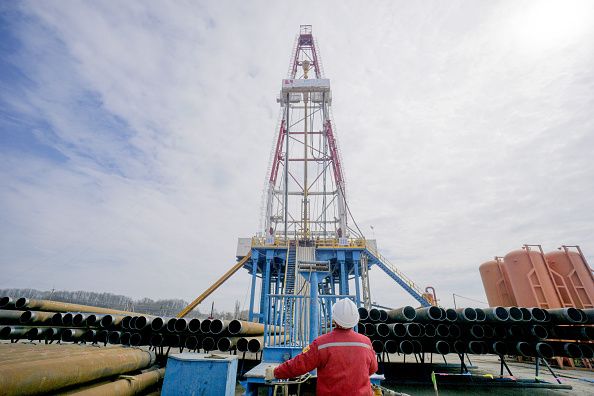
Ukraine's state energy giant Naftogaz has commissioned a new exploration well producing 383,000 cubic meters of natural gas per day through its subsidiary Ukrgazvydobuvannya, CEO Sergii Koretskyi announced on July 8.

The 5.7-kilometer deviated well was drilled and commissioned six weeks ahead of schedule as Ukraine works to boost domestic production amid Russian attacks on its energy infrastructure, including gas storage facilities in western Ukraine.

"This is a significant achievement, given the country's need for gas," Koretskyi said.

Naftogaz produces the lion's share of Ukrainian gas, but its production facilities were severely damaged in a series of Russian missile strikes earlier this year, reducing production by as much as 40%.

According to data from Naftogaz, Ukrgazvydobuvannya lost about 50% of its production due to shelling.

Ukrgazvydobuvannya managed to increase commercial gas production to 13.9 billion cubic meters (bcm) in 2024 compared to 13.2 bcm in 2023, commissioning 83 new wells despite wartime conditions.

Ukraine previously produced 52 million cubic meters daily before Russia's full-scale invasion, but required 110-140 million cubic meters during winter months, covering the shortfall from underground storage.

Russian strikes have repeatedly targeted Ukraine's gas infrastructure, including a February 11 combined missile and drone attack that damaged Naftogaz production facilities in Poltava Oblast.

To secure winter supplies, Naftogaz has signed four contracts with Poland's Orlen for delivery of 440 million cubic meters of U.S. liquefied natural gas. The latest agreement, announced July 2, covers an additional 140 million cubic meters.

According to Bloomberg estimates, in 2025 Ukraine may import a record 5 billion cubic meters of gas from Europe.

Ukraine's gas storage situation has also deteriorated significantly, with underground reserves falling to 6.02 bcm as of May 11 — the lowest level in at least 11 years.

The facilities are operating at just 19.4% capacity, with 2.79 billion cubic meters less gas available than the previous year.

Ukraine’s minerals fund focus of private investment ahead of major recovery conference
This week, thousands of companies, business heads, and global leaders are headed to Rome for the fourth Ukraine Recovery Conference on July 10, with many companies hoping for more clarity around the future of a U.S.-Ukraine minerals deal. It’s been over two months since President Volodymyr Zelensky signed Washington’s so-called “minerals deal” — which, in reality, covers all Ukraine’s natural resources, including oil and gas, related infrastructure, and now, defense projects. While the Economy
Ukraine's Naftogaz brings new high-yield gas well online as country reserves run lowThe Kyiv IndependentDominic Culverwell
Ukraine's Naftogaz brings new high-yield gas well online as country reserves run low
  •  

Russia plans gas extraction in Sea of Azov, Ukrainian officials warn

Russia plans gas extraction in Sea of Azov, Ukrainian officials warn

Russian authorities are planning to begin gas extraction from the Sea of Azov, citing Soviet-era geological data and identifying 22 potential offshore fields, including several located near the occupied Ukrainian city of Berdiansk, Ukrainian officials told Suspilne on July 1.

According to the Berdiansk Municipal Military Administration, Russia's Federal Subsoil Resources Agency (Rosnedra) has announced plans to explore and possibly develop gas fields such as the Morske, Pivnichno-Kazantypske, and Skhidno-Kazantypske deposits.

"(Russia) has declared commercial reserves of gas in the Sea of Azov, referring to Soviet archives listing 22 oil and gas structures," Ksenia Kleshchenko, acting head of communications for the Berdiansk administration, told Suspilne.

"These include the Morske field, discovered in 1977 (and still under conservation). It is necessary to conduct further exploration and pilot operation."

Kleshchenko noted that the Pivnichno-Kazantypske and Skhidno-Kazantypske fields were discovered in the late 1990s and early 2000s during Ukraine's independence, but have not been developed. Ukrainian company Chornomornaftogaz had conducted surveys at the Pivnichno-Kazantypske and Strilkove sites before Russia annexed Crimea in 2014 and seized Ukrainian offshore assets.

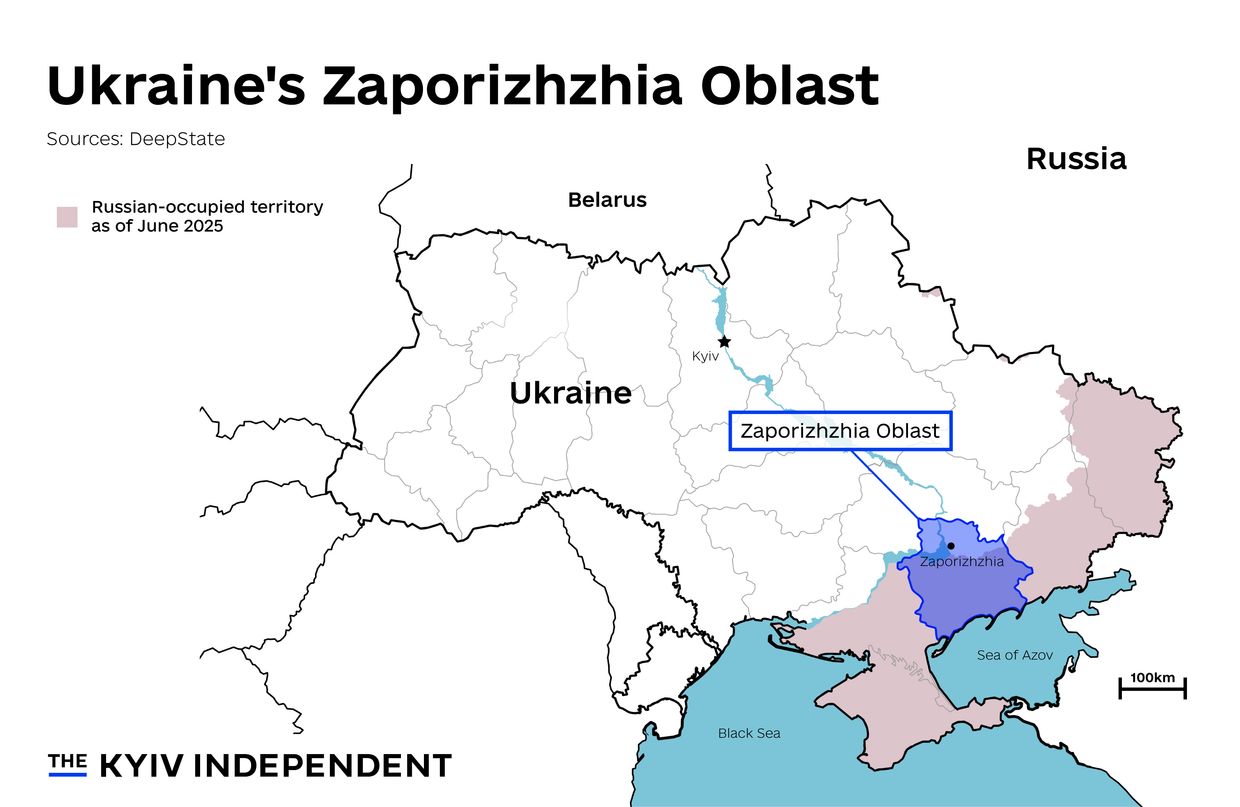
Ukrainian authorities say the Kremlin's interest in mineral resources may have partially motivated the occupation of southern Zaporizhzhia Oblast, including Berdiansk.

Russia plans gas extraction in Sea of Azov, Ukrainian officials warn
Ukraine's Zaporizhzhia Oblast (Nizar al-Rifai/The Kyiv Independent)

"All of the (Russia's) 'plans' are focused on enriching themselves and the Russian Federation, but not on the welfare of the citizens of the occupied territories," the Berdiansk administration said in a statement. "While residents of Berdiansk face constant water and electricity outages, (Russian authorities) are laying grand schemes to exploit the region’s resources."

The administration also warned of potential environmental consequences. Due to the shallow average depth of the Sea of Azov, around 14 meters (about 46 feet), any extraction could cause serious ecological damage. The exploratory work is reportedly planned for 2026–2030.

Russia's interest in resource-rich territories extends beyond the Sea of Azov. In June, Russian forces took control of a major lithium deposit near the village of Shevchenko in Donetsk Oblast, one of Ukraine's most valuable sites for the mineral used in electric vehicle batteries.

Ukraine has now lost two of its four known lithium deposits to Russian occupation, including the Kruta Balka deposit in Zaporizhzhia. According to the Kyiv School of Economics, Ukraine holds about one-third of the European Union's lithium reserves.

Russia seizes Ukraine’s most valuable lithium deposits, but US minerals deal not at risk, investor says
Russian troops have taken over the site of one of Ukraine’s most valuable lithium deposits near the village of Shevchenko, Donetsk Oblast, as Russia ramps up its summer offensive. While Ukrainian troops control territories near the site, the deposit is now under Russian occupation, Roman Pohorilyi, founder of open-source
Russia plans gas extraction in Sea of Azov, Ukrainian officials warnThe Kyiv IndependentDominic Culverwell
Russia plans gas extraction in Sea of Azov, Ukrainian officials warn
  •  
❌