Vue lecture

One Russian warehouse smolders near Kazakhstan while a bigger fire rages near St. Petersburg

one russian warehouse smolders near kazakhstan while bigger fire rages st petersburg · post ukrainian drone over ozon logistics complex orenburg russia 23 2026 fp-1 hitting ozone exilenova ukraine news

Ukrainian drones struck a logistics complex belonging to Russian online retailer Ozon in Orenburg on 23 August, the second Ozon warehouse hit in two days, monitoring Telegram channels reported. The site sits about 1,200 km from the war zone, near Russia's border with Kazakhstan. Hours earlier, a large fire tore through a separate warehouse outside St. Petersburg, roughly 900 km north of Ukraine, though local authorities declared no drone or missile threat.

Kyiv's long-range drone program has pushed its reach ever deeper into the Russian rear, turning fuel depots, factories, and delivery hubs far behind the lines into routine targets, and retail networks have drawn special attention because their warehouses double as arteries for the wider war economy. Each strike this far inside Russia forces Moscow to stretch air defenses across a country too vast to shield everywhere at once. Disrupted e-commerce warehouses also add to pressure already showing at the pumps, where fuel shortages have brought rationing to major cities.

Drones hit Russia's biggest Ozon warehouse

Ukrainian monitoring channel Exilenova+ published video of the strike moment, after which a fire took hold on the site. Independent Russian outlet Astra analyzed eyewitness footage showing an emergency vehicle racing toward the depot. The complex spans more than 200,000 m² and was designed to hold over 31 million items, ranking among Ozon's biggest in Russia.

one russian warehouse smolders near kazakhstan while bigger fire rages st petersburg · post smoke rising over ozon logistics complex orenburg russia 23 2026 заявлено як задимлення на території складу
Smoke rising over the Ozon logistics complex in Orenburg, Russia, 23 August 2026. Photo: Exilenova+

The warehouse stands inside the city's special economic zone, a tax-favored industrial park on the eastern edge of European Russia. The first phase opened in August 2024, and a second building followed in 2025.

Orenburg mayor Albert Yumadilov claimed several drones were downed over the special economic zone and that debris fell on the Ozon complex, starting a fire that crews quickly put out with no one hurt. 

Ozon confirmed the strike, saying it evacuated more than 300 workers, pulled its goods from the marketplace and stopped taking new deliveries while the site sat idle. 

A second fire near St. Petersburg, with no air-raid alert

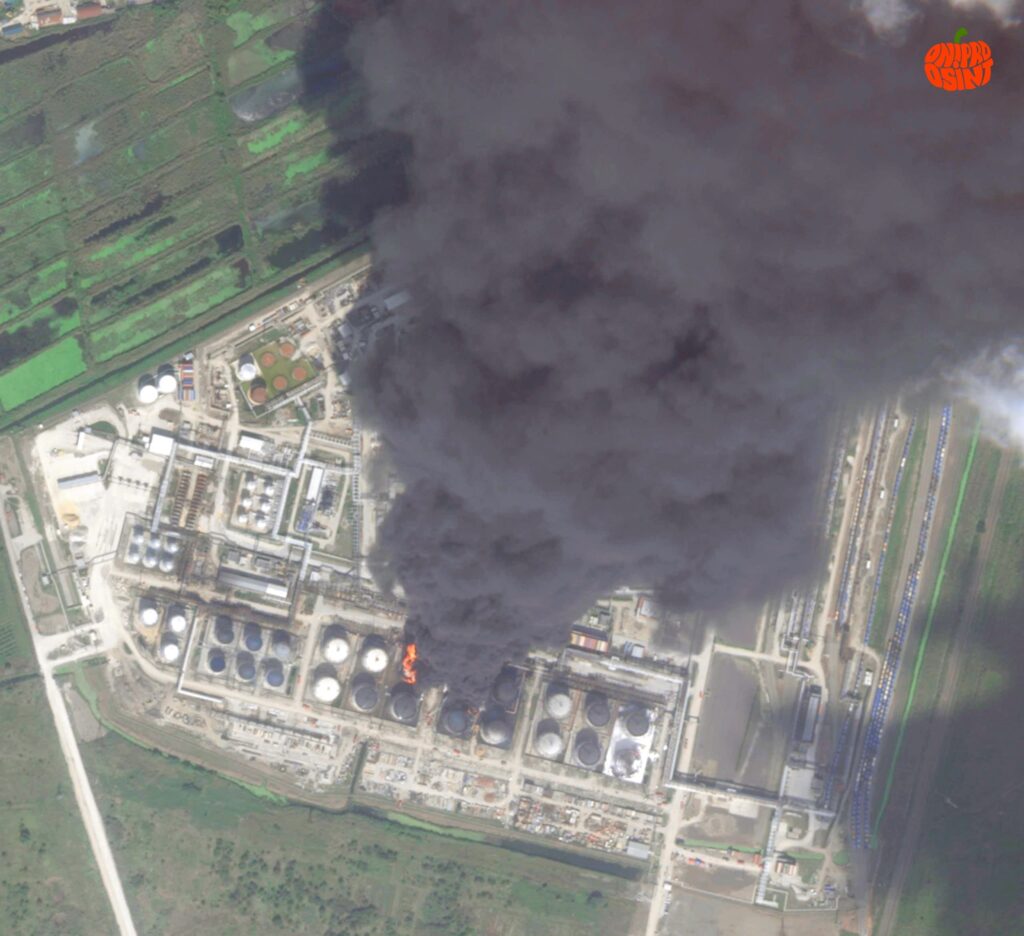
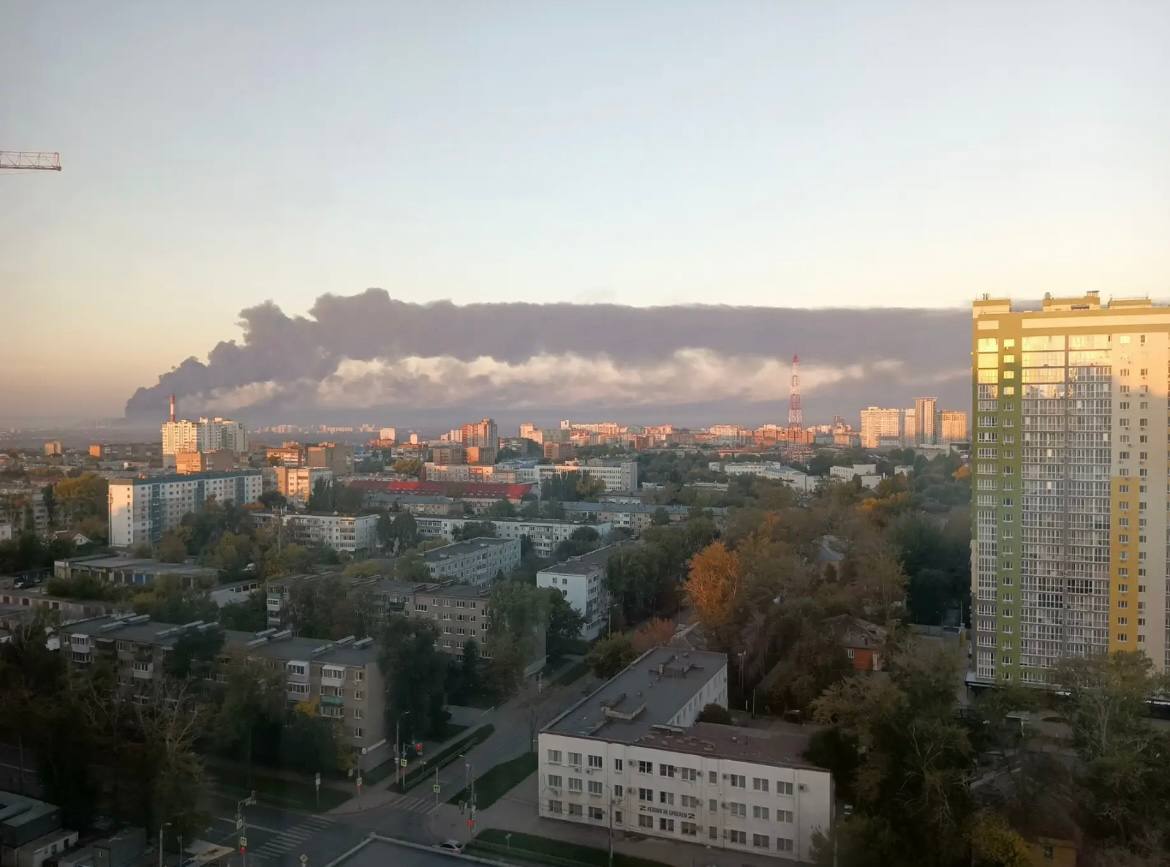
Overnight, a large blaze hit a warehouse in the Kolpino area south of St. Petersburg. Astra established that the warehouse stood about 350 m from an Ozon site, and witnesses said they heard no drones or air defense. Ukrainian Telegram channel Exile+ identified the burning facility as a storage warehouse run by Logistera.

one russian warehouse smolders near kazakhstan while bigger fire rages st petersburg · post large complex kolpino area russia 23 2026 saint astra ukraine news ukrainian reports
A large fire at a warehouse complex in the Kolpino area of St. Petersburg, Russia, 23 August 2026. Photo: Astra

Part of a widening campaign on Russian marketplace logistics

The Orenburg hit followed the first-ever Ozon strike a day earlier, at a warehouse in Chapaevsk, Samara Oblast. Before turning to Ozon, Ukrainian drones had struck more than 10 warehouses belonging to the larger Russian marketplace Wildberries. Such marketplace hubs move not only consumer goods but dual-use items like electronics and drone components that can reach Russia's military.

  •  

Ukrainian drones hit warehouse belonging to Russian online retailer Ozon for the first time

Thick black smoke and flames rise from an Ozon warehouse in Chapayevsk, Russia, at sunset.

Ukrainian FP-1 drones struck an Ozon warehouse in Chapayevsk, Russia’s Samara Oblast, overnight on 22 August 2026, manufacturer Fire Point said.

The attack on the Chapayevsk facility expands Ukraine’s warehouse campaign from Wildberries, Russia’s largest online marketplace, to its second-largest rival, Ozon. Ukraine has repeatedly targeted Russia's major e-commerce distribution hubs to disrupt commercial logistics that Kyiv says help sustain Moscow’s war.

Ozon said the attack injured people and prompted the evacuation of more than 500 employees.

The strike was the first confirmed Ukrainian attack to damage and set fire to an Ozon warehouse, Reuters reported. A drone alert forced Ozon to evacuate a facility in Tatarstan on 31 July, but the building was undamaged and later reopened.

Fire Point said the facility is one of Ozon’s largest warehouses in Volga Oblast, storing goods and processing more than 215,000 orders for delivery each day.

Ozon and Wildberries—Russia’s two largest online marketplaces—and their smaller rivals collectively sell goods and services worth the equivalent of 8.5% of Russia’s GDP and employ 4 million people, Reuters reported in July.

Ozon suspended operations indefinitely and stopped accepting seller deliveries, the company said. As a result, shipments are being redirected to other facilities, while affected orders will either be fulfilled elsewhere or canceled and refunded.

Several people were receiving medical treatment, Samara Oblast Governor Vyacheslav Fedorishchev claimed. Neither he nor Ozon specified how many people were injured, and the extent of the damage remains unclear.

Ukraine’s previous strikes on Russian warehouses

Ukrainian drones had previously concentrated on Wildberries, Russia’s largest online retailer. Since 18 July, Ukraine has struck at least two dozen Wildberries warehouses, Reuters reported.

Ukrainian officials have alleged that Wildberries warehouses move military-linked goods, including drone components. The Kremlin has denied that the company supplies Russian forces. Fire Point made no corresponding claim about the Ozon warehouse.

Fire burning at Wildberries warehouse in Koledino, Russia.
Wildberries warehouse burning in Russia’s Koledino following a Ukrainian drone strike, 16 August 2026. Photo: Exilenova+

Ukraine’s military said the same overnight wave also hit the Novokuibyshevsk refinery in Samara Oblast and caused a fire.

Russian and occupation officials claimed that the broader wave caused civilian deaths and injuries in Yeysk, Belgorod, Bryansk, and Russian-occupied Luhansk.

  •  

Ukraine says its drones hit major Russian refinery amid deepening fuel shortages

Thick black smoke rises over Novokuybyshevsk following a reported Ukrainian strike on the city’s oil refinery on 22 August 2026.

Ukrainian forces struck production facilities at the Novokuybyshevsk oil refinery in Russia’s Samara Oblast overnight on 22 August, sparking a fire at the Rosneft-owned plant, Ukraine’s General Staff said. The extent of the damage remains under assessment.

Ukraine has repeatedly targeted Russia’s oil refineries to restrict military fuel supplies and reduce the energy revenues supporting Moscow’s war. The latest strike came as gasoline rationing returned to Moscow and St. Petersburg, and Rosneft capped nationwide purchases. Militarnyi described the plant as one of Russia’s 10 largest refineries.

The Rosneft-owned refinery can process about 8.8 million metric tons of crude annually and produces more than 20 petroleum products, including aviation fuel and diesel, Ukraine’s General Staff said.

Fire Point said FP-1 long-range drones were used to strike the refinery.

Map of Ukrainian strike on Novokuybyshevsk

The same overnight wave also hit an Ozon logistics center in Chapayevsk, where people were injured, and work was halted, Reuters reported, citing the company.

Novokuybyshevsk Oil Refinery last night and now. pic.twitter.com/aZmL7M8wBe

— Exilenova+ (@Exilenova_plus) August 22, 2026

Neither the damage to the refinery nor any interruption to production has been independently confirmed.

Ukraine keeps pressure on Russian fuel supplies

The strike came one day after Ukraine confirmed hitting Lukoil’s Perm refinery, approximately 1,530 kilometers from Ukraine’s northern border. That attack also caused a fire, according to the General Staff.

At least four Russian refineries went offline during August amid continuing Ukrainian attacks.

By mid-August, filling stations in at least 12 Russian regions were experiencing hours-long lines. Some areas had reintroduced purchase limits or rationing based on license-plate numbers, according to the same report.

Gasoline limits had also been reinstated in Moscow and St. Petersburg, while Rosneft had capped sales at 30 liters per vehicle across its nationwide filling-station network. Diesel purchases remained unrestricted.

  •  

New satellite imagery shows a caved-in roof at Russia’s only Soyuz rocket-assembly plant

new overhead photos show caved-in roof russia's only soyuz rocket-assembly plant · post satellite 85-by-35-meter section collapsed progress rocket space center samara russia after ukrainian flamingo missile strike 15 2026

Satellite imagery shows the damage Ukraine's Flamingo missiles inflicted on Russia's main rocket-assembly plant, the Ukrainian Telegram channel Exilenova+ reported on 18 August. The overhead photo show a collapsed roof section over a key hall at the Progress Rocket Space Center in Samara, a Russian city about 900 km from the war zone in Ukraine. It puts a measurable figure on damage Kyiv had until now only claimed.

Ukraine has steadily carried its war into Russia's industrial rear, striking the plants that sustain Moscow's war machine hundreds of kilometers from any front in a sharply growing deep-strike campaign. Every confirmed hit on an irreplaceable Russian factory narrows Moscow's ability to rebuild what it loses, extending a reach Kyiv keeps pushing farther into Russia.

The satellite photo centers the damage on building 106A, Exilenova+ said. Crews there wire the rockets' control systems, cabling and instrument bays. The imagery shows two missile hits on that hall, the channel reported.

The collapsed roof section runs 85 meters long and 35 meters wide. Ukraine struck the plant on 15 August with its home-built Flamingo cruise missiles, which President Volodymyr Zelenskyy confirmed at the time.

Thick gray smoke rises behind buildings, power lines, and a fuel station in Samara after a reported missile strike.
Explore further

Reported Flamingo strike hits Samara industrial area housing factory that builds rockets for Russia’s Starlink rival

A rocket hall with no domestic replacement

Progress is the only plant in Russia that serially assembles the Soyuz-2 rocket family, used to launch military reconnaissance and targeting satellites, Exilenova+ noted. 

The plant also lofts the Rassvet satellites built by Bureau 1440, Russia's answer to Starlink. The country has no full alternative to the Samara site, they added. Next to building 106A stands 106B, the complex's final-assembly hall.

Ukraine's Fire Point company builds the Flamingo, a long-range cruise missile. Its growing reach lets Kyiv strike defense and space plants far from the front. Overhead imagery has exposed earlier Flamingo damage deep inside Russia.

  •  
❌