❌

Vue lecture

Shadows, roofs, job ads give Ukrainian arms plants away to Russian analysts, Ukrainian experts warn
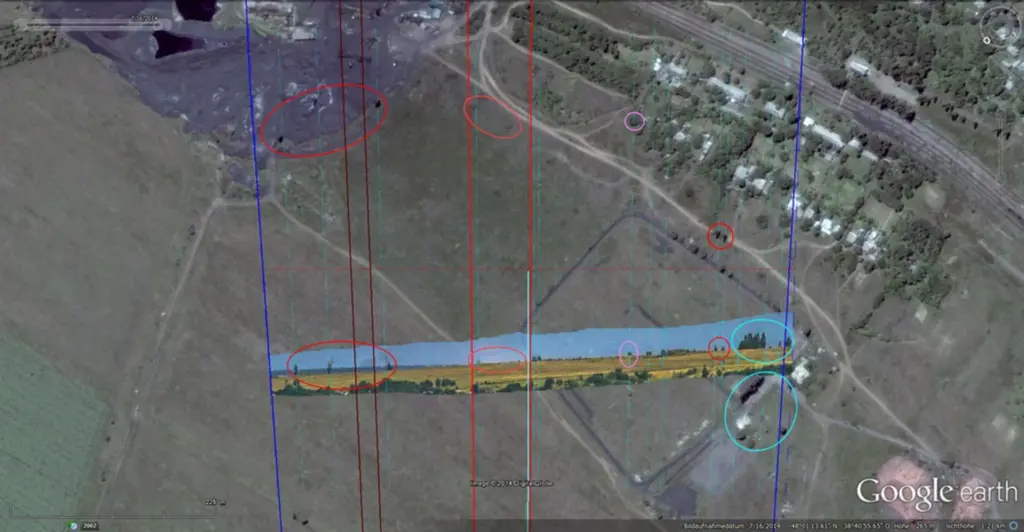
Screenshot from Bellingcat’s investigation into the downing of MH17

Russian analysts can locate Ukrainian weapons plants from details in published photos and TV footage, Ukrainian defense outlet Oboronka reported on 29 October. Open-source researchers told the outlet how to hide those details.

Ukraine plans to build 7 million drones this year, and Russia is hunting the plants that make them. In June, the Security Service of Ukraine (SBU) said Russia’s GRU military intelligence was gathering data to prepare air strikes on defense plants and attacks on their engineers.

A TV clip, then missiles

On 7 April 2022, Ukrainian channel 1+1 aired a report from a workshop at the Kyiv Armored Plant converting captured Russian military equipment for Ukraine’s forces. On 14 April, Rybar, an anonymous pro-Russian Telegram channel, posted the factory’s location. Russian missiles hit the workshop on 16 April, killing at least three civilians, the Centre for Information Resilience (CIR) found.

A frame from the 1+1 report filmed at the Kyiv Armored Plant, aired on 7 April 2022
A frame from the 1+1 report filmed at the Kyiv Armored Plant, aired on 7 April 2022. Screenshot: Centre for Information Resilience

Retracing the likely method, CIR wrote that wall colors, window size, and ceiling height could single out the plant, and Google Earth imagery the workshop. InformNapalm researcher Andrii Lisitsyn told Oboronka that matching a frame with old photos, satellite images, job ads, or staff profiles quickly narrows the search.

A Gaussian blur smears pixels but keeps part of the information, Oboronka wrote. In a 2020 blog post, aerospace engineering student Gonçalo Raposo showed it can be fully reversed if the exact filter and edge handling are known. Pixelation fails too: a 2022 neural network reconstructs plausible faces from pixelated images. Lisitsyn advises cropping or fully opaque masking instead, plus checking file metadata.

Leaks beyond photos

Some Ukrainian defense enterprises still keep accounts and procurement records in Russian 1C software, Oboronka wrote. Since 6 January 2026, 1C products have been on the State Special Communications Service’s list of banned software. The ban covers systems with state information resources and critical information infrastructure owned or managed by state bodies, state enterprises, and local governments, the service said.

Oboronka also wrote that days before the full-scale invasion, Spanish journalist Pablo González photographed production lines at engine maker Motor Sich. Poland held him from February 2022 until a prisoner swap sent him to Russia in August 2024. Prosecutors then indicted him under both his names, Pablo González and Pavel Rubtsov, for spying for Russian military intelligence.

  •  

Russia replaces its missiles as fast as it fires them, Ukrainian intelligence says. Its drone order this year tops 100,000

russian drones

As of October, Russia has up to 700 ballistic and several thousand cruise missiles in reserve, and its 2026 state order for Geran-type drones and decoys such as the Gerbera exceeded 100,000 units, Ukraine’s military intelligence (HUR) told NV in figures the outlet published on 20 October. The missile stocks are roughly the same as HUR reported to NV in July, the outlet found.

Ukraine enters the heating season facing what it says is a Russian plan to hit 60 infrastructure sites this winter. HUR’s figures suggest Russia has the weapons for it, even after its fall mass strikes. In June, HUR said Russia could fire up to 100 ballistic missiles a month while keeping its stocks steady. Its drone output, meanwhile, is shifting to jets that are harder to shoot down.

Russia produces 110 ballistic missiles a month

Russia can make more than 200 missiles a month, 110 of them ballistic, HUR said. About 115 of its ballistic missiles are Iskander-Ms, with production of up to 65 a month. A modernized Iskander with a projected range of 550 to 700 km is in development.

At the same time, Russia holds up to 400 S-300PM and S-400 air defense missiles adapted to strike ground targets, and makes about 40 a month. Meanwhile, Kinzhal production has been temporarily paused over poor accuracy, and the capacity has gone to conventional ballistic missiles.

Most new Kalibrs go into reserve

Russia plans to make more than 80 Kh-101 cruise missiles a month and is exceeding that, though defects in releasing them from aircraft have sent some batches back to the factories.

Russia has more than 450 Kalibrs and makes about 29 a month. Because Ukrainian air defense downs them effectively, Russia sends most new ones to its strategic reserve and to equip its fleets, HUR said. It also holds more than 600 Oniks anti-ship missiles, upgraded for ground strikes, and more than 120 Zircons.

ukraine recovers russia's undamaged geran-3 jet kamikaze drone carrying camera live-link equipment (video) · post russian jet-powered lying cornfield after being recovered intact 16 2025 реактивний дрон-камікадзе герань-3 вересня року
Explore further

Ukraine recovers Russia’s undamaged Geran-3 jet kamikaze drone carrying camera and live-link equipment (VIDEO)

Russia now assembles 4,000 jet drones a month

Russia holds a reserve of about 6,200 Gerans and makes about 10,000 drones a month. Its main production hub is the Alabuga special economic zone in Tatarstan.

Since summer, Russia has shifted toward turbojet drones. “The reason is the saturation of Ukraine’s Air Force with mobile fire groups that shoot down low-speed targets en masse,” HUR said. Russia now assembles about 4,000 jet drones a month, mostly Geran-4s and Geran-5s, which fly at 400 to 500 km/h. It also makes about 2,000 cheaper propeller-driven Geran-2s, which HUR said are used to wear down air defense and locate air defense positions.

  •  

One Ukraine out-produced third of EU’s steel. Russian strikes have now cut its output to zero

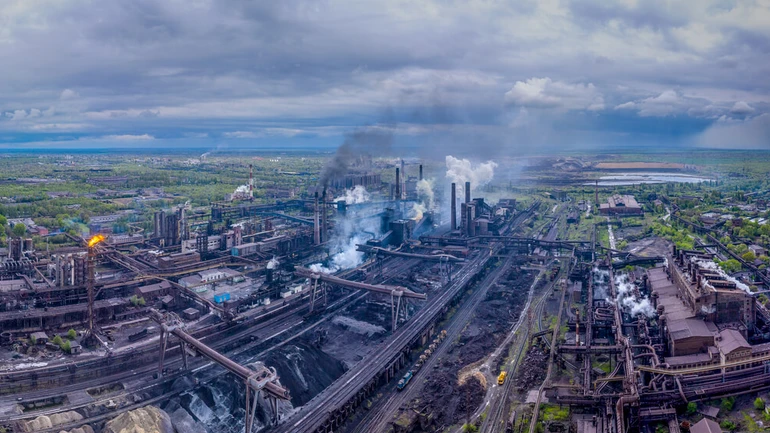
Ukraine produced no steel at all last month, Oleksandr Kalenkov, president of the steelmakers’ association Ukrmetalurhprom, says, according to Ukrainian Radio. Russian missiles have destroyed the blast furnaces at its plants, stopping an industry that ran for more than 150 years.

At its peak, Ukraine smelted more than 42 million tons of steel a year, more than a third of what the entire EU produced last year. Before the full-scale invasion, steel and mining earned over a third of Ukraine’s exports and up to 12% of GDP. With the furnaces down, the country now risks losing billions of euros in export earnings, tax revenue, and thousands of jobs, Kalenkov warns.

“What is happening now is not just a hard or critical situation. It is a tragic situation when an industry more than 150 years old produced zero steel last month,” Kalenkov says.

The collapse is the end of a long descent. Output fell from more than 40 million tons to 22 to 23 million after 2014, and to 7.5 million last year, Kalenkov says. Fifteen years ago, the sector earned half the country’s foreign currency.

Steel remains Ukraine’s second-largest foreign-currency earner, employing more than 70,000 people directly and paying close to $1 billion a year in taxes.

A pillar knocked out piece by piece since 2014

The war has chipped at the industry for more than a decade. Ukraine lost about a third of its capacity after 2014, along with almost all its coking-coal mines. It later lost the last one, the Pokrovske mine, too. In 2022 it lost the Mariupol production site, more than 40% of what Ukraine then made, he recalls.

Even the plants left on government-controlled land have worked in survival mode since.

In 2021, the last year before the invasion, the mining and metals complex still accounted for more than a third of all exports and accounted for up to 12% of GDP, rising above 40% of regional output in Zaporizhzhia, Donetsk and Dnipropetrovsk oblasts.

The strikes that finished the furnaces

The decisive blow came from the air. Since August, a huge number of missiles, both ballistic and cruise, have targeted the plants, and practically all the blast furnaces still working were destroyed, he adds.

Ukraine’s largest steelworks, ArcelorMittal Kryvyi Rih, began a cold shutdown after four Russian attacks that killed six workers and halted primary steel production.

Kalenkov’s figure differs from one his association gave earlier: Ukrmetalurhprom reported that Ukraine’s steel output fell 4.7-fold year on year in September, to 131,000 tons, NV reported. It is not clear whether Kalenkov meant September or a narrower measure.

  •  

Ukraine’s largest steelworks begins cold shutdown after extensive damage from Russian strikes, saying safe operation is impossible while war continues

ArcelorMittal

ArcelorMittal Kryvyi Rih has begun the process of placing its plant in cold shutdown following four Russian missile attacks, the company said on 10 October. The attacks killed six workers, injured more than 18 others, and forced the suspension of primary steel production.

ArcelorMittal Kryvyi Rih is Ukraine’s largest steelworks, so its shutdown adds to the pressure on an industry already hit by Russian attacks and disrupted exports.

ArcelorMittal Kryvyi Rih CEO Mauro Longobardo said the company’s priority was to protect workers and industrial assets. He said the ArcelorMittal Group would remain in Ukraine, but that its assessment was that safe operation was impossible while the war continued.

Workers and the city

As of July, ArcelorMittal Kryvyi Rih and its subsidiaries employed about 17,000 people, local outlet Pershyi Kryvorizkyi reported. On 29 September, the outlet reported that the company had not said how many workers could lose their jobs and was assessing its staffing needs after production stopped. It also said municipal water and heating utilities had about 1,000 vacancies and had been instructed to help ArcelorMittal workers find jobs. The outlet noted that it was unclear whether the vacancies were new and that the announcement did not specify the roles or salaries.

In late September, Kryvyi Rih defense council head Oleksandr Vilkul wrote on Telegram that the city would cut spending and stop a number of projects as tax revenues fell. He attributed the pressure to Russian attacks and the inability to export through seaports, and said several major industrial facilities were idle, including ArcelorMittal Kryvyi Rih and three mining and ore-processing plants.

September steel output down 4.7-fold

Ukraine’s steel production fell 4.7-fold year on year in September, to 131,000 tons, the steelmakers’ association Ukrmetalurhprom said, NV reported. Metinvest chief operating officer Oleksandr Myronenko told Forbes Ukraine on 15 September that the group would declare force majeure on some contracts after Zaporizhstal and Kametstal halted operations.

An expected $1 billion impairment

The ArcelorMittal Group said on 25 September that it expected to record a non-cash impairment of about $1 billion, mostly related to property, plant, and equipment. It also said it had provided more than $700 million in financial support to its Ukrainian business.

  •  

Short on interceptors, Ukraine goes after the launchers: eight Russian ballistic systems hit, three destroyed since September, a minister says

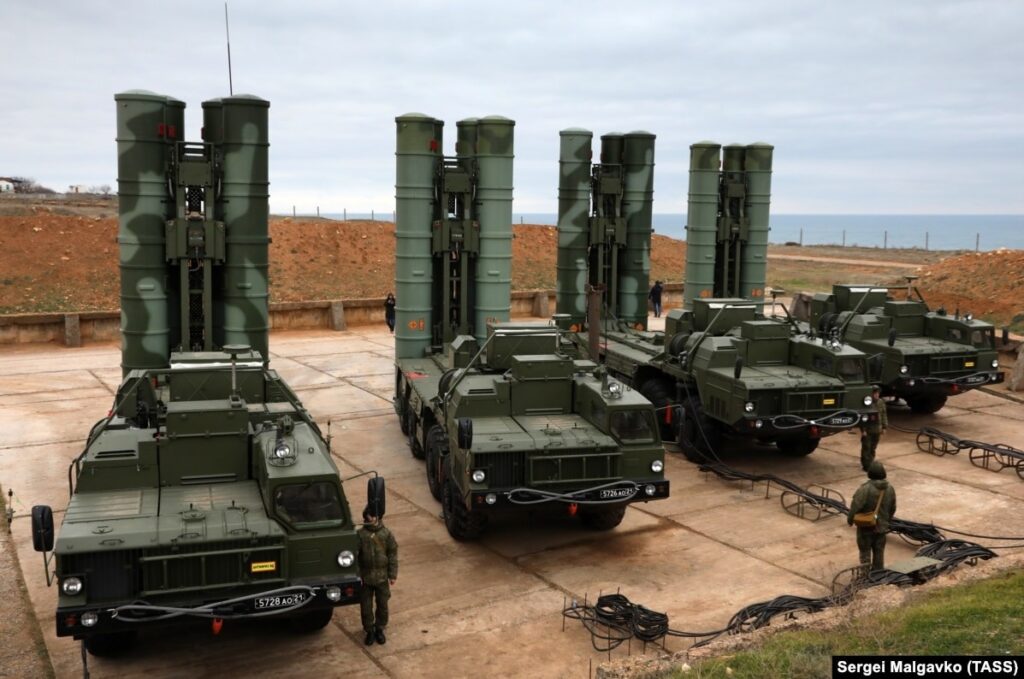
russia's arctic bases sit near-naked air defenses vanish guard moscow refineries burning inland · post s-400 defense missile launcher vehicles 2018 file sergei malgavko/tass rferl ukraine news ukrainian reports

Ukraine has been striking the launchers Russia uses to fire ballistic missiles at its cities, Ukrainian Defense Minister Yevhenii Khmara told journalists. He said the strikes have already disrupted some Russian attack plans, but supplies of anti-ballistic interceptors still fall short of the threat.

Russia strikes Ukraine’s cities and power grid with drones and missiles every day as it prepares to leave civilians without power and heat this winter. Ballistic missiles are the part of that barrage Ukraine still struggles to stop, so every launcher put out of action before it fires means fewer missiles to intercept.

Iskander and S-400 launchers hit since September

Ukrainian forces hit eight launchers used for ballistic strikes on Ukraine in September and early October, destroying three and damaging five, Khmara said. They belonged to Russia’s Iskander tactical missile systems and S-400 air defense systems, he added. Such strikes have already forced Russia to cancel or change planned ballistic attacks, the minister said.

The S-400 was designed to shoot down aircraft and missiles, but Russia also uses it to fire ballistic missiles at Ukrainian cities, including Kyiv. In mid-September, Ukraine reported hitting two S-400 launchers near Vygonichi in Russia’s Bryansk Oblast. Russia had used the same systems against Kyiv the night before.

russian ballistic missile launch
Explore further

Can’t intercept the missiles? Hit the factories—Ukraine’s other way to stop Russia’s ballistic missiles

On 23 August, Ukrainian President Volodymyr Zelenskyy said Ukrainian forces had hit an Iskander launcher near the border. He described it as part of a separate operation to hunt nearby launch positions and linked the tactic to low stocks of anti-ballistic missiles.

Strikes on launchers while interceptors stay scarce

Khmara called the launcher strikes Ukraine’s asymmetric response to a ballistic threat that remains critical.

“Existing and potential supplies of missiles for anti-ballistic defense are not enough to fully cover this threat,” he said.

Instead of waiting for large long-term contracts, the Defense Ministry is looking for missiles in partners’ available stocks to speed up transfers, Khmara added. “We need dozens and hundreds of missiles, not one-off deliveries,” he stressed.

Meanwhile, Russia significantly cut its 2026 state orders for Kinzhal air-launched ballistic missiles, Ukraine’s military intelligence said on 12 October. It redirected the production capacity, components, and raw materials to Iskander-M ballistic missiles, the agency added.

Russia’s missile and drone attacks continue

Overnight on 12 October, Russia attacked Ukraine with a Kh-59 guided missile and 121 attack drones, 76 of them jet-powered, Ukraine’s Air Force reported. Air defenses downed or suppressed 89 drones, but strikes hit 15 locations, and the attack was still going on in the morning.

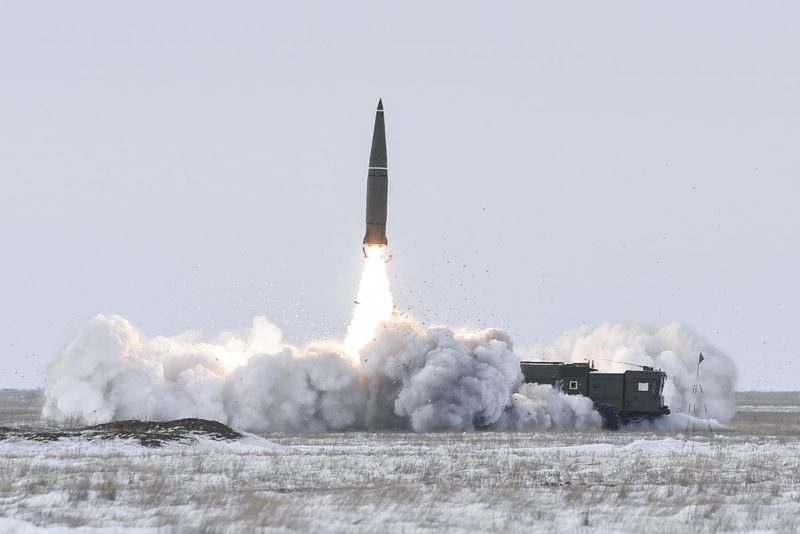
An Iskander test launch in 2018
Explore further

Russia’s new ballistic missile could reach western Ukraine—and it may be tested there within months

In the week to 11 October, Russia hit Ukraine’s power generation and transmission facilities more than 200 times and its gas and oil sites 17 times, Zelenskyy said. Russian attacks that week killed more than 150 people and injured more than 700, he added.

Jet-powered drones are still the main problem for Ukraine’s air defense. It stops more than 90% of slower propeller-driven Shaheds, compared with about 55% for the jet ones.

Ballistic missiles have struck Kyiv repeatedly this autumn. On 24 September, Russian ballistic and hypersonic missiles damaged a maternity hospital in the capital. On 7 October, a Russian missile barrage killed 22 people in Pryluky, Chernihiv Oblast.

  •  

A 3-year-old girl came to visit her aunt in Pryluky, Ukraine. By morning, a Russian missile had killed her grandmother and uncle

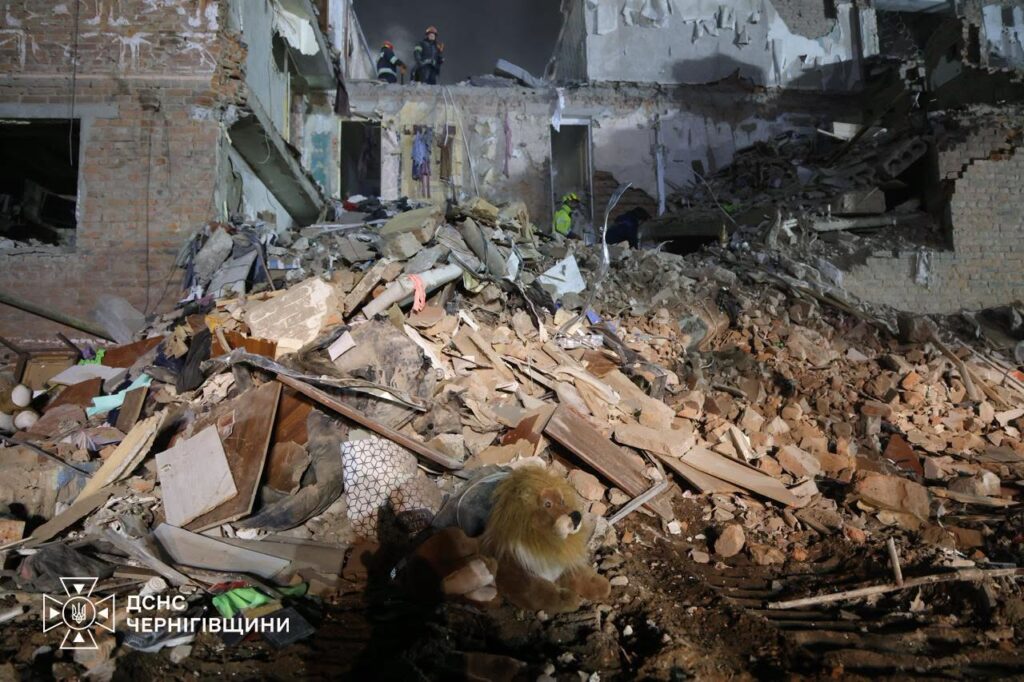
Rescue worker carries a child from the rubble following a Russian missile strike on an apartment building in Pryluky, Chernihiv Oblast.

A Russian missile strike on an apartment building in Pryluky, a town in northern Ukraine's Chernihiv Oblast, killed 22 people on 7 October, regional police reported on the morning of 8 October. Five of the dead were children: three one-year-old boys, an eight-year-old boy, and a 13-year-old girl, police said.

Russian strikes on Pryluky, Kremenchuk, Oleksandriia, and Kyiv killed 28 people on 7 October, Interior Minister Ivan Vyhivskyi said. For the town, it was the second deadly missile strike since May. Behind the toll are families like this one: three generations hit by a single strike.

A family visit that ended under rubble

Three-year-old Zlatoslava is now in the Chernihiv Oblast children's hospital, Pryluky district police chief Vladyslav Stoianov told. Her mother, Kateryna, is hospitalized too. The two had come on the evening of 6 October to visit Kateryna's sister, police officer Yuliia Malysh. The girl's father stayed home in Lynovytsia, a village 15 km away.

Yuliia was wounded and is in hospital, Stoianov said. Her husband, Oleh Malysh, was killed. Until recently, Oleh had fought at the front in the Chernihiv Oblast police rifle battalion. The sisters' mother, Liudmyla, had also come over that evening, and she died too. All the family details come from Stoianov, who was describing a colleague's family.

pryluky
Explore further

22 killed in Russian missile strike on Pryluky, including five children

Footage of an emergency worker carrying a little girl from the ruins reached almost all media, Vyhivskyi wrote in the same post. Suspilne first reported that the filmed rescuer had carried Zlatoslava. It then corrected itself: he had carried a different child, five-year-old Zoriana. Vyhivskyi also gives the girl's age as five, and he named the rescuer as State Emergency Service section commander Pavlo Levchenko. With colleagues, Levchenko freed the girl and her mother after the blast threw them out of the building.

  •  

22 killed in Russian missile strike on Pryluky, including five children

pryluky

The death toll from Russia's 7 October missile strike on Pryluky, a city in Chernihiv Oblast in northern Ukraine, has risen to 22, including five children, Ukraine's State Emergency Service said on 8 October. Another 54 people were injured, and 15 were rescued from the rubble.

Pryluky suffered the heaviest losses in Russia's 7 October attack, which struck cities across Ukraine. The attack involved about 70 missiles, many of them ballistic, as well as Shahed drones.

Search ends with 15 rescued

Seven of the injured are children, and the rescued include a 5-year-old. The search-and-rescue operation, which involved more than 500 emergency workers, has ended, Ukrainian President Volodymyr Zelenskyy said.

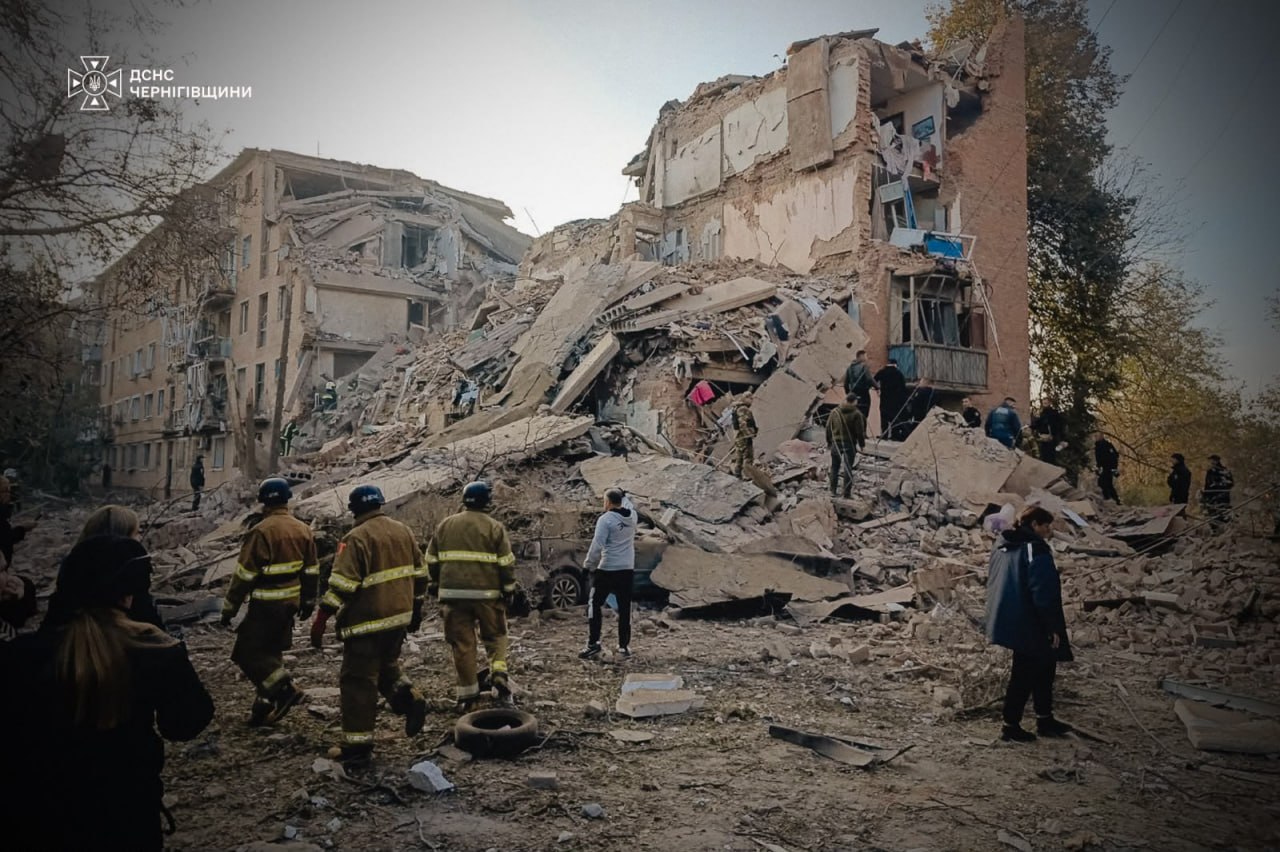
five dead pryluky two each kyiv kremenchuk oleksandriia russia's night 70 missiles · post rescuers collapsed section apartment building chernihiv oblast after russian missile strike 7 2026 ukraine news ukrainian
Explore further

14 dead in Pryluky, two each in Kyiv, Kremenchuk, and Oleksandriia: Russia’s night of 70 missiles

A five-story building hit early in the morning

Russia attacked Pryluky with cruise missiles and directly hit a five-story apartment building, Chernihiv Oblast head Viacheslav Chaus said. The strike came in the morning, when people were still asleep.

The strike hit the apartment building, a children's and youth creativity center, and a business, according to the National Police.

The death toll rose through 7 October and overnight. On the morning of 7 October, the National Police reported five dead and 26 injured. By the afternoon, the State Emergency Service put the figure at 14, including four children. By the morning of 8 October, it had reached 22, Chaus said. Four of the children died at the scene, and one died in hospital.

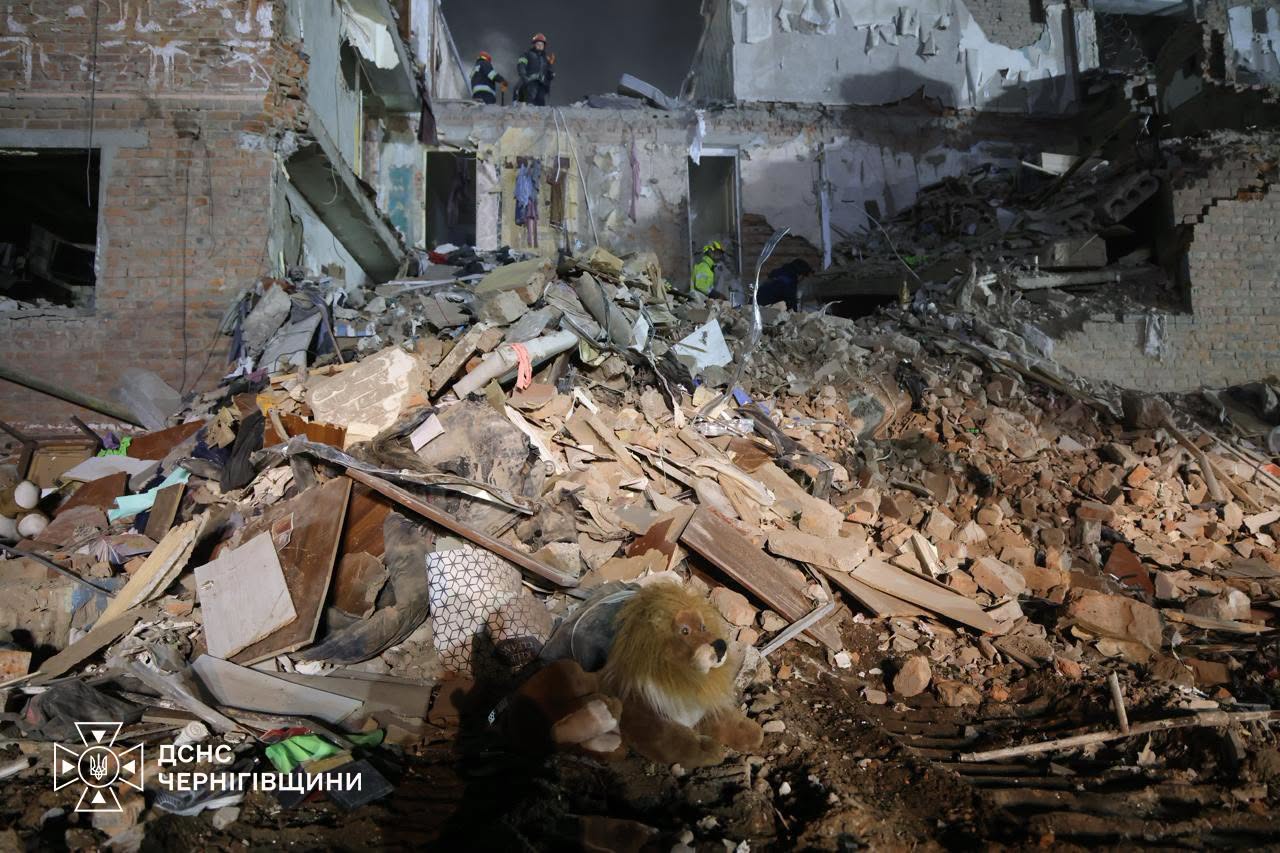
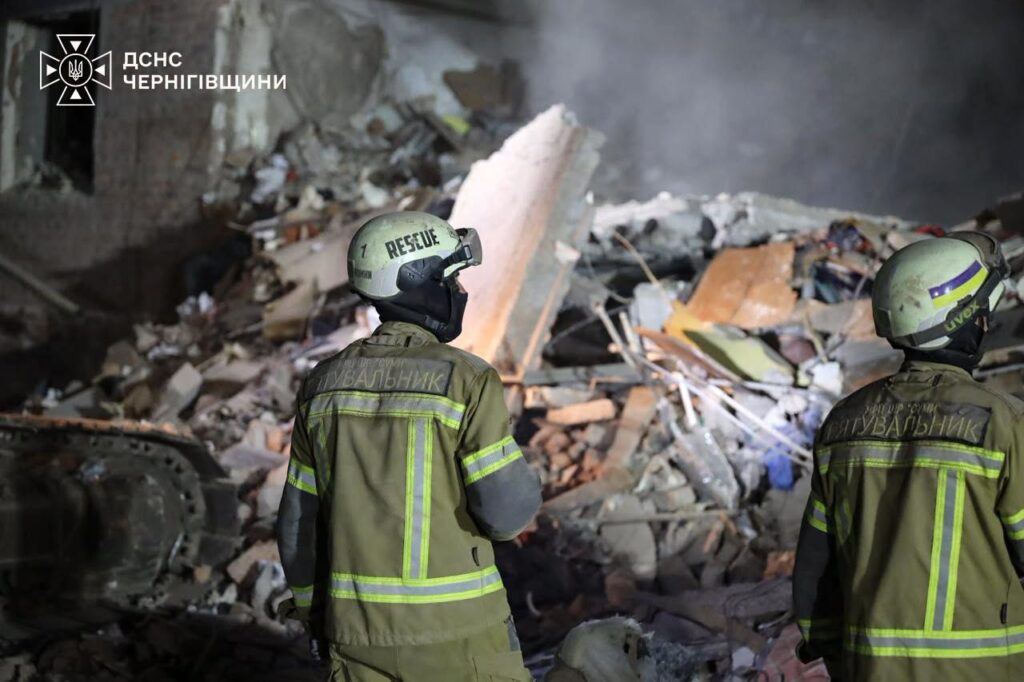
Rescuers at the rubble of the apartment building in Pryluky, Chernihiv Oblast
Rescuers at the rubble of the apartment building in Pryluky, Chernihiv Oblast, 7 October 2026. Photo: State Emergency Service of Ukraine in Chernihiv Oblast

Russian strikes in Kyiv, Kremenchuk, and Oleksandriia

Russia attacked Kyiv and 12 oblasts overnight on 7 October, Zelenskyy said. Two people were killed in each of Kyiv, Kremenchuk, and Oleksandriia.

Air defense downed or suppressed five ballistic missiles, 39 cruise missiles, and 117 drones, while missiles and drones hit 18 locations, according to the Air Force.

  •  
❌