❌

Vue lecture

Deals with dictators lead to hell: Estonia’s PM urges Europe to help Ukraine destroy Russia’s refineries after Washington eased sanctions on diesel

estonian capital allocates € 200000 ukrainian cities development view tallinn estonia tallinnee city introduces program supporting municipalities aid expertise sharing eu integration initiatives estonia's launched new cooperation support 2025 city's

Estonia’s answer to the US-Russia diesel agreement: deals with dictators lead to hell. Prime Minister Kristen Michal wants the European Council to discuss giving Ukraine more aid so it can destroy Russia’s oil refineries, after sharply criticizing the US decision to strike a diesel deal with Russia, ERR reports.

Washington has eased sanctions on Russian diesel, a move Ukraine says funds a war that has killed more than 80 Ukrainian civilians in two days. Estonia’s answer is to go the opposite way and help Ukraine hit the source of that fuel, the refineries, harder.

"It is worth discussing in Estonia and at the European Council next week whether we can quickly contribute more to Ukraine so they can blast Russia's oil refineries to smithereens," Michal says.

He casts the US deal as a historic error. Innocent people are being killed for gas and fuel money, Michal warns, saying that the promised fuel may never arrive. For years, the US urged allies to drop Russian fuel, and Estonia did, so cutting Moscow’s revenue must continue, not reverse, he adds.

Mihkelson: Russia's strategic goals remain unchanged

Meanwhile, Marko Mihkelson, chair of the Riigikogu Foreign Affairs Committee, says that Russia's strategic objectives remain the same as they were before: to rebuild its empire, beginning with the subjugation of Ukraine, and to dismantle the Euro-Atlantic system of collective defense.

"That is why European allies still have only one way to prevent this war of aggression from spreading: to do everything possible to ensure that Russia’s strategic objectives fail and that the imperial wars launched by the Kremlin end in defeat," he says.

This clear strategic objective should also serve US interests, he continues, adding that "Russia’s long-standing ambition, pursued in concert with China and Iran, to undermine America’s global leadership is entering a decisive phase."

  •  

Australia keeps Russian fuel out even as US opens its market: “We do not want Vladimir Putin to benefit from this war in Middle East”

The image shows the Sydney Opera House. Credit: UkrInform

Australia has no need to buy fuel from Russia, despite US President Donald Trump’s move to bring Russian diesel back to world markets. Climate Change and Energy Minister Chris Bowen says that imports from Russia will remain banned to ensure the country does not benefit from its invasion of Ukraine, Bloomberg reports.

Trump has agreed with Russia's President Vladimir Putin to release Russian diesel onto global markets, a move Ukraine says funds a war that has killed more than 80 Ukrainian civilians in two days.

“We don’t need or want Russian fuel in Australia. We do not want Vladimir Putin to benefit from this war in the Middle East. What the United States does is a matter for them, but we won’t be changing our approach,” Bowen said.

The deal Australia is turning down

Trump announced on 9 October a series of cargoes beginning this month totaling about 13.5 million barrels of Russian diesel. The release upends years of sanctions, as the White House looks for ways to tame soaring fuel prices before the US midterm elections.

Bowen draws a clear line between that approach and Australia’s. What the US does is its own affair, he stresses, but Canberra will maintain its arrangements with trading partners to keep Russian fuel out of the market.

Enough fuel to hold the line

Australia can hold out without Russian supply, Bowen argues. The country has 43 days’ worth of petrol, two days more than a week earlier, and 31 days’ worth of diesel, one day less, he notes.

He adds that Australia stays in close contact with domestic refiners to keep them running at full capacity. The stance lets Canberra wait out high prices rather than buy fuel that would send money to Moscow.

Australia’s fuel costs have stayed high since the war between the US and Iran disrupted shipping through the Strait of Hormuz, the route that normally carries about a fifth of the world’s oil and gas.

  •  

Washington makes it official: US Treasury license clears sale and import of Russian diesel blocked by sanctions

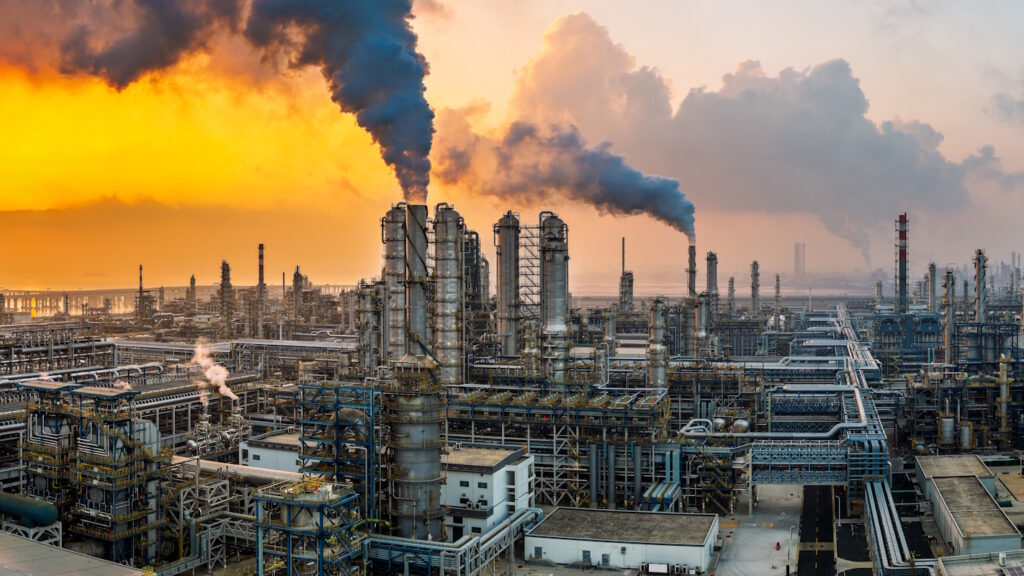
lukoil’s norsi refinery in kstovo, nizhny novgorod oblast

Washington has put its sanctions on Russian diesel on hold. The US Treasury has authorized the sale, delivery, offloading, and import of Russian-origin diesel fuel, effectively suspending sanctions on that trade until 7 April 2027, the Office of Foreign Assets Control (OFAC) said on its website on 9 October.

The waiver lets Russian diesel back onto world markets and, Ukraine argues, hands Moscow fresh revenue for its war, which has killed more than 80 Ukrainian civilians in two days. Until now, it was unclear whether Washington would roll back the sanctions it imposed on Russia in 2022.

OFAC has issued the measure as General License 135, signed by the office’s director, Bradley Smith, according to the report. It authorizes transactions in Russian-origin diesel that sanctions would otherwise block.

The license sets one limit. It does not permit any debits from accounts at US financial institutions held by Russia’s central bank, its National Wealth Fund, or its finance ministry, the document says.

Trump’s promise of cheaper fuel

On 9 October, US President Donald Trump wrote on Truth Social that Russia would immediately supply more than 300,000 tons of diesel, then 500,000 tons in November, and another million tons right after.

Moscow would later send the US up to 3 million more tons, depending on the state of Russia’s refineries, Trump added, framing the deal as a way to bring down energy prices.

Why the volumes fall short

Analysts say the amounts are too small to move prices much. Together, the first tranches would cover about a day and a half of US demand, while US diesel use alone runs near 16 million tons a month. Experts read the move as politics ahead of an election rather than a real shift in the market, pointing out that Trump cited volumes in tons, which look larger than the barrels traders track.

The deal drew fury in Kyiv, and President Volodymyr Zelenskyy called it a weak decision by strong partners. The EU is moving the other way, with ambassadors approving the bloc’s largest sanctions package against Russia’s war machine, due for final adoption on 12 October.

  •  

Trump’s Russian diesel deal, which drew fury in Ukraine, is unlikely to lower prices, experts say

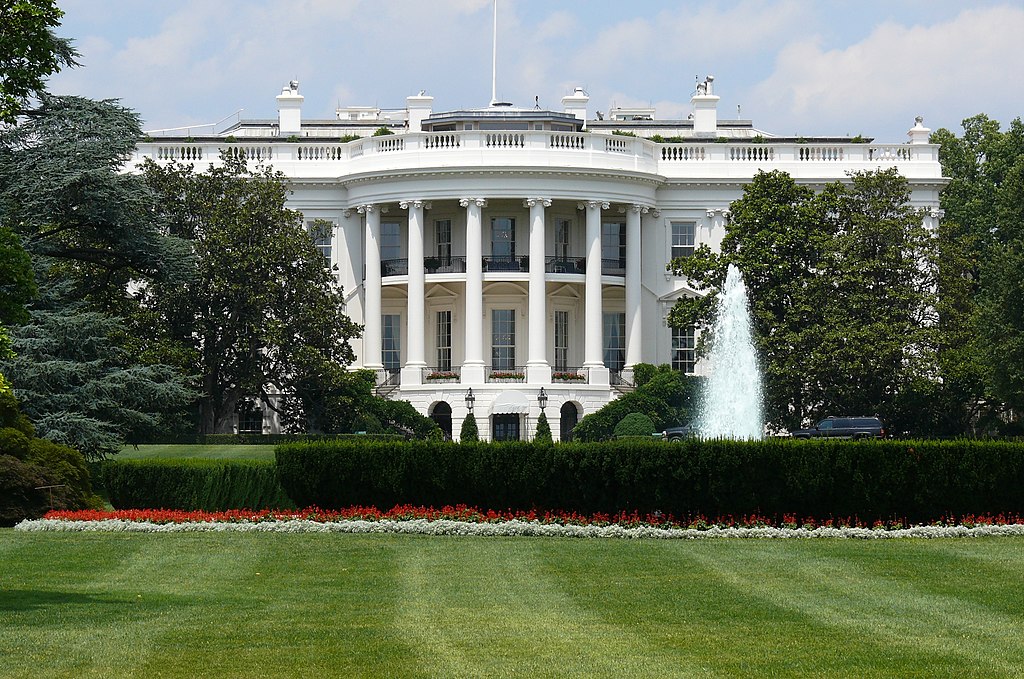
The White House in Washington DC, USA. Illustrative image: Wikimedia Commons.

US President Donald Trump said on 9 October that he had agreed with Russian leader Vladimir Putin to bring Russian diesel to world markets to lower energy prices. However, energy analysts say the deal, which drew fury in Ukraine, is unlikely to lower diesel prices meaningfully, CNN reports.

Trump wrote on social media that Putin would “immediately supply” more than 300,000 tons of diesel, with another 500,000 tons in November. Together, those volumes would cover about a day and a half of US demand, according to the US Energy Information Administration.

Meanwhile, former head of the Center for Countering Disinformation Andrii Kovalenko says that US diesel consumption alone is about 16 million tons per month, and global consumption is roughly 120 million tons.

The US experts read the move as politics more than a market shift. Trump spoke in tons rather than barrels because the figure looks bigger to an ordinary observer, said Dan Pickering, founder of Pickering Energy Partners, calling it “more politics than a game changer.”

Doubts Russia can even deliver

Former US officials question whether Putin holds the diesel Trump described, as Ukrainian strikes strain Russia’s refineries. A former senior State Department official says it hardly matters whether the fuel arrives, because Putin “has already achieved the result he wants,” with Trump believing he has a pre-election card that could move markets.

Even if the fuel flows, it would be a temporary measure. Gregory Brew of Eurasia Group says that he suspects Putin expects Ukraine to halt its strikes on Russian refineries in return, and that he cannot imagine Zelenskyy agreeing.

A win for Putin without conditions

For Putin, the gain is plain, Kovalenko says: he pushes for sanctions relief and for no new US sanctions, all without any demand to end the war in Ukraine.

"Trump’s bet was more on the news itself, driving prices down somewhat, because, in reality, figures like these shouldn’t bring prices down," Kovalеnkо believes.

He adds that Trump will "make a big fuss about diesel ahead of the elections, nothing more," and that the average American is unlikely to feel any lasting effect.”

Earlier, Ukrainian President Volodymyr Zelenskyy warned that allowing Russia to sell petroleum products abroad without securing a lasting de-escalation agreement would help finance Moscow's war against Ukraine.

He criticized the decision, calling it "a birthday gift for Putin," per Axios.

The next day after the announcement, Russia launched six bombs on Zaporizhzhia, killing 17 people.

  •  

Five Russian bombs kill 17 in Ukraine’s Zaporizhzhia next day after Trump lets Russia ship first 300,000 tonnes of its diesel

The aftermath of a Russian strike on Zaporizhzhia on 10 October 2026. Source: Ukraine's National Police

A Russian air strike with guided bombs on the southeastern city of Zaporizhzhia has killed at least 17 people, including three children, according to Ukraine’s State Emergency Service. Ukrainian President Volodymyr Zelenskyy has tied the attack to a US decision to let Russian diesel reach world markets without demanding Moscow halt its strikes on Ukraine first.

On 9 October, President Donald Trump said that Russia would immediately supply more than 300,000 tonnes of diesel fuel to the US and global markets, a further 500,000 tonnes during November, and 1 million tonnes immediately thereafter. The move has already drawn criticism from US lawmakers in both parties.

“Today, Russia expressed its gratitude for the lifting of sanctions on diesel exports by dropping five guided aerial bombs on residential buildings in Zaporizhzhia,” Zelenskyy wrote on Telegram.

Zelenskyy vows to keep hitting refineries

These figures were accurate at the time the post was written. Later, the State Emergency Service reported that the death toll had risen by two. Meanwhile, Zelenskyy stated that Ukraine would not stop striking oil refineries that bring additional revenues for the Kremlin, which spends them on the war.

“There will be responses to Russian attacks. Thank you to everyone who is helping,” Zelenskyy concluded.

According to Zelenskyy, two of the injured are in critical condition, and doctors are fighting to save their lives. Information is also being verified regarding another 12 people who may have been at the strike site.

“Thirteen of our regions came under attack overnight. Residential buildings, infrastructure, and railway facilities have been damaged,” the Ukrainian leader said.

More pressure on Kremlin

Zelenskyy stressed that the latest Russian strikes further demonstrate the need to increase pressure on Russia. In his view, easing restrictions is interpreted by the aggressor as a signal that it can continue the war and attack Ukrainian cities.

“This night provided yet another confirmation that Russia interprets any easing of pressure as a signal that it can supposedly continue fighting and that it can supposedly drop bombs on cities,” he emphasized.

He also noted that Ukraine’s long-range strike capabilities are inflicting such losses on Russia and stressed that Ukraine would respond to Russian attacks.

  •  
❌