
 Connexion
Ukrainian border unit’s HIMERA B1 relay took 10 strikes from Russia’s FPV drones and guided bombs. Last one leveled building and tower, and relay kept working
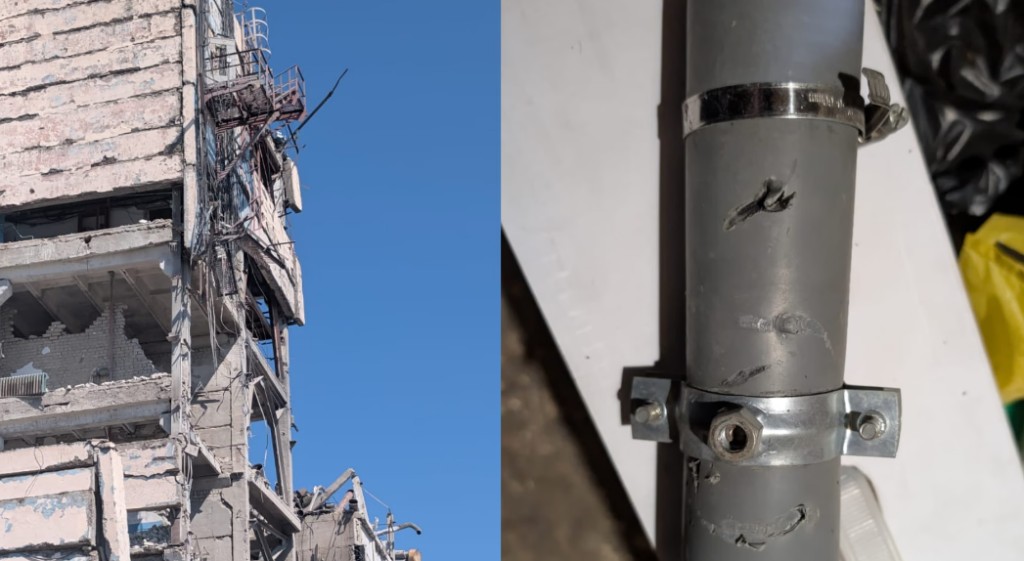
A Ukrainian-made radio repeater survived 10 Russian drone and bomb strikes and a building collapse, and kept transmitting from under the rubble. The HIMERA B1, used by border guards on a telecom tower in Kharkiv Oblast, held its communications link through FPV drones and guided bombs, the manufacturer said.
On what Ukraine's soldiers call the most heavily jammed battlefield in the world, keeping a radio link alive is one of the hardest problems there is, and a cheap, rugged device that outlasts direct hits is a real advantage.
The B1 in Kharkiv Oblast worked in tandem with a second one 10.5 kilometers away, each covering roughly 5 kilometers, until it took 10 strikes. The account is the maker's, HIMERA, but it fits the company's story: a Kyiv firm whose encrypted, frequency-hopping radios were built to survive Russian electronic warfare.
The relay outlasts 10 strikes
The B1 is an autonomous repeater, a box that extends the range of a mesh radio network. This one sat on a telecom tower used by the 1st Border Guard Detachment. During one attack, its power system was destroyed, HIMERA said.
Later strikes partly collapsed the building, and the repeater fell and was buried under debris, yet it kept working.
"Even after that, the repeater remained operational and continued to stay connected," the company said.
Soldiers went in and pulled it from the rubble precisely because it was still transmitting.
The signal beats the jamming
The device is built for a battlefield where Russia listens for radio traffic and uses it to aim, so a poorly protected link can give away a unit's position. HIMERA's radios use AES-256 encryption and pseudo-random frequency-hopping to make a signal hard to intercept, locate, or jam.
A volunteer's frustration built the firm
HIMERA grew out of the front's own shortcomings. One of its co-founders volunteered with the territorial defense in Kyiv Oblast early in the full-scale war and ran into a critical shortage of reliable tactical communications, the company said.
The idea was to build something hard to detect, resistant to jamming, simple to use, and cheap enough to mass-produce, using encryption and frequency-hopping that make a signal difficult to find or suppress.
Within months, the company said, the idea became a team and the team a product, one now fielded widely enough that its repeaters are sometimes dropped into forward positions by drone.
