❌

Vue normale

  • ✇Euromaidan Press
  • 22 killed in Russian missile strike on Pryluky, including five children
    The death toll from Russia's 7 October missile strike on Pryluky, a city in Chernihiv Oblast in northern Ukraine, has risen to 22, including five children, Ukraine's State Emergency Service said on 8 October. Another 54 people were injured, and 15 were rescued from the rubble. Pryluky suffered the heaviest losses in Russia's 7 October attack, which struck cities across Ukraine. The attack involved about 70 missiles, many of them ballistic, as well as Shahed drones. Search ends with 1
     

22 killed in Russian missile strike on Pryluky, including five children

8 octobre 2026 à 05:24

pryluky

The death toll from Russia's 7 October missile strike on Pryluky, a city in Chernihiv Oblast in northern Ukraine, has risen to 22, including five children, Ukraine's State Emergency Service said on 8 October. Another 54 people were injured, and 15 were rescued from the rubble.

Pryluky suffered the heaviest losses in Russia's 7 October attack, which struck cities across Ukraine. The attack involved about 70 missiles, many of them ballistic, as well as Shahed drones.

Search ends with 15 rescued

Seven of the injured are children, and the rescued include a 5-year-old. The search-and-rescue operation, which involved more than 500 emergency workers, has ended, Ukrainian President Volodymyr Zelenskyy said.
five dead pryluky two each kyiv kremenchuk oleksandriia russia's night 70 missiles · post rescuers collapsed section apartment building chernihiv oblast after russian missile strike 7 2026 ukraine news ukrainian
Explore further

14 dead in Pryluky, two each in Kyiv, Kremenchuk, and Oleksandriia: Russia’s night of 70 missiles

A five-story building hit early in the morning

Russia attacked Pryluky with cruise missiles and directly hit a five-story apartment building, Chernihiv Oblast head Viacheslav Chaus said. The strike came in the morning, when people were still asleep.

The strike hit the apartment building, a children's and youth creativity center, and a business, according to the National Police.

The death toll rose through 7 October and overnight. On the morning of 7 October, the National Police reported five dead and 26 injured. By the afternoon, the State Emergency Service put the figure at 14, including four children. By the morning of 8 October, it had reached 22, Chaus said. Four of the children died at the scene, and one died in hospital.
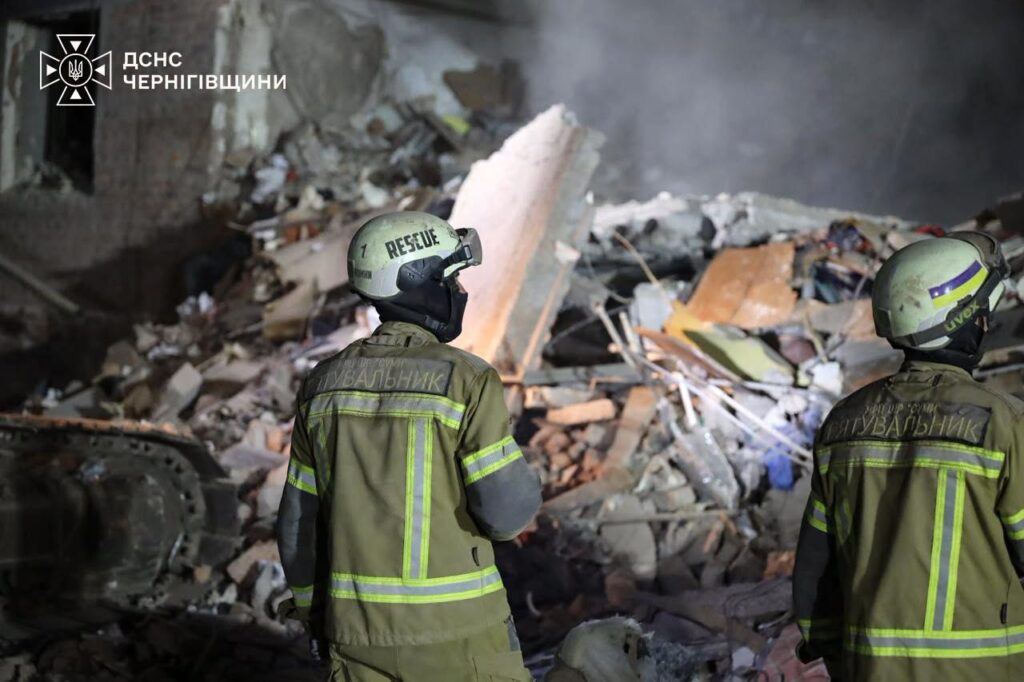
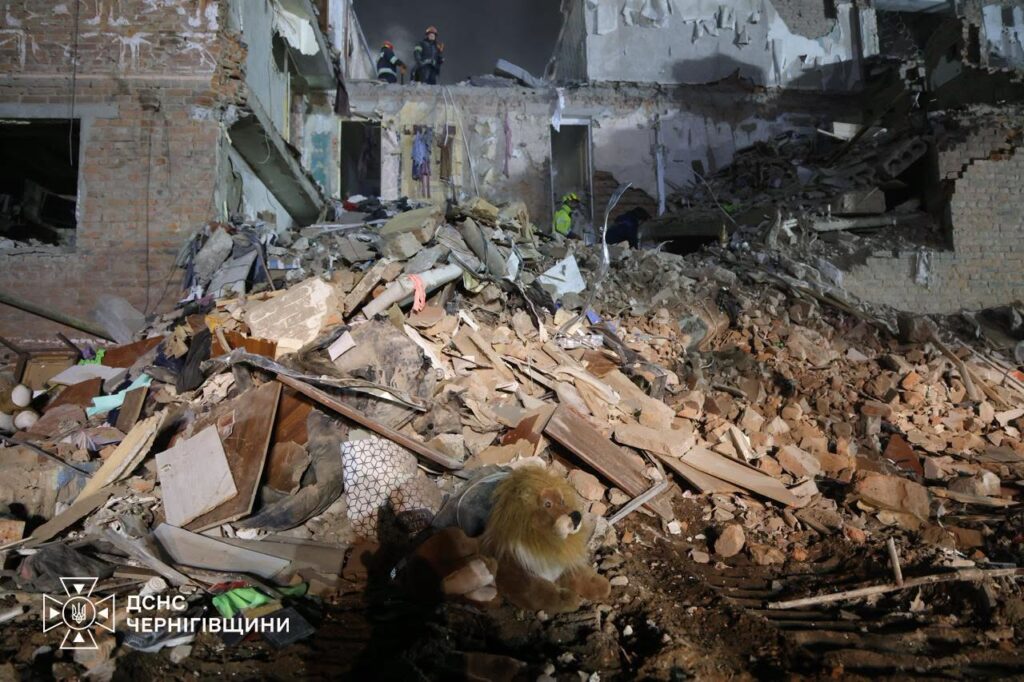
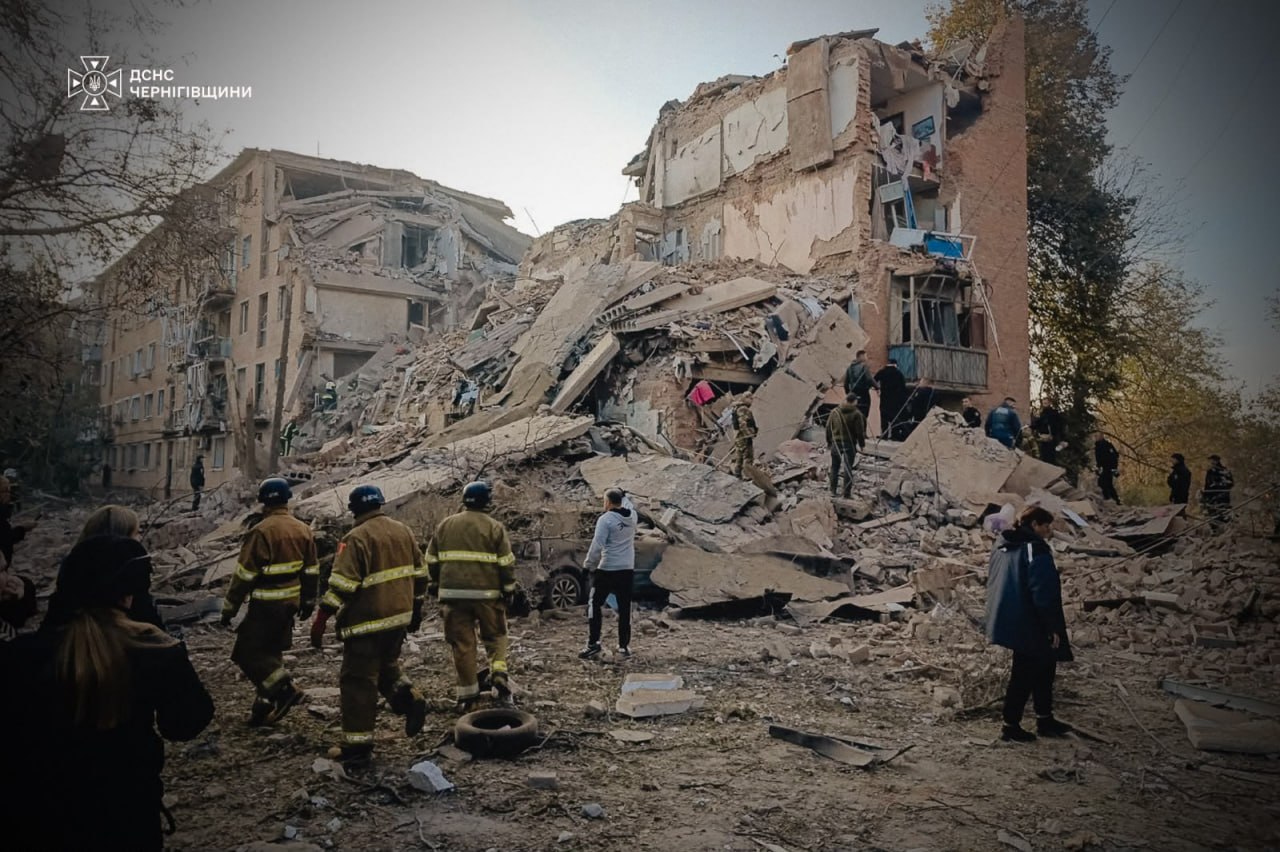
Rescuers at the rubble of the apartment building in Pryluky, Chernihiv Oblast
Rescuers at the rubble of the apartment building in Pryluky, Chernihiv Oblast, 7 October 2026. Photo: State Emergency Service of Ukraine in Chernihiv Oblast

Russian strikes in Kyiv, Kremenchuk, and Oleksandriia

Russia attacked Kyiv and 12 oblasts overnight on 7 October, Zelenskyy said. Two people were killed in each of Kyiv, Kremenchuk, and Oleksandriia.

Air defense downed or suppressed five ballistic missiles, 39 cruise missiles, and 117 drones, while missiles and drones hit 18 locations, according to the Air Force.

  • ✇Euromaidan Press
  • Sea drone vs. air drone: Ukraine’s Sargan-3000 turns anti-aircraft gunner
    A Ukrainian Sargan-3000 sea drone shot down a Russian Shahed flying on a mesh radio network, Ukraine's Navy reported on 7 October. Ukrainian sea drones have downed Russian aircraft before, but with missiles. This one used a machine gun. Russia has been hitting Odesa with air attacks that come in waves with short gaps between them. Guarding the sky over water is harder than over land. Since fall 2025, Russia has also used mesh radio networks to reroute Shaheds mid-flight and dodge Ukrain
     

Sea drone vs. air drone: Ukraine’s Sargan-3000 turns anti-aircraft gunner

8 octobre 2026 à 04:54

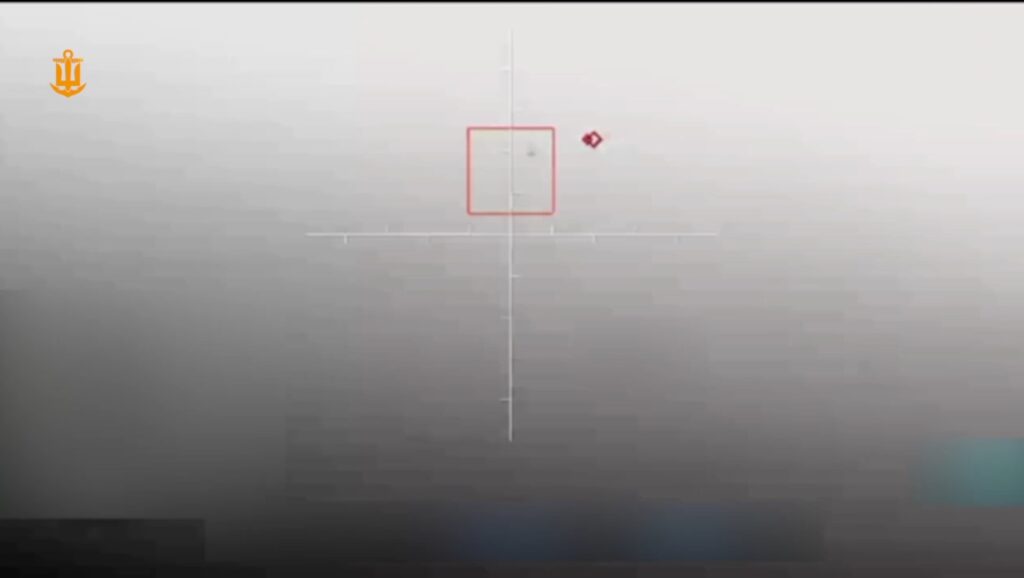
Russian drone seen through the camera of the RWS Protector module on the Ukrainian Sargan-3000 naval drone, October 2026.

A Ukrainian Sargan-3000 sea drone shot down a Russian Shahed flying on a mesh radio network, Ukraine's Navy reported on 7 October. Ukrainian sea drones have downed Russian aircraft before, but with missiles. This one used a machine gun.

Russia has been hitting Odesa with air attacks that come in waves with short gaps between them. Guarding the sky over water is harder than over land. Since fall 2025, Russia has also used mesh radio networks to reroute Shaheds mid-flight and dodge Ukrainian air defenses. That leaves Ukraine needing more ways to meet these drones out at sea, before they reach its ports and coast.

A Shahed steered by radio

A mesh-network drone passes its control signals along a chain of radio relays, drone to drone and on to ground antennas. That lets a Russian operator steer it in flight.

In May, Serhii "Flash" Beskrestnov, then a Defense Ministry adviser, said only about 5% of Shaheds had got through in a recent Russian strike, and predicted that Russia would answer with jet-powered versions and strikes near the border. By July, Ukraine was testing jamming against mesh-controlled jet Shaheds, he said.

Protector RWS turret on the Ukrainian Sargan-3000 naval drone, October 2026
Protector RWS turret on the Ukrainian Sargan-3000 naval drone, October 2026. Screenshot from a video by the Ukrainian Navy

The Sargan-3000 fired its Protector remote weapon station, Militarnyi reported. The station is a remotely operated 12.7-mm (50-caliber) machine gun with electro-optical sights. The outlet added that the Sargan-3000 is designed for combat missions far from Ukraine's coast.

Built for the open sea

Ukraine's Navy took the Sargan-3000 into service in April 2026, according to Militarnyi. The drone boat has a combat radius of up to 1,600 km. It moves at 40–55 knots and carries up to 450 kg of payload.

In September, a Sargan-3000 sank a Russian uncrewed boat with machine-gun fire. Militarnyi called it the first battle between uncrewed sea platforms in history. Analyst H.I. Sutton wrote that the boat carried a Protector made by Norway's Kongsberg. That is the same weapon station named in the October shootdown. Sutton added that Russian attack sea drones work closely with Shaheds, which can relay the boats' mesh radio signals.

  • ✇Euromaidan Press
  • It was built to shield Russian crops from hail. Now it’s being pitched as a drone interceptor
    Russia has shown a drone interceptor built on the Alazan, a civilian anti-hail rocket, Militarnyi reported. The sample went on display at a weapons exhibition that Russian dictator Vladimir Putin toured at the Chebarkul training range in the Urals on 2 October. Ukraine now sends drones at Russia by the hundreds, by Moscow's own count. Russia's Defense Ministry claimed its air defenses intercepted nearly 900 overnight into 6 October. Russia's missile-based air defense was built to repel
     

It was built to shield Russian crops from hail. Now it’s being pitched as a drone interceptor

8 octobre 2026 à 03:31

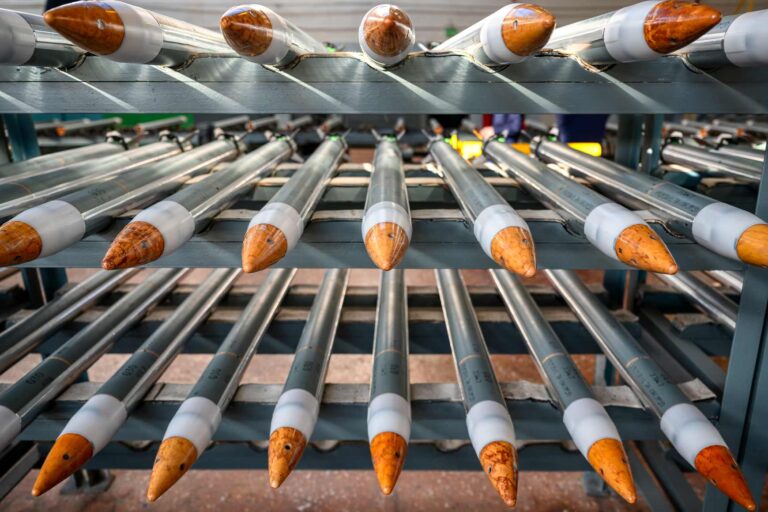
Alazan-6 anti-hail rockets

Russia has shown a drone interceptor built on the Alazan, a civilian anti-hail rocket, Militarnyi reported. The sample went on display at a weapons exhibition that Russian dictator Vladimir Putin toured at the Chebarkul training range in the Urals on 2 October.

Ukraine now sends drones at Russia by the hundreds, by Moscow's own count. Russia's Defense Ministry claimed its air defenses intercepted nearly 900 overnight into 6 October. Russia's missile-based air defense was built to repel aircraft raids and a few cruise missiles, not swarms of low-flying drones.

In May, Ukrainian intelligence said Russia was adding four regiments, 24 battalions, and 162 batteries to counter Ukrainian strike drones. The converted Alazan, which Militarnyi calls an anti-drone system, is one more piece of that search. Meanwhile, the commander of Ukraine's Unmanned Systems Forces, Robert Brovdi, said his forces struck 300 Russian air-defense assets between January and 19 September.

From hail reagent to shrapnel

Based on the size of the sample on display, the interceptor builds on the Alazan-2M or Alazan-6 series, Militarnyi assessed. The outlet put the stated cost at up to $12,000 per unit but did not say who named the figure. In civilian service, the rocket flies about 10 km, climbs up to 8 km, and carries about 0.5 kg of reagent. For air defense, the developers plan to replace that reagent with a fragmentation warhead.

Militarnyi's analysis of the published photos describes the front end as a steering assembly: four cruciform deflector fins, probably paired with a seeker or a fuze. At the rear sit folding stabilizers and the open nozzle of a solid-fuel motor, held in a metal cradle.

Anti-drone missile based on the Alazan, 2 October 2026
Anti-drone missile based on the Alazan, 2 October 2026. Photo: kremlin.ru

One sample among 300 exhibits

The Kremlin's account of the visit lists more than 300 weapons on display, including interceptor drones, but does not mention the rocket. Propaganda channel Russia 1 aired the interceptor in its report from the visit, and the Kremlin pool of state news agency RIA posted photos.

❌