❌

Vue normale

Ukraine’s Defense Ministry says some suppliers cannot build weapons ordered, and drops contracts to free $346 million for front

6 octobre 2026 à 10:23

The image shows Ukrainian marines. Source: The 34th Separate Marine Brigade of the Ukrainian Marine Corps

Ukraine is canceling part of its planned military purchases and moving the money to other priorities. Ukraine's Defense Ministry has announced that it, together with the General Staff and the Logistics Forces Command, will free about $346 million by terminating some weapons contracts and dropping some planned purchases.

What the army planned to buy in 2024 and 2025 may no longer be suitable for the front, the ministry noted, because technology and tactics change quickly. The review comes four days after the Ukrainian government drew about $1.1 billion from the defense reserve to pay soldiers in October amid a looming economic crisis.

The ministry gives five reasons for the review: some weapons no longer match combat tasks, certain suppliers cannot build the planned volume, certain models have not been codified, partners already cover some needs, and cheaper means can perform specific jobs in larger numbers.

"For us, there is one criterion: does the item work for results in combat today. Every hryvnia released from irrelevant contracts must reach the troops as the weapons needed right now and in the right place," Col. Yurii Pohribnyi, commander of the Logistics Forces, says.

The procurement agency calls each producer

The General Staff set the final list of purchases for review, and the ministry forwarded the documents to the Defense Procurement Agency to implement the decision. For specific items, delivery volumes were adjusted rather than canceled, which the contracts allow when needs change.

Affected producers have been informed, and the agency is discussing each item with suppliers based on the status and payments of each contract. Artem Romaniuk, acting director of the agency, has explained that further steps on each contract will depend on the army's current needs and the contract terms. The list of weapons stays secret for security reasons.

Funds freed up by terminating contracts and canceling planned purchases will be redirected to the urgent needs of Ukraine’s Defense Forces.

  • ✇Euromaidan Press
  • Ukraine’s battlefield gains may be pushing Putin to shift focus to early winter strikes, ISW says
    Ukraine's battlefield successes appear to be forcing Russian President Vladimir Putin to reevaluate his theory of victory and shift focus toward long-range strikes to compel Ukraine to surrender, rather than advances on the battlefield, the Institute for the Study of War said on 4 October. Ukrainian President Volodymyr Zelenskyy said Russia used more than 800 jet-powered drones during the week of 27 September to 4 October. Ukraine currently intercepts only 50–60% of jet-powered drones,
     

Ukraine’s battlefield gains may be pushing Putin to shift focus to early winter strikes, ISW says

6 octobre 2026 à 07:57

russian strike in Kyiv

Ukraine's battlefield successes appear to be forcing Russian President Vladimir Putin to reevaluate his theory of victory and shift focus toward long-range strikes to compel Ukraine to surrender, rather than advances on the battlefield, the Institute for the Study of War said on 4 October.

Ukrainian President Volodymyr Zelenskyy said Russia used more than 800 jet-powered drones during the week of 27 September to 4 October. Ukraine currently intercepts only 50–60% of jet-powered drones, leaving it vulnerable to the large number of new drones Russia is deploying.

The late-September start and the campaign's aim

ISW said Russian forces began their winter 2026–27 strike campaign against Ukraine's energy infrastructure in late September and that the campaign is aimed at making civilian life unbearable enough to force Ukraine to capitulate.

Russian forces would step up attacks on military facilities, defense industry sites, and related infrastructure in Kyiv and elsewhere in Ukraine, the Russian Defense Ministry said on 4 October, according to Reuters. The announcement followed Zelenskyy's vow to increase attacks on Russian oil refineries.

The ministry also claimed its recent strikes on Kyiv and other Ukrainian regions were a response to alleged Ukrainian attacks on civilian targets inside Russia. Among the grievances it named were Ukraine's strikes on Leningrad Oblast during the St. Petersburg International Economic Forum in June and alleged strikes on electoral infrastructure in Moscow during the 18–20 September State Duma elections, according to ISW.

ISW called the Russian Defense Ministry's framing of the recent strikes as retaliation for Ukrainian attacks on Russian civilian targets unfounded, saying many of its specific claims are "blatantly false." Russia has provided no evidence that Ukraine targeted electoral infrastructure, and Ukraine's 19–20 September strikes on Moscow targeted oil refineries and warehouses, the think tank said. The Russian strikes "are not an actual response to specific events," it concluded.

The 135 drones, the bridges struck seven times

Overnight on 3–4 October, Russia launched 135 Shahed-type and Gerbera-type drones, while also using decoy drones and Banderol or Dan-T loitering munitions. Ukrainian forces downed 123 drones and two loitering munitions, and strikes hit five locations, according to ISW, which cited the Ukrainian Air Force. Russian forces struck Kyiv's Northern and Southern bridges seven times between 1 and 4 October in an effort to disrupt Ukraine's economy and daily civilian life, ISW said.

Ukraine builds new layers of defense against jet drones

More than 12 .50-caliber machine-gun turrets are already working in Kyiv against jet-powered drones, and eight more will be installed in Kyiv Oblast, Zelenskyy said, Suspilne reported. He added that F-16s help a lot against the drones, according to Ukrinform. Ukraine is set to receive 2,000 Bars interceptor drones through joint production with Germany, RBC-Ukraine reported.

Ballistic missiles may be Russia's next wave

Zelenskyy said Ukraine estimates Russia has up to 700 ballistic missiles in reserve and produces 130–140 a month. He made the remarks at a joint media briefing with German Chancellor Friedrich Merz in Kyiv, Ukrinform reported. Russia is likely stockpiling ballistic and quasi-ballistic missiles for intense strikes after its jet-powered drones lose their current advantage, ISW assessed. ISW also cited an ongoing shortage of Patriot interceptors.

OHCHR has verified some 15,280 civilian casualties in Ukraine in the first eight months of 2026, 55% more than in the same period of 2025, UN High Commissioner for Human Rights Volker Türk said on 2 October.

Russia is out to break Ukraine’s economy this winter, Jetten says—and the Netherlands will help keep Ukraine’s drone-hunting F-16s in the air

6 octobre 2026 à 07:37

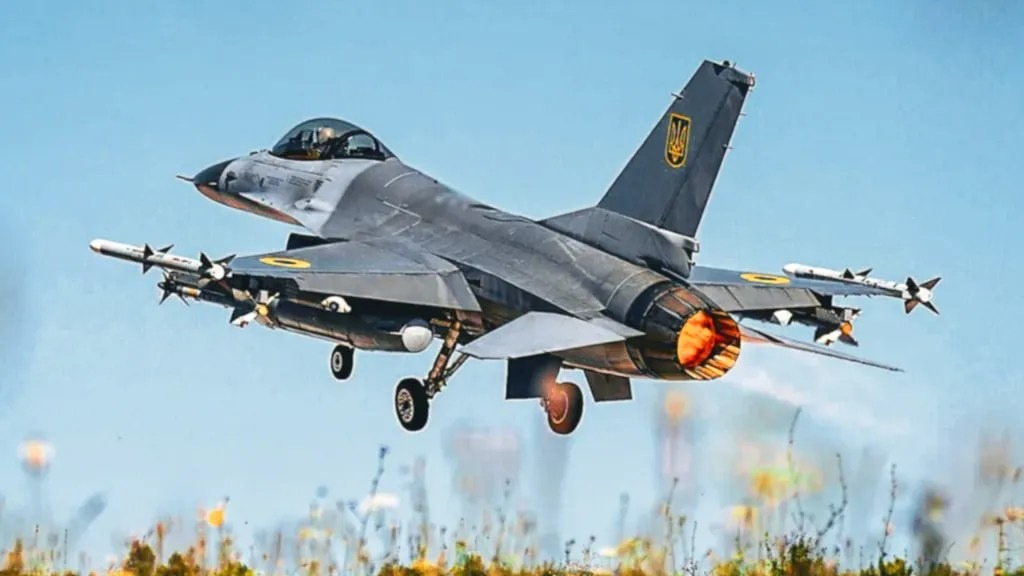
take off formation fly low navigate terrain—ukraine's f-16 trainees finished uk course russia helped design · post ukraine's air force carrying aim-120c aim-9 missiles fuel tanks terma pylons self-defense systems

The Netherlands will help Ukraine with maintenance, spare parts, and ammunition for F-16 fighter jets, Dutch Prime Minister Rob Jetten promised in a statement on 5 October. He made this and other statements following a phone call with Ukrainian President Volodymyr Zelenskyy.

Russia attacks Ukrainian cities with drones every day, increasingly with jet-powered ones. F-16 fighter jets are one of the effective options for shooting down these UAVs, but Ukraine has far too few of them. The F-16s are used very frequently and therefore require maintenance. About half of the aircraft spend extended periods abroad undergoing repairs and maintenance, Ukrainian President Volodymyr Zelenskyy told the Financial Times this month. The process of returning the aircraft has taken too long, and Ukraine has lost time when the jets were most needed to protect Ukrainian airspace, he said.

“A further strengthening of Ukraine’s air defense is literally vital,” the prime minister said.

Russia’s aggression continues to escalate, and F-16 fighter jets can help stop it

Russia is deliberately attacking civilian facilities and energy infrastructure and wants to make Ukrainian cities uninhabitable, Jetten said, adding that “we must not allow this to happen.”

One effective solution is the use of F-16 fighter jets, while Ukraine faces shortages of both these aircraft and the missiles for them.

Ukrainian F-16 pilots lack air-to-air missiles and take off with only the aircraft’s cannon during some daytime missions, the War Zone reported on 2 September. The M61A1 Vulcan 20mm rotary cannon can pose a danger to civilians on the ground, the outlet noted.

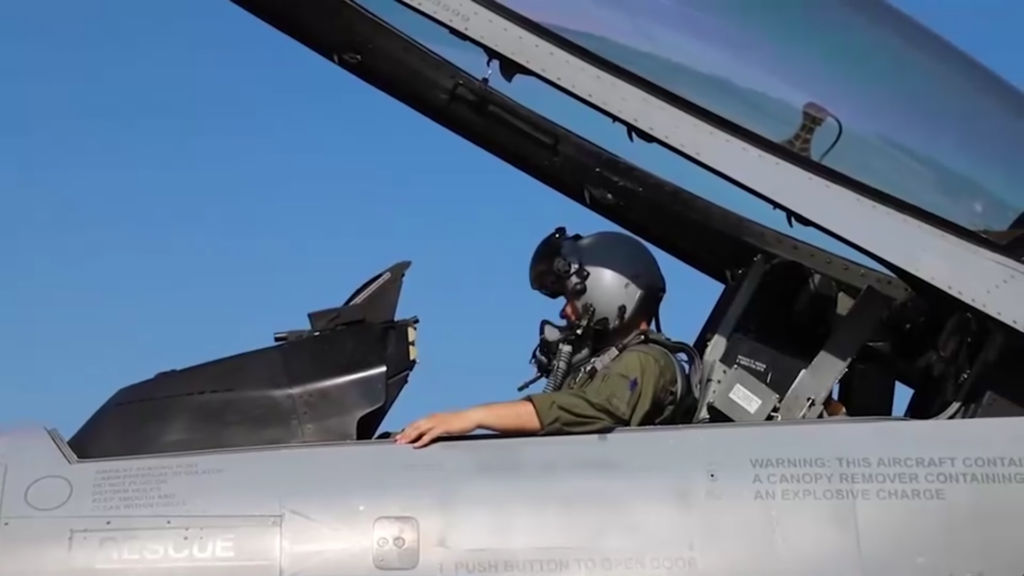
A pilot in an F-16 fighter in Ukraine.
A pilot in an F-16 fighter in Ukraine. Screenshot from the video of President Volodymyr Zelenskyy's speech on Ukraine's Air Force Day

Poland promised to provide Ukraine with F-16 missiles back in September, and several partners, including Poland, have already begun the process of transferring ammunition this month. Other partners include Spain and Belgium, which Foreign Minister Andrii Sybiha mentioned during a meeting with journalists, Hromadske reported on 1 October.

Ukraine critically needs this ammunition, especially as Russia prepares new strikes, Sybiha said.

“Against the backdrop of the fact that we have not yet built up the capability to repel jet-powered drones, against the backdrop of preparations for new strikes, it was critically important to help our military shoot down these drones. The most effective right now—apart from air defense systems, which are very expensive to use constantly against drones—are F-16 fighter jets,” the minister said.

Zelenskyy held talks with the president of France and the prime ministers of Poland and the Netherlands about means of protecting against Russian strikes, he said in his address on 5 October. In particular, he thanked the Dutch prime minister for his prompt response.

Whether Belgian maintenance delays are the reason for the low number of operational F-16s in Ukraine remains disputed

Fewer than 50% of the F-16s delivered to Ukraine may be operational, Defense Express reports, citing a Wall Street Journal (WSJ) editorial published on 29 September.

The Belgian company that services F-16s for Ukraine takes as long as 40 weeks to complete the work, retired US Navy Rear Admiral Mark Montgomery told the WSJ.

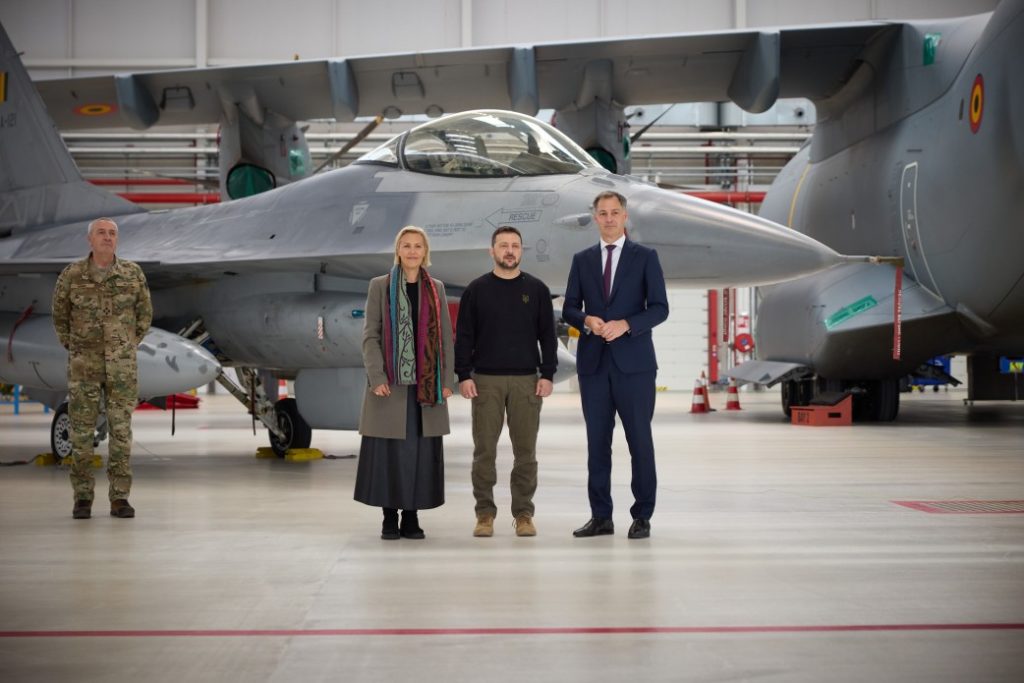
Zelenskyy with Belgian leaders at the Melsbroek Air Base
Belgian Defense Minister Ludivine Dedonder, Ukrainian President Volodymyr Zelenskyy, and Belgian Prime Minister Alexander De Croo visiting the Melsbroek Air Base, where Ukrainian personnel have been undergoing F-16 training, 28 May 2024. Photo: president.gov.ua

That day, Zelenskyy had already announced that Belgium would send three of its fighter jets to Ukraine this year. Ukraine will receive them under an accelerated procedure, he said.

Meanwhile, Ukraine’s Ministry of Foreign Affairs refutes claims that Ukrainian fighter jets have a catastrophically low operational availability rate and excessively long maintenance times.

“Contrary to these claims, our industrial sustainment partners are not only continuing to deliver overhauled aircraft, but are doing so at an increasing pace. Turnaround times are decreasing, not increasing,” Ukrainian Foreign Ministry spokesperson Heorhii Tykhyi said on 2 October.

Reports about the condition of Ukraine’s F-16s should not undermine confidence in international funding supporting F-16 maintenance or cast doubt on the need for additional F-16s from the stockpiles of partner countries, Tykhyi warned.

Turkey’s Korkut guns now shoot down Russian drones over Ukraine. Almost half of the jet-powered Shaheds still get through

Par : David Axe
6 octobre 2026 à 05:39

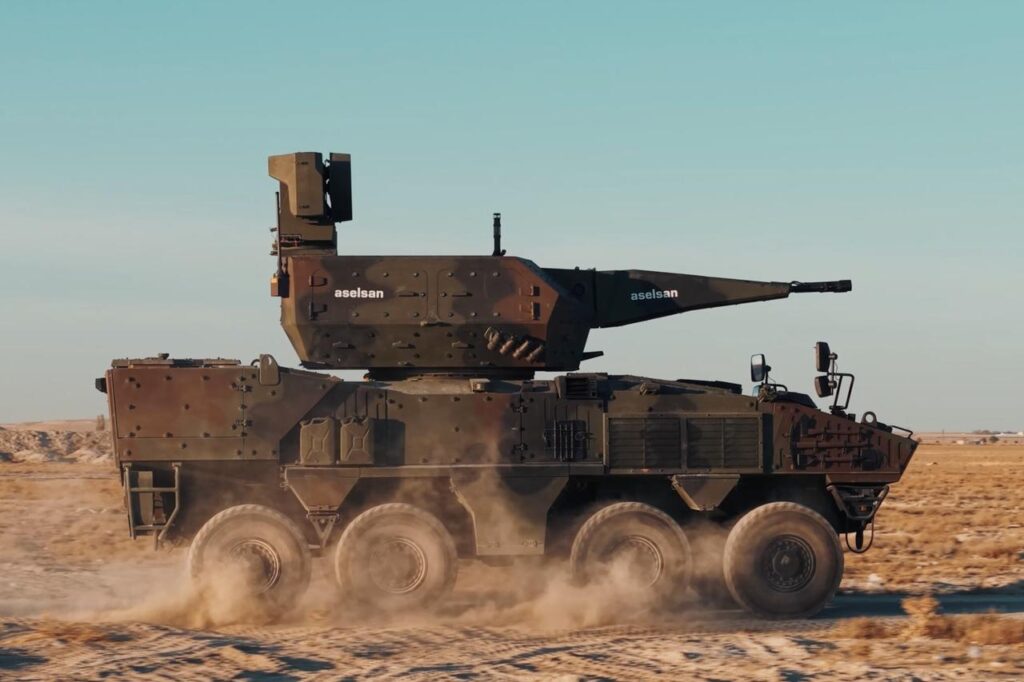
A Korkut air defense vehicle.

  • Ukraine has acquired new Korkut air defense guns from Türkiye
  • The Korkut is a pair of fast-firing guns on a tracked or wheeled chassis
  • Ground-based guns are effective defenses against drones
  • But the Russians are launching faster drones, and more of them are getting through

Ukraine has reportedly purchased Korkut self-propelled anti-aircraft guns (SPAAGs) from Türkiye. Effectively a Turkish take on the classic German-made Gepard SPAAG, a mainstay of Ukraine's defense against Russian one-way attack (OWA) drones, the Korkuts could help stiffen Ukrainian air defenses as winter looms and Russia intensifies its terror attacks on Ukrainian cities and power plants.

The problem for Ukrainian air defenders is that the latest jet-propelled Russian drones, the Geran-4 and Geran-5, are getting through. They fly at around 500 km/h, nearly three times as fast as an older, propeller-driven Geran-2, and in September Ukraine shot down just 55% of them, by Zelenskyy's count, against at least 90% of the slow ones, one analyst calculated. The Korkuts arrive in that gap. Ground-based guns are arguably Ukraine's most cost-effective anti-drone weapons, but they may not work so well against the fastest drones.

That means more Russian munitions are getting through. More Ukrainian homes are burning. More power plants are going dark. It's a crisis now. It'll be an even greater crisis when winter arrives and the temperature drops.

All that is to say, the handful of Korkut systems Ukraine has received from Turkish firm Aselsan are welcome, but they're not silver bullets against Russian drones.

A Korkut battery includes a command vehicle plus three tracked or wheeled vehicles armed with pairs of fast-firing, radar-cued 35-mm autocannons. The exact variant Ukraine received hasn't been disclosed; Middle East Eye's mention of 25-mm ammunition suggests it may be the smaller Korkut 100/25, built mainly to stop frontline drones. The Ukrainian Korkuts join a sizeable fleet of SPAAGs in Ukrainian service, most notably including potentially 90 or more 1960s-vintage Gepards with twin radar-cued 35-mm guns.

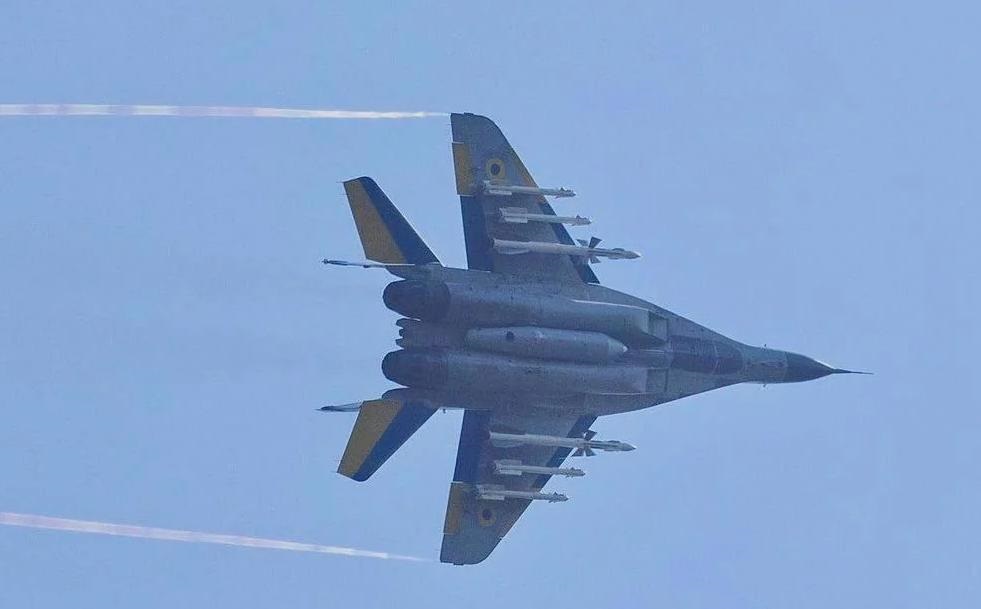
MiG-29 with R-27s and R-73s.
Explore further

Ukraine is running short of its best missiles for hunting Russia’s jet drones. Now MiG-29s are firing 1970s weapons

The tracked Gepards are old but effective. They, like all SPAAGs, can only engage incoming drones and other targets at fairly short range: just a few kilometers. But they're cheap. A SPAAG might fire a few hundred dollars' worth of shells to bring down a $50,000 Geran. A surface-to-air missile can hit a Geran from much farther away, but even the cheapest missiles cost tens of thousands of dollars apiece—and the supply is limited.

Gepards and other gun-based air defenses, along with wide-area strategic radio jamming, were the twin keys to Ukraine's temporary victory over Russian Gerans as recently as late last year. That's when the Russians were still mostly launching propeller-driven Gerans, and the Ukrainians were shooting down most of them.

Slipping interception rates

Vanquishing the slow Gerans didn't solve a separate air defense problem—how to shoot down supersonic ballistic missiles—but it did minimize Ukrainian casualties and mitigate the overall damage to Ukrainian infrastructure. Only the best, priciest, and rarest Ukrainian air defenses such as the Patriot and SAMP/T can hit incoming ballistic missiles. As missiles have run out for those batteries, more Russian ballistic missiles have gotten through.

But now more Gerans are getting through, too. On 26 September, President Volodymyr Zelenskyy said Russia had launched more than 2,730 jet-powered Gerans at Ukraine that month and that Ukrainian air defenses were shooting down 55% of them. Analyst and mapper Clément Molin set that against Air Force totals: of 5,437 drones launched between 1 and 26 September, the remaining 2,707 were slow Geran-2s and Gerbera decoys, and at least 90% of those were downed. The overall interception rate, he calculated, has fallen to close to 70%, from 86% to 90% earlier this year.

Ukrainian forces are scrambling to acquire more inexpensive surface-to-air missiles as well as faster interceptor drones. But they're racing against time and the growing preponderance of jet-propelled OWA drones. The Ukrainians' air defense problem may get worse before it gets better.

This statement from V. Zelensky 🇺🇦 is very interesting

🔹Based on UA air-force numbers, Russia already launched 5 437 drones this month, including 2 730 Geran-4/5 based on Zelensky's claim, 50%.
🔹Based on UA air-force numbers, 4 524 drones were downed this month, while Zelensky… https://t.co/F2JhDm7qEV pic.twitter.com/vVtpQQH5wz

— Clément Molin (@clement_molin) September 26, 2026

"Ballistic missile defense is a serious problem, but the increasing production of Geran-4, Geran-5, Banderol, and Filin jet-powered OWA drones/cheap cruise missiles will also be a growing challenge this fall and winter," Rob Lee, an analyst with the Foreign Policy Research Institute in Philadelphia, warned in August.

Winter weather reduces the effectiveness of interceptor drones and helicopters, Lee noted, and Ukraine will need more high-speed interceptors to counter the jet drones. "The interception rate for OWA drones will likely decrease."

But that doesn't mean the Korkut isn't helping forestall an even worse dip in the overall interception rate for incoming Russian drones. Ukrainian officials are reportedly pleased with the Turkish gun. "Korkut has been pretty much successful in countering the Russian attacks," a Ukrainian official told Middle East Eye. "There were of course some problems but nothing that couldn't be overcome through some small adjustments."

According to Middle East Eye, the Ukrainians are considering acquiring more Korkuts.

❌