❌

Vue normale

  • ✇Euromaidan Press
  • For the 17th or 18th time, Putin promised to take Donetsk “in a few months” – Zelenskyy
    Russian President Vladimir Putin has again told US officials that Russia can capture Ukraine’s Donetsk Oblast within several months, according to Ukrainian President Volodymyr Zelenskyy. Speaking to the UN General Assembly on 24 September, Zelenskyy said this was the latest in a long series of similar promises as Russia has spent nearly five years trying to seize the region. He said Putin has made such promises 17 or 18 times, repeatedly pushing the deadline further back. He contrast
     

For the 17th or 18th time, Putin promised to take Donetsk “in a few months” – Zelenskyy

24 septembre 2026 à 15:36

Ukrainian President Volodymyr Zelenskyy speaks during the UN General Assembly in New York on 24 September 2026. Photo: Ukrainian President's Office

Russian President Vladimir Putin has again told US officials that Russia can capture Ukraine’s Donetsk Oblast within several months, according to Ukrainian President Volodymyr Zelenskyy.

Speaking to the UN General Assembly on 24 September, Zelenskyy said this was the latest in a long series of similar promises as Russia has spent nearly five years trying to seize the region. He said Putin has made such promises 17 or 18 times, repeatedly pushing the deadline further back.

He contrasted those promises with Russia’s heavy battlefield losses and relatively limited territorial gains.

Russia has paid a huge price for its Donetsk offensive

Zelenskyy said Russian forces suffered 248,964 troops killed or severely wounded between January and August 2026.

He said Russia had captured only slightly more than 1,000 square kilometers of Ukrainian territory this year, while Ukraine had already liberated a significant portion of those gains.

Zelenskyy presented the figures as the human cost of Putin’s continued attempt to seize Donetsk, arguing that Russia is paying an enormous price for relatively limited territorial gains.

“Always the same: ‘Just a few more months,’” Zelenskyy said, adding that Putin would again fail to meet his latest deadline.

The Russian offensive is also facing a recent setback in northern Donetsk. Ukraine launched Operation Vivaldi in September to clear Russian infiltrators and retake ground near Lyman, disrupting Russia’s plan to encircle the fortified cities of the Donetsk “Fortress Belt.”

Ukrainian forces have reported retaking several settlements and clearing up to 125 square kilometers in the operation, although the full scope of the offensive remains undisclosed.
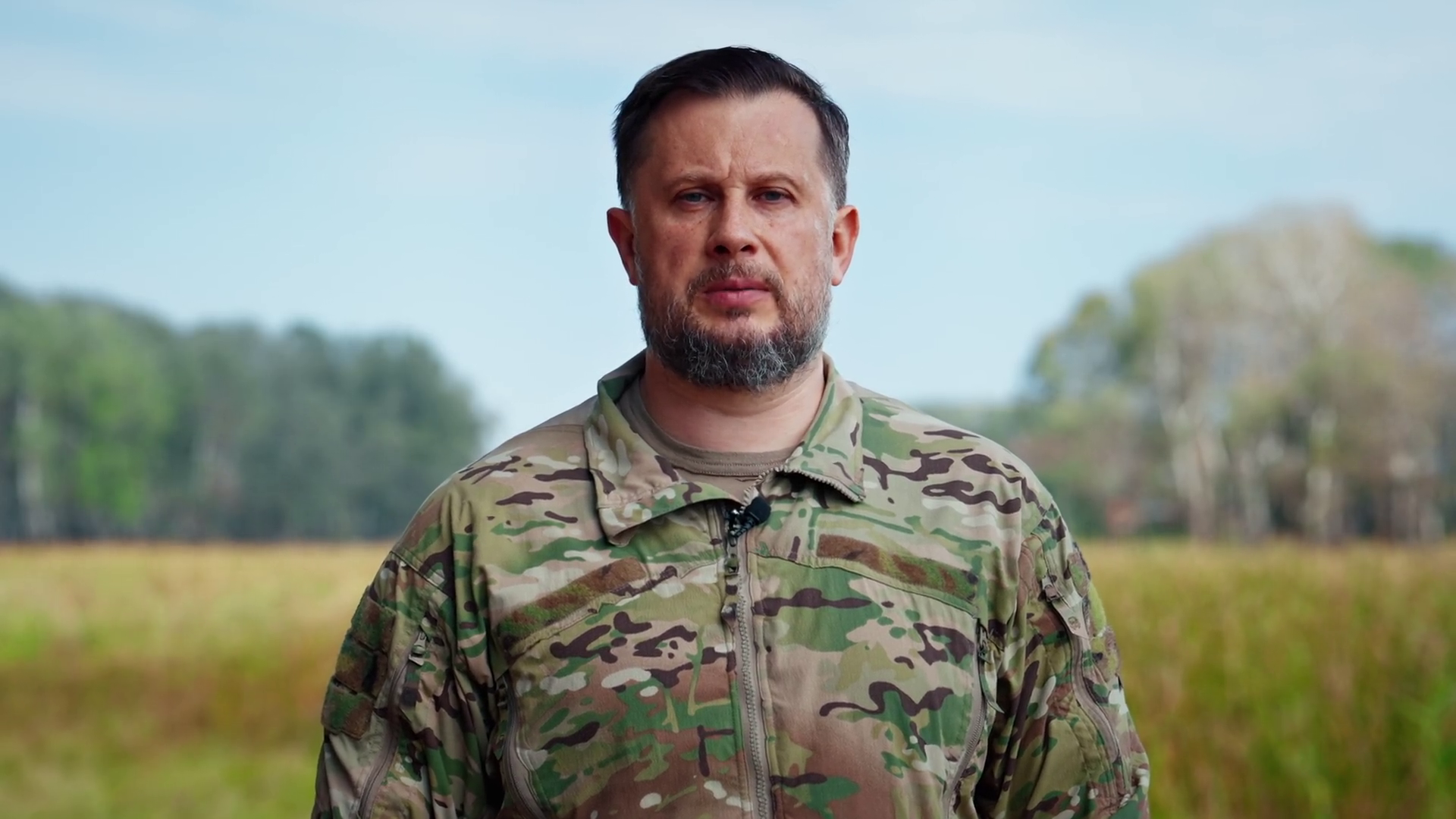
Ukraine's Third Army Corps commander Brigadier General Andrii Biletskyi announcing new developments in "Operation Vivaldi," 20 September 2026. Screenshot from video: Ukraine's Third Army Corps
Explore further

Ukraine retakes ground in a region Russia has fought for years to capture. “Vivaldi” is only getting started but is already “one of the most important victories for Ukraine in 2026”

Zelenskyy also warned that Russia’s ambitions extend beyond Donetsk. After saying Putin would again fail to capture the region, he said Russia would continue seeking other Ukrainian cities, naming Odesa, Kharkiv and Dnipro, while also pointing to Russian pressure on Moldova and threats toward Poland and the Baltic states.

Russia continues to pour missiles and drones into Ukraine

The battlefield campaign has been accompanied by a sustained Russian long-range attack campaign against Ukrainian cities and infrastructure.

Since the beginning of 2026, Russia has launched more than 2,100 missiles against Ukraine, including more than 950 ballistic missiles, according to Zelenskyy.

Ballistic missiles are particularly difficult for Ukraine to counter because it has a limited supply of interceptors capable of engaging them. Russia’s heavy use of ballistic weapons is therefore contributing directly to civilian deaths and infrastructure destruction.

Over the first eight months of the year, Russia also used 63,000 attack drones of various types, Zelenskyy said. More than 7,700 were jet-powered Geran drones, which he described as particularly destructive and dangerous.

The newer jet-powered drones are faster and more advanced than earlier Shahed-type models, making them harder to intercept and adding to the pressure on Ukraine’s air defenses as Russia attacks cities and infrastructure.

Zelenskyy said Russia was using the drones continuously to disrupt economic activity and normal life in Ukrainian cities, including by making it harder for children to attend school.

The figures show the scale of the Russian campaign beyond the front line. Alongside its ground offensive, Russia is using sustained missile and drone strikes to kill civilians, destroy infrastructure, and exhaust Ukraine’s air-defense resources.

North Korean troops add to Russia’s war effort

Zelenskyy also highlighted North Korea’s direct involvement in Russia’s war, saying its troops have suffered heavy losses while gaining battlefield experience alongside Russian forces.

He said North Korea’s military capabilities were also benefiting from its cooperation with Russia, pointing to improvements in its ballistic missiles and drone capabilities.

Ukraine recently transferred two North Korean prisoners of war to South Korea. Zelenskyy said capturing the soldiers alive had been difficult and described one prisoner’s attempt to take his own life after realizing he was about to be captured.

He said the soldiers had been conditioned to believe they had to die rather than surrender.

“Do you really want to give such a force more time to learn how to fight?” Zelenskyy asked.

Zelenskyy calls for de-escalation before winter

Zelenskyy separately warned that Russia could again target Ukraine’s energy and heating infrastructure this winter.

Russia has already intensified attacks on Ukraine’s energy system ahead of the cold season.

Russia has also explicitly threatened to “freeze” Ukraine this winter, with its Defense Ministry linking the threat to attacks on Ukrainian infrastructure. The country spent much of the previous winter dealing with the consequences of Russian strikes on power and heating infrastructure, including blackouts and disruptions to heat supplies.

Zelenskyy said Ukraine expects the coming winter to be difficult but warned that if Russia continues attacking Ukraine’s energy and heating systems, Ukraine will make the winter painful for Russia as well.

He called for steps toward de-escalation before winter, saying that diplomacy and military strength were both needed to end the war.

  • ✇Euromaidan Press
  • Russian-linked software sold to US government as CEO allegedly hid Russian control – two now arrested
    The US has arrested the CEO of Virginia-based digital forensics company Oxygen Forensics and a Russian national over allegations that they concealed the company’s Russian ownership and the fact that its software was developed in Russia while selling it to US government agencies, according to the US Justice Department. The case highlights a potential route through which Russian-linked networks could seek access to sensitive US institutions: concealing Russian ownership and influence behi
     

Russian-linked software sold to US government as CEO allegedly hid Russian control – two now arrested

24 septembre 2026 à 14:20

A tablet with cybersecurity forensics software from Oxygen Forensics. Photo via Militarnyi

The US has arrested the CEO of Virginia-based digital forensics company Oxygen Forensics and a Russian national over allegations that they concealed the company’s Russian ownership and the fact that its software was developed in Russia while selling it to US government agencies, according to the US Justice Department.

The case highlights a potential route through which Russian-linked networks could seek access to sensitive US institutions: concealing Russian ownership and influence behind seemingly legitimate American companies.

Lee Reiber, 55, and Oleg Sergeyevich Davydov, 52, are charged with conspiracy to commit wire fraud. The US Justice Department alleges that five Russian nationals, including Davydov, owned and controlled Oxygen Forensics through a Cyprus-based holding company, while its software was developed by a team in Russia.

Software sold to US government agencies

According to the criminal complaint, Oxygen Forensics presented itself to US agencies as an independent American company with no foreign ownership or control.

The company sold digital forensic software used to recover and analyze data from electronic devices to the US Department of War and three Department of Homeland Security components: the Secret Service’s National Computer Forensics Institute, Homeland Security Investigations, and the DHS Office of Inspector General.

The National Computer Forensics Institute awarded Oxygen Forensics a five-year contract in September 2024. The award file included a certification from Reiber stating that the company had no immediate or highest-level owner, according to the affidavit.

The Justice Department alleges that this was false. The Russian owners allegedly continued to make significant company decisions, set Reiber’s compensation, control payments and retain signatory authority over bank accounts after their names were removed from public corporate filings.

Russian software development allegedly concealed

The complaint says the same five Russian nationals also owned a Russian company founded by Davydov in 2000, previously known as Oxygen Software and now called MKO Systems.

According to the affidavit, the Russian company developed the software used by Oxygen Forensics, with developers working in Russia under Davydov’s direction. MKO Systems also sold its software in Russia under different product names to customers that reportedly included the Federal Security Service (FSB), the Russian Investigative Committee and the Russian Ministry of Internal Affairs.

After the US expanded sanctions against Russia in 2022 following Russia’s full-scale invasion of Ukraine, the Russian owners allegedly agreed with Reiber to conceal both the company’s ownership and its Russian development operations.

Reiber was installed as CEO, president and chairman in March 2022, while the Russian owners were removed from the company’s public filings, according to the Justice Department.

The complaint alleges that the arrangement did not end the Russian owners’ control. One of them was later appointed to the company’s board using a Turkish identity, according to the affidavit.

OSINT investigators had traced Russian software links

Militarnyi separately reported that OSINT investigators from InformNapalm had previously traced corporate and technological links between Oxygen Forensics and Russia’s Oxygen Software, now known as MKO Systems.

According to Militarnyi, the Russian company’s products were supplied to Russian security and law-enforcement agencies, including the FSB and Ministry of Internal Affairs. The investigation traced a common corporate and technological origin between the Russian and US software ecosystems.

CEO allegedly denied Russian involvement

The Justice Department says Reiber repeatedly certified to US authorities that the company had no foreign ownership or control.

In March 2026, he allegedly told DHS personnel that no Russian was involved in developing Oxygen Forensics’ software and that no one in Russia had access to its development environment. Days later, he published a statement saying the company had no development presence in any restricted jurisdiction.

The complaint alleges that the software was in fact written and managed by a team in Russia, using a cloud environment administered by one of the Russian owners.

The affidavit also describes a November 2023 exchange in which Reiber allegedly told the Russian owners that public reporting about the company’s Russian connections could jeopardize a pending US government contract.

Arrests and seizures

Reiber was arrested in Idaho on 20 September and released on bond after appearing in federal court. Davydov was arrested the same day at London Heathrow Airport before boarding a flight to Istanbul. The US says it will seek his extradition.

Separately, a federal judge authorized the seizure of Oxygen Forensics’ corporate bank accounts, around 57 domains and other cyber infrastructure allegedly used in the scheme. The domains and related infrastructure were seized on 20 September.

The case is being investigated by the US Department of Commerce’s Bureau of Industry and Security, with assistance from the Department of War Office of Inspector General’s Defense Criminal Investigative Service.

Each could face up to 20 years in federal prison if convicted.

  • ✇Euromaidan Press
  • EU approves nearly €3 billion for Ukraine as Kyiv meets more reform targets
    The European Union has approved nearly €3 billion in new funding for Ukraine, including nearly €800 million provided for the first time through the Ukraine Support Loan. The payment is the eighth regular disbursement under the EU’s Ukraine Facility. The funding will support Ukraine’s budget, recovery, modernization, and reform efforts as the country continues to fight Russia’s full-scale war and pursue EU membership. Ukraine meets 88% of targets due so far The latest payment follo
     

EU approves nearly €3 billion for Ukraine as Kyiv meets more reform targets

24 septembre 2026 à 13:44

EU summit Ukraine cyprus zelenskyy

The European Union has approved nearly €3 billion in new funding for Ukraine, including nearly €800 million provided for the first time through the Ukraine Support Loan. The payment is the eighth regular disbursement under the EU’s Ukraine Facility.

The funding will support Ukraine’s budget, recovery, modernization, and reform efforts as the country continues to fight Russia’s full-scale war and pursue EU membership.

Ukraine meets 88% of targets due so far

The latest payment follows Ukraine’s completion of 10 targets under its Ukraine Plan, the roadmap for reforms and investments linked to the Ukraine Facility. Ukraine has now completed 84 of the 95 targets required under the plan so far, according to the Council of the EU.

Funding under the Ukraine Facility is tied to Ukraine meeting these targets. It is intended to strengthen Ukraine’s macro-financial stability, keep public administration running, and support recovery and modernization.

The Ukraine Facility entered into force in March 2024 and provides more than €50 billion in grants and loans for Ukraine through 2027.

Norway adds €92 million

The EU also amended Ukraine’s plan to include approximately €92 million in non-repayable support from Norway.

Norway is the first non-EU country to contribute to Pillar I of the Ukraine Facility, which provides support through Ukraine’s reform and investment plan.

Sweden has provided more than €253 million in additional voluntary contributions over the past year, while the UK recently contributed more than €17 million to Pillar II, the Ukraine Investment Framework.

Ukraine has received more than €32 billion

Following the latest disbursement, Ukraine will have received more than €32 billion through the Ukraine Facility since mid-2024.

More than €40 billion of the facility’s total funding is earmarked for reforms and investments under the Ukraine Plan, with payments tied to Ukraine’s progress toward the agreed targets.

Russia could launch limited attacks on NATO in coming months, escalating hybrid warfare without being ready for full-scale conflict, Denmark warns

24 septembre 2026 à 12:13

Danish soldiers

Russia is likely to intensify its hybrid war against the West, including more frequent sabotage and cyberattacks that could cause greater damage and casualties, Denmark’s Defence Intelligence Service (DDIS) said in a new assessment published on 24 September.

The assessment says Russia has become increasingly willing to take risks against European and NATO countries, even while its full-scale war against Ukraine continues. DDIS also assesses a low but growing risk of Russia carrying out a limited military attack against one or more NATO countries bordering Russia in the coming months.

Russia preparing to escalate hybrid attacks

DDIS said Russia’s hybrid attacks have increasingly shifted from attempts to create fear and weaken support for Ukraine toward efforts to directly disrupt Western assistance to Kyiv.

This includes sabotage targeting defense companies and railway transport carrying military equipment to Ukraine. The Danish intelligence service expects Russia to carry out such attacks more frequently and with greater consequences.

Future operations could include destructive cyberattacks capable of disrupting critical societal functions and sabotage attacks with a high risk of casualties, according to the assessment.

DDIS also cited the foiled drone attack against Leipzig/Halle Airport in Germany as an example of Russia’s growing willingness to conduct operations against targets in Europe. German authorities said the attack had been planned by Russia over several months.

German Federal police officer protecting the city
Explore further

Germany suspects Russian intelligence behind arson attack as hybrid warfare threat grows across Europe

Growing risk of a limited attack on NATO

The Danish intelligence service assesses that there is a low but growing risk Russia could launch a limited military attack against one or more NATO countries bordering Russia.

Such an attack could take the form of isolated long-range strikes against infrastructure supporting Ukraine. Russia could also use Ukrainian-made drones in a false-flag operation or deploy a limited number of troops, potentially without national insignia.

DDIS says Russia could attempt such an operation even while continuing its war against Ukraine and without having the forces needed for a regional war against NATO.

The purpose, according to the assessment, could be to divert European resources away from Ukraine and create divisions within NATO if Moscow believes the alliance would struggle to agree on a collective response.

Russia would likely try to ensure that any military attack remained below the threshold that would trigger a full NATO response. DDIS warns, however, that Russia may be uncertain about what would trigger such a response.

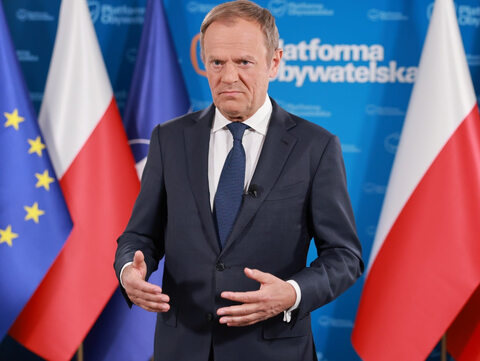
tusk polish prime minister
Explore further

After CIA head’s visit to Moscow, Poland’s PM warns Russia is preparing to escalate war. He puts critical window at seven or eight months

No signs of an imminent Russian invasion

Despite the increased risk of limited attacks, DDIS says it sees no indications that Russia is preparing to invade one or more NATO countries.

The agency considers a full-scale Russian invasion of NATO “highly unlikely,” but says it cannot be ruled out. If Russia decided to launch such an invasion, DDIS estimates it would need at least six months to build up the necessary forces.

The intelligence service also says Russia would need several months to build up forces near a NATO border before a limited military deployment, making such preparations difficult to conceal.

A Danish military helicopter, illustrative image. Photo: Denmark’s Armed Forces
Explore further

Russian warship fires flares at Danish military helicopter as Moscow’s provocations escalate

Russia under pressure from Ukraine’s attacks

The assessment says Russia is currently under more pressure than at any other point in its war against Ukraine.

Ukraine’s sustained long-range strikes are causing increasing damage deep inside Russia, while Russian forces are suffering heavy losses for marginal territorial gains. Moscow is also facing economic pressure from military spending, international sanctions and Ukrainian strikes against Russian energy infrastructure.

DDIS assesses that there is no prospect of Russia achieving a major breakthrough in Ukraine over the next six months. At the same time, it says Putin is highly unlikely to compromise on his fundamental objectives in the war.

The agency says Russia believes Europe will develop a stronger independent military capability by 2030, which Moscow could view as an increasing threat. This could create what DDIS describes as a window of opportunity for Putin to attempt to change Europe’s security order.

❌