❌

Vue normale

Russia is using inaccurate missiles that can miss by hundreds of meters to attack Ukrainian cities – and plans to scale them up
18 septembre 2026 à 15:26

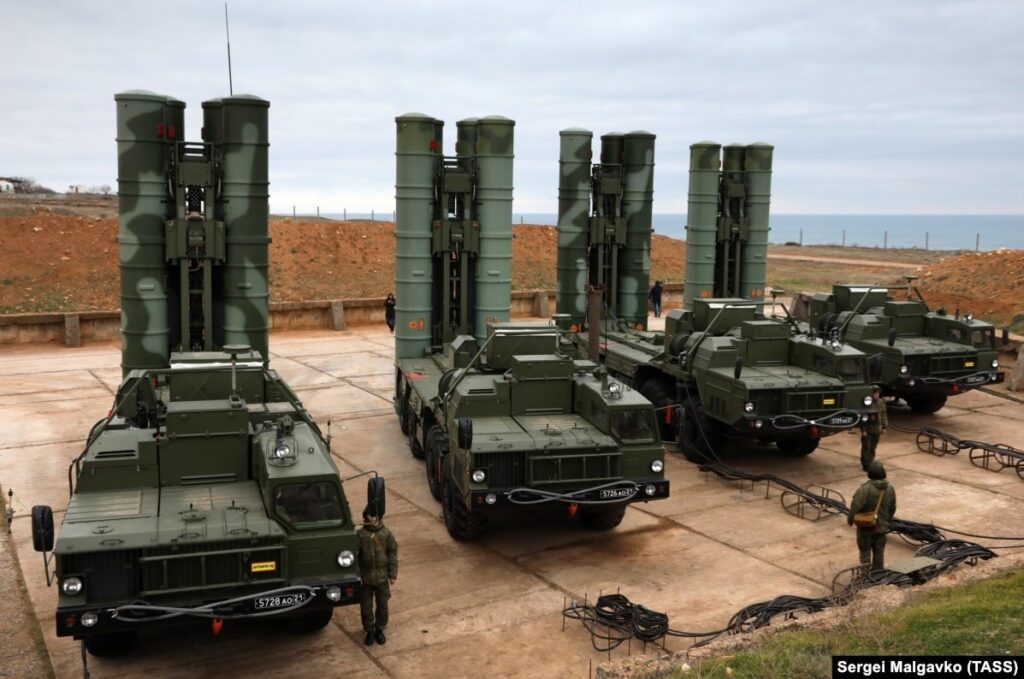
russia's arctic bases sit near-naked air defenses vanish guard moscow refineries burning inland · post s-400 defense missile launcher vehicles 2018 file sergei malgavko/tass rferl ukraine news ukrainian reports

Russia has begun using large numbers of a missile originally designed as a training target for air-defense crews, despite the weapon being significantly less accurate than the ballistic missiles Russia normally uses for precision strikes. The RM48U is now being launched against targets in Ukraine from S-400 air-defense systems.

The development comes as Russia has sharply increased its use of ballistic missiles against Ukrainian cities in recent months, while Ukraine faces a critical shortage of the interceptors needed to defend against them. Russian forces had more than tripled their monthly ballistic missile launches between April and July, according to Ukrainian military intelligence, as Ukraine's stocks of Patriot interceptors have dwindled.

More than half of the 228 ballistic and hypersonic missiles Russia launched in July and the first eight days of August were RM48Us, according to Ukrainian data reviewed by Reuters in an investigation published on 18 September.

A training missile turned into an inaccurate weapon

The RM48U was originally developed as a training target to help Russian air-defense crews practice intercepting incoming threats. It was not designed as a precision ground-attack missile.

Ukrainian investigators told Reuters that the missile is less powerful and less accurate than the Iskander, Russia's main short-range ballistic missile. They estimate that RM48Us deviate from their intended targets by around 300 meters on average.

The missiles nevertheless follow a high-speed ballistic trajectory when used in combat, making them difficult for Ukrainian air defenses to intercept.

Russia launches the RM48U from S-400 systems, repurposing part of its air-defense arsenal for offensive strikes.
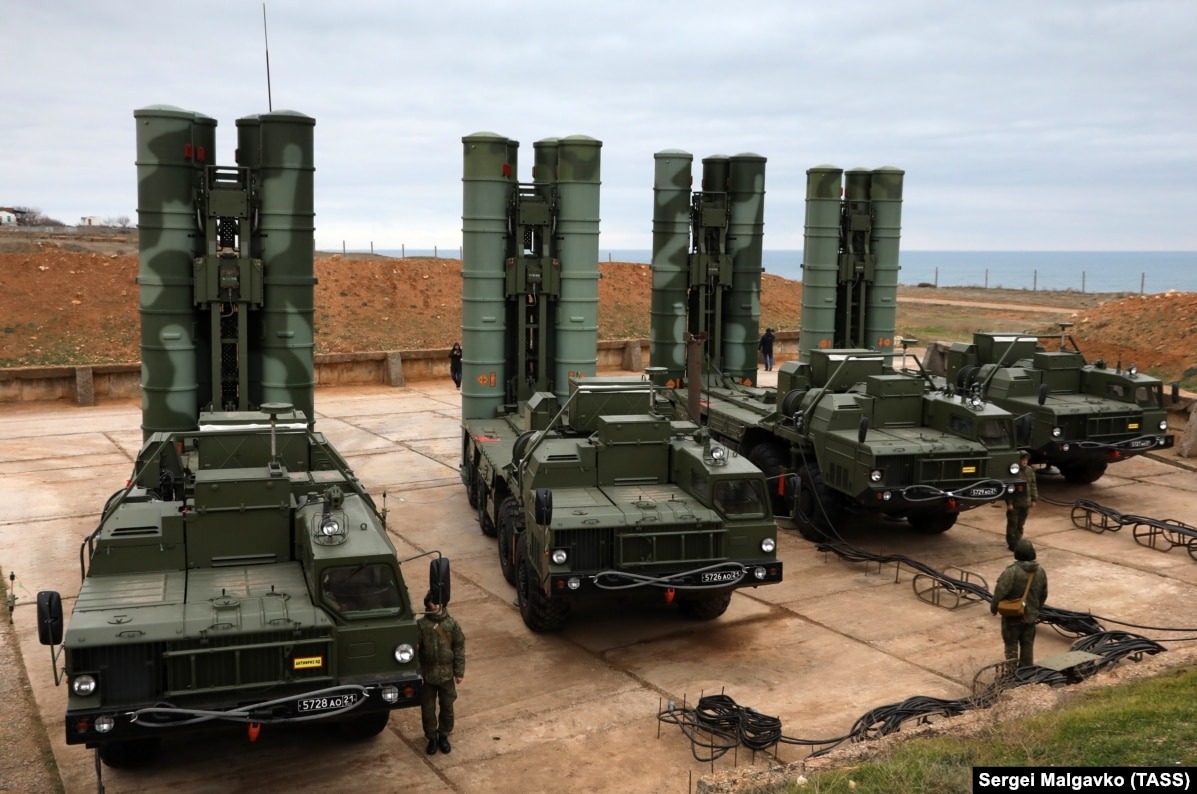
russia's arctic bases sit near-naked air defenses vanish guard moscow refineries burning inland · post s-400 defense missile launcher vehicles 2018 file sergei malgavko/tass rferl ukraine news ukrainian reports
Explore further

Ukraine strikes two Russian S-400 launchers in Bryansk. The same systems were used to attack Kyiv overnight.

Russia is using inaccurate missiles at scale

The number of RM48U launches increased sharply during the summer.

Russia launched 158 ballistic and hypersonic missiles against Ukraine in July, according to Ukrainian data reviewed by Reuters. Of those, 87 were RM48Us.

Russia then launched another 36 RM48Us among 70 ballistic and hypersonic missiles fired during the first eight days of August.

July was the highest month for Russian ballistic and hypersonic missile launches since the start of the full-scale invasion, according to the Ukrainian data.

The surge in RM48U use also coincided with a major decline in Russia's use of Iskanders. Russia launched more than 100 Iskanders in June but only 38 in July.

The shift indicates that Russia is using the less capable RM48U to sustain its ballistic missile campaign to continue causing indiscriminate destruction in Ukrainian cities while conserving more capable weapons.

RUSI analyst Sidharth Kaushal told Reuters that this allows Russia to preserve missiles such as Iskanders, as well as other more advanced weapons, for future attacks.

Less accurate does not mean less dangerous

The RM48U's poor accuracy has already had deadly consequences.

Ukrainian investigators concluded that an RM48U struck a railway platform in the Brovary district of Kyiv Oblast on 5 August, killing eight people. 

According to Ukrainian prosecutors cited by Reuters, the missile's warhead also scatters metal fragments over a wide area.

The attack illustrates the danger of Russia using a weapon that was never designed for precision strikes in populated areas. Even when the missile misses its intended target, its large deviation can leave civilians and civilian infrastructure within the affected area.

Russia denies deliberately targeting civilians and says it strikes military and other strategic targets.

Russia plans to produce more

Ukraine's military intelligence told Reuters that Russia plans to produce 480 RM48U missiles in 2026, more than twice the 200 produced last year.

That would give Russia a growing supply of a relatively simple ballistic weapon that can be used alongside its more sophisticated missiles.

The large-scale deployment of the RM48U represents a new development in Russia's ballistic campaign: a missile built to serve as a training target for air-defense crews is now being used as an offensive weapon against Ukraine.

At a time when Ukraine is struggling to replenish the scarce interceptors needed to stop Russia’s ballistic missiles, Moscow is expanding the range of weapons it can use to strike Ukrainian cities, killing more civilians and destroying more civilian infrastructure with each escalation.
“A warning to companies that remain”: Russia takes control of Nestlé and Auchan’s assets – companies that stayed in Russia following the full-scale invasion of Ukraine

18 septembre 2026 à 12:03

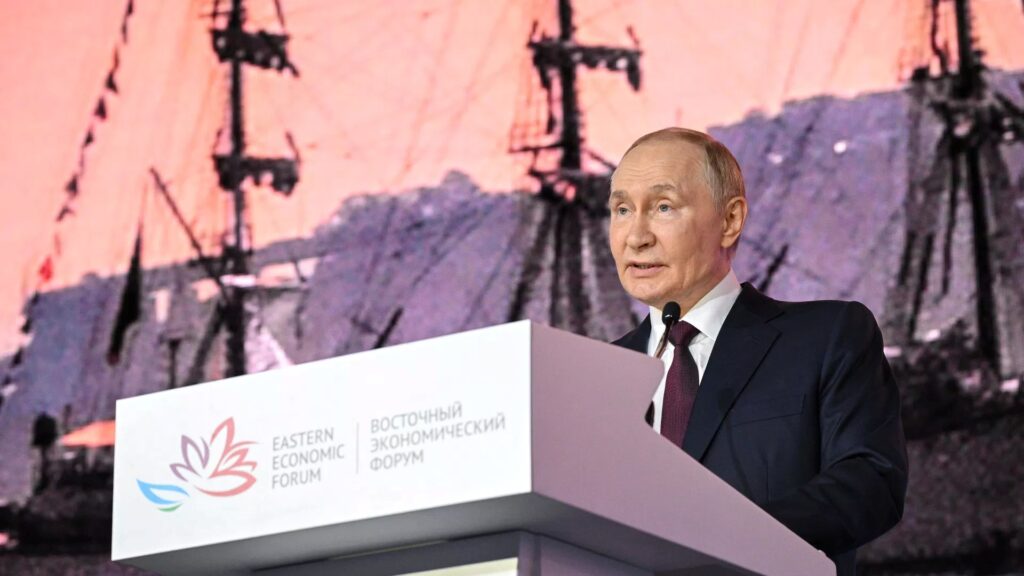
putin at the eastern economic forum in vladivostok on 5 september 2025

Russia has placed the Russian assets of French retailer Auchan, Swiss food giant Nestlé, and the former Leroy Merlin chain under temporary management, stripping the companies of effective control over their businesses in the country.

Foreign companies have long been urged to leave Russia because their continued operations generate revenue for a state waging war against Ukraine. They also face growing risks of asset seizure, legal and financial liabilities, and reputational damage as the Kremlin increasingly uses foreign-owned businesses as political leverage.

Russian President Vladimir Putin signed the decree on 17 September, transferring the assets to L.E.V. Management, a little-known Russian company. The decree also covers Russian assets linked to French logistics companies FM Logistic and Bati Logistics.

The measure does not formally change ownership. However, the companies' Russian assets are now controlled by the Kremlin-appointed administrator, and similar temporary-management arrangements have previously preceded forced sales or transfers to Russian buyers.

L.E.V. Management is headed by Andrei Krayushkin, a Russian Interior Ministry major general who previously served as first deputy head of the ministry's migration department.

According to Reuters, the Kremlin justified the move by pointing to the companies' ties to countries Russia considers "unfriendly." Kremlin spokesperson Dmitry Peskov said the countries involved are actively supporting Ukraine and participating in actions against Russia.

Companies warned they could lose their assets

The move comes after years of warnings to Western companies that remained in Russia carried an increasing risk of expropriation.

Denys Svyrydenkov, a representative of the B4Ukraine coalition, told Euromaidan Press that the organization had repeatedly contacted Auchan, Nestlé, and Leroy Merlin, warning them that their Russian assets could be seized.

"We repeatedly warned these companies about the serious and growing risks of continuing to operate in Russia, including the possibility of losing their businesses through nationalisation," Svyrydenkov said.

According to Svyrydenkov, the companies defended their continued presence in Russia by arguing that they provided essential goods and protected the livelihoods of Russian employees.

He rejected both arguments, saying Russia is largely self-sufficient in food and that Western sanctions do not prevent food or humanitarian goods from reaching the country. He also pointed to Russia's severe labor shortage and historically low unemployment, arguing that alternative employment opportunities are widely available.

"By staying, they were effectively running businesses that were no longer truly theirs," Svyrydenkov said.

Auchan and Nestlé remained in Russia

The three companies took different approaches after Russia launched its full-scale invasion of Ukraine in February 2022.

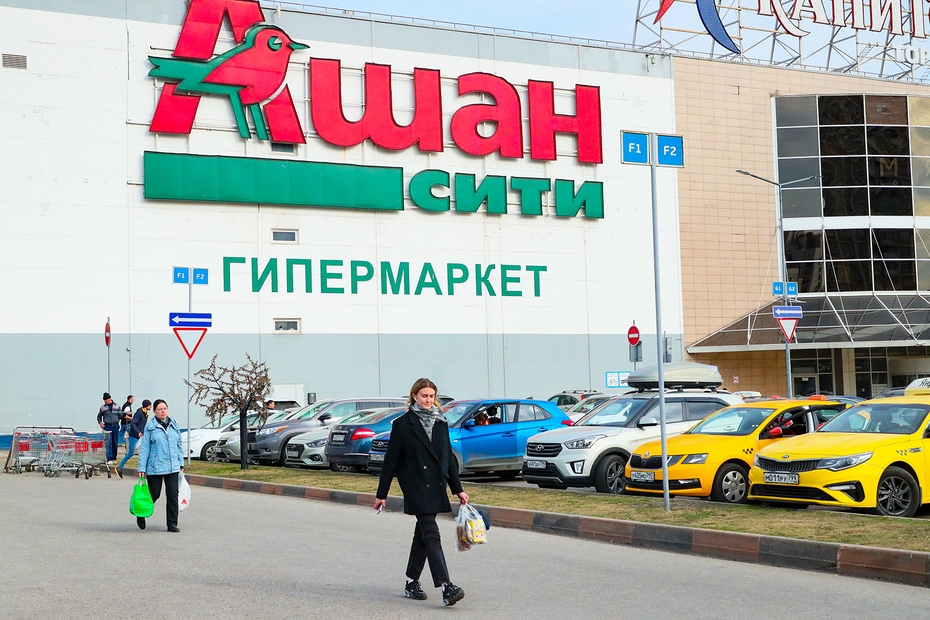
Auchan did not leave Russia and continued operating its large retail network. It currently has around 230 stores across 100 Russian cities. The chain's Russian turnover reached 127 billion rubles ($1.5 billion) in the first half of 2026, according to The Moscow Times.

Nestlé also remained, but reduced its Russian operations. The company halted investments, withdrew some brands including KitKat and Nesquik, and said it did not intend to profit from its Russian business. It still operates six production sites in Russia, making products including coffee, confectionery, baby food, and pet food.

Leroy Merlin's owner announced its departure from Russia in 2023. Its Russian legal entity was renamed Le Monlid, while its stores now operate under the Lemana Pro brand.

Nestlé said on 18 September that it was assessing its options and would take "all necessary steps" to protect its rights and ensure business continuity, particularly for its employees.

auchan mall russia newsru 95f5d5a4-920d-11ef-a84f-02420a0000c9_930
Auchan mall in Russia. Illustrative image: News.ru

A warning to companies still operating in Russia

The seizure reflects a broader pattern that has emerged since Russia began using temporary administration to take control of Western-owned businesses.

Companies including Danone, Carlsberg and Finnish energy firm Fortum have previously seen their Russian assets placed under state control. Reuters reported that Russia had seized more than $50 billion in foreign assets by 2025.

Svyrydenkov said the latest move was "more than predictable," arguing that Russia has repeatedly used Western companies' exposure to its domestic market as leverage.

"The Kremlin's seizure of the Russian assets of Auchan, Nestle and the former Leroy Merlin reinforces a reality that has been evident for years: Russia is a hostile and unpredictable environment where foreign companies' assets remain at the mercy of an authoritarian regime," he said.

He warned that companies remaining in Russia face the possibility of sudden expropriation while also continuing to generate economic activity inside a country waging war against Ukraine.

"The latest asset seizures should serve as a warning to all companies still operating in Russia: waiting for the Kremlin to decide the fate of your business is not a risk-management strategy," Svyrydenkov said.

❌