Vue normale

  • ✇Euromaidan Press
  • Russia’s attack drones now jam the cheap interceptors sent to kill them
    Ukraine's cheap interceptor drones have been knocking Russia's nightly attackers out of the sky, so Russia has now bolted a jammer onto some of its own drones to blind them, according to Serhii "Flash" Beskrestnov, an adviser to Ukraine's President on defense technology. He examined the system, found in drone wreckage, and mapped how it strikes back at the interceptor sent to hunt it. Russia batters Ukrainian cities with long-range drones most nights, and Ukraine has le
     

Russia’s attack drones now jam the cheap interceptors sent to kill them

25 août 2026 à 12:39

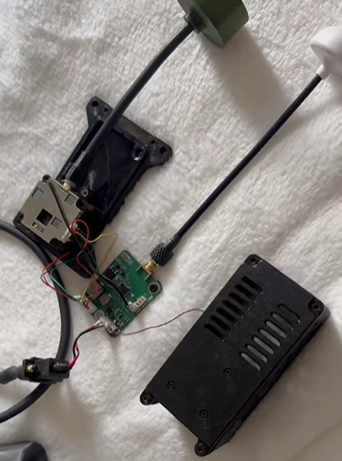
Electronic warfare equipment from Shahed drones.

Ukraine's cheap interceptor drones have been knocking Russia's nightly attackers out of the sky, so Russia has now bolted a jammer onto some of its own drones to blind them, according to Serhii "Flash" Beskrestnov, an adviser to Ukraine's President on defense technology. He examined the system, found in drone wreckage, and mapped how it strikes back at the interceptor sent to hunt it.

Russia batters Ukrainian cities with long-range drones most nights, and Ukraine has leaned on a cheap shield—drones costing a few thousand dollars—instead of burning through far pricier missiles. Anything that dulls that shield pushes the cost of defending the sky back up.

A jammer that waits for the interceptor

The unit rides on a Geran, Russia's version of the Iranian Shahed one-way drone. It listens for the video signal an approaching Ukrainian interceptor beams back to its pilot. Its receiver reads the interceptor's working frequency, then orders a transmitter to bury that same channel in noise, Beskrestnov found.
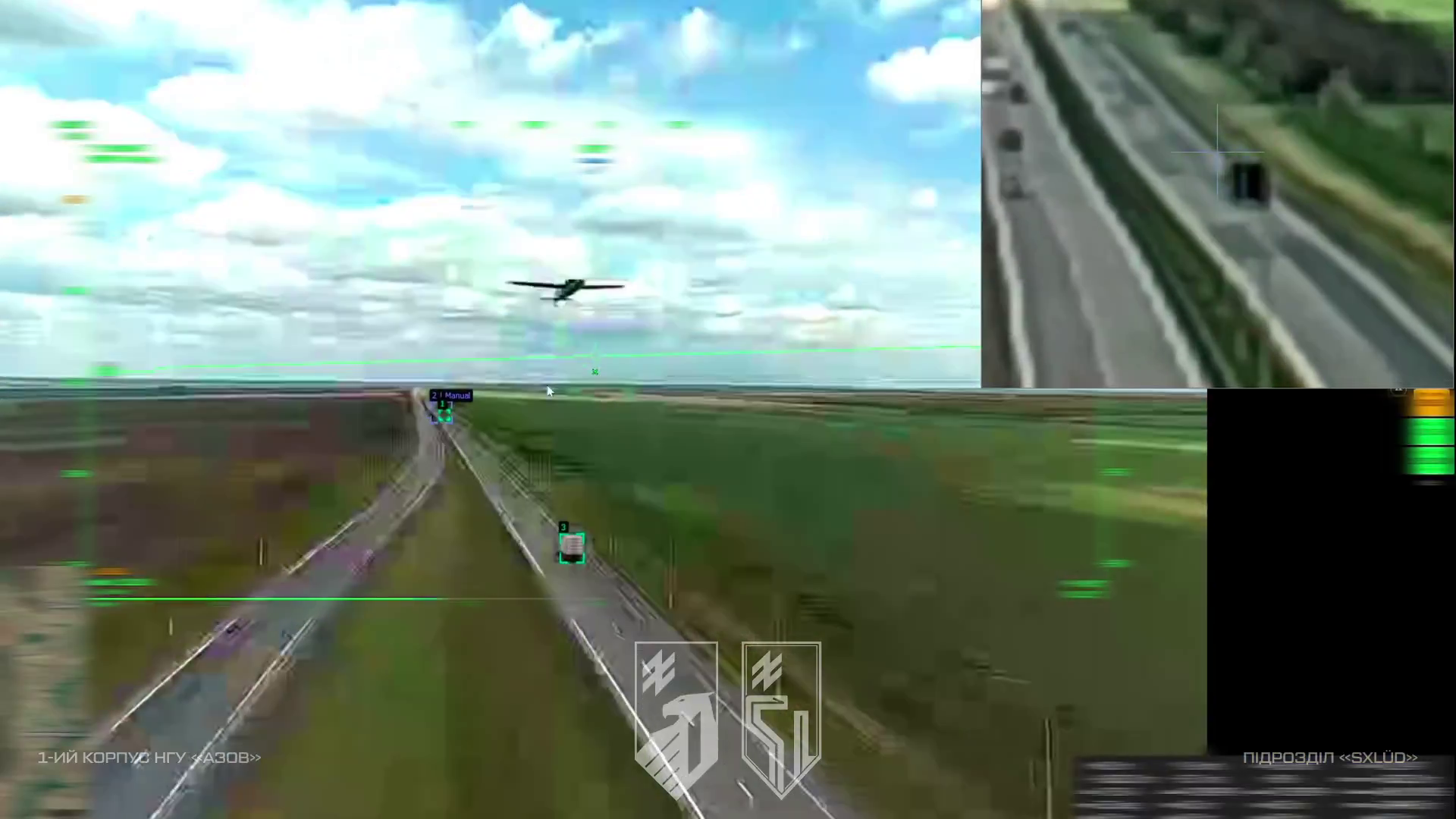
A Ukrainian Hornet drone spots another Hornet. Photo: Ukraine's 1st Azov Corps
Explore further

How Ukraine uses AI to guide long-range drone strikes through electronic warfare and deep into Russian-controlled rear areas

By his first estimate, the jammer's signal runs about five times stronger than the interceptor's video link—enough to wipe the picture and any chance of steering the drone onto its target.

Seconds decide it

In Beskrestnov's account, the system detected a test transmitter and switched on jamming after about three seconds, and the feed cut out. The device stays nearly idle until a hunter comes close, then jumps to full power to smother the signal. It targets the ordinary analog video band around 5.8 gigahertz that many cheap interceptors still use.

Possible answers, include interceptors with terminal-guidance homing for the final stretch of flight, digital communication links, or transmitters set to non-standard frequencies.
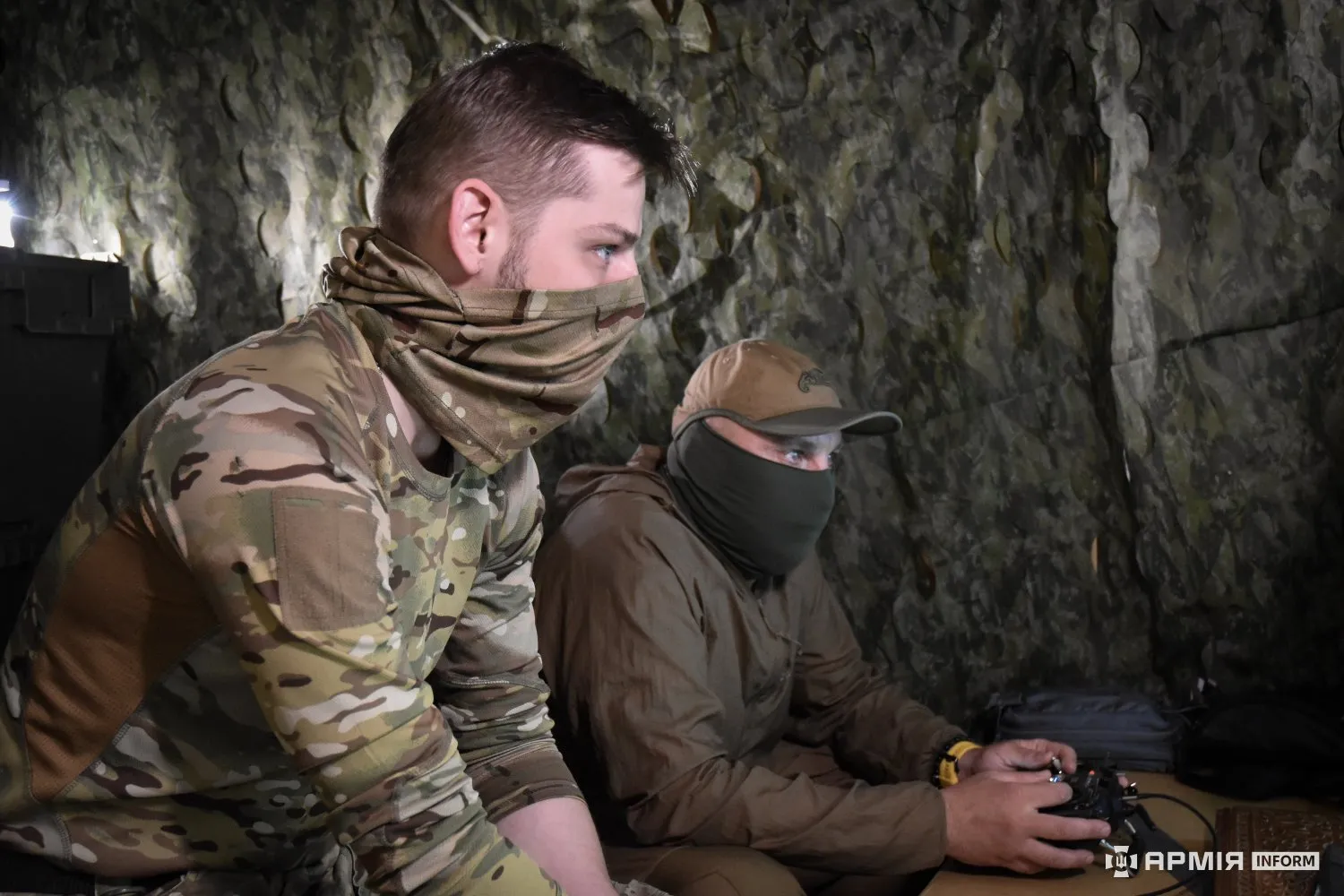
“two targets ammo one drone” how ukrainian drone crew hunts russian transport behind front line · post arti schultz daria moskalets/ armiyainform ukraine news reports
Explore further

“Two targets and ammo with one drone”: How a Ukrainian drone crew hunts Russian transport behind the front line

An old problem for Russia's drones

Russia has tried again and again to keep its one-way drones alive against Ukraine's defenses, including wiring jammers into some Shaheds earlier this year. Spending weight and power to protect a drone from a far cheaper interceptor shows how well those cheap drones work.

  • ✇Euromaidan Press
  • Ukraine mapped Russia’s Su-35 down to individual control units—and found 22 firms nobody has sanctioned
    Ukraine's military intelligence has named the Russian companies that build the Su-35S fighter jet and singled out those no country has sanctioned, according to the Main Intelligence Directorate of Ukraine's Defense Ministry (HUR). The unsanctioned suppliers make parts as ordinary as wheels and fuel-system units, and one of them helped develop the aircraft. Kyiv wants sanctions efforts synchronized across every link of Russia's military-industrial complex. More than four
     

Ukraine mapped Russia’s Su-35 down to individual control units—and found 22 firms nobody has sanctioned

25 août 2026 à 10:30

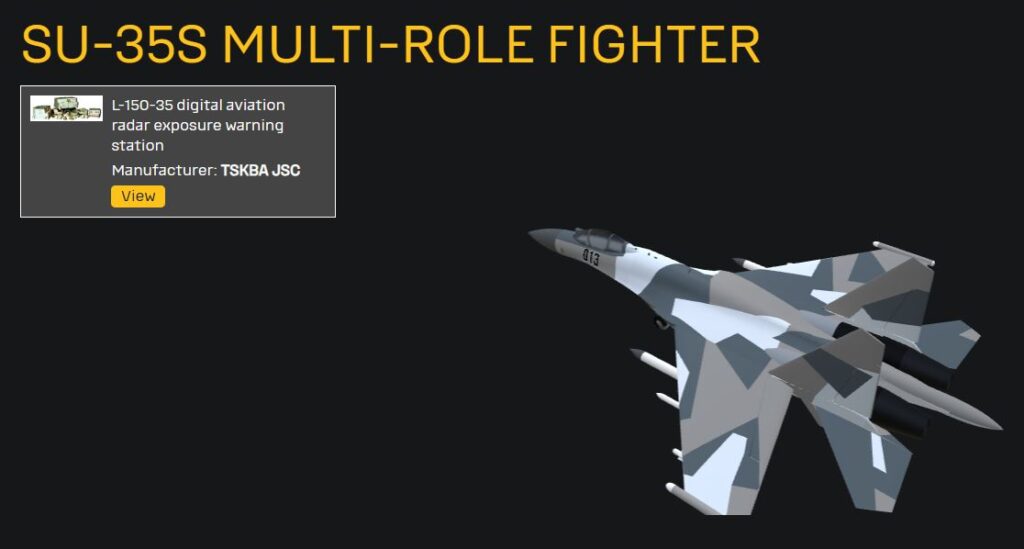
ukraine mapped russia's su-35 down individual control units—and found 22 firms nobody has sanctioned · post interactive 3d model su-35s multirole fighter published ukraine's war&sanctions portal l-150-35 radar warning station

Ukraine's military intelligence has named the Russian companies that build the Su-35S fighter jet and singled out those no country has sanctionedaccording to the Main Intelligence Directorate of Ukraine's Defense Ministry (HUR). The unsanctioned suppliers make parts as ordinary as wheels and fuel-system units, and one of them helped develop the aircraft. Kyiv wants sanctions efforts synchronized across every link of Russia's military-industrial complex.

More than four years of harsh restrictions have made Russia's arms industry slower and costlier to run rather than idle, and it keeps closing the gaps by substituting parts and buying through third countries. Every restriction works one company at a time, which makes the depth of a sanctions list, not its length, the thing that decides whether production slows.

The 22 firms no one has sanctioned

HUR identified 79 companies in the Su-35S production chain. Of those, 22 face no sanctions from any country restricting Russia over the war. The agency highlighted three. Rubin Aviation Corporation supplies the aircraft's braking and non-braking wheels. Gidroavtomatika builds the AU46-05 control units inside the fuel system. The Oktava research institute carried out design and development work on the Su-35S itself.

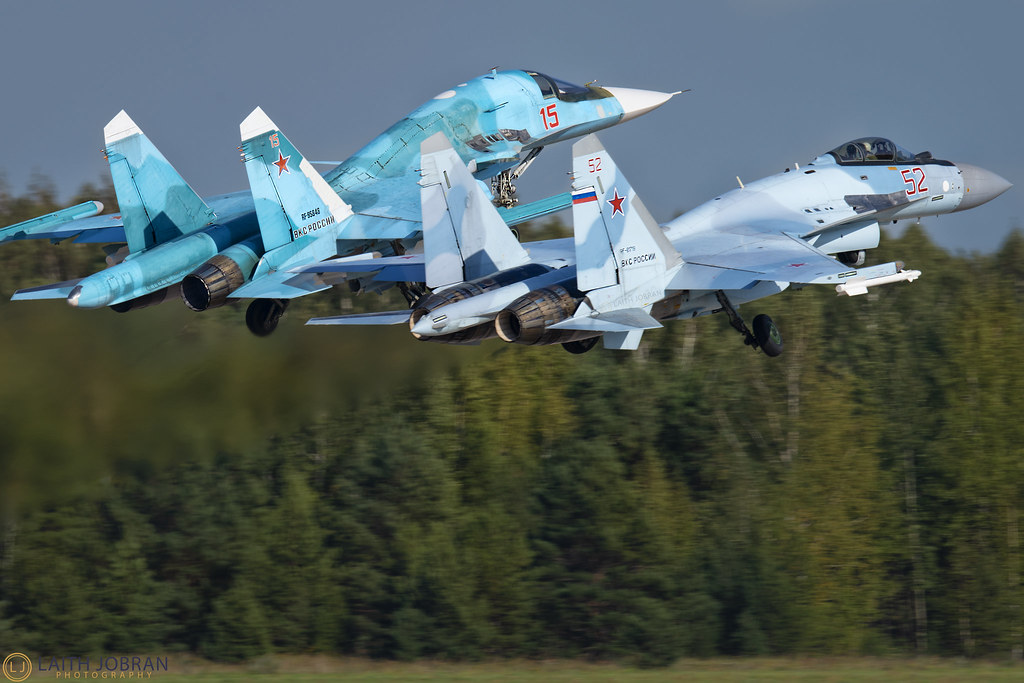
Russian Airspace Force's Su-34 fighter-bomber (left) and Su-35 fighter jet (right). Illustrative image: Flickr/Laith Jobran

What the rest of the network builds

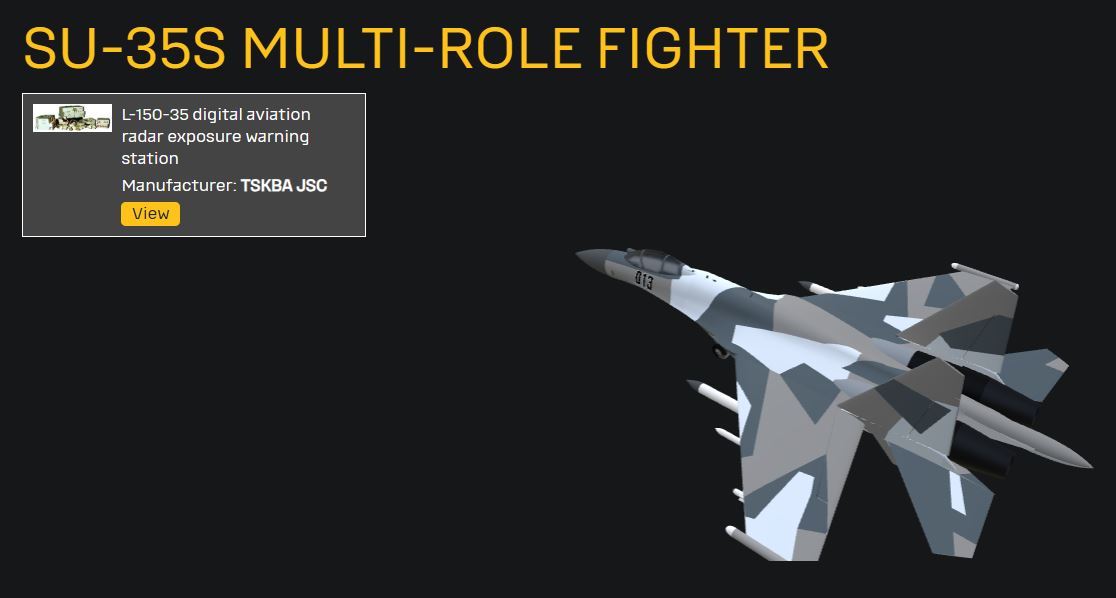
The 79 firms develop and produce the engines and fuel system, the control, communications, and guidance systems, the electronic warfare suite, and the main aviation missiles the jet carries into the war against Ukraine. HUR set the data out in the "Components in weapons" section of its War&Sanctions portal. The page carries a rotatable 3D model of the aircraft whose parts open onto the firms behind them, alongside directory listings and a profile for each company.

Russia uses the jet mainly to cover its own Su-34 fighter-bomber strike groups, ground troops, and installations. It also intercepts Ukrainian drones and cruise missiles, and works against Ukrainian air defense systems. Ukraine's Air Force said in July it had shot one down over the east, and such losses are hard for Moscow to replace: Russian factories ordered 12 of the jets in 2024 and delivered 10.

ukraine mapped russia's su-35 down individual control units—and found 22 firms nobody has sanctioned · post interactive 3d model su-35s multirole fighter published ukraine's war&sanctions portal l-150-35 radar warning station
Explore further

Ukraine mapped Russia’s Su-35 down to individual control units—and found 22 firms nobody has sanctioned

Three sanctions regimes, loosely aligned

The gaps HUR points to exist because the restrictions are not one list. The EU legislates in packages, the US and other G7 states maintain their own designations, and Ukraine issues sanctions by presidential decree, each covering a different set of firms. Kyiv has spent years asking partners to synchronize those lists, and its own designations often run ahead of them. A company can therefore supply a frontline fighter and still trade freely under most of them.

Previously, HUR ran the same exercise on the Su-34, where a third of the production network was still unsanctioned. The same pattern shows up above the component level, with Russia's largest arms conglomerate covered by EU measures while hundreds of its subsidiaries are not, and Western machine tools still sitting inside Russian missile plants. 

❌