Vue normale

  • ✇UKR Inform
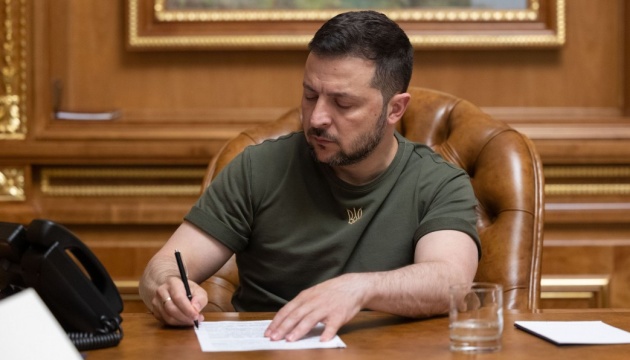
  • Zelensky honors 289 Ukrainians on Independence Day
    On the occasion of the 35th anniversary of Ukraine’s independence, President Volodymyr Zelensky awarded state honors and conferred honorary titles on 289 artists, athletes, educators, scientists, medical professionals, diplomats, military personnel, volunteers, and representatives of other fields.
     
  • ✇Euromaidan Press
  • EU approves $7.12 billion for Ukraine’s defense as Kyiv marks 35 years of independence
    The European Commission approved €6.1 billion ($7.12 billion) in new defense procurement for Ukraine on 24 August, covering air and missile defense systems, missiles, ammunition, and radars. European Commission President Ursula von der Leyen announced the decision as Ukraine marked its Independence Day. Russia's intensifying missile campaign has outpaced what Ukraine's partners can supply, and Europe is now financing the systems its own industry can build while the scar
     

EU approves $7.12 billion for Ukraine’s defense as Kyiv marks 35 years of independence

24 août 2026 à 10:11

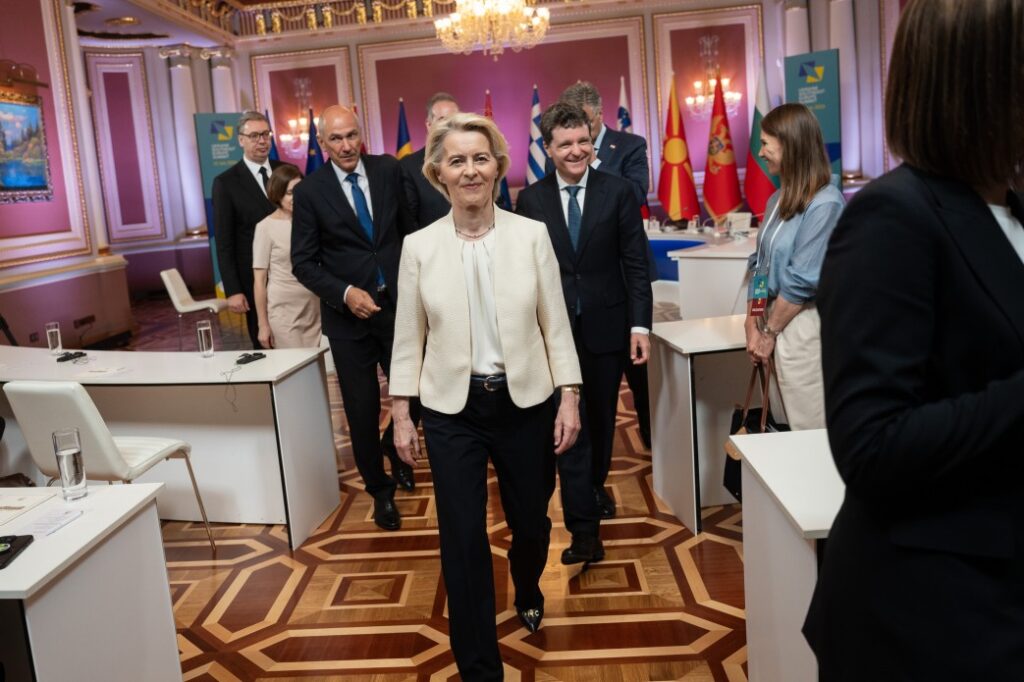
eu approves $712 billion ukraine's defense kyiv marks 35 years independence · post european commission president ursula von der leyen 5th ukraine–southeast europe summit 15 2026 presidentgovua ukraine news ukrainian

The European Commission approved €6.1 billion ($7.12 billion) in new defense procurement for Ukraine on 24 August, covering air and missile defense systems, missiles, ammunition, and radars. European Commission President Ursula von der Leyen announced the decision as Ukraine marked its Independence Day.

Russia's intensifying missile campaign has outpaced what Ukraine's partners can supply, and Europe is now financing the systems its own industry can build while the scarcest interceptors stay in American hands.

How the €90 billion loan pays out

The funding is part of the EU's €90 billion ($105 billion) Ukraine Support Loan for 2026-27, with €60 billion allocated to defense and €30 billion for budgetary support. The new package comes on top of €16 billion in previously approved defense procurement. Reuters put the disbursed total at €8.35 billion.

On 30 June, the European Commission disbursed €3.9 billion as the first payment under a first tranche of around €6 billion dedicated to drone procurement. On 15 July, it disbursed €1.1 billion, and on 30 July another €3.47 billion for drones, missiles, air defense, and Gripen fighter jets. The Commission's own three defense-window payments add to €8.47 billion.

Most of the buying will be from EU defense companies, and the Commission said deliveries will mean drawing down stockpiles, reprioritizing orders, and raising production. Under the mechanism, Ukraine submits signed contracts with defense companies, and the Commission reviews them before releasing funds.

Interceptor deliveries are falling as strikes rise

Air defense is among Ukraine’s most urgent military needs as Russia steps up its aerial campaign. The European Commission said Ukraine faced 376 missile strikes in July alone.

Kyiv has repeatedly warned of shortages of interceptors, particularly for ballistic missiles. The shortfall traces to Washington: since the United States went to war with Iran, it faces its own Patriot shortage and has resisted releasing large numbers to Ukraine.

Ukrainian President Volodymyr Zelenskyy released figures ahead of the Independence Day meeting that show the scale: Ukraine received 675 Patriot interceptors in 2023 and 364 in 2025, while 264 are projected for 2026, against a request for at least 300 for the winter, according to Kyiv Post.

Allies gather in Kyiv with missiles on the table

The announcement coincided with a hybrid meeting of the Coalition of the Willing in Kyiv. British Prime Minister Andy Burnham, German Chancellor Friedrich Merz, and French President Emmanuel Macron co-chaired the meeting, with Macron joining by videoconference, the Élysée Palace said. European Council President António Costa also took part, and NATO was represented by Deputy Secretary General Radmila Šekerinska.

Britain agreed to let defense firm MBDA release classified information on UK components of the long-range SCALP missile so Ukraine and France can set up local assembly lines, the UK government said. The EU decision followed Norway's pledge on 23 August to provide Ukraine with about $9 billion in support in 2027, including military, humanitarian, and financial assistance. Nordic and Baltic leaders announced the pledge during a visit to Kyiv.

  • ✇Euromaidan Press
  • No GPS, no landmarks—how Ukraine’s drones hunt Russian spy drones far out over the Black Sea
    Ukraine is building a sea-facing layer of air defense along its southern coast, Kyrylo Liukov, head of the unmanned technologies department at the Serhii Prytula Foundation, wrote in a column for RBC-Ukraine. Winged interceptors now reach the Russian spy drones that guide strikes in the south. Russia's nightly drone strikes on Ukrainian cities have turned air defense into a race to close every corridor Russia can fly through, over land first and now over the open sea. K
     

No GPS, no landmarks—how Ukraine’s drones hunt Russian spy drones far out over the Black Sea

24 août 2026 à 08:58

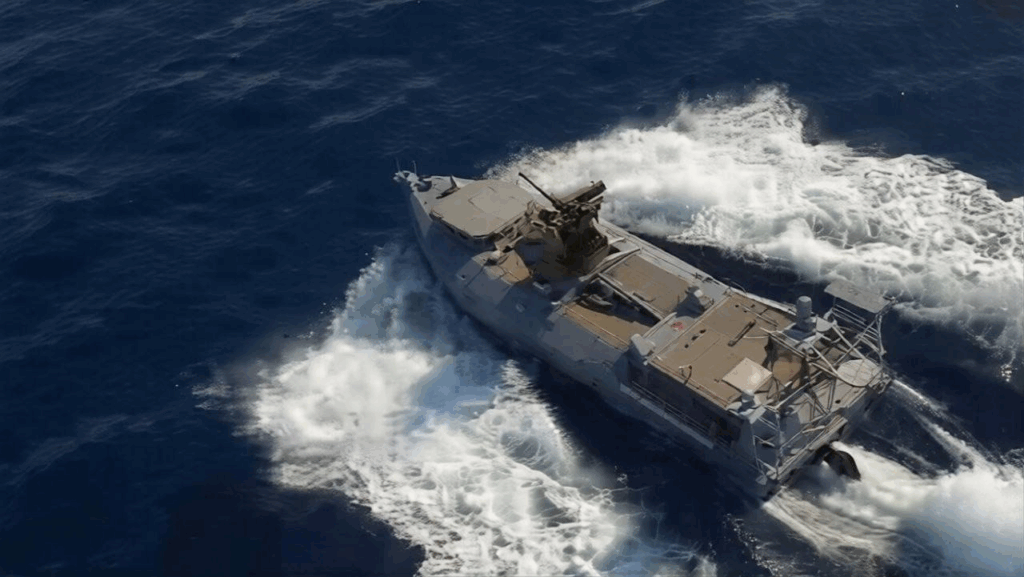
Ukraine sea drone USV machine gun naval

Ukraine is building a sea-facing layer of air defense along its southern coast, Kyrylo Liukov, head of the unmanned technologies department at the Serhii Prytula Foundation, wrote in a column for RBC-Ukraine. Winged interceptors now reach the Russian spy drones that guide strikes in the south.

Russia's nightly drone strikes on Ukrainian cities have turned air defense into a race to close every corridor Russia can fly through, over land first and now over the open sea. Kyiv does it with cheap interceptors rather than costly missiles, and keeps having to chase Russian workarounds. The sea was the stretch air defense could not reach, and it is where Russia keeps the spotters that make its Shahed swarms steerable.

Land and sea are two different fights

Defending the sky over land and over open water are two different problems, Liukov wrote. Multirotor copters are fast and simple to launch near the coast, but past roughly 25 km offshore, a multirotor is almost useless. Russia builds its mission routes so that drones cross dozens of kilometers over sea before they turn toward Ukrainian targets. Fixed-wing drones close the gap. Built like gliders, they loiter for over an hour and hold a link at 40 km and beyond, helped by an open radio horizon that land's terrain and buildings deny them.

Recon drones are the priority target for a reason. Beyond spotting and confirming hits, they work as relays in a MESH network for a group of strike drones. In that setup, Russian crews can steer Shaheds by hand right up to the moment of impact, Liukov wrote.

Southern units recently set three distance records with foundation-supplied interceptors. The 18th aviation commandant's office of Air Command South downed a Russian Orlan-30 reconnaissance drone 110 km out. It used a Wovkulaka Spitfire interceptor, the longest kill on record for that system.

The 12th Separate Special Purpose Center set the other two, flying a system from the miltech company TechnoTaras: an Orlan downed at 86 km, and a 145 km hunt measured from the takeoff point that held a stable digital link the whole way, Liukov wrote. That leaves Russia's drones exposed much farther from shore than its planners assume, he added—and if such results become routine, Russia has to pull its transit routes farther out still.

The Maiachnia beacon line

A less obvious problem was navigation, not shooting. A drone flying without GPS steers by landmarks, and over open sea, there are none. Late last year, the foundation, the 12th Separate Special Purpose Center, and TechnoTaras launched a project called Maiachnia. It strings radio beacons on the Skyline system along the coast from Ochakiv to Izmail. The beacons work on their own and keep backup power, tied to a central network that operators can adjust remotely. An operator can then track the drone even under GPS jamming, bad weather, or a temporary loss of link, and bring it home. More than five southern units now fly the foundation's winged drones.

The real stakes sit offshore—the southern ports and the Black Sea grain corridor that Russian drones threaten and that land-based copters can barely reach. Keeping Russian drones farther offshore would buy room there. But Russia is scaling up a faster, jet-powered Shahed, and the interceptor answer to it is early—so the offshore edge just won will have to be defended again.

❌