Vue normale

  • ✇Euromaidan Press
  • From Warsaw to New York, Ukrainians will form human chains on Independence Day
    Ukrainians and supporters will form human chains in cities abroad at 19:00 (7 p.m.) on 24 August 2026 to mark Independence Day, Ukraine’s Mission to the European Union announced on 20 August. Russia’s invasion has driven more than 5.6 million Ukrainians to seek refugee or other international protection abroad, according to the UN Refugee Agency. The human chains will help displaced Ukrainians and established diaspora communities show that Ukraine still needs their host
     

From Warsaw to New York, Ukrainians will form human chains on Independence Day

22 août 2026 à 12:47

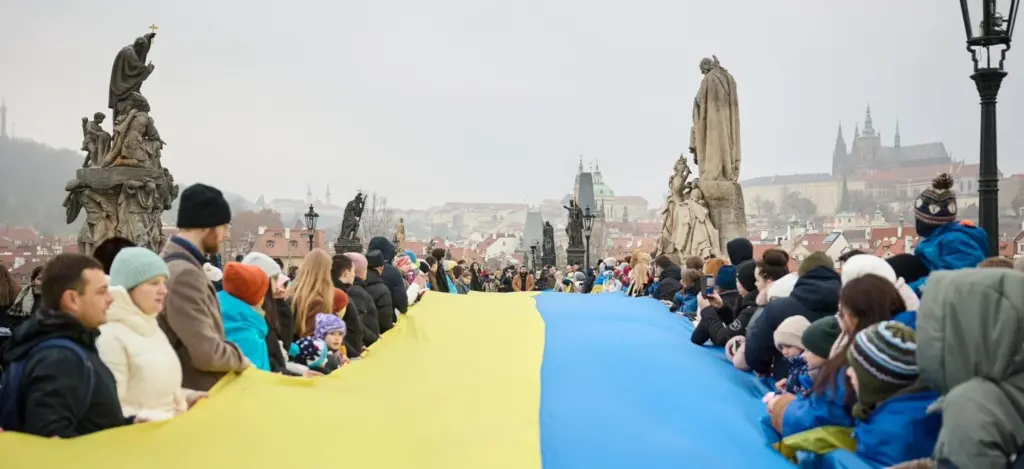
People line Prague’s Charles Bridge holding a long Ukrainian flag, with Prague Castle visible in the background.

Ukrainians and supporters will form human chains in cities abroad at 19:00 (7 p.m.) on 24 August 2026 to mark Independence Day, Ukraine’s Mission to the European Union announced on 20 August.

Russia’s invasion has driven more than 5.6 million Ukrainians to seek refugee or other international protection abroad, according to the UN Refugee Agency. The human chains will help displaced Ukrainians and established diaspora communities show that Ukraine still needs their host countries’ support, the organizers say. Participants follow in the footsteps of Ukrainians in the Soviet era who formed human chains to demonstrate their desire for independence.

The 2026 Chain of Unity campaign website listed 55,600 participants on 22 August. Ukrainians and their supporters will gather on central streets and squares in Warsaw, London, Berlin, Rome, Toronto, New York, and other cities, where they will hold hands in local chains.

An interactive map allows people to find, join, or organize a local chain. Ukraine’s Cultural and Foreign Ministries support the action, which is being held only outside the country.

Ukrainians abroad will use Independence Day in other ways to draw attention to Ukraine’s wartime needs. Ukrainian community groups have organized rallies in 11 cities across 10 countries, calling on European governments to use Russian central bank reserves frozen under sanctions to fund Ukraine.

Why human chains still matter to Ukraine

Human chains became a powerful symbol of Ukrainian unity as Soviet rule weakened and the independence movement moved into the open.

On 21 January 1990, hundreds of thousands of Ukrainians formed the nearly 700-kilometer “Ukrainian Wave” from Ivano-Frankivsk through Lviv to Kyiv. It became late-Soviet Ukraine’s largest public demonstration and helped build momentum for independence the following year.

The pro-independence People’s Movement of Ukraine (Rukh) spent five months organizing the chain. When gaps appeared, organizers bused volunteers from Lviv and Ivano-Frankivsk to fill them, while participants supplied their own fuel.
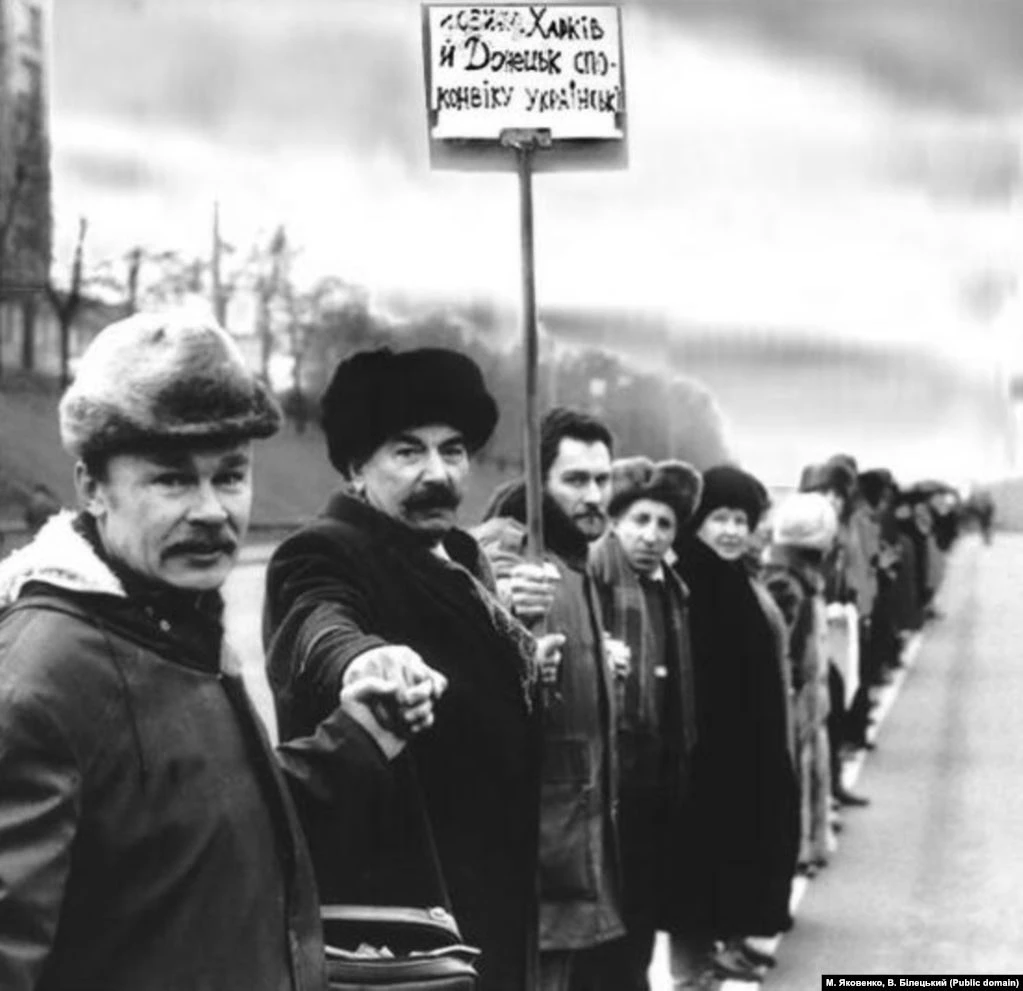
Human chain formed during the Soviet-era independence movement
Representatives of Donetsk and Kharkiv at the Human Chain in Kyiv. The sign reads, "Kharkiv and Donetsk are Ukrainian from time immemorial." Source: Radio Svoboda

The 1990 chain marked the anniversary of the 1919 union of the Ukrainian People’s Republic and Western Ukrainian People’s Republic, two Ukrainian states that emerged after World War I. By joining hands across regions while their country remained part of the Soviet Union, participants showed broad support for restoring Ukraine's sovereignty and unity.

After 1991, Ukrainians kept the tradition on Unity Day, the 22 January holiday marking that union. They often joined hands across Dnipro bridges to symbolize east-west unity. This year’s action takes the gesture abroad: refugees, established Ukrainian communities, and supporters are using it to show they remain part of one nation.
  • ✇Euromaidan Press
  • Ukrainian drones hit warehouse belonging to Russian online retailer Ozon for the first time
    Ukrainian FP-1 drones struck an Ozon warehouse in Chapayevsk, Russia’s Samara Oblast, overnight on 22 August 2026, manufacturer Fire Point said. The attack on the Chapayevsk facility expands Ukraine’s warehouse campaign from Wildberries, Russia’s largest online marketplace, to its second-largest rival, Ozon. Ukraine has repeatedly targeted Russia's major e-commerce distribution hubs to disrupt commercial logistics that Kyiv says help sustain Moscow’s war. Ozon said
     

Ukrainian drones hit warehouse belonging to Russian online retailer Ozon for the first time

22 août 2026 à 10:27

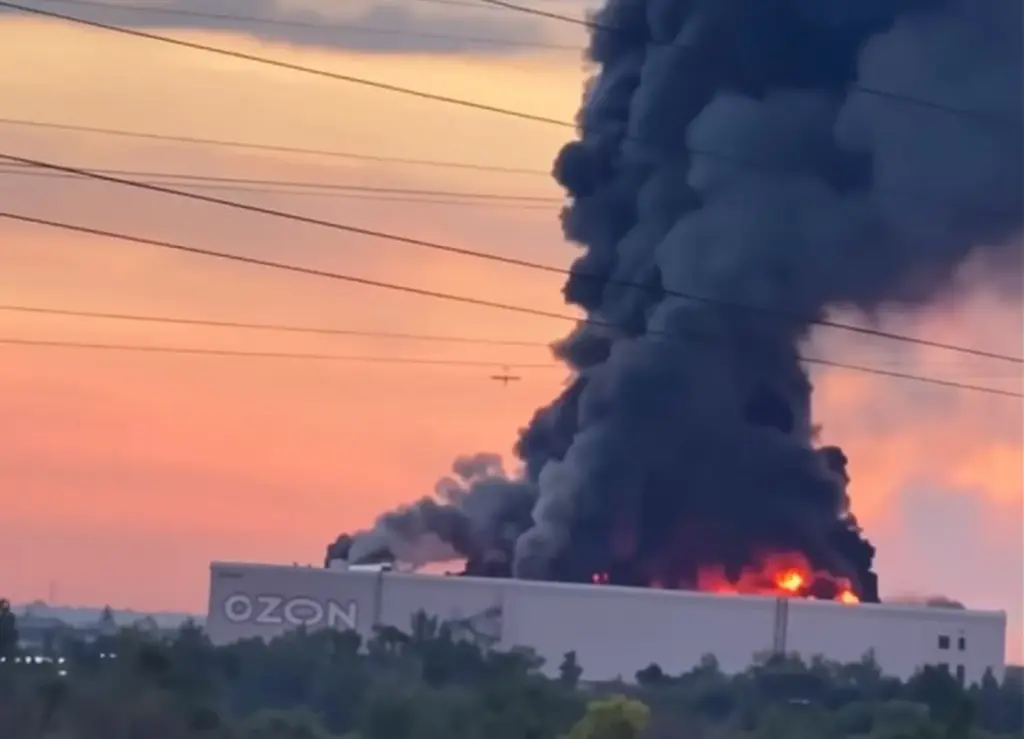
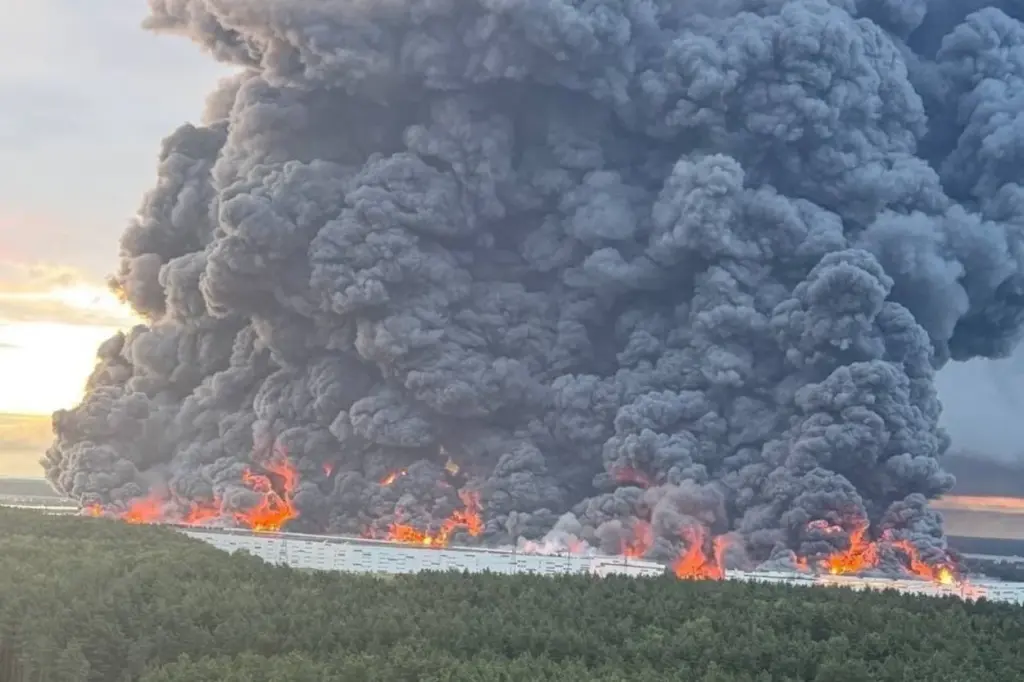
Thick black smoke and flames rise from an Ozon warehouse in Chapayevsk, Russia, at sunset.

Ukrainian FP-1 drones struck an Ozon warehouse in Chapayevsk, Russia’s Samara Oblast, overnight on 22 August 2026, manufacturer Fire Point said.

The attack on the Chapayevsk facility expands Ukraine’s warehouse campaign from Wildberries, Russia’s largest online marketplace, to its second-largest rival, Ozon. Ukraine has repeatedly targeted Russia's major e-commerce distribution hubs to disrupt commercial logistics that Kyiv says help sustain Moscow’s war.

Ozon said the attack injured people and prompted the evacuation of more than 500 employees.

The strike was the first confirmed Ukrainian attack to damage and set fire to an Ozon warehouse, Reuters reported. A drone alert forced Ozon to evacuate a facility in Tatarstan on 31 July, but the building was undamaged and later reopened.

Fire Point said the facility is one of Ozon’s largest warehouses in Volga Oblast, storing goods and processing more than 215,000 orders for delivery each day.

Ozon and Wildberries—Russia’s two largest online marketplaces—and their smaller rivals collectively sell goods and services worth the equivalent of 8.5% of Russia’s GDP and employ 4 million people, Reuters reported in July.

Ozon suspended operations indefinitely and stopped accepting seller deliveries, the company said. As a result, shipments are being redirected to other facilities, while affected orders will either be fulfilled elsewhere or canceled and refunded.

Several people were receiving medical treatment, Samara Oblast Governor Vyacheslav Fedorishchev claimed. Neither he nor Ozon specified how many people were injured, and the extent of the damage remains unclear.

Ukraine’s previous strikes on Russian warehouses

Ukrainian drones had previously concentrated on Wildberries, Russia’s largest online retailer. Since 18 July, Ukraine has struck at least two dozen Wildberries warehouses, Reuters reported.

Ukrainian officials have alleged that Wildberries warehouses move military-linked goods, including drone components. The Kremlin has denied that the company supplies Russian forces. Fire Point made no corresponding claim about the Ozon warehouse.

Fire burning at Wildberries warehouse in Koledino, Russia.
Wildberries warehouse burning in Russia’s Koledino following a Ukrainian drone strike, 16 August 2026. Photo: Exilenova+

Ukraine’s military said the same overnight wave also hit the Novokuibyshevsk refinery in Samara Oblast and caused a fire.

Russian and occupation officials claimed that the broader wave caused civilian deaths and injuries in Yeysk, Belgorod, Bryansk, and Russian-occupied Luhansk.

  • ✇Euromaidan Press
  • Ukraine says its drones hit major Russian refinery amid deepening fuel shortages
    Ukrainian forces struck production facilities at the Novokuybyshevsk oil refinery in Russia’s Samara Oblast overnight on 22 August, sparking a fire at the Rosneft-owned plant, Ukraine’s General Staff said. The extent of the damage remains under assessment. Ukraine has repeatedly targeted Russia’s oil refineries to restrict military fuel supplies and reduce the energy revenues supporting Moscow’s war. The latest strike came as gasoline rationing returned to Moscow and St
     

Ukraine says its drones hit major Russian refinery amid deepening fuel shortages

22 août 2026 à 10:02

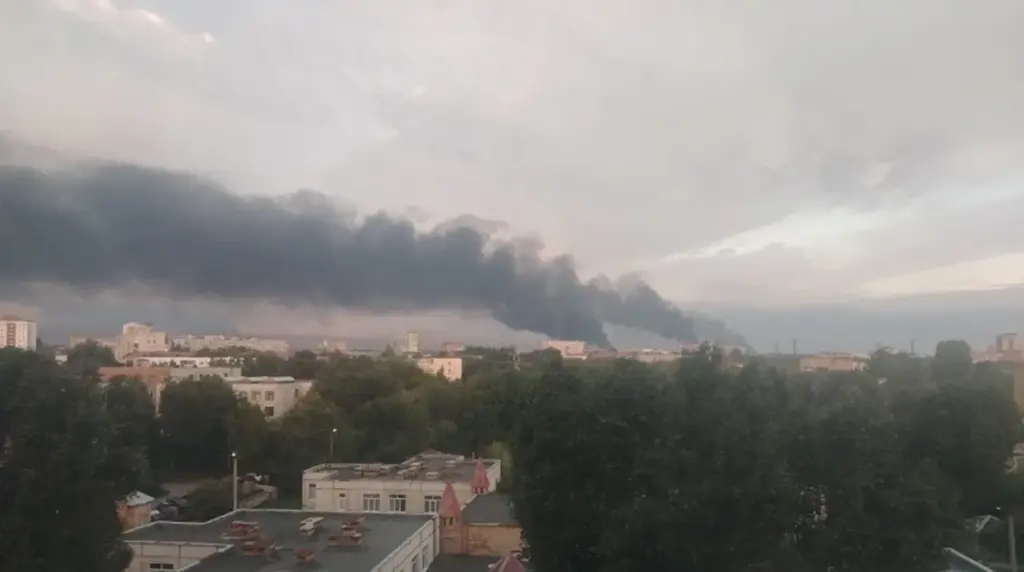
Thick black smoke rises over Novokuybyshevsk following a reported Ukrainian strike on the city’s oil refinery on 22 August 2026.

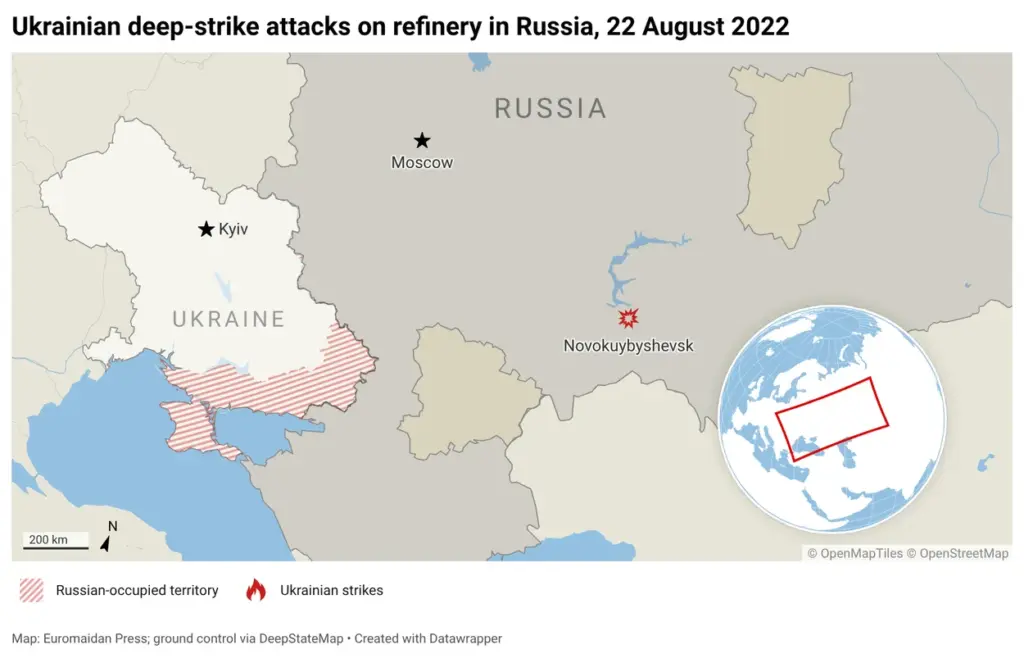
Ukrainian forces struck production facilities at the Novokuybyshevsk oil refinery in Russia’s Samara Oblast overnight on 22 August, sparking a fire at the Rosneft-owned plant, Ukraine’s General Staff said. The extent of the damage remains under assessment.

Ukraine has repeatedly targeted Russia’s oil refineries to restrict military fuel supplies and reduce the energy revenues supporting Moscow’s war. The latest strike came as gasoline rationing returned to Moscow and St. Petersburg, and Rosneft capped nationwide purchases. Militarnyi described the plant as one of Russia’s 10 largest refineries.

The Rosneft-owned refinery can process about 8.8 million metric tons of crude annually and produces more than 20 petroleum products, including aviation fuel and diesel, Ukraine’s General Staff said.

Fire Point said FP-1 long-range drones were used to strike the refinery.

Map of Ukrainian strike on Novokuybyshevsk

The same overnight wave also hit an Ozon logistics center in Chapayevsk, where people were injured, and work was halted, Reuters reported, citing the company.

Novokuybyshevsk Oil Refinery last night and now. pic.twitter.com/aZmL7M8wBe

— Exilenova+ (@Exilenova_plus) August 22, 2026

Neither the damage to the refinery nor any interruption to production has been independently confirmed.

Ukraine keeps pressure on Russian fuel supplies

The strike came one day after Ukraine confirmed hitting Lukoil’s Perm refinery, approximately 1,530 kilometers from Ukraine’s northern border. That attack also caused a fire, according to the General Staff.

At least four Russian refineries went offline during August amid continuing Ukrainian attacks.

By mid-August, filling stations in at least 12 Russian regions were experiencing hours-long lines. Some areas had reintroduced purchase limits or rationing based on license-plate numbers, according to the same report.

Gasoline limits had also been reinstated in Moscow and St. Petersburg, while Rosneft had capped sales at 30 liters per vehicle across its nationwide filling-station network. Diesel purchases remained unrestricted.

❌