Violent Extremist Who Targeted Young People Online Is Sentenced to 77 Years

© Wade Payne/Associated Press


© Wade Payne/Associated Press


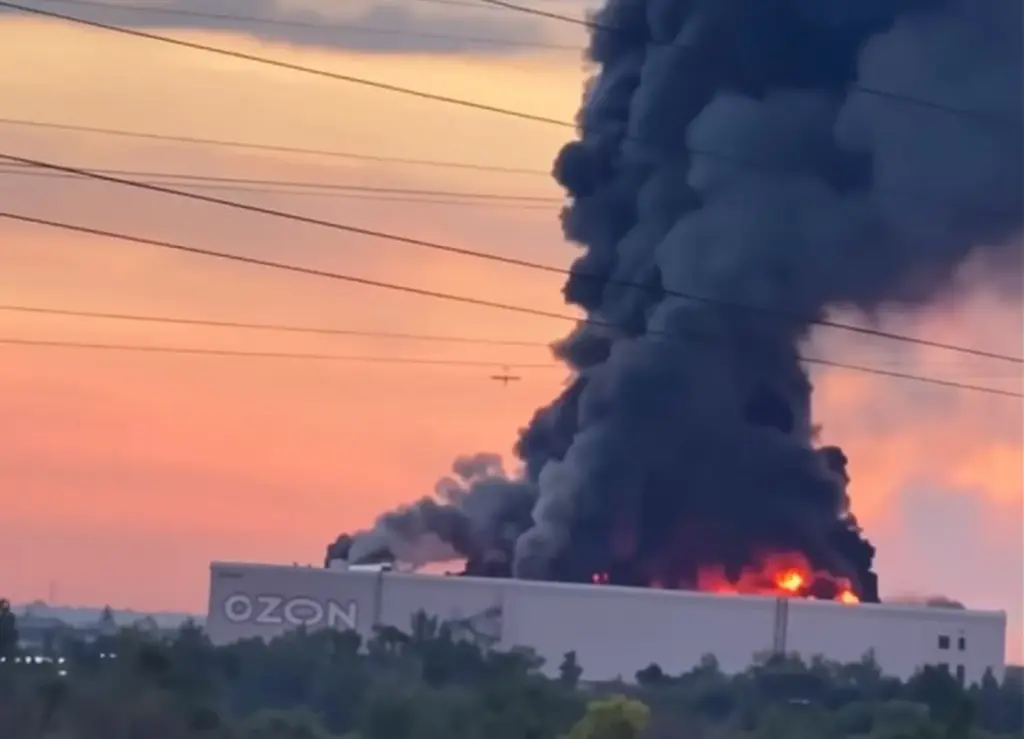
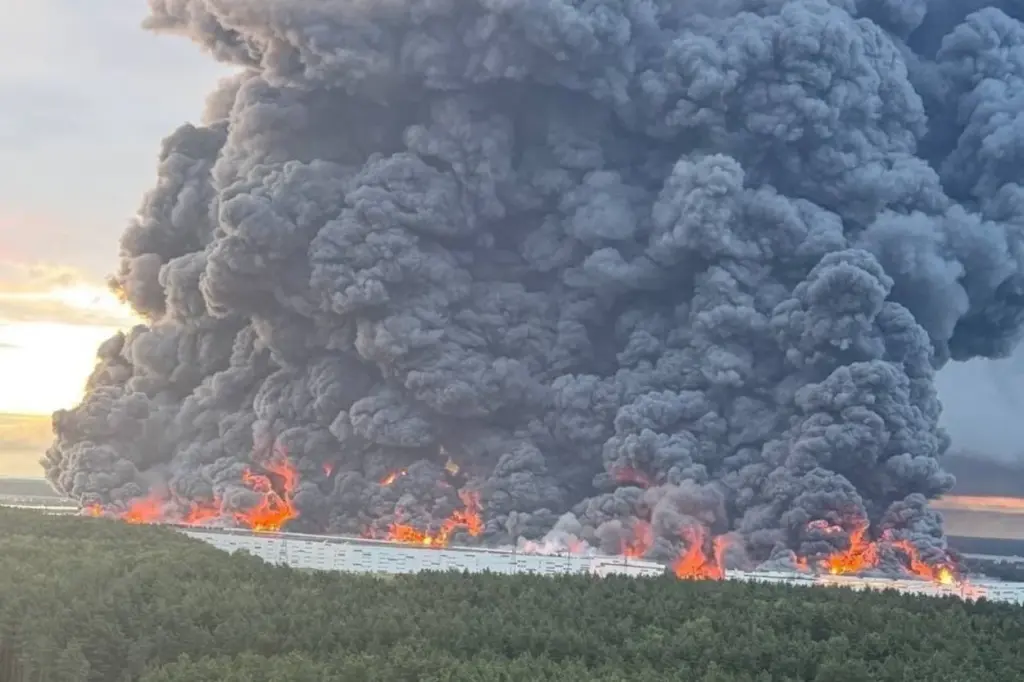
Ukrainian FP-1 drones struck an Ozon warehouse in Chapayevsk, Russia’s Samara Oblast, overnight on 22 August 2026, manufacturer Fire Point said.
The attack on the Chapayevsk facility expands Ukraine’s warehouse campaign from Wildberries, Russia’s largest online marketplace, to its second-largest rival, Ozon. Ukraine has repeatedly targeted Russia's major e-commerce distribution hubs to disrupt commercial logistics that Kyiv says help sustain Moscow’s war.
Ozon said the attack injured people and prompted the evacuation of more than 500 employees.
The strike was the first confirmed Ukrainian attack to damage and set fire to an Ozon warehouse, Reuters reported. A drone alert forced Ozon to evacuate a facility in Tatarstan on 31 July, but the building was undamaged and later reopened.
Fire Point said the facility is one of Ozon’s largest warehouses in Volga Oblast, storing goods and processing more than 215,000 orders for delivery each day.
Ozon and Wildberries—Russia’s two largest online marketplaces—and their smaller rivals collectively sell goods and services worth the equivalent of 8.5% of Russia’s GDP and employ 4 million people, Reuters reported in July.
Ozon suspended operations indefinitely and stopped accepting seller deliveries, the company said. As a result, shipments are being redirected to other facilities, while affected orders will either be fulfilled elsewhere or canceled and refunded.
Several people were receiving medical treatment, Samara Oblast Governor Vyacheslav Fedorishchev claimed. Neither he nor Ozon specified how many people were injured, and the extent of the damage remains unclear.
Ukrainian drones had previously concentrated on Wildberries, Russia’s largest online retailer. Since 18 July, Ukraine has struck at least two dozen Wildberries warehouses, Reuters reported.
Ukrainian officials have alleged that Wildberries warehouses move military-linked goods, including drone components. The Kremlin has denied that the company supplies Russian forces. Fire Point made no corresponding claim about the Ozon warehouse.

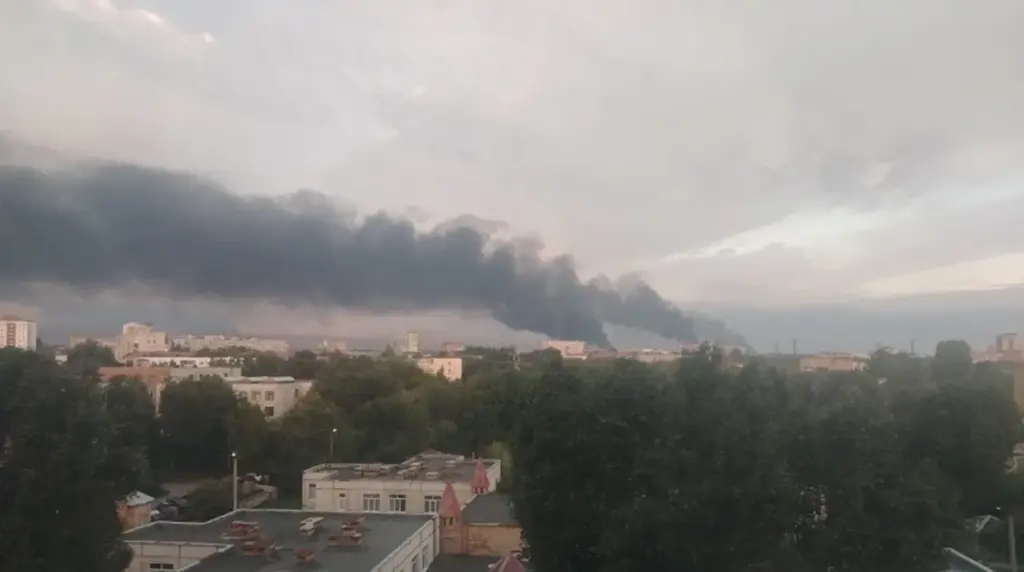
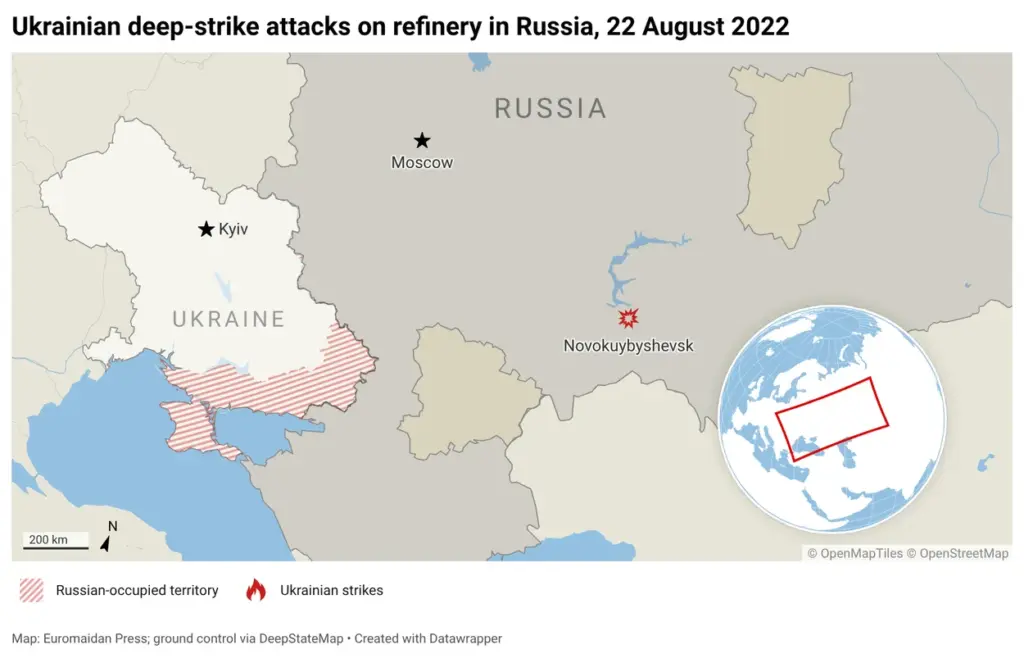
Ukraine’s military said the same overnight wave also hit the Novokuibyshevsk refinery in Samara Oblast and caused a fire.
Russian and occupation officials claimed that the broader wave caused civilian deaths and injuries in Yeysk, Belgorod, Bryansk, and Russian-occupied Luhansk.


Ukrainian forces struck production facilities at the Novokuybyshevsk oil refinery in Russia’s Samara Oblast overnight on 22 August, sparking a fire at the Rosneft-owned plant, Ukraine’s General Staff said. The extent of the damage remains under assessment.
Ukraine has repeatedly targeted Russia’s oil refineries to restrict military fuel supplies and reduce the energy revenues supporting Moscow’s war. The latest strike came as gasoline rationing returned to Moscow and St. Petersburg, and Rosneft capped nationwide purchases. Militarnyi described the plant as one of Russia’s 10 largest refineries.
The Rosneft-owned refinery can process about 8.8 million metric tons of crude annually and produces more than 20 petroleum products, including aviation fuel and diesel, Ukraine’s General Staff said.
Fire Point said FP-1 long-range drones were used to strike the refinery.

The same overnight wave also hit an Ozon logistics center in Chapayevsk, where people were injured, and work was halted, Reuters reported, citing the company.
Novokuybyshevsk Oil Refinery last night and now. pic.twitter.com/aZmL7M8wBe
— Exilenova+ (@Exilenova_plus) August 22, 2026
Neither the damage to the refinery nor any interruption to production has been independently confirmed.
The strike came one day after Ukraine confirmed hitting Lukoil’s Perm refinery, approximately 1,530 kilometers from Ukraine’s northern border. That attack also caused a fire, according to the General Staff.
At least four Russian refineries went offline during August amid continuing Ukrainian attacks.
By mid-August, filling stations in at least 12 Russian regions were experiencing hours-long lines. Some areas had reintroduced purchase limits or rationing based on license-plate numbers, according to the same report.
Gasoline limits had also been reinstated in Moscow and St. Petersburg, while Rosneft had capped sales at 30 liters per vehicle across its nationwide filling-station network. Diesel purchases remained unrestricted.


Russia has struck Kyiv and its suburbs with ballistic missiles for a second consecutive day, killing civilians. Meanwhile, Ukraine lacks enough interceptors to stop them because deliveries from the US have halted.
The strikes land at a moment when Ukraine's ability to shoot ballistic missiles down has been cut off at the source. Ukraine intercepts ballistic missiles mainly with US-made Patriot systems. During the recent Oval Office meeting, President Donald Trump declined President Volodymyr Zelenskyy's request for hundreds of additional Patriot interceptors, according to the Financial Times.
At the same time, when Ukraine sought to destroy Russia's ballistic launchers on Russian territory, US billionaire Elon Musk did not allow Ukraine to use Starlink to guide strikes on those launchers, The Atlantic reported. Ukraine can neither shoot the missiles down at the rate it needs nor freely strike the launchers that fire them.
The overnight attack hit Ukraine's railway. On the night of 22 August, a Russian ballistic missile struck a railway enterprise in Kyiv's Darnytsia area, killing a Ukrzaliznytsia worker, the railway's board chairman Oleksandr Pertsovskyi said.
He described a strike timed to the threat.
"In Darnytsia, ballistic strikes hit one of the railway enterprises, at the same moment as, or even a second before, the ballistic threat appeared. One of our workers, a foreman, was killed on the spot. The rest we managed to evacuate quickly after the first strike," Pertsovskyi reported.
Russia launched about six ballistic missiles, with launches recorded from three directions, Kursk, Bryansk, and Millerovo, according to monitoring channels.
Russia struck again in daylight. In the morning, six to eight ballistic missiles attacked the Boryspil area in the Kyiv agglomeration, likely with cluster warheads, according to monitoring channels. Boryspil city is home to the Boryspil International Airport, Ukraine’s main and largest international passenger airport.
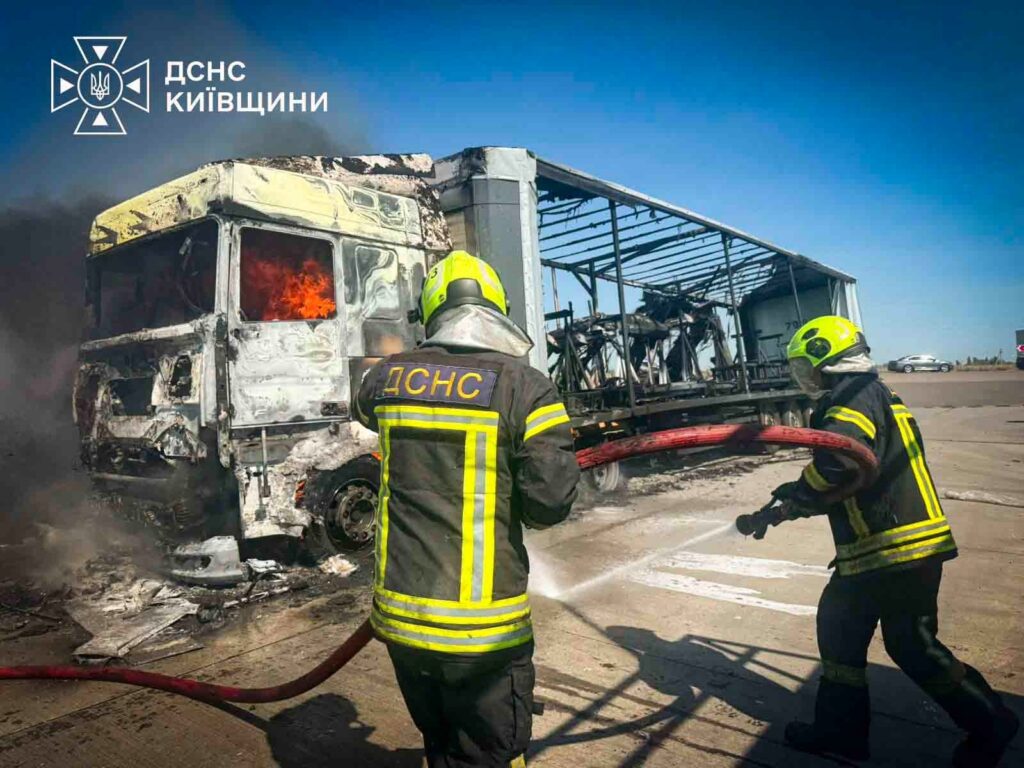
The strike killed civilians and hit infrastructure. Two civilians, a man and a woman, were killed, and the number of wounded rose to eight, including a child, with the daytime strike hitting a truck parking lot along with warehouses, a fuel station, a private household, and vehicles. Two trucks caught fire, and a blaze spread across 700 square meters of open ground, the State Emergency Service (DSNS) said.
The attacks landed two days before Ukraine marks its Independence Day. The Security Service (SBU) has already urged citizens to be especially vigilant before and during the 24 August holiday because of the threat of attacks, warning that in wartime, Russia may use mass events for strikes, provocations, sabotage, cyberattacks, and other crimes.
The service has also warned against recruitment. It reminded Ukrainians not to publish photos or videos of military objects, critical infrastructure, checkpoints, or air-defense systems, nor to share information on the consequences of strikes or the movement of Ukrainian forces.
Russian special services may try to recruit Ukrainians to prepare attacks and sabotage, the SBU said, urging anyone offered money for arson, property damage, planting unknown objects, or collecting information on military sites to report it immediately.


© Dylan Martinez/Reuters


© Mindaugas Kulbis/Associated Press


© Ajit Solanki/Associated Press