Vue normale

  • ✇Euromaidan Press
  • Russian agent who set fires in Kyiv receives 15-year prison sentence

    A Kyiv court has sentenced an unemployed man to 15 years in prison with confiscation of his property for carrying out arson attacks on behalf of Russian intelligence, Ukraine's Security Service (SBU) said on 13 August. The man was recruited while looking for "easy money" on Telegram channels and carried out two arson attacks in Kyiv before fleeing to Odesa, the SBU reported. Russian intelligence increasingly recruits Ukrainians through Telegram for arson and sabotag
     

Russian agent who set fires in Kyiv receives 15-year prison sentence

14 août 2026 à 09:54

Illustrative photo. Source: Depositphotos

A Kyiv court has sentenced an unemployed man to 15 years in prison with confiscation of his property for carrying out arson attacks on behalf of Russian intelligence, Ukraine's Security Service (SBU) said on 13 August. The man was recruited while looking for "easy money" on Telegram channels and carried out two arson attacks in Kyiv before fleeing to Odesa, the SBU reported.

Russian intelligence increasingly recruits Ukrainians through Telegram for arson and sabotage. It targets people seeking quick money and treats them as disposable operatives, paying small sums for a single task and discarding them once they are caught.

The Russian agent carried out two arson attacks

According to the SBU, the man first set fire to a relay cabinet belonging to a railway signaling system. Russia intended the attack to disrupt freight logistics, including supplies to areas near the front.

The agent later burned a volunteer’s SUV used to deliver humanitarian aid and evacuate civilians from areas affected by Russia’s war. He carried out the attacks at night, using a flammable mixture and filming each incident on his smartphone before sending the footage to his Russian handler.

The SBU arrested him in Odesa in July 2025, where he had attempted to hide after carrying out the attacks. Investigators seized his phone, which contained evidence of his cooperation with Russia.

A court found him guilty on two counts — sabotage committed under martial law, and intentional destruction of property by arson — both carried out as part of a group acting on prior conspiracy. He was sentenced to 15 years in prison with confiscation of his property.

ukraine detains six suspected russian agents including teen arsonist one russian-paid detained sbu fsb saboteur arrested says suspects were recruited telegram ordered target railway military infrastructure 22 security service (sbu)
Explore further

From “easy money” to murder: Russia escalates recruitment of Ukrainians for terrorist attacks inside Ukraine, police warn

Easy money, hard time: other Telegram recruits jailed too

The case follows several similar convictions. In a May case, an agent received 15 years for burning a railway relay cabinet near a Dnipro station in an attempt to disrupt frontline logistics. The SBU said the unemployed local, recruited through Telegram, filmed the arson and reported it to his handler, then was caught before he could carry out a planned series of attacks on the city's critical infrastructure.

In June 2026, another agent was sentenced to 15 years for preparing to burn an electrical substation in Kropyvnytskyi.

In July, SBU investigators reported that a GRU agent in Zaporizhzhia received 15 years for preparing explosives for Russian-organized attacks.

  • ✇Euromaidan Press
  • Russia drops eight FAB-250 bombs on Kramatorsk, killing one and injuring 18
    Russia's glide-bomb strike on Kramatorsk killed one person and wounded 18, the head of the Donetsk Oblast Military Administration, Vadym Filashkin, reported on the morning of 14 August. The Donetsk Oblast Prosecutor's Office has opened a war-crimes investigation into the attack. Russian forces dropped eight FAB-250 aerial bombs fitted with universal glide and correction modules (UMPK) on the city on the evening of 13 August, hitting residential areas including apart
     

Russia drops eight FAB-250 bombs on Kramatorsk, killing one and injuring 18

14 août 2026 à 07:36

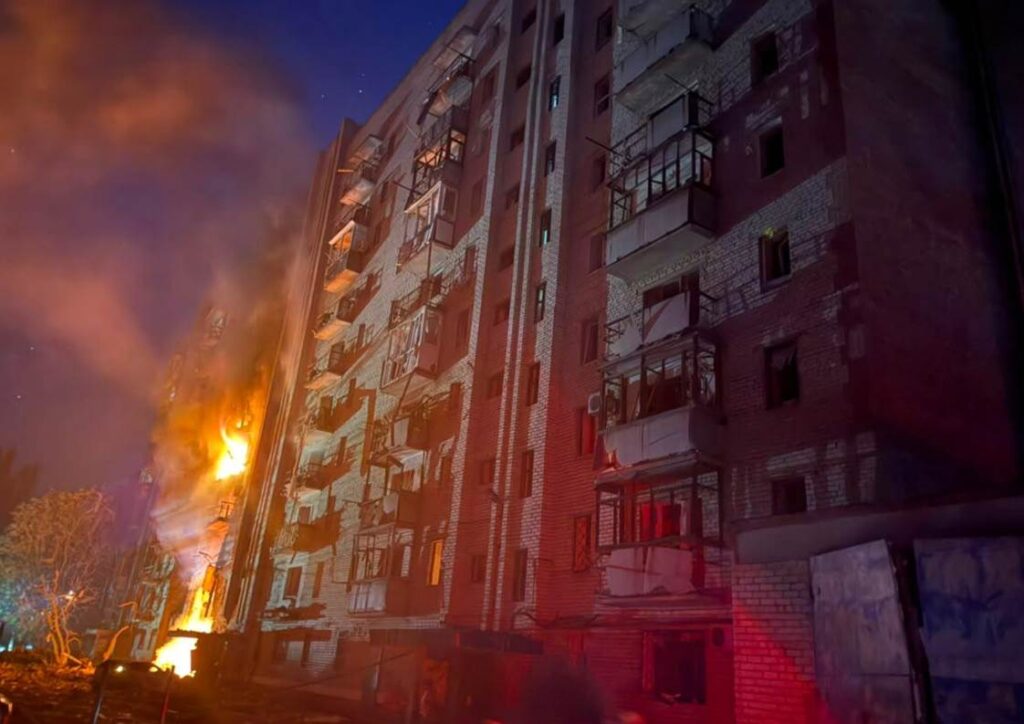
An apartment building hit in a Russian strike on Kostiantynivka on the evening of 13 August, 2026. Photo: Donetsk Region Prosecutor's Office

Russia's glide-bomb strike on Kramatorsk killed one person and wounded 18, the head of the Donetsk Oblast Military Administration, Vadym Filashkin, reported on the morning of 14 August. The Donetsk Oblast Prosecutor's Office has opened a war-crimes investigation into the attack.

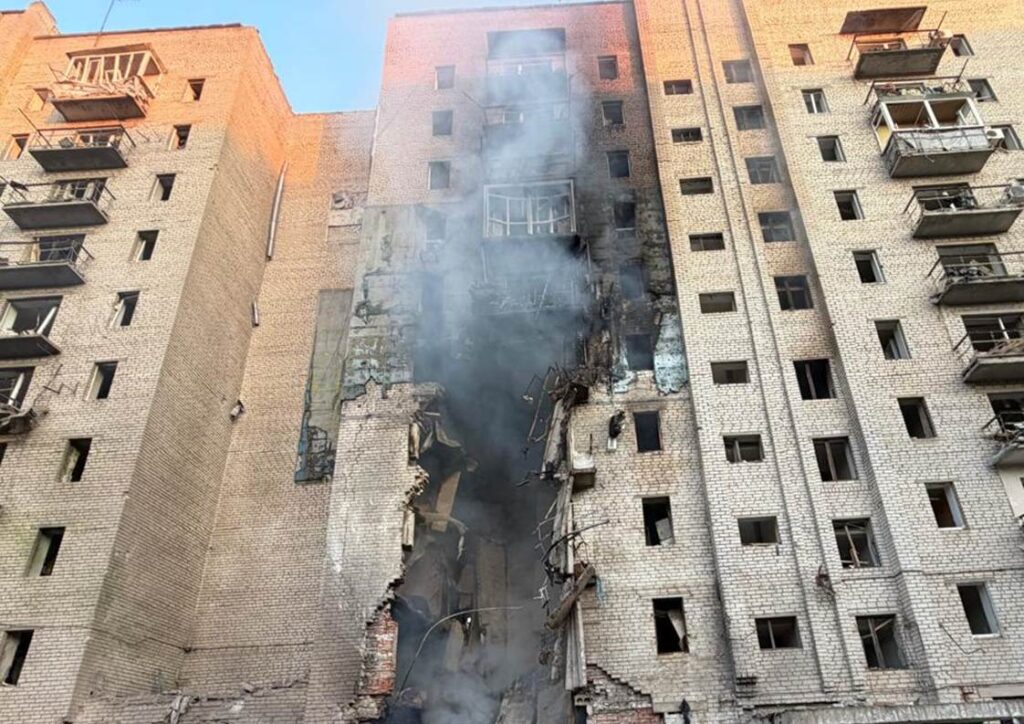
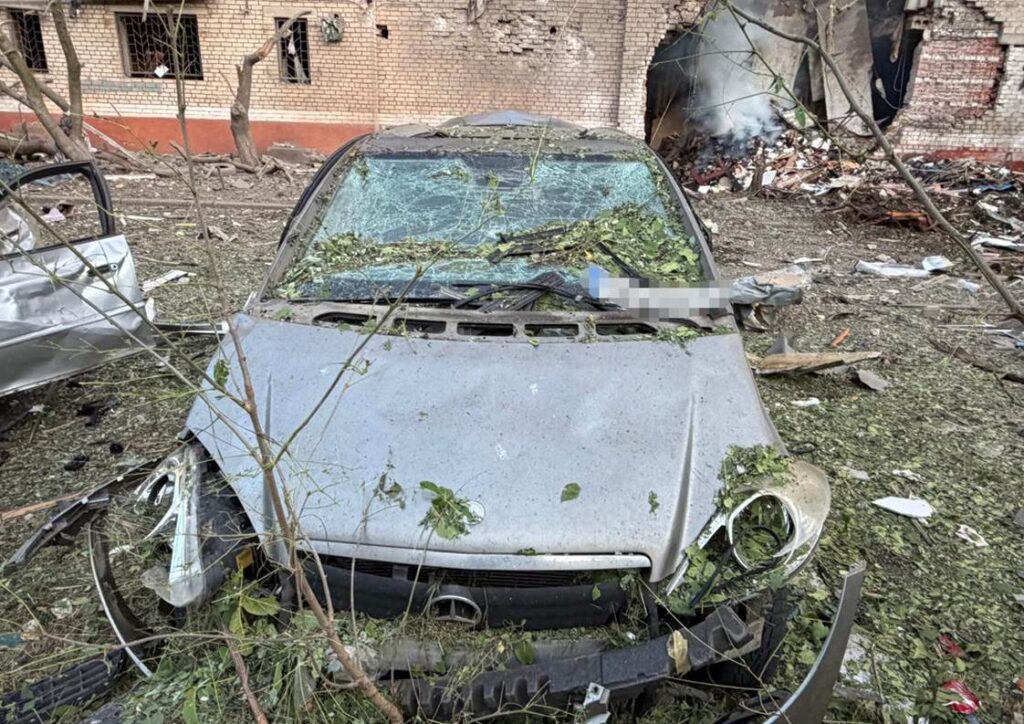
Russian forces dropped eight FAB-250 aerial bombs fitted with universal glide and correction modules (UMPK) on the city on the evening of 13 August, hitting residential areas including apartment buildings, the prosecutor's office reported. An apartment building and a car were damaged. Filashkin said the strikes also hit the nearby settlement of Bilenke.

The strike on the residential area was another instance of Russian forces using guided aerial munitions against civilian areas. Under international humanitarian law, civilian objects may not be deliberately targeted.

The toll rose overnight. Filashkin first reported at least one killed and 15 wounded on the evening of 13 August. By the next morning, the prosecutor's office had documented 17 of the wounded — seven men and 10 women aged between 47 and 85 — with blast and traumatic brain injuries, shrapnel wounds, cuts to the head, arms and legs, and abrasions and bruises. Filashkin's later update put the number of wounded at 18.

An apartment building hit in a Russian strike on Kramatorsk on the evening of 13 August, 2026. Photo: Donetsk Region Prosecutor's Office

"Russia again turned an ordinary evening in the city into deadly danger. This is not an accident or a mistake — this is how the enemy wages war against our people," Filashkin said.

Deliberately directing attacks against civilian objects may constitute a war crime under international humanitarian law. The prosecutor's office has opened a pre-trial investigation under Part 2 of Article 438 of Ukraine's Criminal Code.

"In total, over the past day, Russians shelled populated areas of Donetsk Oblast 37 times. 624 people, including 90 children, have been evacuated from the front line," Filashkin reports.

A car hit in a Russian strike on Kramatorsk on the evening of 13 August, 2026. Photo: Donetsk Region Prosecutor's Office

Repeated pattern of glide-bomb strikes on Donetsk Oblast

Russian forces regularly use FAB-250 bombs equipped with UMPK to strike populated areas in Donetsk Oblast and other frontline regions.

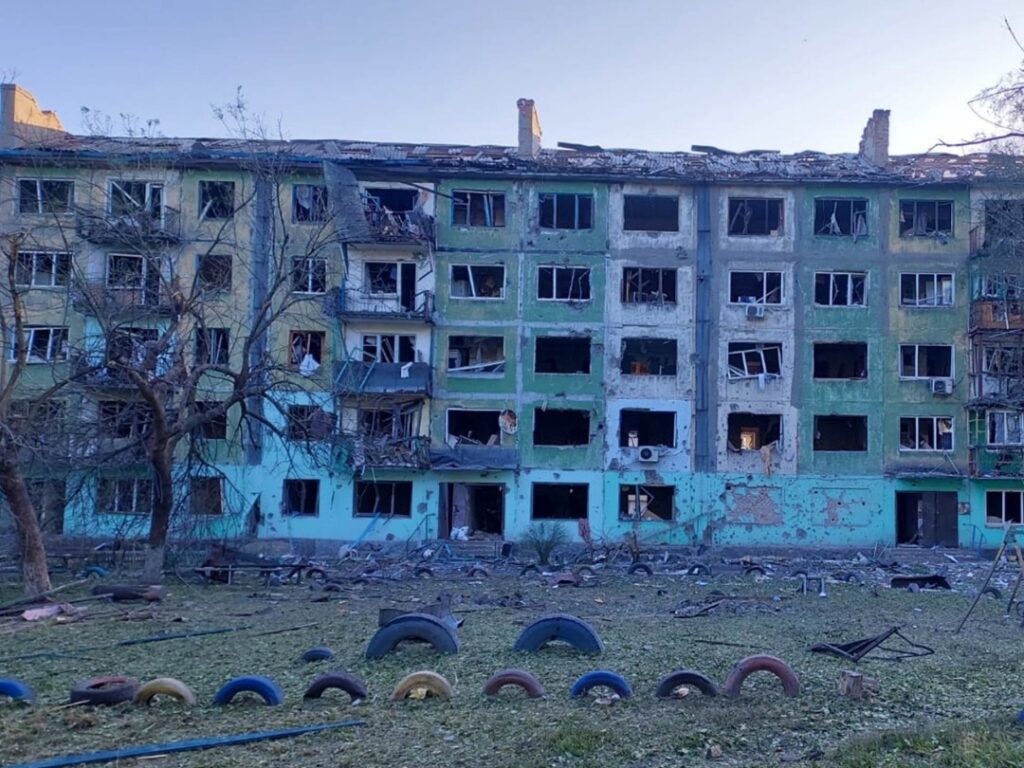
On 11 August 2025, Russian aircraft dropped FAB-250 bombs equipped with UMPK on a residential quarter in Bilozerske, Donetsk Oblast. Two civilians were killed, a 43-year-old man and a 34-year-old woman, while seven others were injured, including a 16-year-old boy. Eight apartment buildings and six vehicles were damaged. A pre-trial investigation was opened under Part 2 of Article 438 of Ukraine's Criminal Code.

An apartment building hit in a Russian strike on Bilozerske on 11 August, 2025. Photo: Donetsk Region Prosecutor's Office

On 18 September 2025, Russian forces struck civilians with a FAB-250 bomb equipped with UMPK in Kostiantynivka, Donetsk Oblast. Five residents aged between 62 and 74 were killed; three men and two women were outside at the time of the strike. The facades of four apartment buildings were damaged.

On 25 June 2026, Russian forces dropped three FAB-250 bombs equipped with UMPK on Druzhkivka, Donetsk Oblast. A 56-year-old woman was killed, and four others were injured: a 68-year-old man and three women aged 51, 58, and 67, sustaining blast injuries and shrapnel wounds.

  • ✇Euromaidan Press
  • NASA shows Crimea as Russian on a map during its eclipse broadcast
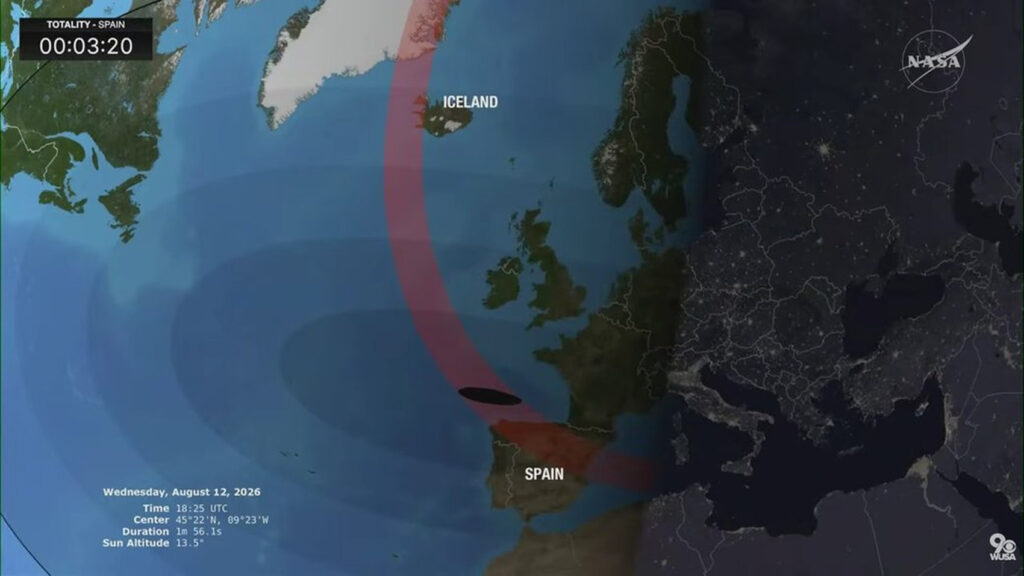
    On the evening of 12 August 2026, NASA displayed a map on which Crimea was marked as Russian. It happened during the live broadcast of a total solar eclipse: on the graphic, the peninsula was separated from mainland Ukraine by a border line and presented as part of Russia. Crimea is a Ukrainian region that Russia occupied after its illegal annexation in 2014. Ukraine and the overwhelming majority of the world's states do not recognize that annexation, and no cartog
     

NASA shows Crimea as Russian on a map during its eclipse broadcast

14 août 2026 à 04:01

During the eclipse broadcast, NASA depicted Crimea as Russian on 12 August 2026. Photo: Screenshot from NASA's broadcast

On the evening of 12 August 2026, NASA displayed a map on which Crimea was marked as Russian. It happened during the live broadcast of a total solar eclipse: on the graphic, the peninsula was separated from mainland Ukraine by a border line and presented as part of Russia.

Crimea is a Ukrainian region that Russia occupied after its illegal annexation in 2014. Ukraine and the overwhelming majority of the world's states do not recognize that annexation, and no cartographic error changes the peninsula's status under international law. Each uncorrected map treats as ordinary what international law still calls an illegal occupation.

What happened during the broadcast

The US agency streamed the total eclipse, whose path crossed Greenland, Iceland, and Spain, live to a global audience. The error appeared on one of the visibility maps NASA showed during the broadcast: on it, Russia's border was drawn along the land boundary between mainland Ukraine and the peninsula, creating the impression that Crimea belongs to Russia.

Additional images from the August 12 Solar Eclipse are on our Flickr feed. Check them out! A few more frames may be added later too. 📷 https://t.co/CwbEoWw3Eq pic.twitter.com/mZRukcYnZd

— NASA HQ PHOTO (@nasahqphoto) August 12, 2026

Not the only case

In December 2024, FIFA eventually apologized for a map it displayed during the qualifying draw for the 2026 World Cup that left occupied Crimea outside Ukraine's borders. The graphic was meant to show pairs of teams that cannot be drawn against each other for geopolitical reasons, among them Spain and Gibraltar, Kosovo and Serbia, and Ukraine and Belarus. It marked out Ukraine but drew the country without the peninsula. Ukraine's Foreign Ministry spokesman Heorhii Tykhyi objected, Kyiv called the omission an unacceptable error, and football's world governing body pulled the image.

On 24 September 2024, the British broadcaster Sky News published an investigation into a scheme for supplying sanctioned goods to Russia through third countries, Georgia among them. The report was accompanied by three maps of vehicle-transport routes into Russia, on each of which Crimea was marked as Russian territory, Detector Media reports. The maps have since been edited, and Crimea is now marked as part of Ukraine.

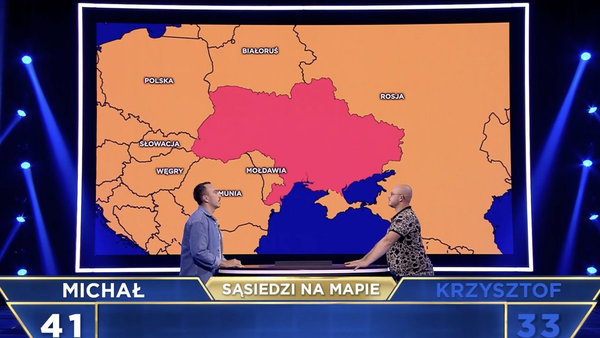
The Polish broadcaster TVN showed a map of Ukraine on which occupied Crimea was marked in a separate color during the entertainment show The Floor. The episode aired on Polish television, and the broadcaster published its video on its website in 2025.

Map of Ukraine without Crimea aired on Polish TV channel TVN during The Floor. Photo: Screenshot from the TVN website

Behind Putin's sacred Crimea stood Sevastopol's airfields

Explaining the annexation, Putin spoke not of the military but of sacred things. In his December 2014 address to the Federal Assembly, he called Crimea a place of "enormous civilizational and sacral significance," comparing the peninsula to the Temple Mount in Jerusalem. Europe rejected that mythology: just ten days after the sham referendum, the UN General Assembly passed Resolution 68/262 by a vote of 100 to 11 and declared the annexation illegal.

Putin arrived in annexed Sevastopol, where he took part in a ceremony marking the launch of the Balaklava Thermal Power Plant. 18 March 2019. Photo: TASS

But behind Moscow's "spiritual" rhetoric lay a different purpose for Crimea. Sevastopol, its airfields, and its logistics turned the peninsula into a springboard for the 2022 invasion, and it is largely for this reason that Ukraine's forces are now focused on striking Crimea. Robert "Madyar" Brovdi, commander of the Unmanned Systems Forces on 10 August said that the strikes are the first phase of a campaign meant to render the peninsula unusable for Russian troops.

"Crimea is one of the key conceptual pillars on the path to ending the war," Madyar told the Associated Press.

❌