Vue normale

  • ✇Euromaidan Press
  • Russia builds 3,000 jet drones monthly to counter Ukrainian interceptors, HUR says
    Russia has ceased producing its Geran-3 jet-powered attack drone, Ukraine’s Military Intelligence (HUR) told the Ukrainian defense outlet Militarnyi. The agency estimates Russian industry now makes about 3,000 newer Geran-4 and Geran-5 drones per month. Russia is shifting toward faster jet drones as Ukraine’s low-cost interceptors have become more effective against slower Shaheds. The Geran-4 and Geran-5 leave defenders less time to react, requiring faster interceptors
     

Russia builds 3,000 jet drones monthly to counter Ukrainian interceptors, HUR says

12 août 2026 à 14:02

3D model of a Russian Geran-4 jet-powered attack drone, shown from above with its tracker and navigation unit listed beside it.

Russia has ceased producing its Geran-3 jet-powered attack drone, Ukraine’s Military Intelligence (HUR) told the Ukrainian defense outlet Militarnyi. The agency estimates Russian industry now makes about 3,000 newer Geran-4 and Geran-5 drones per month.

Russia is shifting toward faster jet drones as Ukraine’s low-cost interceptors have become more effective against slower Shaheds. The Geran-4 and Geran-5 leave defenders less time to react, requiring faster interceptors or short-range air defenses. At the reported production rate, these newer Geran models, previously used in limited numbers, could become a regular feature of Russian attacks.

HUR said Russia has established serial assembly of the two newer models at the Alabuga complex in Tatarstan, with other Russian companies supplying components. The agency also said Russia’s Defense Ministry wants to expand Alabuga’s capacity. Construction began in May. Satellite imagery showed large-scale work by early July 2026, although the purpose of the new buildings remains unknown.

From Geran-3 to newer jet drones

Russia first used Geran-3 drones in large numbers during a combined nighttime attack on Ukraine on 30 July 2025. At least eight flew alongside propeller-driven Shaheds and decoys. The model retained the Geran-2 airframe but replaced its piston engine with a Chinese Telefly JT80 turbojet. HUR gave it a speed of 300–370 kilometers per hour and a range of up to 1,000 kilometers.

In May, then-Defense Ministry adviser Serhii “Flash” Beskrestnov said Ukrainian defenses stopped 95% of incoming Shaheds during the most recent documented strike and predicted Moscow would produce more jet-powered Geran variants.

The newer Geran-4 has a more robust airframe than the Geran-3 and is designed for high-speed flight and maneuvers. It can reach 500 kilometers per hour.

The larger Geran-5 carries a roughly 90-kilogram warhead and has a stated range of up to 1,000 kilometers. HUR has said Russia may equip it with R-73 air-to-air missiles, potentially threatening aircraft sent to intercept it.

The Chinese engines that Russia itself can't build

The Geran line combines Iranian designs, Russian assembly, and imported technology. HUR described the Geran-3 as a localized version of Iran’s Shahed-238. It found 45 foreign components inside, including parts from the United States, China, Switzerland, Germany, Britain, and Japan.

Russia depends on China for the turbojet engines in newer Geran models. HUR deputy chief Vadym Skibitskyi told RBC-Ukraine that Russia remains fully dependent on Chinese turbojet engines for the Geran-4 and Geran-5. Each costs about $35,000–$40,000, he said.

A Chinese XK-F358 mesh radio recovered from a Geran-5 also helps Russian drones resist jamming. Its manufacturer remains outside the US, EU, UK, and Ukrainian sanctions, according to a review by Euromaidan Press.
  • ✇Euromaidan Press
  • A Ukrainian railway engineer spied on Lyman’s defenses for Russia using Google Maps
    A Ukrainian court sentenced the former chief engineer of Lyman’s locomotive depot to 15 years in prison with property confiscation for helping Russia target the frontline city, Ukraine’s Security Service (SBU) said on 11 August. Investigators report he sent a Russian handler the locations of Ukrainian positions intended for guided-bomb and artillery strikes. Lyman blocks Russia’s northern route toward Sloviansk and Kramatorsk, which are part of Ukraine's fortress belt i
     

A Ukrainian railway engineer spied on Lyman’s defenses for Russia using Google Maps

12 août 2026 à 14:01

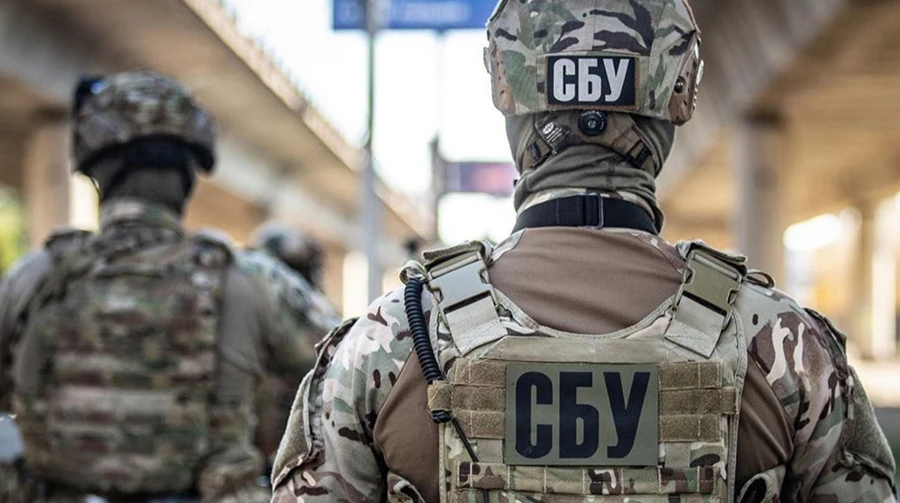
SBU officers in camouflage and tactical gear, seen from behind during an operation.

A Ukrainian court sentenced the former chief engineer of Lyman’s locomotive depot to 15 years in prison with property confiscation for helping Russia target the frontline city, Ukraine’s Security Service (SBU) said on 11 August. Investigators report he sent a Russian handler the locations of Ukrainian positions intended for guided-bomb and artillery strikes.

Lyman blocks Russia’s northern route toward Sloviansk and Kramatorsk, which are part of Ukraine's fortress belt in the Donbas. As attacks on supply lines intensify, information about Ukrainian positions can help Russia direct bombs and artillery. The case fits a broader pattern of Russian intelligence recruiting people inside Ukraine to locate targets. Russian services have used money and blackmail, including threats against recruits’ families, to secure their cooperation.

According to the SBU, the former engineer traveled around Lyman and its outskirts to record Ukrainian military bases. He marked possible targets on Google Maps, then sent screenshots to a handler in Russia through a messaging app.

The collaborator operated from basement

The agency said an acquaintance whom it described as a “DNR deputy” in occupied Donetsk Oblast connected him with Russian intelligence. The SBU said the man moved into an apartment building’s basement to shelter himself while directing Russian strikes on the community.

SBU officers detained him in Sloviansk in May 2026. The agency said a seized smartphone contained evidence of his reconnaissance and contacts with the Russian side.

The SBU did not identify the man, the court, or any specific strike enabled by his information.

How Russia turns locals into spotters 

The Lyman case involved an acquaintance of the former engineer, but Russian services also use money, blackmail, and online platforms to find recruits. The SBU says minors may initially receive simple assignments, such as taking photographs or painting graffiti, before being directed toward more serious sabotage.

Other recruits have allegedly answered Telegram offers of “easy money.” These include a Zaporizhzhia man later convicted of building bombs and a Dnipro suspect accused of activating more than 1,000 Starlink terminals for Russian forces.

Ukraine has prosecuted similar cases before. In November 2024, a court sentenced another Russian agent to 15 years for guiding missile and drone strikes in Zhytomyr Oblast.

More recent cases remain at the allegation stage. The SBU has accused a Kharkiv Oblast man of installing hidden cameras near military sites and a Poltava student of mapping energy facilities while filming air-defense units.

  • ✇Euromaidan Press
  • The Belarus border tunnels reached Latvia—guards turned back the 15 migrants who crawled underground
    Latvia has discovered its first known border tunnel used to enter the country illegally from Belarus, the country’s State Border Guard said on 11 August. Officers intercepted 15 people who had crossed through the underground passage and returned them to Belarus. Latvia, Lithuania, and Poland accuse Belarus and Russia of directing migrants toward their borders to retaliate for EU sanctions and strain countries supporting Ukraine. Minsk and Moscow deny orchestrating the c
     

The Belarus border tunnels reached Latvia—guards turned back the 15 migrants who crawled underground

12 août 2026 à 12:48

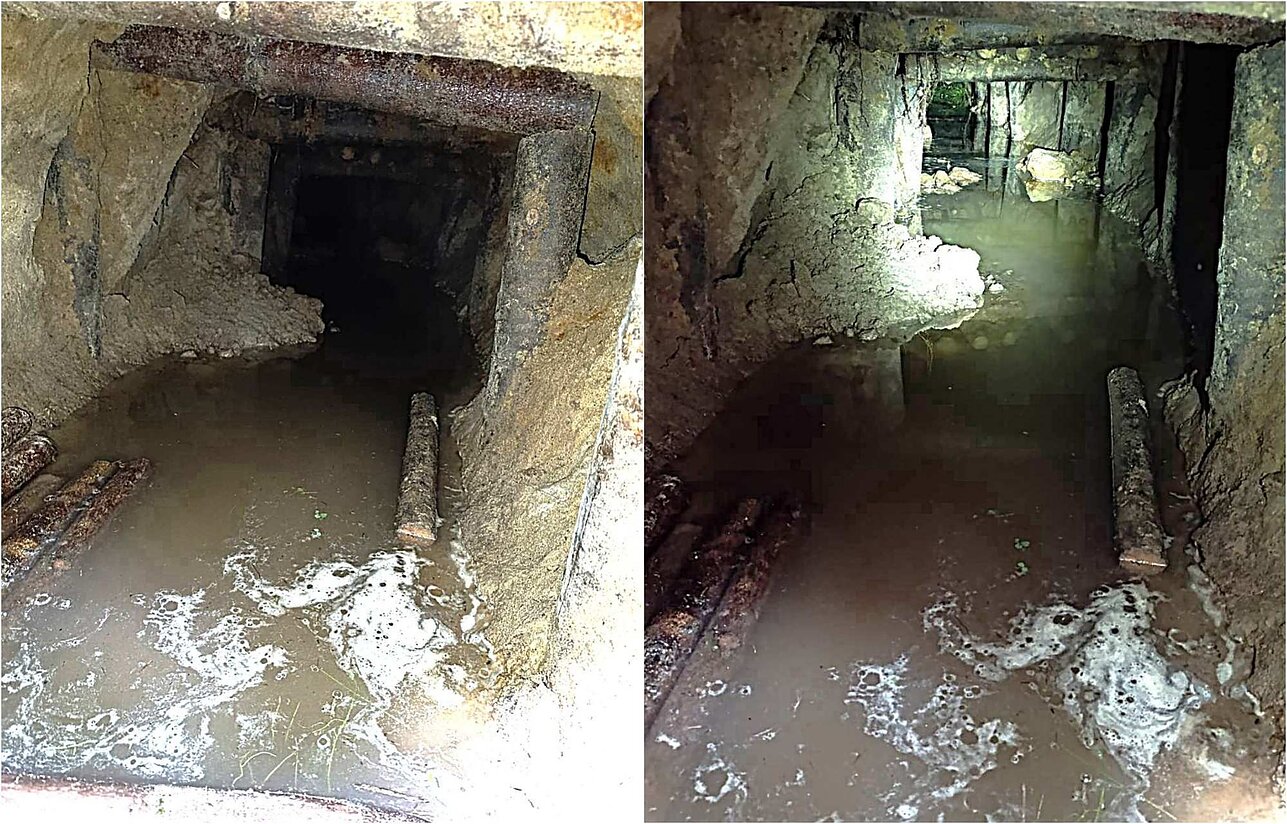
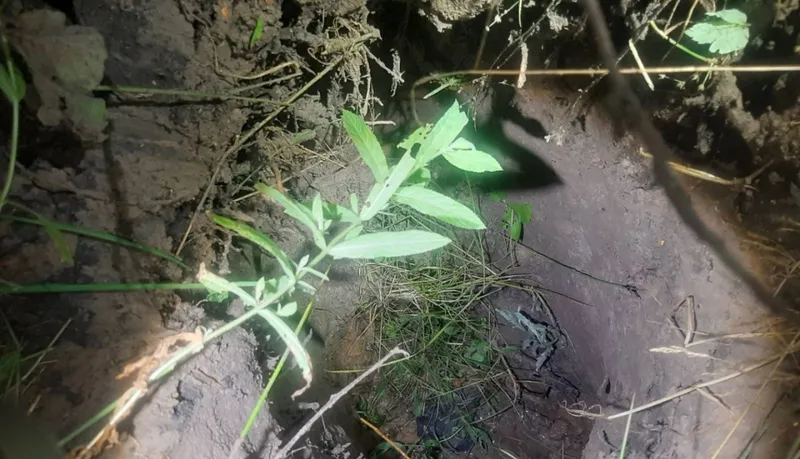
A flashlight illuminates the narrow entrance to a tunnel dug beneath the Latvia–Belarus border.

Latvia has discovered its first known border tunnel used to enter the country illegally from Belarus, the country’s State Border Guard said on 11 August. Officers intercepted 15 people who had crossed through the underground passage and returned them to Belarus.

Latvia, Lithuania, and Poland accuse Belarus and Russia of directing migrants toward their borders to retaliate for EU sanctions and strain countries supporting Ukraine. Minsk and Moscow deny orchestrating the crossings. Tunnels found in Lithuania and Latvia show organizers adapting to fortified borders, requiring Baltic governments to deploy more personnel and surveillance technology.

The tunnel was about 10 meters from Latvia's fence

Border guards found the group on 10 August in Skrudaliena parish, in Latvia’s southeastern Augšdaugava municipality, and briefed the public on the discovery the following day. The operation involved the State Police, a Lithuanian border-service dog handler, and a rapid-response unit, the Latvian Border Guard said.

While reconstructing the group’s route, officers found the passage near the Silene border post, about 10 meters from Latvia’s fence. The agency said it had received intelligence that a tunnel might be under construction, but had previously found no sign of a breach there.

Riga answered on 11 August 2026 by launching Operation Vilkatis, or “Werewolf,” scheduled to run through the end of August. The government says the operation will improve intelligence-sharing among border guards, police, the military, and security services. It will also expand aerial surveillance and target networks that transport and shelter migrants after they cross.

belarusian tunnel eu almost done lithuania drilled hole exactly wrong place—for diggers · post unfinished dug belarus toward lithuanian territory varėna district туннель ведущий из беларуси на территорию литвы vsat
Explore further

The Belarusian tunnel to the EU was almost done. Then Lithuania drilled a hole in exactly the wrong place—for the diggers

Latvia faced 87% of all crossing attempts along the EU-Belarus border by mid-July 2026

Belarus has weaponized migration since 2021, when EU governments accused Alyaksandr Lukashenka’s regime of bringing people from the Middle East and Africa to the bloc’s frontier in retaliation for sanctions. Belarus denied orchestrating the crisis.

Latvia reported more direct evidence in January 2026. Documents and phones taken from detained migrants linked Belarusian military and border personnel to organized crossings, according to Latvia’s armed forces and Border Guard.

By 13 July, Latvia had recorded 7,791 attempts over 111 consecutive days, 87% of all attempts along the EU-Belarus border by then. Lithuania later found an unfinished tunnel dug from Belarus. Latvia’s tunnel, unlike the unfinished Lithuanian passage, had already been used.

  • ✇Euromaidan Press
  • Ukraine says Russia can’t replace its losses, plans mass draft after elections—and again in 2027
    In an 11 August 2026 address, Ukrainian President Volodymyr Zelenskyy stated Russia is preparing a new mass mobilization drive after its parliamentary elections this fall, citing an assessment by Ukrainian military intelligence. Moscow plans to mobilize several hundred thousand people by the end of 2026 and roughly the same number by the end of 2027, he said. The mobilization would come on top of continuing contract recruitment.  Moscow has relied on contract soldier
     

Ukraine says Russia can’t replace its losses, plans mass draft after elections—and again in 2027

12 août 2026 à 11:54

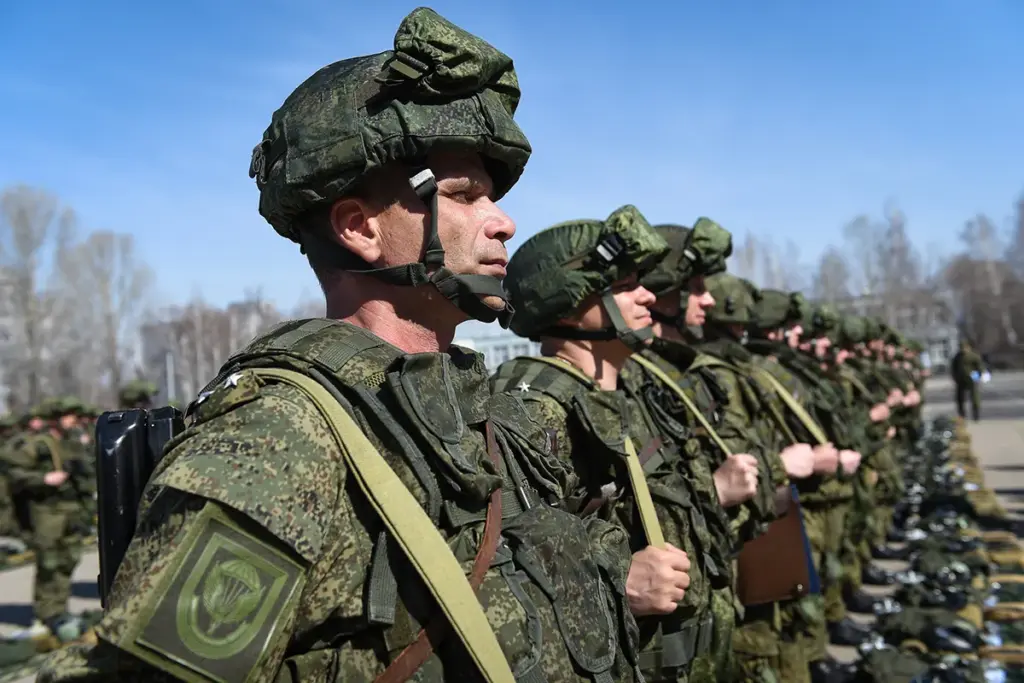
Russian soldiers in camouflage uniforms and helmets stand in formation outdoors.

In an 11 August 2026 address, Ukrainian President Volodymyr Zelenskyy stated Russia is preparing a new mass mobilization drive after its parliamentary elections this fall, citing an assessment by Ukrainian military intelligence.

Moscow plans to mobilize several hundred thousand people by the end of 2026 and roughly the same number by the end of 2027, he said. The mobilization would come on top of continuing contract recruitment. 

Moscow has relied on contract soldiers and foreign troops to avoid the political cost of another compulsory draft. But Russia has struggled to recruit soldiers as quickly as it loses them. A mass call-up could replace losses and maintain offensive operations, although Ukrainian officials say it may initially do little more than offset battlefield losses.

Zelenskyy said internal Russian documents support the intelligence assessment. The documents have not been published. 

According to Zelenskyy, Putin plans to wait until after Russia’s parliamentary elections, then use the result to claim the Russians support continuing the war. He described the vote as an “imitation,” claiming every party allowed to compete opposes peace. Russia’s Supreme Court barred Yabloko, the country’s only officially registered party opposing the war, from contesting the election, Reuters reported.

Russia avoided a second draft since 2022. Now recruitment can't keep up

The Kremlin has largely avoided another compulsory call-up since its September 2022 mobilization triggered mass protests and an exodus of Russians. Instead, Moscow has used financial incentives and recruited prisoners and foreigners to replenish its forces in Ukraine.

In March 2026, then-Commander-in-Chief Oleksandr Syrskyi said Russia aimed to recruit 409,000 troops during 2026 and form at least 11 divisions. Ukrainian intelligence then warned in July that Moscow could mobilize 500,000 people that fall. 

195,000 new contracts signed—but losses keep outpacing recruitment

Russia has struggled to meet those targets while covering battlefield losses. Ukraine said Moscow had failed to replace its losses for five consecutive months by April. By mid-July, Russia had signed 195,000 military contracts against a target of 204,500, while Ukraine’s Foreign Intelligence Service estimated its 2026 personnel losses at 196,700.

In his 11 August 2026 address, Zelenskyy claimed Russia is losing at least 30,000 personnel monthly, 60% of them killed, and that its force in Ukraine is gradually shrinking. The figures could not be independently verified.

Zelenskyy also said Putin expects the recruits and North Korean troops to prolong the war and expand Russian offensive capacity. The president stated that he had ordered Ukraine’s intelligence agencies and special services to make Moscow’s plans harder to carry out, but gave no details.

❌