Vue normale

  • ✇Euromaidan Press
  • Ukraine is testing four new drone interceptors as Russia floods its skies with faster Gerans 
    Ukraine has four potential interceptor systems that could shoot down Russia’s increasingly common jet-powered Geran attack drones, Ukrainian Defense Minister Yevhen Khmara said on 30 August, according to Suspilne. Russia has sharply increased its use of the faster drones against Ukrainian cities, causing major damage to civilian infrastructure and many civilian casualties. The attacks are putting near-unprecedented strain on Ukraine’s air defenses. All four intercept
     

Ukraine is testing four new drone interceptors as Russia floods its skies with faster Gerans 

30 août 2026 à 15:49

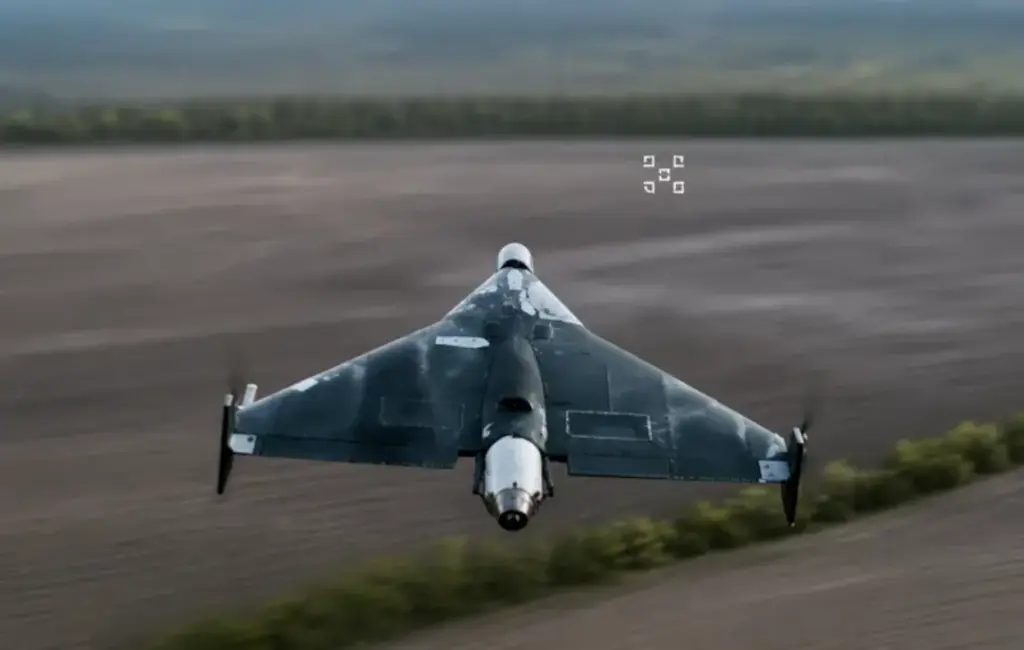
Russia’s new “Geran-4 Seeker” Shahed variant uses machine-vision AI for targeting. Source: Dyki Shershni

Ukraine has four potential interceptor systems that could shoot down Russia’s increasingly common jet-powered Geran attack drones, Ukrainian Defense Minister Yevhen Khmara said on 30 August, according to Suspilne.

Russia has sharply increased its use of the faster drones against Ukrainian cities, causing major damage to civilian infrastructure and many civilian casualties. The attacks are putting near-unprecedented strain on Ukraine’s air defenses.

All four interceptor systems have undergone field testing, Khmara said. Ukraine now aims to bring them to the required level as quickly as possible and scale production to thousands of units.

“The search for countermeasures against jet-powered drones continues,” Khmara told journalists, according to Suspilne. “There are already four potential interceptors that can shoot down jet-powered ‘Shaheds.’ Field tests have already been conducted on them.”

Russia is rapidly expanding Geran attacks

Russia's Gerans are jet-powered adaptations of the Iranian-designed Shahed attack drones that Russia has produced domestically throughout the full-scale war. The faster Geran variants give Ukrainian air defenses less time to detect and engage them.

Ukrainian defense technology adviser Serhii “Flash” Beskrestnov said Russia used more than 2,500 jet-powered Gerans against Ukraine in August, up from about 1,500 in July.

He also said the drones are being launched against Ukraine almost directly from Russian factories, highlighting the rapid expansion of their production and use.

Zelenskyy calls for faster production

Ukrainian President Volodymyr Zelenskyy has made countering the Gerans a priority as Russia sustains repeated attacks on Ukrainian cities.

At a 28 August meeting of Ukraine’s military leadership, Zelenskyy said the country needed to maximize domestic weapons production, with the immediate focus on defending against jet-powered Gerans and increasing Ukraine’s own long-range strikes against Russia.

“[The] main thing is our defense against jet-powered ‘Shaheds,’” Zelenskyy said in his evening address.

He said Russia had adopted a tactic of keeping Kyiv and other cities under repeated air raid alerts, with Gerans reaching the capital as well as cities including Kharkiv and Zaporizhzhia.
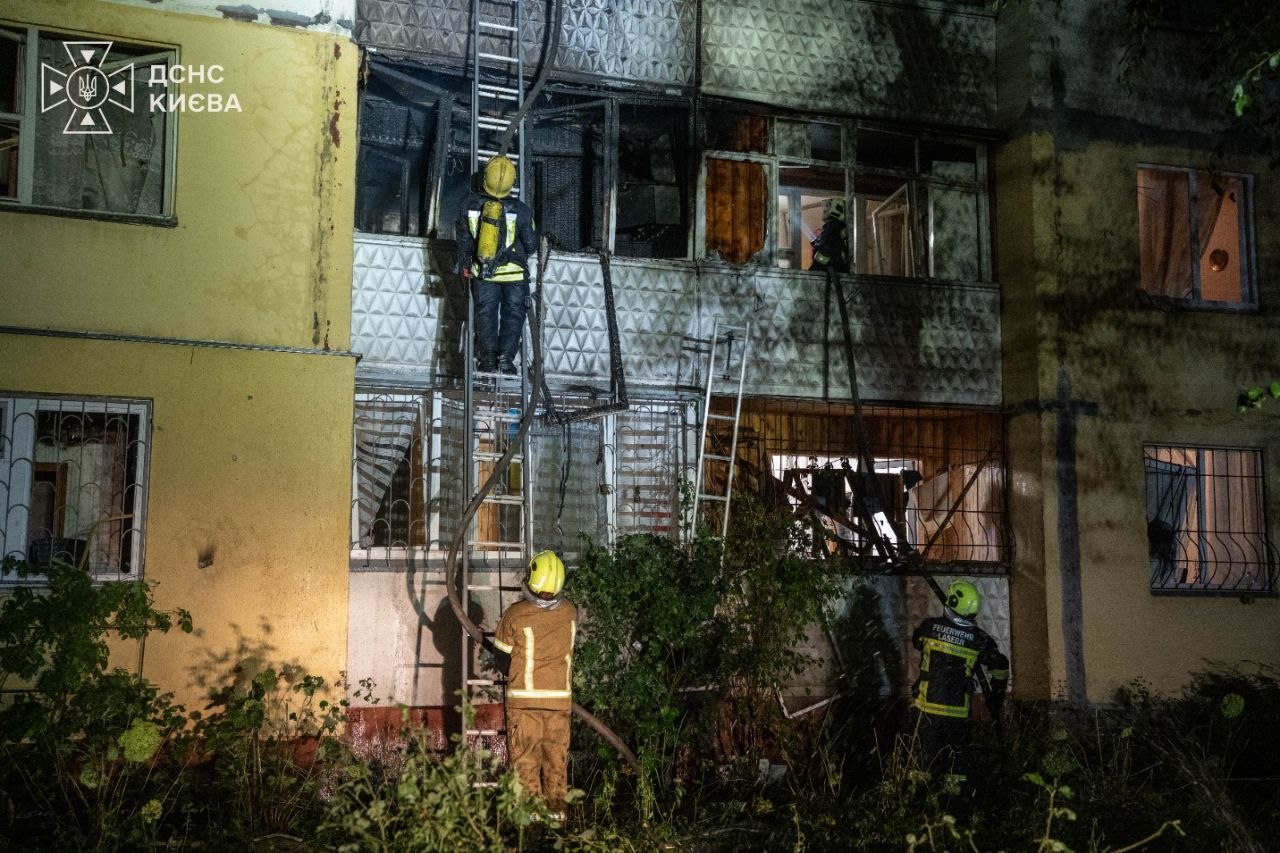
Rescue workers respond to the site of a Russian strike on an apartment building in Kyiv, 30 August 2026. Photo: Ukraine's State Emergency Service
Explore further

Four days of Russian attacks keep Kyiv under near-constant fire. Ukraine is struggling to defend its skies

“All our means of countering [them] are already being used,” Zelenskyy said, adding that Ukraine needs a significant acceleration in production of interceptors specifically designed for the jet-powered drones.

Khmara said the four potential interceptors are now at the field-testing stage, with the next step being to bring them into production at a scale of thousands of units.

For Ukraine, that scale is critical. The country must defend a large territory against increasingly large Russian drone barrages while also preserving limited air-defense resources for ballistic and other missiles that require more advanced interceptors.
  • ✇Euromaidan Press
  • Russia’s attack drones now jam the cheap interceptors sent to kill them
    Ukraine's cheap interceptor drones have been knocking Russia's nightly attackers out of the sky, so Russia has now bolted a jammer onto some of its own drones to blind them, according to Serhii "Flash" Beskrestnov, an adviser to Ukraine's President on defense technology. He examined the system, found in drone wreckage, and mapped how it strikes back at the interceptor sent to hunt it. Russia batters Ukrainian cities with long-range drones most nights, and Ukraine has le
     

Russia’s attack drones now jam the cheap interceptors sent to kill them

25 août 2026 à 12:39

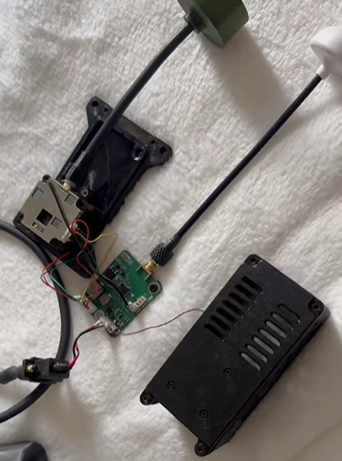
Electronic warfare equipment from Shahed drones.

Ukraine's cheap interceptor drones have been knocking Russia's nightly attackers out of the sky, so Russia has now bolted a jammer onto some of its own drones to blind them, according to Serhii "Flash" Beskrestnov, an adviser to Ukraine's President on defense technology. He examined the system, found in drone wreckage, and mapped how it strikes back at the interceptor sent to hunt it.

Russia batters Ukrainian cities with long-range drones most nights, and Ukraine has leaned on a cheap shield—drones costing a few thousand dollars—instead of burning through far pricier missiles. Anything that dulls that shield pushes the cost of defending the sky back up.

A jammer that waits for the interceptor

The unit rides on a Geran, Russia's version of the Iranian Shahed one-way drone. It listens for the video signal an approaching Ukrainian interceptor beams back to its pilot. Its receiver reads the interceptor's working frequency, then orders a transmitter to bury that same channel in noise, Beskrestnov found.

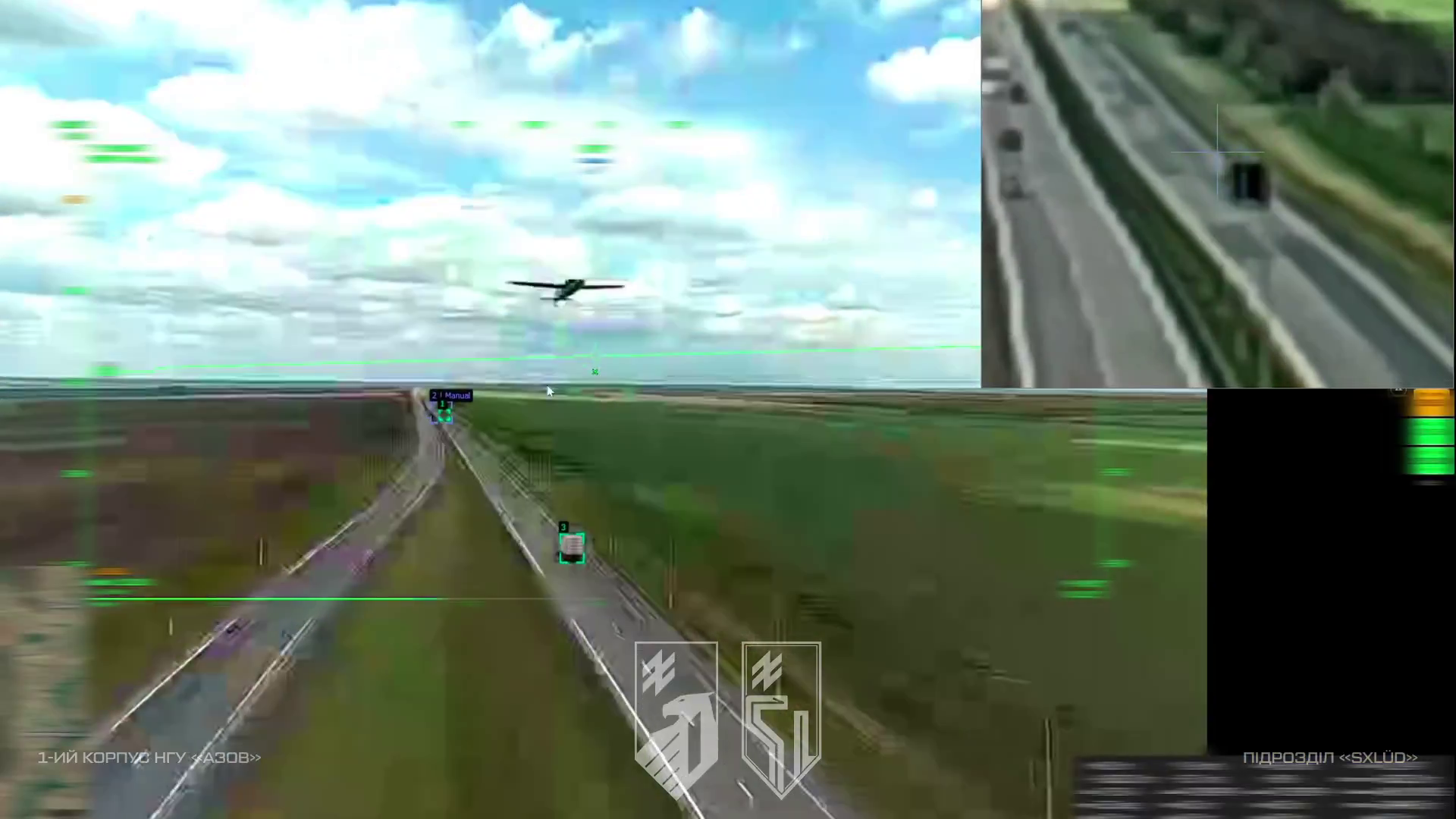
A Ukrainian Hornet drone spots another Hornet. Photo: Ukraine's 1st Azov Corps
Explore further

How Ukraine uses AI to guide long-range drone strikes through electronic warfare and deep into Russian-controlled rear areas

By his first estimate, the jammer's signal runs about five times stronger than the interceptor's video link—enough to wipe the picture and any chance of steering the drone onto its target.

Seconds decide it

In Beskrestnov's account, the system detected a test transmitter and switched on jamming after about three seconds, and the feed cut out. The device stays nearly idle until a hunter comes close, then jumps to full power to smother the signal. It targets the ordinary analog video band around 5.8 gigahertz that many cheap interceptors still use.

Possible answers, include interceptors with terminal-guidance homing for the final stretch of flight, digital communication links, or transmitters set to non-standard frequencies.

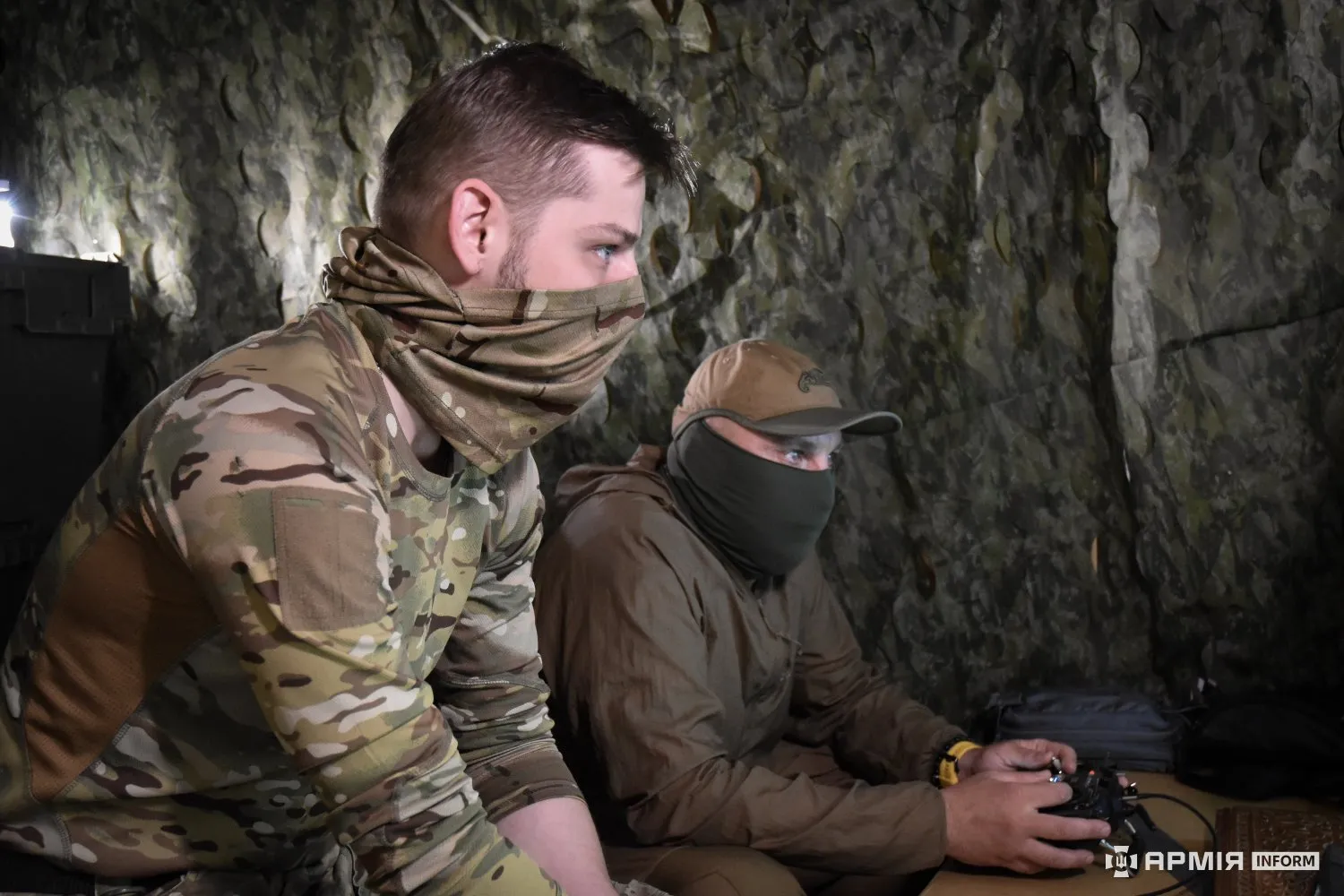
“two targets ammo one drone” how ukrainian drone crew hunts russian transport behind front line · post arti schultz daria moskalets/ armiyainform ukraine news reports
Explore further

“Two targets and ammo with one drone”: How a Ukrainian drone crew hunts Russian transport behind the front line

An old problem for Russia's drones

Russia has tried again and again to keep its one-way drones alive against Ukraine's defenses, including wiring jammers into some Shaheds earlier this year. Spending weight and power to protect a drone from a far cheaper interceptor shows how well those cheap drones work.

❌