Vue normale

Fix for Ukraine’s interceptors is radar seeker head, and American firm is selling one for $4,000, says president’s tech adviser
28 août 2026 à 16:45

russia steers its long-range drones ground towers—kyiv says hit one occupied crimea · post russia’s new “geran-4 seeker” shahed variant uses machine-vision ai targeting geran 4 ukraine news ukrainian reports

Ukraine's drone interceptors work until the weather turns. On 28 July, Presidential advisor Serhii "Flash" Beskrestnov wrote that fog and cloud in fall, winter, and spring can leave an interceptor pilot unable to see more than a dozen meters, and that success rates fall as soon as winter begins, a problem that is especially severe over the sea.

Cheap interceptor drones have become one of Ukraine's main answers to Shahed saturation. But nearly every system shares the flaw Beskrestnov names: it depends on a pilot or camera seeing the target. Ukrainian and foreign teams are all racing toward the same fix, an onboard seeker head.

The method started simple

The earliest approach was primitive but cheap and effective, Beskrestnov said. A pilot flies the interceptor to the right point using the radar network, then finds the target by eye, chases it, and attacks.

Russia answered not only with jet Shaheds but with onboard electronic warfare, evasion systems, in-flight maneuvers, and rear-facing cameras to watch the sky behind, he explained. Ukraine replied with machine-vision target capture and guidance.

Bad weather remains unsolved

None of that fixes visibility, Beskrestnov wrote, and the problem hits both ordinary and jet interceptors. The way out, he argued, is an autonomous seeker head, acoustic, thermal, or radar, mounted on the interceptor itself.

A radar seeker is the ideal, in his view, because it opens the door to a fully autonomous system with no human in the loop: the network sees the target, launches the nearest interceptor, guides it by tactical radar, and the seeker locks on for the kill.

A US firm has put a price on it

Building a radar small enough for an interceptor has proven hard, and teams in Ukraine and abroad are working on it, Beskrestnov said, adding that he would not discuss the Ukrainian efforts because the subject is sensitive.

He pointed to the American company Archimedes, which he said announced a radar days ago, operating at 24 gigahertz with a 25-by-14-degree field of view and a one-kilometer lock-on range, shown in a promotional video mounted on several Ukrainian interceptors, at about $4,000 per unit. Whether it works remains to be seen, he added, given how hard the problem is.

Russia’s new jet Shaheds run on turbojets from one Chinese company. It deleted them from its English website

27 août 2026 à 01:12

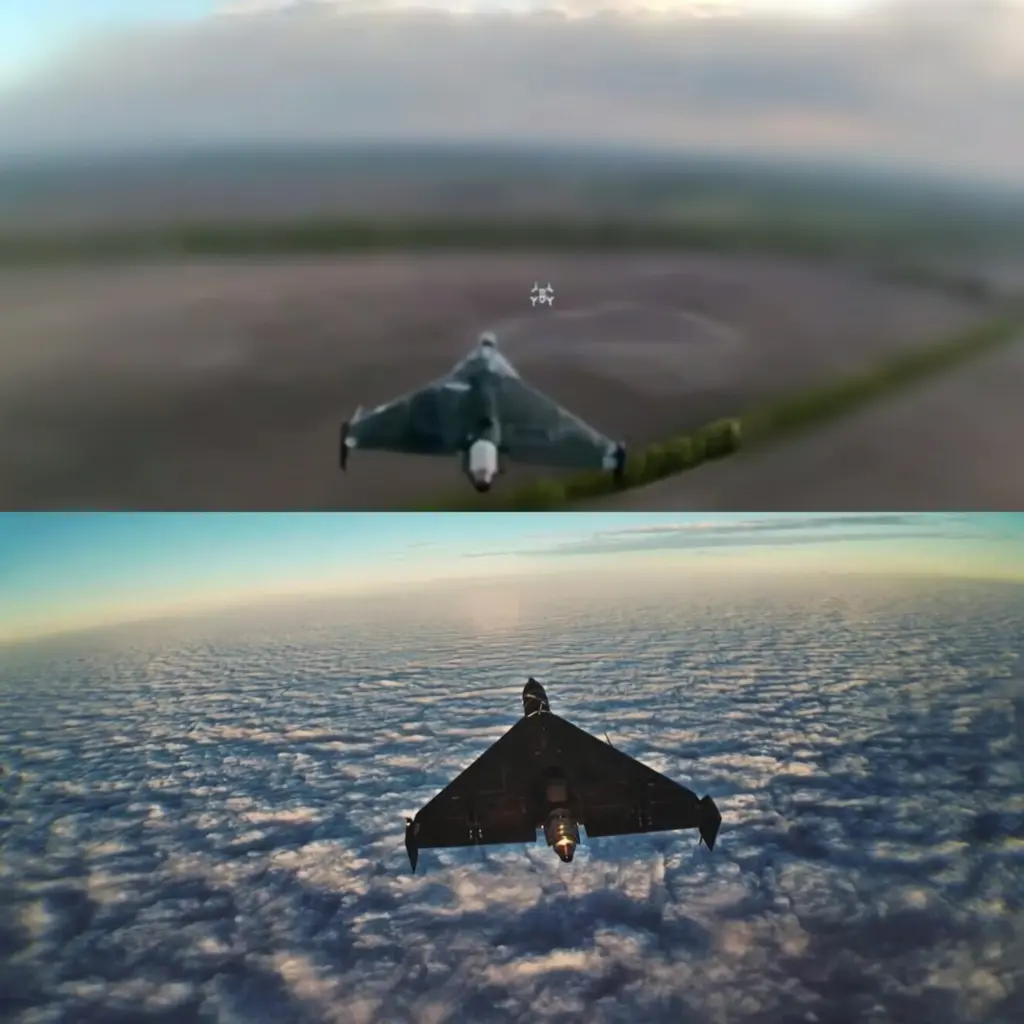
Geran-4" is an evolution of the earlier "Geran-3" model

China is helping Russia build a faster Shahed. Russia has begun using upgraded Shahed drones with Chinese-made turbojet engines that fly at speeds close to three times those of earlier versions, the Wall Street Journal reported.

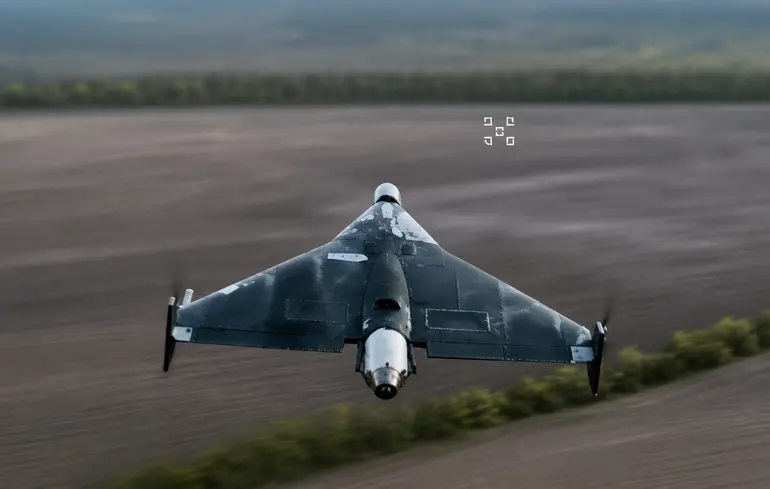
The Shahed jet is designed to beat Ukraine's air defenses. Ukrainian interceptors have downed about 90 percent of the older piston-engine drones, which cruise at roughly 180 kilometers per hour, so Russia switched to the jet-powered Geran-4, which cruises at around 500 kilometers per hour.

The engines come from one Shenzhen firm

The turbojets come from Telefly Telecommunications Equipment, founded in Shenzhen in 2010. The company chiefly makes computer hardware and communications equipment, but also sells its own line of micro-turbojets for drones.

China has long been the main clearinghouse for Shahed parts, including engine components, servomotors, and gyroscopes, the newspaper reported.

The company scrubbed its own website

After Ukraine publicized the discovery of Telefly engines in Russian drones, the turbojet section disappeared from the English-language pages of the company's website. The pages in Chinese and other languages still carry them.

China's foreign ministry, which did not respond either, has previously said it strictly regulates exports of dual-use components and rejects unilateral US sanctions on such trade.

Western parts fade as Chinese parts arrive

Downed Shaheds once carried microcontrollers from Texas Instruments in the US and linear regulators from STMicroelectronics, which the newspaper lists as being based in Switzerland. Over time, the Western components are disappearing even as the drones gain better navigation and attack systems, because US Treasury investigations found nearly all the Western parts were being diverted through Chinese intermediaries, often shell companies in Hong Kong.

Ukrainian government researcher Colonel Oleksandr Zaruba said in June that Shaheds now hold more antennas, modems, and SIM cards to correct their flight paths through local mobile networks, and that the components increasingly come from China.

Ukraine has shown its answer to Russia’s most powerful drones for first time. Meet Alexa Spatium, which can carry thermobaric warheads and fly back home

21 août 2026 à 17:34

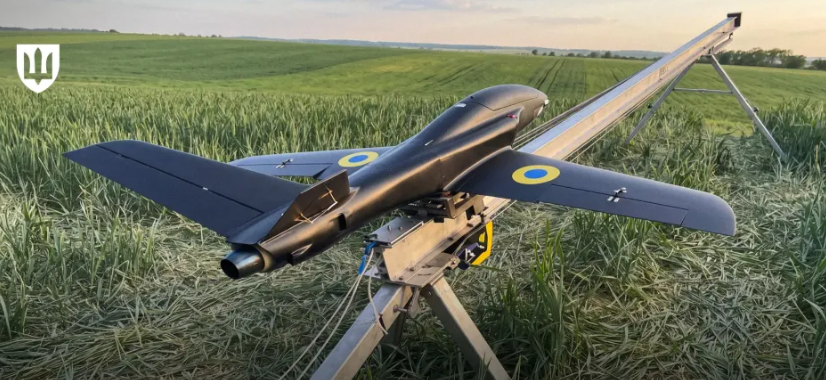
The Ukrainian arsenal gained its first jet-powered interceptor drone, the Alexa Spatium. Source: Ukraine's Defense Ministry

Ukraine has built a revolutionary drone to catch Russia's most modern drones. The Ukrainian arsenal gained its first jet-powered interceptor drone, the Alexa Spatium, developed to destroy small aerial, ground, and surface targets in combat, Ukraine's Defense Ministry announced.

The interceptor is Ukraine's answer to a threat that has outrun its defenses and killed civilians. Russia added jet engines to its Geran drones to make them fly faster than Ukraine's interceptors could intercept. Such jet-powered drones, Geran-4, struck a Kryvyi Rih shopping center on 21 August, killing at least 15 people and injuring 130.

The Alexa Spatium is built to catch exactly those jet-powered drones, closing an arms-race loop in which Russia's speed had left Ukraine's slower interceptors behind.

It is built to kill the jet Gerans

The interceptor targets Russia's fastest drones first. It is primarily oriented toward destroying Russian kamikaze drones, including the Geran-3, Geran-4, and Geran-5, as well as the Shahed-131, and can also strike reconnaissance drones, helicopters, and other targets, according to the Defense Ministry.

A powerful turbojet gives the Alexa Spatium the speed to chase down jet-powered targets, with a high flight ceiling, a significant combat radius, and a range spanning low to medium altitudes.

It is fast, reusable, and pickup-portable

The drone is built for flexible, repeated use. It measures about 1.5 by 1.7 meters, launches from a mobile catapult in minutes, and is made of a light, strong composite that lets it make sharp maneuvers without losing control. A drone that does not complete its mission can return to the launch site and be reused.

It carries a choice of warheads and seekers. The Alexa Spatium can be fitted with fragmentation, shaped-charge, or thermobaric warheads, guided by preset coordinates or direct control, and uses television and infrared search-and-aiming systems.

Since the beginning of 2026, Ukraine’s Defense Ministry has codified and approved 413 unmanned aerial systems for use by the country’s Defense Forces. Almost all of them are Ukrainian-made.

Ukraine hit ground-control station for rare drone that fires Russia’s Banderol, missile hitting 650 km/h with 114-kg warhead

17 août 2026 à 12:23

ISW: Russia deploys ship-based Orion drones as Ukraine cripples Black Sea fleet

Ukraine went after the sites and systems Russia uses to launch and steer its most powerful attack drones. On the night of 17 August 2026, Ukraine's Defense Forces struck a series of important Russian military targets, hitting drone storage, launch, and control infrastructure across occupied Crimea and Kherson Oblast, the General Staff reported.

The strikes target the infrastructure behind Russia's drone attacks, not just the drones themselves. By hitting storage sites, control stations, and relay points, Ukraine degrades Russia's ability to launch and guide the Shaheds, reaching the launch and command nodes rather than intercepting drones one by one in the air.

The Shahed site and the Orion control station

The first strike hit a Shahed base. Ukraine struck a storage, preparation, and launch site for attack drones near Hvardiiske in occupied Crimea, with a fire recorded at the site, the General Staff said.

The second hit the launch platform for one of Russia's newer drone missiles. Ukraine struck the ground-control station of an Orion drone at Novofedorivka in occupied Crimea. The Orion is a large Kronshtadt strike-reconnaissance drone and the aerial launch platform for the jet-powered S8000 "Banderol" cruise missile, which Russia fires from Crimea at Odesa.

It flies at 520-560 km/h cruise speed and up to 650 km/h maximum, has a range up to 500 km, and carries a 114.3-kg fragmentation-high-explosive warhead.

Until Russia developed a ground launcher, the rare Orion, with only nine lost in the whole war, was the only way to fire a Banderol.

The relay points that extend the drones' reach

Ukraine also hit the relays that guide Russian drones. It struck a ground system for controlling Geran and Gerbera attack drones at Olenivka in occupied Crimea, and a communication and power point for a drone relay on the Tendra Spit in Kherson Oblast.

Those relays matter because they extend range. Russia uses ground relay stations to guide its drones farther than a direct signal reaches, so destroying them shortens how deep the Shaheds can be steered into Ukraine. The degree of damage is being clarified.

A jet-powered BM-35 can now hit 350 km/h. Russia says that’s specifically to outrun Ukraine’s interceptors

15 août 2026 à 14:04

A Russian drone is flying at Ukraine. Source: NTV

Russia is upgrading more of its drones to escape Ukraine's drone hunters. Russia has begun fitting jet engines to another attack drone model, the BM-35, presidential adviser Serhii "Flash" Beskrestnov reported.

The move is a direct answer to Ukraine's interceptors, and it is spreading across Russia's drone fleet. As Ukraine's interceptors have improved, the Russians are replacing their engines with jet engines not only on long-range Geran drones but also on budget mid-strike drones.

Each Ukrainian advance in shooting drones down pushes Russia to make them faster, Beskrestnov says.

The jet BM-35 is built to be harder to catch

Beskrestnov shared a Russian report showing the jet version of the BM-35 and its claimed characteristics. According to the Russian segment, the jet BM-35 can reach over 350 kilometers per hour, has a range of over 200 kilometers, and carries a 10-kilogram warhead.

The speed is the whole point. Russian fighters claim the increased speed is intended to make the drone harder for Ukrainian interceptors to catch, according to the Russian report. A faster drone gives Ukraine's interceptors less time to close and strike, which is exactly the problem the jet engine is designed to create.

The change is driven by Ukraine's own success

Ukraine has scaled up cheap interceptor drones that take down tens of thousands of Russian drones a month, and that success is what forces Russia to respond, swapping propeller engines for jets to fly above the speed interceptors can reliably catch.

The result is a cost-and-speed contest. Jet engines make each drone more expensive and complex than the cheap propeller models Russia has relied on for mass attacks. So by making its interceptors effective, Ukraine has pushed Russia toward pricier, faster drones, the same dynamic seen with the jet Gerans that now strike Ukrainian cities.

Russia's war is driving advances in weapons technology without limits. This means that soon Ukraine will have to find more ways to protect itself from new weapons, as well as its allies, who have also come under Russia's attacks, such as Poland, Romania, and the Baltic States.

❌