Vue normale

  • ✇Euromaidan Press
  • Three Ukrainian units received kit that makes an uncrewed vehicle out of whatever they’re already driving
    Ukraine is turning ordinary cars into robots instead of building them from scratch. Three units of the Armed Forces received the Kaban remote-control system, which converts vehicles into uncrewed ones, developer Drone Fight Group told Defender Media. Ground robots have become a daily part of Ukraine's front. Ukrainian units ran 16,676 logistics and evacuation missions with them in June, up 122 percent since January, and the military has contracted more than 22,000 groun
     

Three Ukrainian units received kit that makes an uncrewed vehicle out of whatever they’re already driving

26 août 2026 à 17:48

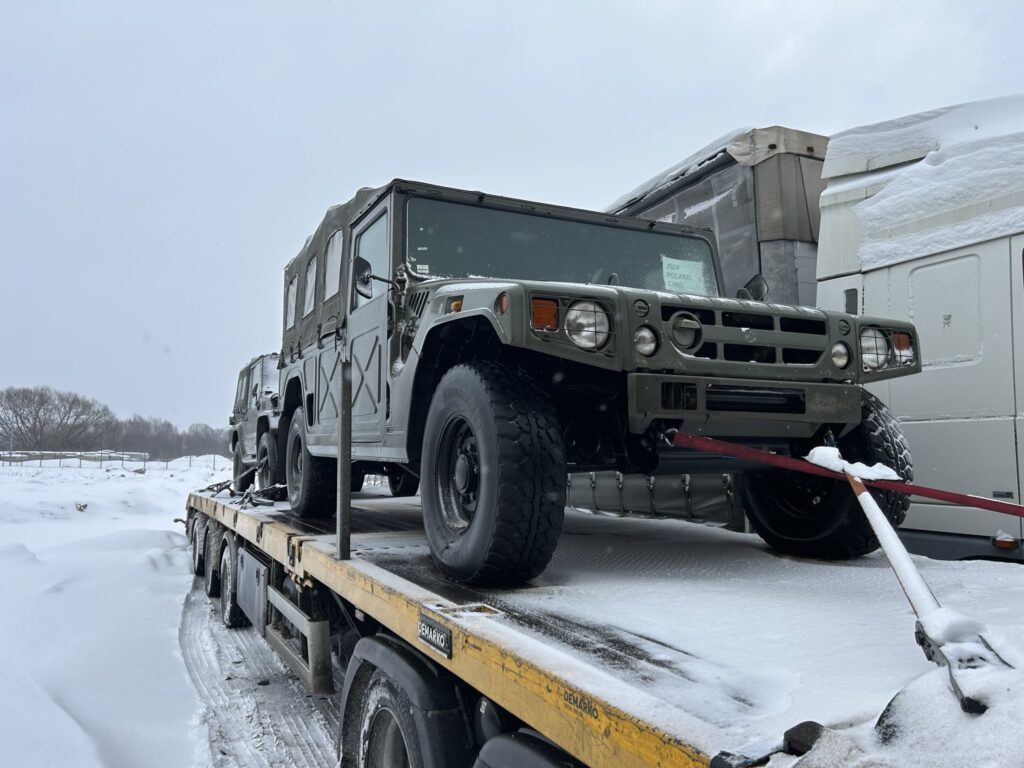
japan quietly ships military-grade off-roaders ukraine — here’s what can do · post toyota high mobility vehicle transferred loaded transport truck 14 2026 переданий японією позашляховик hmv січня року посольство

Ukraine is turning ordinary cars into robots instead of building them from scratch. Three units of the Armed Forces received the Kaban remote-control system, which converts vehicles into uncrewed ones, developer Drone Fight Group told Defender Media.

Ground robots have become a daily part of Ukraine's front. Ukrainian units ran 16,676 logistics and evacuation missions with them in June, up 122 percent since January, and the military has contracted more than 22,000 ground robots for 2026, nearly double the 2025 total. Most are purpose-built platforms. Kaban takes the opposite route, converting vehicles that a unit already has.

The developers say Kaban was passed to the 3rd Army Corps, the 429th Separate Unmanned Systems Regiment "Akhilles", and the 49th Brigade of the Armed Forces.

The system bolts on without modification

Kaban installs on a vehicle without altering its construction and works with different models, Drone Fight Group said. It lets the operator switch between remote and manual control.

The operator navigates on a digital map, plotting routes and setting markers. Manual correction is built in for GPS spoofing cases. The system predicts its trajectory and can automatically stop the vehicle if the connection is lost.

Starlink carries the control link

The main communication channel is Starlink, and the system also supports analog video transmission and radio control, according to the developers. A vehicle can be fitted with thermal cameras if needed.

Kaban provides two-way audio and remote control of lights, infrared illumination, and searchlights, and it can pull data from the vehicle's onboard computer. Among the optional add-ons, the developers list net launchers and platforms for launching drones.

Combat testing came before the handover

Kaban is developed with support from the Brave1 cluster, and the system has already passed combat trials, according to the developers. Work continues to refine it using feedback from military units.

  • ✇Euromaidan Press
  • Zvook covers Ukraine’s skies for under €50 million. Now, it has started testing hydrophones underwater
    The Ukrainian company that taught Ukraine to hear Russian drones is now learning to listen underwater. Zvook, which develops acoustic systems for detecting drones and missiles, has begun testing hydrophones to detect vessels and other underwater objects by sound, the company said on LinkedIn. Zvook built its name on land. Its acoustic sensors cover Ukraine at 1,000 meters and below for less than 50 million euros, a system NATO's assistant secretary-general for operation
     

Zvook covers Ukraine’s skies for under €50 million. Now, it has started testing hydrophones underwater

26 août 2026 à 15:35

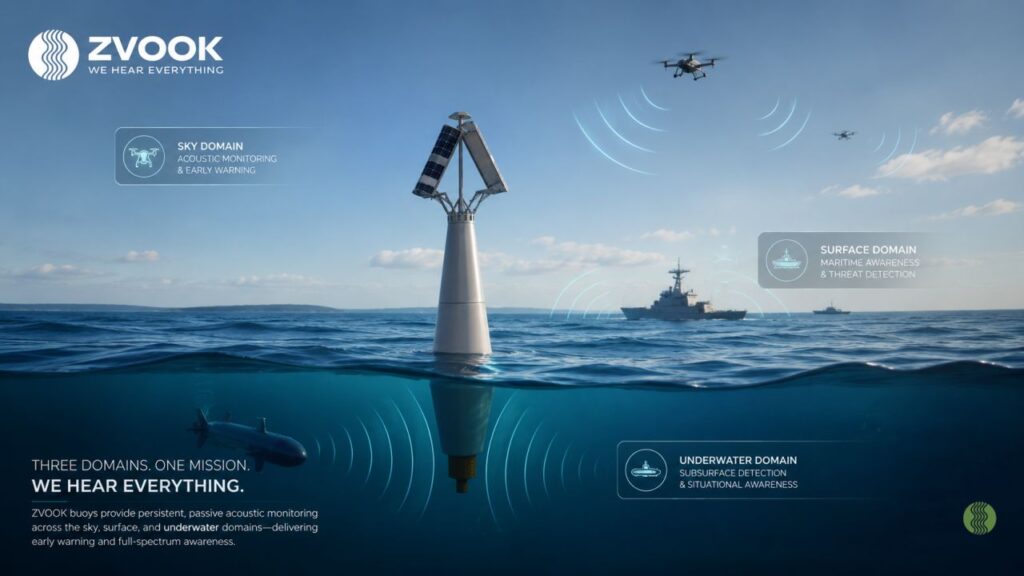
The Zvook underwater system. Source: The Zvook company

The Ukrainian company that taught Ukraine to hear Russian drones is now learning to listen underwater. Zvook, which develops acoustic systems for detecting drones and missiles, has begun testing hydrophones to detect vessels and other underwater objects by sound, the company said on LinkedIn.

Zvook built its name on land. Its acoustic sensors cover Ukraine at 1,000 meters and below for less than 50 million euros, a system NATO's assistant secretary-general for operations, Tom Goffus, called crazy for its cost-effectiveness. Lithuania chose the same Ukrainian acoustic technology for deployment in 2026 after Russian drones entered its airspace.

The approach stays passive

Zvook says its underwater method emits nothing, unlike traditional sonar. Active sonar sends sound into the water and listens for its return. The company's system only listens to the acoustic environment and uses the information already present in it.

That principle is familiar to the company from the air. Underwater, almost everything else changes: sound propagation, background noise, reflections, environmental conditions, and acoustic signatures create a different detection problem.

Testing comes before any product

The company says its focus now is not a finished product but real-world data. It is working out which objects can be reliably detected and classified, and where a distributed passive underwater acoustic system could have practical value.

Possible applications range from maritime security and vessel awareness to the protection of ports and critical underwater infrastructure, the company explained. Zvook added that it is seeking commercial joint testing with defense organizations, maritime operators, and infrastructure owners.

The company frames it as one method across domains

Zvook cast the shift as continuity rather than a new line of work. From listening to the sky to acoustic tracking, and now beneath the surface, the domain changes, but the principle stays the same: passive, always listening, emitting nothing, the company said.

Ukraine’s new commander-in-chief has been picking technical chiefs. Adviser who knows them says he is putting most competent people

26 août 2026 à 14:26

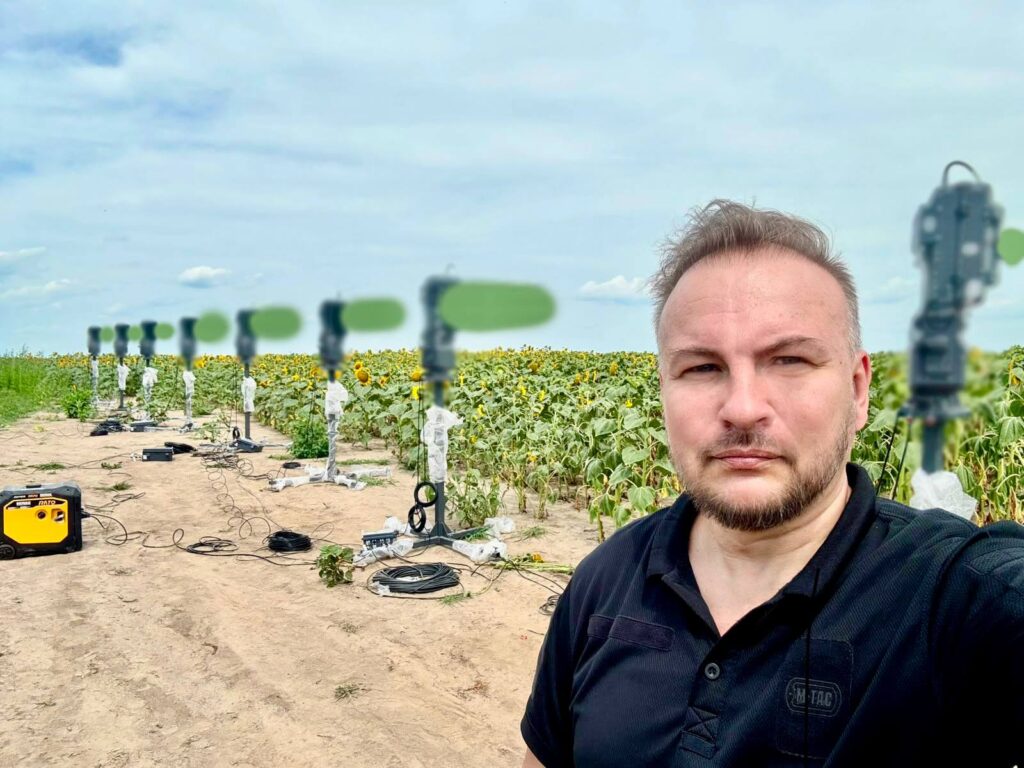
Presidential adviser on defense technology development Serhii "Flash" Beskrestnov at the test range of new electronic warfare means against jet-powered Shaheds. Source: Serhii "Flash" Beskrestnov

Serhii "Flash" Beskrestnov, advisor to the president on the development of defense technologies, has highly praised the recent personnel changes in the new Ukrainian commander-in-chief's staff. He says that Mykhailo Drapatyi is appointing the most competent people available to the Armed Forces' technical directions, adding that "after many years of war, he knows most of the army's technical specialists."

The endorsement comes from Beskrestnov, an adviser to former Ukrainian Defense Minister Mykhailo Fedorov, considered the most effective in Ukraine's history. After the dismissal, he became a non-staff adviser to President Volodymyr Zelenskyy.

The technology war moves weekly

Beskrestnov rates the new appointees on temperament as much as expertise.

"The main thing is that these new heads are energetic, modern, and good communicators," he wrote.

In a war of technologies, everything changes literally every week, and "we have to react to all the enemy's challenges just as fast. Analyze, forecast, respond, and act a step ahead of the enemy," he added.

Drapatyi arrived in the same reshuffle

Zelenskyy named Drapatyi commander-in-chief on 21 July, replacing Oleksandr Syrskyi, and said in the same address that he had offered Fedorov a leadership position bringing together Ukraine's technological capabilities.

Fedorov's removal drew street protests across Ukraine. Drapatyi commands the General Staff rather than the ministry, so the appointments Beskrestnov praises sit outside the structure he left behind.

Change will be slow, he expects

"I believe big positive changes are ahead of us, but this will not happen fast, because a great deal has to change," Beskrestnov said.

He did not name any of the new appointees or their posts.

Earlier, Beskrestnov disclosed Russia's new tactics in its drones. According to him, while Ukraine's cheap interceptor drones have been knocking Russia's nightly attackers out of the sky, Russia has now bolted a jammer onto some of its own drones to blind them.

  • ✇Euromaidan Press
  • Russia’s attack drones now jam the cheap interceptors sent to kill them
    Ukraine's cheap interceptor drones have been knocking Russia's nightly attackers out of the sky, so Russia has now bolted a jammer onto some of its own drones to blind them, according to Serhii "Flash" Beskrestnov, an adviser to Ukraine's President on defense technology. He examined the system, found in drone wreckage, and mapped how it strikes back at the interceptor sent to hunt it. Russia batters Ukrainian cities with long-range drones most nights, and Ukraine has le
     

Russia’s attack drones now jam the cheap interceptors sent to kill them

25 août 2026 à 12:39

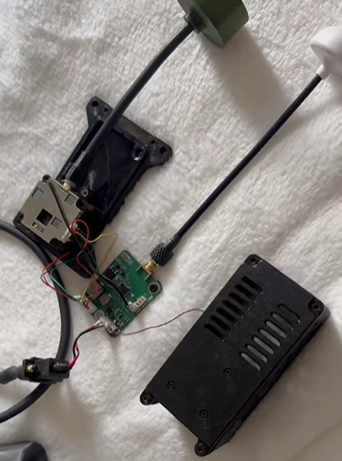
Electronic warfare equipment from Shahed drones.

Ukraine's cheap interceptor drones have been knocking Russia's nightly attackers out of the sky, so Russia has now bolted a jammer onto some of its own drones to blind them, according to Serhii "Flash" Beskrestnov, an adviser to Ukraine's President on defense technology. He examined the system, found in drone wreckage, and mapped how it strikes back at the interceptor sent to hunt it.

Russia batters Ukrainian cities with long-range drones most nights, and Ukraine has leaned on a cheap shield—drones costing a few thousand dollars—instead of burning through far pricier missiles. Anything that dulls that shield pushes the cost of defending the sky back up.

A jammer that waits for the interceptor

The unit rides on a Geran, Russia's version of the Iranian Shahed one-way drone. It listens for the video signal an approaching Ukrainian interceptor beams back to its pilot. Its receiver reads the interceptor's working frequency, then orders a transmitter to bury that same channel in noise, Beskrestnov found.

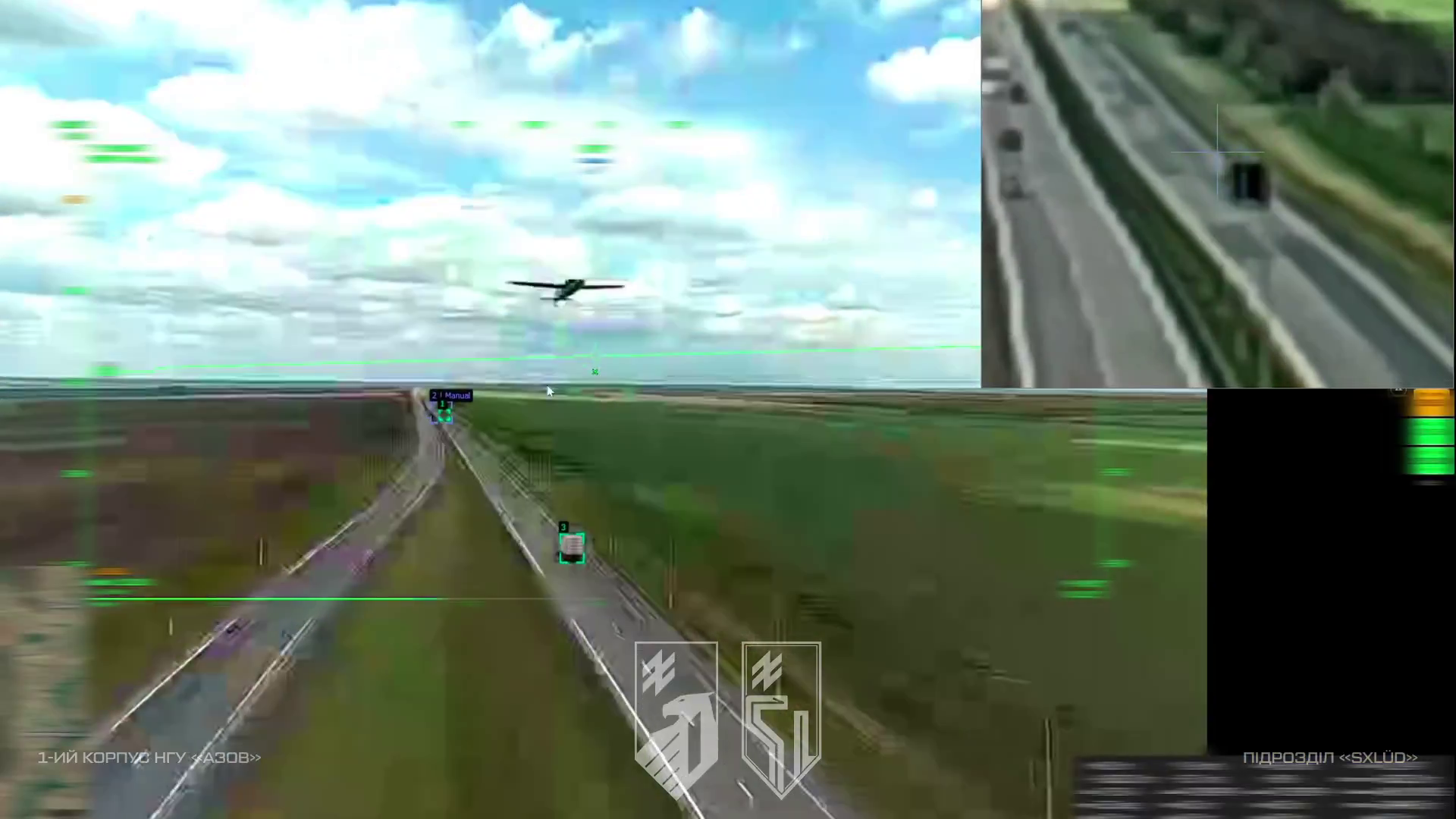
A Ukrainian Hornet drone spots another Hornet. Photo: Ukraine's 1st Azov Corps
Explore further

How Ukraine uses AI to guide long-range drone strikes through electronic warfare and deep into Russian-controlled rear areas

By his first estimate, the jammer's signal runs about five times stronger than the interceptor's video link—enough to wipe the picture and any chance of steering the drone onto its target.

Seconds decide it

In Beskrestnov's account, the system detected a test transmitter and switched on jamming after about three seconds, and the feed cut out. The device stays nearly idle until a hunter comes close, then jumps to full power to smother the signal. It targets the ordinary analog video band around 5.8 gigahertz that many cheap interceptors still use.

Possible answers, include interceptors with terminal-guidance homing for the final stretch of flight, digital communication links, or transmitters set to non-standard frequencies.

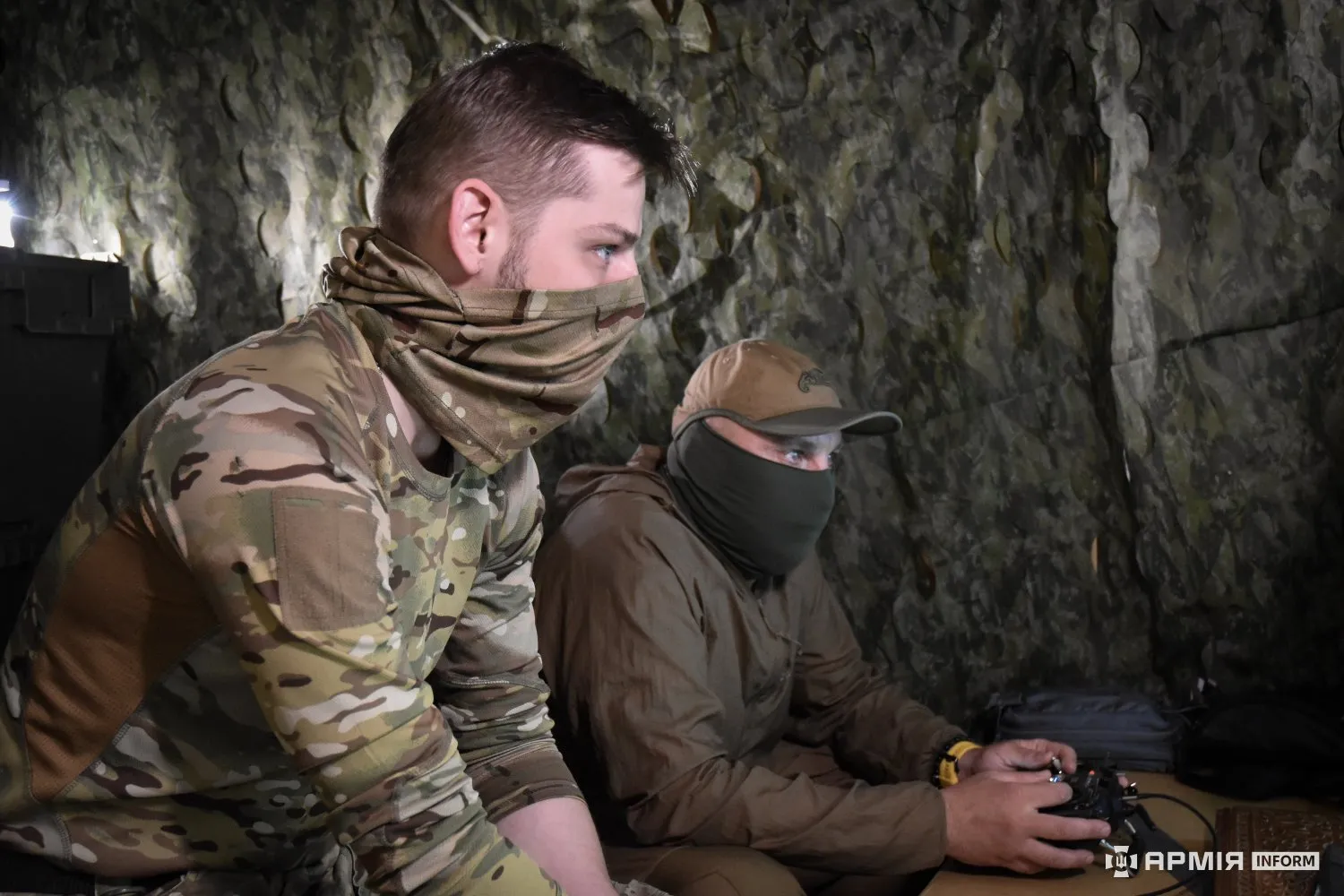
“two targets ammo one drone” how ukrainian drone crew hunts russian transport behind front line · post arti schultz daria moskalets/ armiyainform ukraine news reports
Explore further

“Two targets and ammo with one drone”: How a Ukrainian drone crew hunts Russian transport behind the front line

An old problem for Russia's drones

Russia has tried again and again to keep its one-way drones alive against Ukraine's defenses, including wiring jammers into some Shaheds earlier this year. Spending weight and power to protect a drone from a far cheaper interceptor shows how well those cheap drones work.

❌