Vue normale

  • ✇Euromaidan Press
  • Russia’s most-used map app is erasing a Baltic missile site that Western maps still show
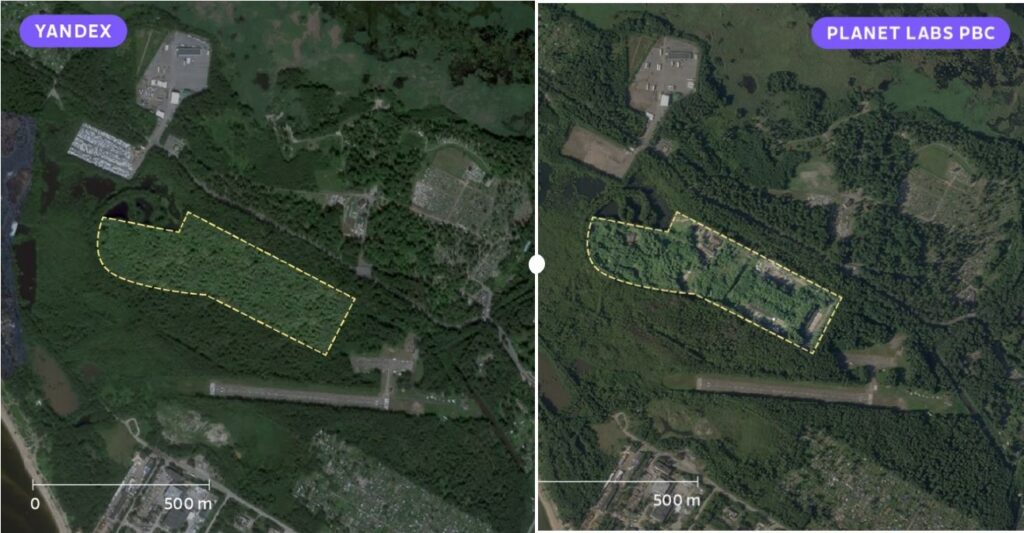
    Russia's most-used mapping service has digitally hidden a military missile site near Finland by copying a fake forest over it on satellite imagery, Finnish public broadcaster Yle reported. Western map services still show the same position, and a Finnish military analyst called the concealment careless and self-defeating. The clumsy edit points to Moscow's growing fear of Ukrainian drones. Ukraine's drones now reach thousands of kilometers into Russia, striking refin
     

Russia’s most-used map app is erasing a Baltic missile site that Western maps still show

17 août 2026 à 07:51

berlin weighs closing russian house spying yet federal ministry just moved beside · post left yandex maps right planet labs pbc imagery 4 2026 undated yle uses because societal significance

Russia's most-used mapping service has digitally hidden a military missile site near Finland by copying a fake forest over it on satellite imagery, Finnish public broadcaster Yle reported. Western map services still show the same position, and a Finnish military analyst called the concealment careless and self-defeating. The clumsy edit points to Moscow's growing fear of Ukrainian drones.

Ukraine's drones now reach thousands of kilometers into Russia, striking refineries, defense plants, and naval yards once thought safe. That expanding reach has upended Moscow's sense of a protected rear across the war.

What Yandex tried to erase

The concealed site sits beside the Kronstadt naval base, on Kotlin Island off St. Petersburg in the Gulf of Finland. Editing software copied trees from another image and laid them over the missile position. Until now, Russia mostly blurred sensitive locations rather than deleting them, but this edit tries to hide the target's existence outright. The same battery still appears on Google, Apple, and Microsoft satellite maps. In the covered zone, Russia has previously kept Bastion anti-ship missiles and their radar and reconnaissance systems.
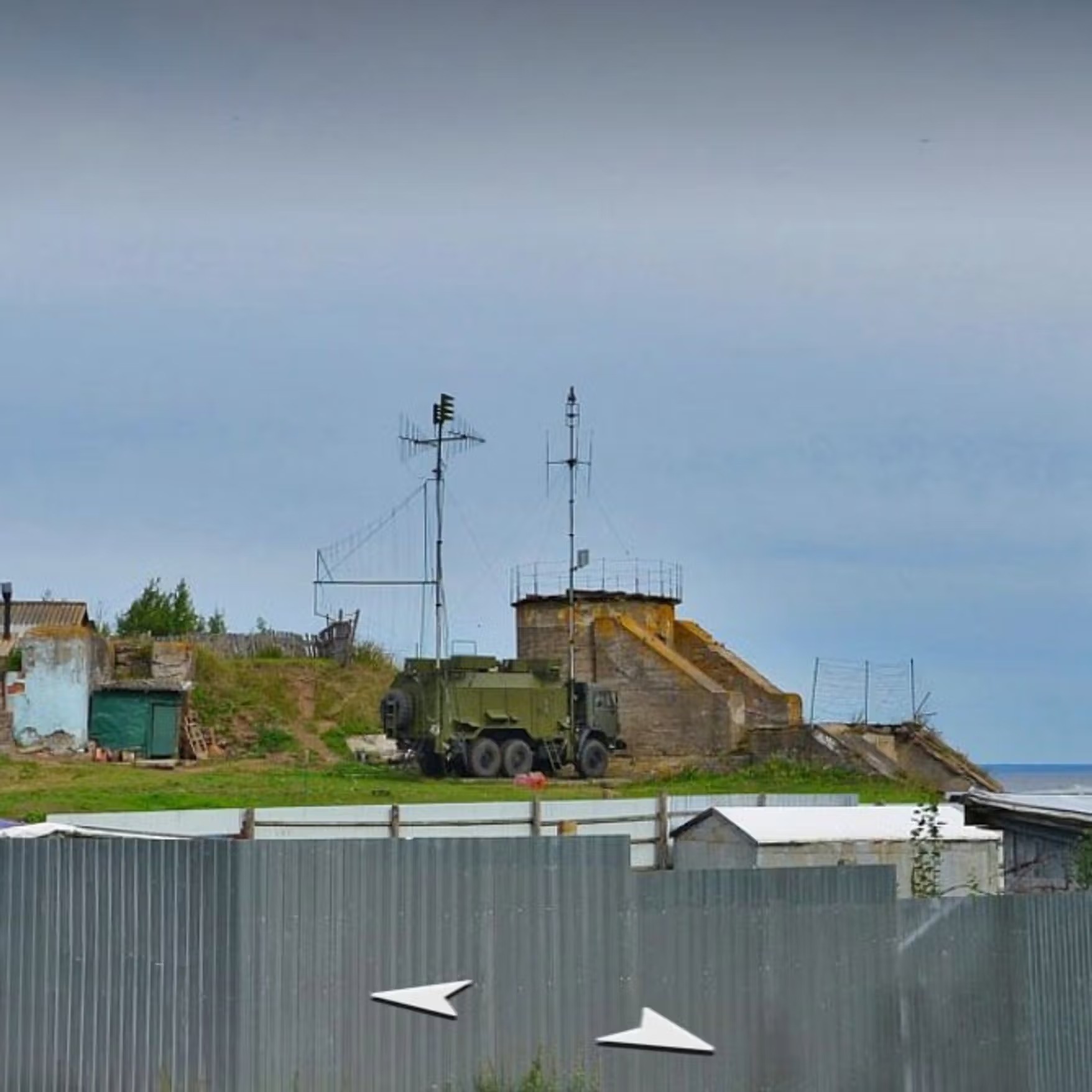
berlin weighs closing russian house spying yet federal ministry just moved beside · post yandex's service electronic warfare base near kronstadt kuvakaappaus yandexin karttapalvelusta kronstadtin lähellä sijaitsevasta elektronisen sodankäynnin tukikohdasta
A screenshot from Yandex's map service showing an electronic warfare base near Kronstadt. Photo: Yandex

A cover-up that gives itself away

Marko Eklund, a military expert and former Finnish intelligence officer, called the secrecy pointless. Western and Ukrainian analysts read their own satellite images, not Yandex, so the edit protects nothing in practice. He believes an administrative order drove it, and that the work was done sloppily. Anyone who knows what to look for can spot the seams and repeating patterns. 
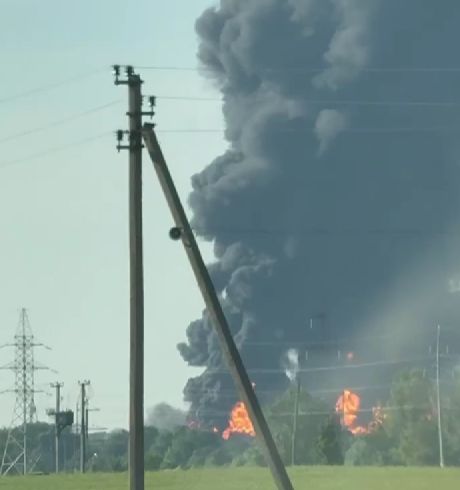
Ukrainian drones struck Russia's Baltic Fleet base at Kronstadt near St. Petersburg overnight, flying nearly 1,000 km. Source: Zelenskiy
Explore further

Kronstadt, Russia’s major naval Base after Black Sea Fleet losses, gets hit by Ukrainian drones (VIDEO)

A pattern set by Ukraine's drones

Russia's map cover-ups have tracked Ukraine's deep strikes. A Moscow court ordered Yandex to mask an oil refinery in Ryazan in 2024 after repeated Ukrainian strikes, and a Nordic-Baltic investigation later counted 119 blurred sites near Russia's northwestern border. Blurring shows up at once, while cloned forest hides the tampering itself.

Kronstadt gives Russia one of its main Baltic Fleet bases, and Ukraine's drones have already reached it. In early June, they set a Russian missile corvette ablaze in dry dock there.

  • ✇Euromaidan Press
  • Armor can barely reach Ukraine’s front now—so robots drive and soldiers walk
    Drones have pushed armored vehicles off the roads to Ukraine's front line, a Ukrainian brigade commander told RBC-Ukraine. Denys Perch, who commands the 107th Territorial Defense Brigade, says the drone-saturated belt has grown so deep that pickups no longer reach forward positions. The one enemy weapon his jammers can't touch is the fiber-optic drone. The war has become a contest over who can pull people off the battlefield fastest, as cheap drones make any human movem
     

Armor can barely reach Ukraine’s front now—so robots drive and soldiers walk

14 août 2026 à 07:02

A Russian tank destroyed in Kharkiv Oblast, Ukraine

Drones have pushed armored vehicles off the roads to Ukraine's front line, a Ukrainian brigade commander told RBC-Ukraine. Denys Perch, who commands the 107th Territorial Defense Brigade, says the drone-saturated belt has grown so deep that pickups no longer reach forward positions. The one enemy weapon his jammers can't touch is the fiber-optic drone.

The war has become a contest over who can pull people off the battlefield fastest, as cheap drones make any human movement near the front a target. Ukraine keeps out-inventing Russia at the front, but Russia copies each advance and floods the line with it at state scale.

When armor becomes the target

Until recently, armored vehicles still drove supplies to logistics hubs near the front. That is now almost impossible. Perch says that when a large, armored machine appears, Russian forces treat it as a prize target and swarm it with dozens of drones and munitions. Perch would sooner park his armor than seat soldiers inside it.

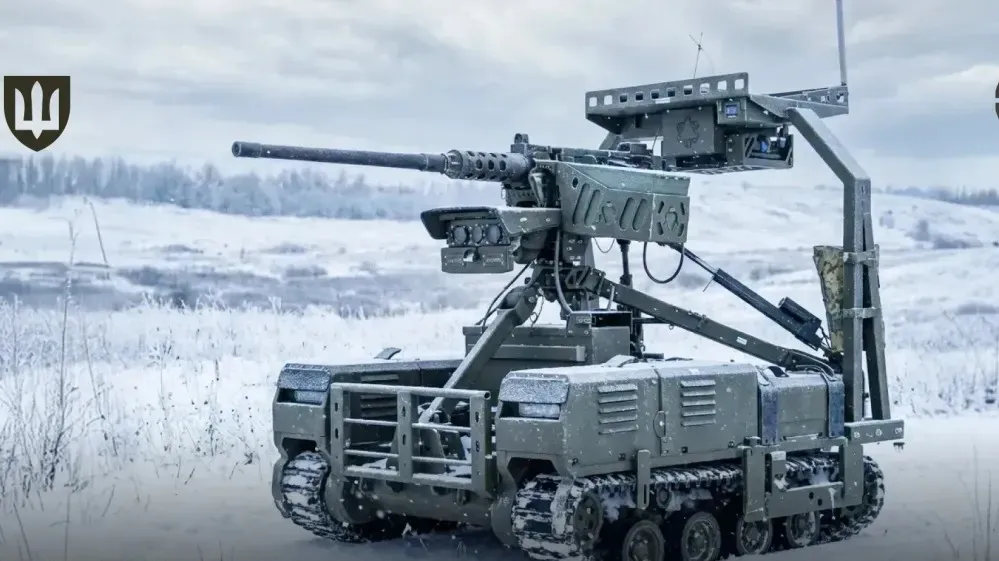
A Ravlyk UGV from Ukrainian Unmanned Technologies displayed at Eurosatory 2026, here mounting twin anti-tank launchers from Ukroboronprom. (Photo: Ukrainian Unmanned Technologies)
Explore further

This Ukrainian UGV, beloved by Ukrainian intel, is now winning over NATO countries and global defense giants

A kill zone that keeps widening

On the busiest sectors, Perch says, the kill zone—the drone-ruled strip around the contact line—now runs 15 to 20 kilometers deep. Some positions take three days to reach on foot. Where troops once drove most of the way and walked the last stretch, they now walk it all.

Robots take the drive

Under Perch, the brigade climbed, by his account, from around 22nd to third among Ukraine's Territorial Defense forces on the military's strike-results leaderboard, the home-guard units now fighting on the front. Ground robots—unmanned ground vehicles (UGVs)—do the work that armor cannot. They haul supplies and evacuate the wounded, though the robot often can't be brought back. His brigade runs over 1,500 logistics missions a month by heavy bomber drones alone, and still more by first-person-view (FPV) drones and robots. Russia hunts those bombers, he says, with interceptors that scramble the moment they hear one take off, so his crews mix high and low flight to slip past. Perch expects robots to move from supply runs into combat, hitting Russian troops in their rear.

A ground robotic system. The Ukrainian Defense Ministry
Explore further

Ukraine wants robots doing 100% of frontline logistics. In June, they ran nearly 17,000 supply and evacuation runs

The drone his jammers can't touch

Both armies now field fiber-optic drones—machines guided by a hair-thin glass thread instead of radio. No signal means nothing to jam. Ukraine learned to block radio and digital drones, cutting their controls and video, Perch said. The glass-fiber ones his electronic warfare cannot reach, because there is no radio link to attack. His brigade still has no counter to them, Perch said, and he wants a technical fix that stops them.

  • ✇The Kyiv Independent
  • Ukraine arrests two suspects accused of extorting foreign defense supplier
    The Security Service of Ukraine (SBU) has arrested two individuals in Kyiv accused of attempting to extort $200,000 from a European defense company, potentially jeopardizing the delivery of electronic warfare (EW) systems to Ukraine's military, the SBU reported on June 14.The suspects allegedly demanded the payment in exchange for facilitating the successful testing and adoption of five radio electronic warfare systems provided to Ukraine at no cost, according to statements released by the SBU a
     

Ukraine arrests two suspects accused of extorting foreign defense supplier

14 juin 2025 à 11:01
Ukraine arrests two suspects accused of extorting foreign defense supplier

The Security Service of Ukraine (SBU) has arrested two individuals in Kyiv accused of attempting to extort $200,000 from a European defense company, potentially jeopardizing the delivery of electronic warfare (EW) systems to Ukraine's military, the SBU reported on June 14.

The suspects allegedly demanded the payment in exchange for facilitating the successful testing and adoption of five radio electronic warfare systems provided to Ukraine at no cost, according to statements released by the SBU and the Prosecutor General's Office.

The devices, supplied by a private foreign manufacturer, were financed by Ukraine's international partners. The producer had already delivered five systems to Ukraine, with additional contracts possible if the equipment performed well in combat conditions, the SBU said.

According to investigators, the suspects falsely claimed to have influence within Ukraine's Defense Ministry and promised to use their connections to ensure positive evaluations of the equipment.

"Under the guise of having contacts within the ministry, the men demanded $200,000 from the company in exchange for ensuring no obstacles during official trials of the equipment," the Prosecutor General's Office said in a statement.

Both men have been formally charged under Ukraine's Criminal Code for alleged obstruction of the Armed Forces and receiving unlawful benefits through influence peddling. The charges carry a possible sentence of up to eight years in prison and asset confiscation.

The arrests were made as part of a broader investigation led by the SBU and conducted under the procedural oversight of the Specialized Defense Prosecutor's Office. Authorities say the investigation is ongoing to identify all individuals involved.

Ukraine continues to rely heavily on international military assistance as it defends against Russia's full-scale invasion, now in its fourth year. Ukraine uses EW systems during Russian attacks on its cities and on the front line.

Kyiv and its Western partners launched an electronic warfare coalition in April, which consists of 11 countries and comes on top of other eight Western coalitions to support Ukraine. Other similar initiatives include an artillery coalition, a fighter jet coalition, and a demining coalition, organized within the framework of the Ramstein format.

From buffer zone to new front: Russia pushes deeper into Sumy Oblast
In March 2025, as Ukrainian forces made their final retreat from Sudzha in Russia’s Kursk Oblast, new grey spots began to appear on open-source maps on the other side of the state border, in Ukraine’s Sumy Oblast. For the first time since 2022, when Moscow’s forces retreated
Ukraine arrests two suspects accused of extorting foreign defense supplierThe Kyiv IndependentFrancis Farrell
Ukraine arrests two suspects accused of extorting foreign defense supplier
❌