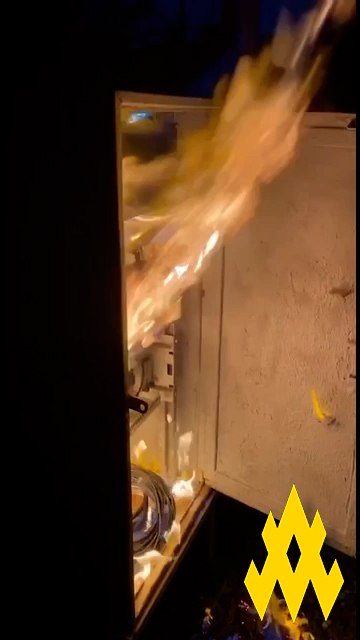
Ukrainian partisan movement ATESH says it burned electronic warfare towers in Russia's Bryansk Oblast, the region Russia uses to launch ballistic missiles at Kyiv. ATESH agents targeted communication and EW nodes in the cities of Fokino and Karachev in a coordinated operation, the group reveals.
The sabotage lands in the strategically critical zone that Russia uses for ballistic strikes on the Ukrainian capital. Iskander-M ballistic missiles launched from Bryansk Oblast reach Kyiv in about two minutes of flight time.
Ukrainian Volunteer Army spokesperson Serhii Bratchuk said on Kyiv24 TV that Russia has moved its launchers up to the Bryansk border, reducing flight time to the point that the air raid siren in Kyiv sounds after the first explosions ring out in the capital. Ukraine cannot intercept most of these strikes due to an acute shortage of Patriot missiles.
The past week's Russian ballistic strikes on Kyiv have all come from Bryansk. Russia fired six Iskander-M or S-400 ballistic missiles from Bryansk on the night of 11 July, which all six struck four Kyiv districts and wounded 10 people. The first explosions were heard more than a minute and a half before the air raid siren sounded.
On 8 July, five ballistic missiles hit Kyiv. On the night of 5-6 July, 23 Iskander-M/S-400 ballistic missiles launched from Bryansk, Oryol, and Kursk struck Kyiv, killing at least 16 and injuring 58.
Fokino and Karachev protect Russia's Bryansk launch infrastructure
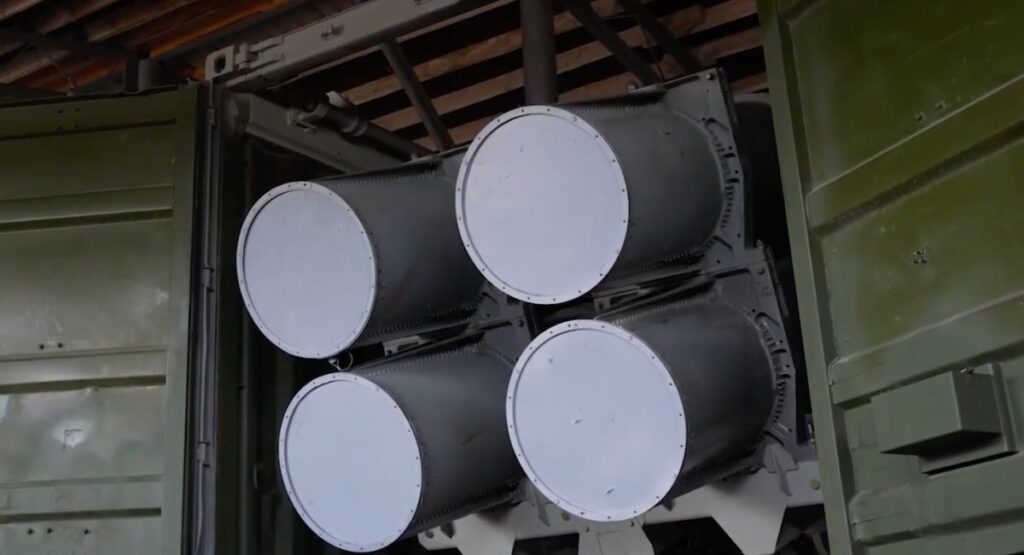
The towers held EW complexes designed to suppress drones and their navigation systems, per ATESH. The claims have not been independently verified.
Fokino is a closed city in Bryansk Oblast about 100 kilometers from the Ukrainian border. Karachev is about 180 kilometers from the border. Both cities are within the zone where Russia has concentrated the ballistic-missile launchers that have been hitting Kyiv.
ATESH said the destruction of the Fokino and Karachev EW towers created a gap in Russian border defense and blinded local air defense, depriving it of the ability to target Ukrainian drones. Without EW cover in the Fokino-Karachev area, a direct tactical corridor opened for Ukrainian drones to strike deeper into the central regions of Russia. The strategic implication runs both ways: the EW towers ATESH burned also protected Russia's ballistic launchers from Ukrainian counterstrikes.
ATESH has hit Bryansk targets before. In October 2025, the group disabled a communications tower responsible for coordinating Russian occupation forces and border units in Bryansk Oblast.
ATESH template: burn EW cover, enable Ukrainian strikes
ATESH is a Ukrainian-Crimean Tatar partisan movement founded in September 2022 in response to Russia's full-scale invasion. The group operates in occupied Ukrainian territories and in Russia itself, with members including Crimean Tatars, Ukrainians, and Russians who were mobilized into the Russian army but now work for Ukraine.
ATESH's operational template through 2026 has been consistent: burn EW towers, damage air-defense transformers, and Ukrainian drones exploit the newly created corridor. In March 2026, ATESH burned three EW towers in Novgorod Oblast, opening a route for Ukrainian drones to reach a military aircraft repair plant in Staraya Russa.

 Connexion