Vue normale

40-tonne machine and fleet of robots: this is how Ukraine clears world’s most mined country without losing sappers
24 juin 2026 à 09:53

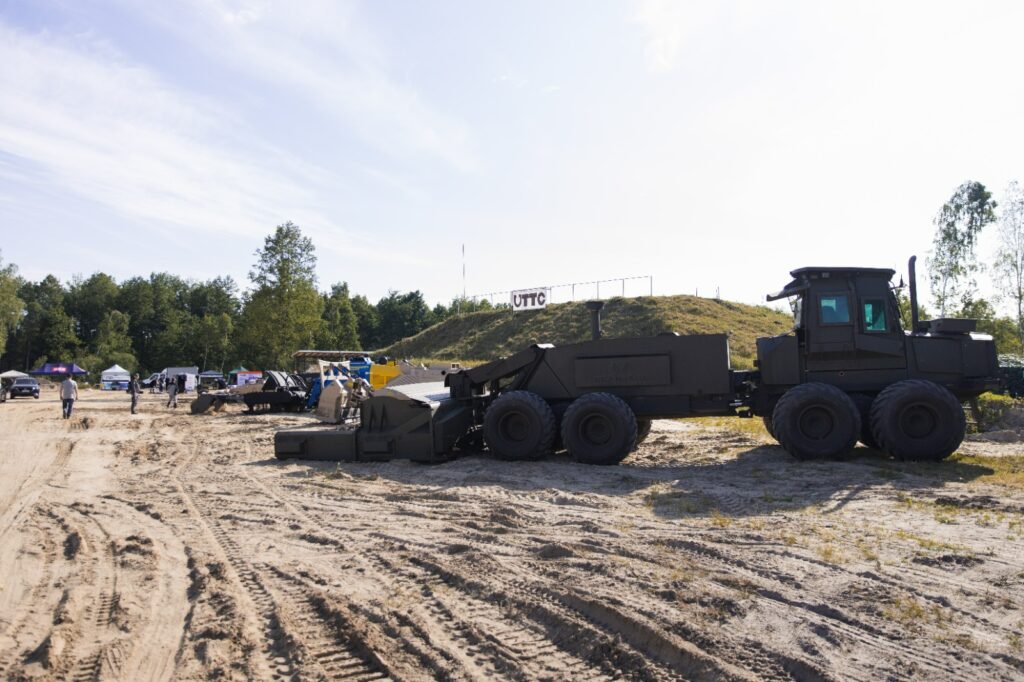
The image shows the ScanJack 3500 demining machine. Source: ArmyInform

Ukraine's military shared the demining technologies tested at UTTC Technology Week 2026. The 40-tonne ScanJack 3500 heavy demining machine and robotic platforms for urban operations were among the showcased systems, ArmyInform reports.

The combined heavy-machine and robotic-platform showcase fits Ukraine's broader shift toward remote demining, with the defenders emphasizing field experience over theoretical demonstration. Ukraine remains the world's most mine-contaminated country, with approximately 460,000 hectares of territory identified for clearance.

Practical goals from the showcase are to reduce risk to personnel, shorten survey and clearance times, raise situational awareness, and expand the share of dangerous work performed remotely, per ArmyInform.

ScanJack 3500 clears mines to 30–40 cm depth at walking pace

The ScanJack 3500 weighs nearly 40 tonnes and clears mines to a maximum depth of 30 to 40 centimeters. The machine operates at speeds between 0.2 and 1.5 kilometers per hour during demining and consumes 50 to 90 liters of fuel per hour, depending on conditions.

The operator works from inside an armored cab covered with steel paneling and bulletproof glass, controlling the system via a joystick. The Swedish-built machine carries two engines — one for the vehicle's drivetrain and one for the demining attachment.

Robotic platforms tackle urban demining in destroyed areas

Robotic platforms for searching, detecting, and destroying explosive ordnance were also showcased for use in hard-to-access urban environments such as destroyed settlements, industrial zones, and private-sector buildings. Work in urban conditions is jewelry-precise and super-dangerous because of mine-traps, trip wires, and rubble. The ground robotic platforms' main task is not only to neutralize explosives but to keep Ukrainian sappers out of immediate proximity to them.

In recent months, Ukraine has codified domestic ground robots specifically for sapper roles, including the NEO-1 modular platform and the upgraded Vepr ground robotic complex. The Defense Ministry's broader procurement target is more than 25,000 ground robotic complexes in the first half of 2026, which is twice as many as in all of 2025.

Shuvarskyi says showcase reflected operational practice, not theory

"What we presented at UTTC Technology Week was not theoretical projections, but real field experience of demining units," Colonel Oleh Shuvarskyi said during demonstration events.

Most demonstrated technologies have dual-use applications and can be deployed for both humanitarian demining and military mobility, engineering reconnaissance, remote inspection of dangerous territories, logistics, evacuation, and engineering tasks in combat areas. 
  • ✇The Kyiv Independent
  • Zelensky signs decree to withdraw from Ottawa Convention banning anti-personnel mines
    President Volodymyr Zelensky signed a decree to withdraw from the Ottawa Convention banning anti-personnel mines, a step that follows the Baltic nations and Poland's move to boost their defense as the war rages on in Ukraine. The 1997 treaty, joined by over 160 countries, bans the use, production, stockpiling, and transfer of anti-personnel landmines in efforts to protect civilians from the scattered explosives that could still injure them long after the conflict is over. "Russia has never been
     

Zelensky signs decree to withdraw from Ottawa Convention banning anti-personnel mines

29 juin 2025 à 07:15
Zelensky signs decree to withdraw from Ottawa Convention banning anti-personnel mines

President Volodymyr Zelensky signed a decree to withdraw from the Ottawa Convention banning anti-personnel mines, a step that follows the Baltic nations and Poland's move to boost their defense as the war rages on in Ukraine.

The 1997 treaty, joined by over 160 countries, bans the use, production, stockpiling, and transfer of anti-personnel landmines in efforts to protect civilians from the scattered explosives that could still injure them long after the conflict is over.

"Russia has never been a party to this convention and uses anti-personnel mines extremely cynically," Zelensky said in justifying the decision. "And not only now, in the war against Ukraine. This is the signature style of Russian killers — to destroy life by all methods at their disposal.

Earlier in March, the Baltic states and Poland announced their intention to withdraw from the Ottawa Convention, a significant shift in defense policy that shows how countries near Ukraine are preparing for a potential war in Europe.

Anti-personnel mines are scattered across the battlefield in Ukraine, with soldiers and civilians often losing their feet or limbs due to detonations. Territories liberated by Ukraine since 2022 have been heavily covered with mines, making it extremely difficult and dangerous to clear them. Russia has used more than a dozen variants of anti-personnel mines since it launched a full-scale invasion of Ukraine in 2022, according to Human Rights Watch's June report.

In a surprise move that angered Moscow, the Biden administration in 2024 approved the provision of anti-personnel mines to Ukraine. Then Defense Secretary Lloyd Austin said it was to help Ukraine stall the Russian advances in the east as the front-line situation deteriorated.

"This is a step that the reality of war has long demanded," lawmaker Roman Kostenko, secretary of the parliament's defense committee, said in the Facebook post announcing a significant move forward in withdrawing from the major mine treaty.

Now that Zelensky signed the decree enacting the decision of the National Security and Defense Council of Ukraine, it will land on the parliament's table, Kostenko said. The dates when the decision will take effect are still unclear.

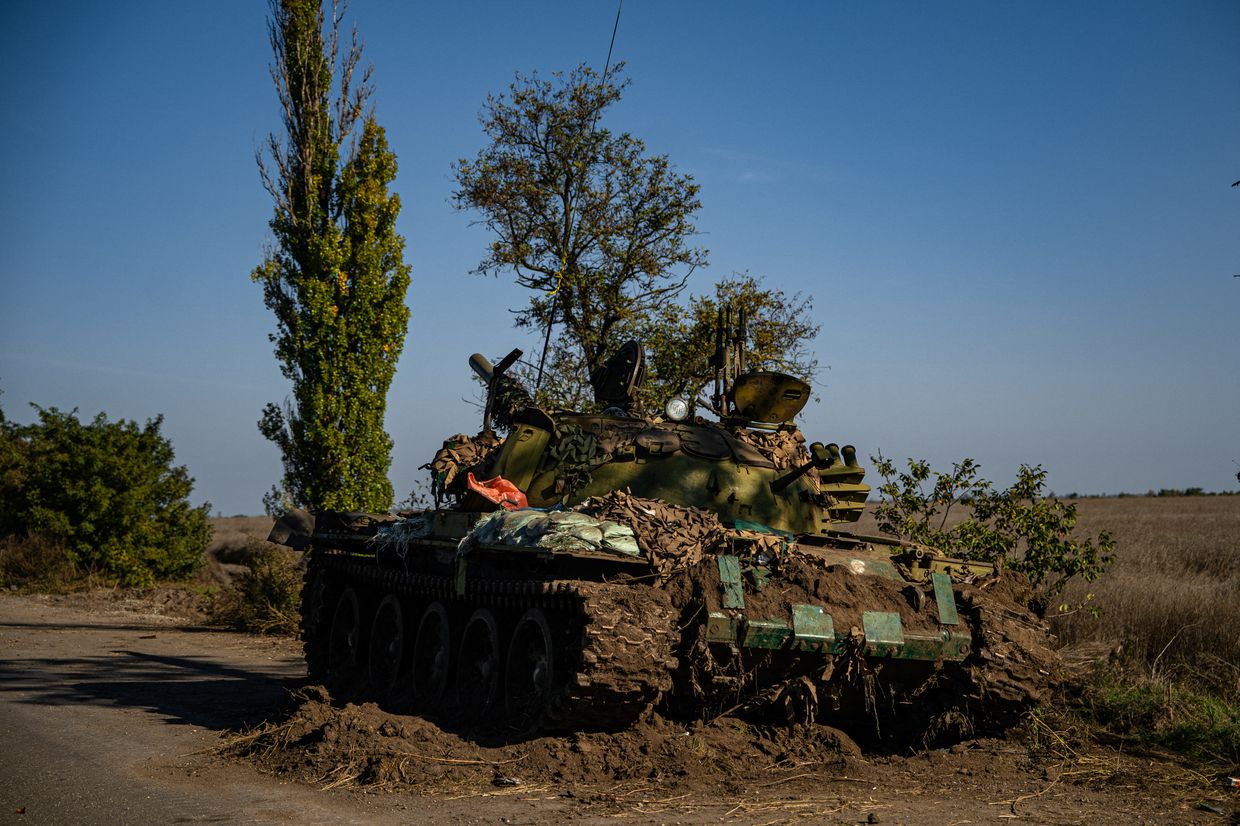
Russia revives obsolete T-62 tanks amid equipment shortages, Ukraine’s intel claims
“The key factors limiting the ability to produce modern armored vehicles in Russia are a lack of industrial capacity and a shortage of imported high-tech components,” Ukraine’s military intelligence said.
Zelensky signs decree to withdraw from Ottawa Convention banning anti-personnel minesThe Kyiv IndependentKateryna Denisova
Zelensky signs decree to withdraw from Ottawa Convention banning anti-personnel mines
  • ✇The Kyiv Independent
  • Finland votes to withdraw from landmine treaty, citing Russian threat
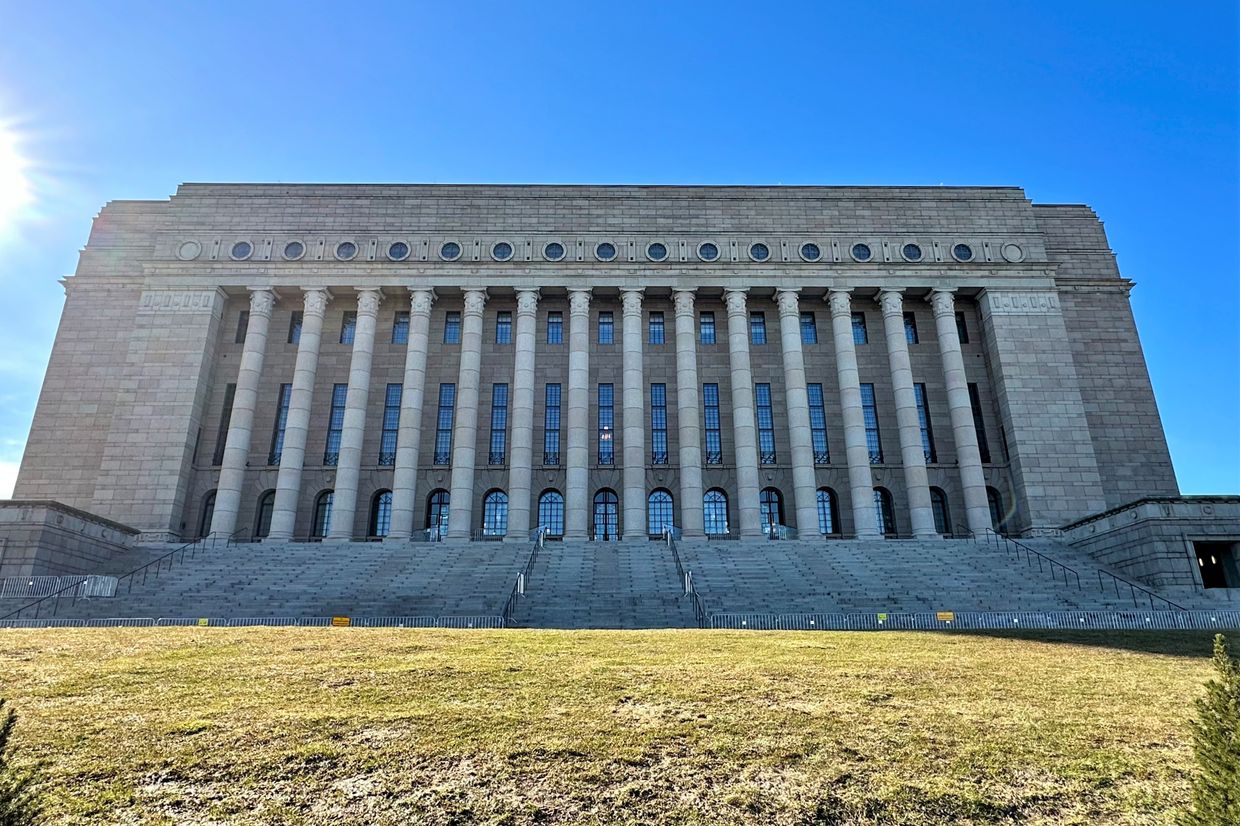
    Finland's parliament voted on June 19 to withdraw from the Ottawa Convention banning anti-personnel landmines, citing growing security concerns from Russia's aggressive posture and the threat it poses to the region, Reuters reported.The vote aligns Finland with its Baltic allies, Estonia, Latvia, and Lithuania, whose parliaments have already approved similar exits from the treaty.Defending the decision earlier this week, Finnish President Alexander Stubb said the security reality along Finland's
     

Finland votes to withdraw from landmine treaty, citing Russian threat

19 juin 2025 à 06:14
Finland votes to withdraw from landmine treaty, citing Russian threat

Finland's parliament voted on June 19 to withdraw from the Ottawa Convention banning anti-personnel landmines, citing growing security concerns from Russia's aggressive posture and the threat it poses to the region, Reuters reported.

The vote aligns Finland with its Baltic allies, Estonia, Latvia, and Lithuania, whose parliaments have already approved similar exits from the treaty.

Defending the decision earlier this week, Finnish President Alexander Stubb said the security reality along Finland's 1,300-kilometer (800-mile) border with Russia had changed dramatically since the full-scale invasion of Ukraine, according to TVP.

"The reality in the endgame is that we have as our neighboring country an aggressive, imperialist state called Russia, which itself is not a member of the Ottawa Treaty and which itself uses landmines ruthlessly," Stubb said.

Russia has widely deployed landmines across Ukrainian territory since launching its invasion in 2022, a tactic condemned by human rights organizations and Western governments.

Finland, which joined NATO in 2023, has significantly ramped up its defense posture amid growing concern over potential Russian provocations. The country closed its border with Russia over a year ago, accusing Moscow of orchestrating a "hybrid operation" by directing asylum seekers toward Finnish territory. Helsinki claims such hybrid tactics have intensified since it joined the alliance.

The Finnish Border Guard completed the first 35 kilometers (22 miles) of a planned 200-kilometer (124-mile) fence along its eastern frontier on May 21. The move came amid growing evidence of Russian military infrastructure expansion near the Finnish border.

Finland is "closely monitoring and assessing Russia's activities and intentions," Finland's Defense Minister Antti Hakkanen told AFP on May 22.

"We have excellent capabilities to observe Russian operations. As a member of the alliance, Finland holds a strong security position."

Russia's Defense Minister Andrei Belousov said in December 2024 that Moscow must be ready for a potential conflict with NATO within the next decade. Western officials have repeatedly warned of the possibility that Moscow could target NATO members in the coming years.

Diplomacy in crisis: G7 letdowns reveal limits to Western solidarity on Ukraine
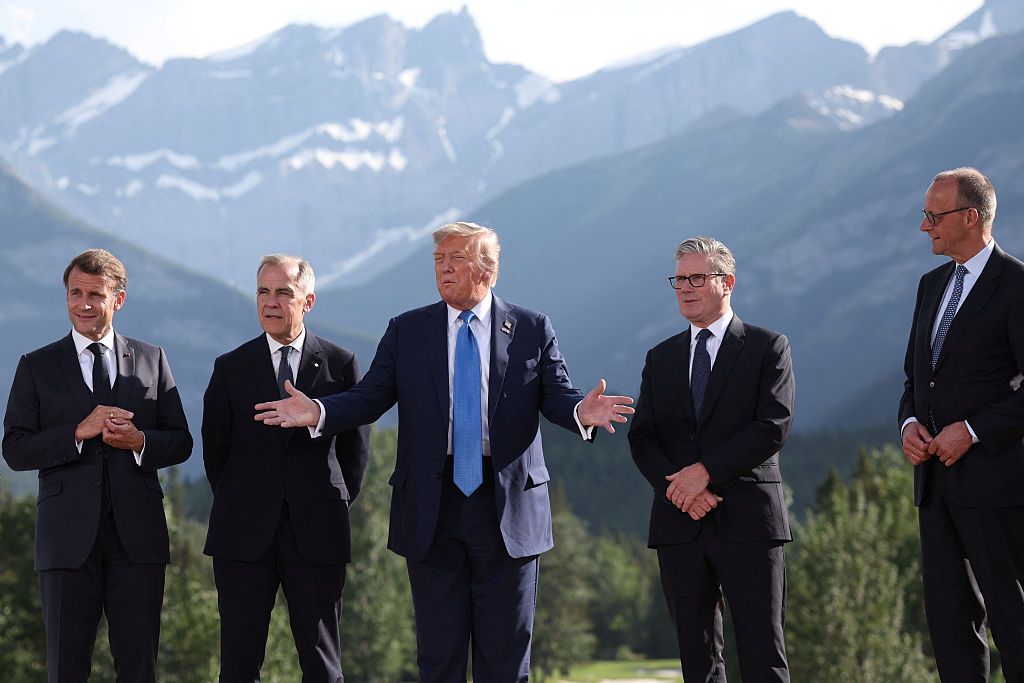
KANANASKIS, Canada — The Group of Seven (G7) Leaders’ Summit ended on June 17 with no joint statement in support of Ukraine, no commitments to provide desperately needed U.S. weapons, and no meeting between President Volodymyr Zelensky and U.S. President Donald Trump. The Ukrainian delegation headed into the summit,
Finland votes to withdraw from landmine treaty, citing Russian threatThe Kyiv IndependentDmytro Basmat
Finland votes to withdraw from landmine treaty, citing Russian threat
❌