Vue normale

“Safe Moscow” is no more – drone strikes are eroding the sense of security felt in Russia’s capital, SBU unit says
18 juin 2026 à 16:35

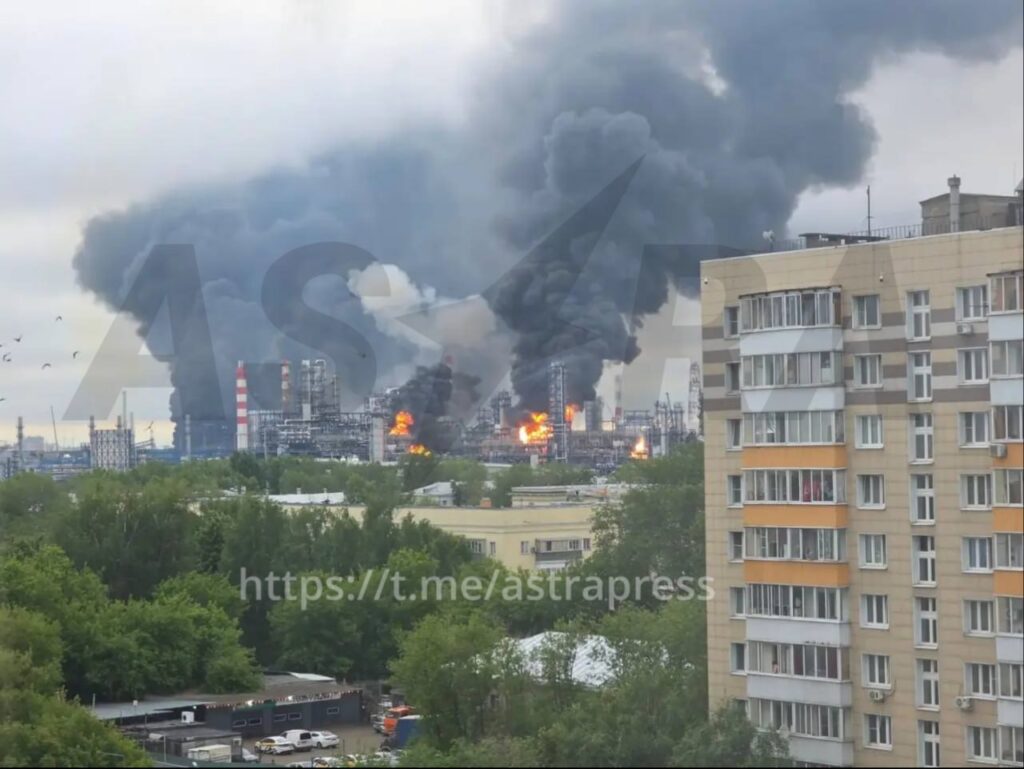
Aftermath of the attack on Moscow, 18 June 2026. Credit: Exilenova+

A Ukrainian Security Service (SBU) drone unit has said repeated strikes on the Moscow Oil Refinery in Kapotnya mark a shift in the perceived security of Russia’s capital, arguing it weakens the idea that Moscow remains insulated from the war, according to Interfax-Ukraine.

Deputy commander of the First Separate Center for Unmanned Systems Roman Parkhanov said the refinery is a critical fuel hub for the capital region and that its exposure to repeated attacks signals a broader change in Russia’s internal security environment.

He said the impact extends beyond infrastructure damage, pointing to what he described as a psychological shift inside Russia as strikes reach deeper into previously shielded areas.

“The realization that there are no longer any safe zones in the country – and that the capital's status no longer protects it from airstrikes – is having a paralyzing effect.

“The notion of a 'safe Moscow' is officially a thing of the past. The new reality for the capital of the aggressor state is life under the shadow of war, which is establishing its own long-term rules there,” he told Interfax-Ukraine.

Second strike in three days on key fuel infrastructure

The comments follow Ukrainian drone strikes on the Moscow oil refinery in Kapotnya on 18 June, which sparked a large fire. It was the second attack on the same facility within three days, after an earlier strike on 16 June damaged a primary processing unit and temporarily disrupted operations.

The refinery, located about 15 kilometers from the Kremlin, is a major supplier of Moscow’s fuel needs, covering roughly 40% of gasoline consumption and around 50% of diesel demand in the region, according to reporting on the facility. It also produces aviation fuel for the capital’s airports.

Pressure on fuel system and internal perception

Parkhanov said the refinery’s role makes it central to Moscow’s energy stability, arguing that repeated disruption could force Russian authorities to reroute supplies or introduce restrictions within the capital.

He said such developments are eroding the perception that major cities remain shielded from the consequences of the war, as strikes increasingly reach high-value infrastructure deep inside Russia.
Oil storage site burns in Russia’s Rostov Oblast after Ukrainian strike on key fuel logistics hub behind occupied territory

18 juin 2026 à 10:50

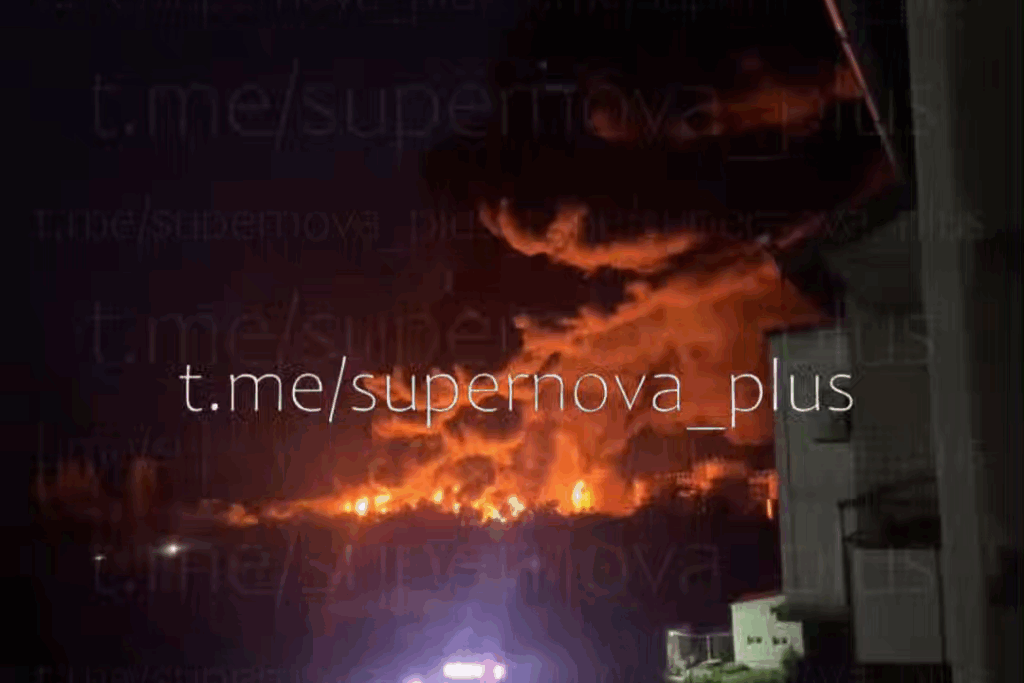
Fire seen at oil depot in Russia’s Gukovo, Rostov Oblast, after reported Ukrainian drone strike on 18 June 2026. Screenshot from video: Supernova+

A large fire broke out at an oil storage facility in Gukovo, Rostov Oblast, following a reported Ukrainian drone strike overnight, according to OSINT analysis by ASTRA.

Gukovo is a town in Russia’s Rostov Oblast, close to the border with Ukraine’s Luhansk Oblast. It lies near key cross-border transport routes and is located behind the Russian-controlled section of the frontline in occupied eastern Ukraine, making it part of the broader logistics belt supporting Russia’s operations in the Donbas area.

Residents of the town reported explosions and a major blaze in the early hours of 18 June. Video published by monitoring channel Supernova+ was used by analysts at ASTRA to geolocate the fire to an oil depot on Karl Marx Street.

Ukraine claims responsibility for strike with help from Russian resistance

Update 19:30: Ukraine’s Special Operations Forces (SSO) later claimed responsibility for the attack, saying Deep Strike units operating alongside the Russian resistance movement Chornaya Iskra struck the Rostovnefteprodukt oil depot and a fuel and lubricants storage base in Gukovo overnight.

According to the SSO, several Ukrainian drones reached their targets, causing fires and damage at the facilities.

The military said the sites formed part of a system used for the storage, transfer, and shipment of fuel products, including gasoline and diesel. It described Rostov Oblast as a key rear area supporting Russian military operations in southern and eastern Ukraine.

The SSO said the targeted facilities served both regional transport infrastructure and Russian military logistics, adding that operations against fuel and logistics infrastructure would continue as part of efforts to reduce Russia’s ability to sustain its war against Ukraine.

Ukraine’s Special Operations Forces say they struck an oil depot and a fuel storage base in Russia’s Rostov Oblast overnight, causing fires at key logistics facilities in Gukovo.

According to the Ukrainian military, Deep Strike units operating together with the Russian… pic.twitter.com/VJBazxJR1t

— Euromaidan Press (@EuromaidanPress) June 18, 2026

OSINT analysis points to oil storage site

ASTRA said open-source imagery and video verification indicate the fire originated at a fuel storage facility containing multiple storage tanks and rail access infrastructure.

The depot is believed to include several large reservoirs used for petroleum products, with rail lines running through the site, according to satellite imagery referenced in the analysis.

A large fire broke out at an oil depot in Gukovo, Rostov Oblast, after a reported Ukrainian drone strike overnight, according to OSINT analysis by ASTRA.

Residents reported explosions followed by a major blaze in the early hours of 18 June. Analysts say video evidence and… pic.twitter.com/swxmNQzgw0

— Euromaidan Press (@EuromaidanPress) June 18, 2026

Casualties reported by regional authorities

Authorities in Rostov Oblast said one person was killed and two others were injured in the attack, according to statements cited by ASTRA.

Regional governor Yuri Slyusar said the injured were hospitalized in moderate condition. He also reported damage to a locomotive and fires at two commercial sites, with emergency services deployed to the area.

Ukrainian strike campaign on Russian fuel infrastructure

Ukraine has repeatedly targeted fuel storage, refinery, and logistics infrastructure inside Russia with long-range drone strikes, arguing these facilities support Moscow’s military operations in Ukraine.

Russian regional authorities have increasingly reported fires and damage at industrial sites in border and southern regions amid the ongoing strike campaign.

  • ✇Euromaidan Press
  • Defense minister says Ukraine’s drones are turning Crimea into an island
    Ukraine's drone campaign against Russian supply lines is cutting occupied Crimea off from the mainland, and the peninsula will soon "turn into an island," Defense Minister Mykhailo Fedorov said in an interview published on 17 June. Fedorov's words put a cabinet minister's name to a forecast Ukraine's military has been demonstrating for weeks — every land corridor into Crimea struck, traffic on the main route down by more than two-thirds, fuel rationed inside the peninsu
     

Defense minister says Ukraine’s drones are turning Crimea into an island

17 juin 2026 à 10:05

Fedorov

Ukraine's drone campaign against Russian supply lines is cutting occupied Crimea off from the mainland, and the peninsula will soon "turn into an island," Defense Minister Mykhailo Fedorov said in an interview published on 17 June.

Fedorov's words put a cabinet minister's name to a forecast Ukraine's military has been demonstrating for weeks — every land corridor into Crimea struck, traffic on the main route down by more than two-thirds, fuel rationed inside the peninsula. The isolation "could lead to very unexpected consequences for the Russians," he told the PRESSING channel, declining to say more.

A correlation the ministry says it can see

Fedorov linked the strikes directly to the fighting on the front. The more Ukraine hits Russian logistics, the fewer assault operations Russia mounts on the first line, he said, describing a "direct correlation" the ministry tracks.

He said the Defense Ministry contracted 300% more Middle Strike drones in the first four months of 2026 than in all of 2025. That figure sits below a larger one already on the record: in late April, after a briefing from Fedorov, President Volodymyr Zelenskyy said five times more mid-range strike assets had been contracted this year than last.

The campaign behind the forecast

Fedorov announced on 27 May a program he calls Logistics Lockdown, directing an extra 5 billion hryvnias ($112 million) to the drone units striking Russian supply routes 20 to 200 kilometers behind the front. Two weeks later, Unmanned Systems Forces commander Robert Brovdi, known by his call sign Madyar, vowed to isolate Crimea in a Reuters interview, saying strikes had cut traffic on the Novorossiya highway by 71% in a fortnight.

Between 7 and 13 June, Ukrainian drones hit the Chonhar bridge, the Henichesk–Arabat Spit crossing, four bridges near Armiansk, and the Dzhankoi checkpoint. Russian-installed officials said no intact bridges remained at the peninsula's land entrances, with traffic rerouted, then halted again under repeated strikes.

What Fedorov did not say is what the "unexpected consequences" might be, or when.

  • ✇Euromaidan Press
  • Russia quietly lets refiners sell lower-grade Euro-3 fuel as drone strikes squeeze supply
    Russia is trading fuel quality for quantity. To keep pumps supplied as drone strikes cut into refining, the government is letting some refineries sell dirtier, lower-grade gasoline and diesel on the home market, the business daily Kommersant reported, citing a source. Gasoline can also carry more aromatic hydrocarbons and octane-boosting additives. Fuel sold under the Euro-5 label can now contain up to 150 milligrams of sulfur per kilogram—15 times what that grade
     

Russia quietly lets refiners sell lower-grade Euro-3 fuel as drone strikes squeeze supply

16 juin 2026 à 09:31

russia's fuel crisis jumps 15 25 regions five days—plus six occupied ukrainian areas · post russian truck burns gas station skadovsk kherson oblast after logistic lockdown mid-range strike 11 2026

Russia is trading fuel quality for quantity. To keep pumps supplied as drone strikes cut into refining, the government is letting some refineries sell dirtier, lower-grade gasoline and diesel on the home market, the business daily Kommersant reported, citing a source.

Gasoline can also carry more aromatic hydrocarbons and octane-boosting additives.

Fuel sold under the Euro-5 label can now contain up to 150 milligrams of sulfur per kilogram—15 times what that grade allows. The easing began quietly last autumn and was extended in May.

Gasoline can also carry more aromatic hydrocarbons and octane-boosting additives, the Kommersant report found. Only refineries modernizing under deals with the Energy Ministry qualify, and the ministry must report to the government each month on who makes the fuel and in what volume.

The fuel keeps its Euro-5 label, with no marking to flag the lower grade, so drivers cannot tell what they are buying, Za Rulem reported.

Supply problems have hit around a dozen regions.

No official decree has been published, and market sources said only isolated cases of refineries producing the lower grade had occurred so far. Wholesale AI-95 gasoline and diesel rose about 10% in the first half of June. Supply problems have hit around a dozen regions, and the number of drone strikes on Russian refineries has roughly doubled since the start of 2026.

ukraine confirms strikes two tatarstan refineries rocket-fuel rubber plant tolyatti · post black smoke rises over burning oil refining facility after ukrainian strike nizhnekamsk russia 12 2026 0b9bde49-e761-4e4b-9abe-9bd2dd867a7d ukraine's defense
Explore further

Fuel shortages reach Moscow and St. Petersburg as Ukraine’s strikes squeeze Russian refining

Even so, the change will not end the shortage. The additional volumes can only partially ease regional shortfalls, NEFT Research managing partner Sergey Frolov told Kommersant.

The extra sulfur and aromatic compounds speed wear on engines, catalytic converters, and exhaust systems, Novaya Gazeta reported. The aromatics are also toxic compounds tied to health problems, Reuters noted.

“How can it be solved, how? Only if the special military operation ends.”

Tatneft, meanwhile, limited gasoline and diesel sales across its entire Russian network on 16 June and moved to cash-only payments, without giving a reason or an end date. In the Urals, its stations cap sales at 30 liters of gasoline and 60 liters of diesel per customer.

In Russian-occupied Sevastopol, drivers lined up for fuel on 15 June. One, who gave only her first name, doubted the shortages would ease while the war went on. “How can it be solved, how? Only if the special military operation ends,” Reuters quoted Alyona as saying.

❌