Vue normale

  • ✇Climb to the Stars
  • The Wild Magical World of AI (LLMs) [en]
    [en] End 2024 is when I really started to get going with “AI” (or LLMs – I know saying “AI” is kinda wrong, but there seems to be no good way to escape it right now). I’d been dabbling a bit before that: as a search engine, to help me with my excel formulas at work, or translating an e-mail here or there. But over that Christmas break, I realised it went further than that: helping me manage my tasks; keep lists updated; make sense of my investment portfolio; troubleshooting technical stuff that
     

The Wild Magical World of AI (LLMs) [en]

5 avril 2026 à 10:59
[en]

End 2024 is when I really started to get going with “AI” (or LLMs – I know saying “AI” is kinda wrong, but there seems to be no good way to escape it right now). I’d been dabbling a bit before that: as a search engine, to help me with my excel formulas at work, or translating an e-mail here or there. But over that Christmas break, I realised it went further than that: helping me manage my tasks; keep lists updated; make sense of my investment portfolio; troubleshooting technical stuff that’s above my pay-grade; and build actual systems to do stuff. I didn’t really know what I was doing, but I saw enough to find it really exciting. I was quite busy with work and life during that period, and not finding time to blog much.

And then I had a skiing accident. Everything stopped, but in time, as I started becoming more functional, I turned back to playing with AI some more, doing a little more vibe-coding too. Excitement grew. But I was also hitting limitations, fed up with the sycophancy, context bloat, hallucinations and endless rabbit-holes. Oh, and really sick of AI slop. (Really: nobody wants to read your AI slop, people.) But the exciting was still there, I was just biding my time. Integrations, agents and AI-powered browsers showed up, with the security risks that are bundled in. I was tempted but stopped myself. And a few loved ones.

Three articles amongst many that tell cautionary tales. I have more to say, particularly about the brain fry one, but not today.

https://brave.com/blog/comet-prompt-injection/ https://hbr.org/2026/03/when-using-ai-leads-to-brain-fry https://www.theguardian.com/lifeandstyle/2026/mar/26/ai-chatbot-users-lives-wrecked-by-delusion

Recently, like many others, I jumped ship from ChatGPT to Claude. I’d been thinking about it for a while, because I have been working hard on migrating my diabetic cat community from Facebook to Discourse, and had come to the conclusion I would have to code a plugin or component or two, and it seemed obvious that Claude was the better AI assistant for that. Around that time, I read this article:

https://derekhanson.blog/tufte-blocks/

In it, the author describes one key aspect of working with AI that I had understood to be important, but that I didn’t know how to put into practice: using different conversations for different “roles” or aspects of the project. And here I had a real example.

I put that in practice (a bit as an exercise) in applying these instructions to migrate my personal context from ChatGPT to Claude. It was extremely satisfying and a great learning experience. I was itching to get going with Claude Cowork and Claude Code, but still a bit anxious. As I see it, Cowork is like being handed a powerboat when all you’re used to are the free permitless motorboats you can rent by the hour on a sunny Sunday afternoon like this one. You can really get in trouble if you’re not careful. And probably, even if you are.

I asked around a bit and Claire pointed me to this wonderful guide to Cowork. What she also explained to me is that Cowork is sandboxed, so it only has access to the folders you give it access to. That’s reassuring. And just a few days ago, Matt shipped Taxonomist, an AI-app (? what do we call these things?) that he used to cleanly recategorise all his blog posts. Unsurprisingly, categories here on CTTS have been a mess since time immemorial, and one of the things that has been clear for some time for me is that AI can help me clean things up a bit around here – in general, not just the categories. But that felt like a great way to get started seeing what the powerboat can do, with a trusted friend on board to keep me from crashing on the rocks.

So earlier today I installed Claude Desktop, downloaded the guide, and started it in Cowork. And wow. Honestly. It’s wild. My 3TB of archived files going back nearly three decades are now hopeful they will one day be deduplicated and cleaned up. Of course, I hit my usage limit (which is why I’m writing this instead of playing with my new AI friend), so I went to have a look at what something like Taxonomist really looks like under the hood. You know, open the files and read them. And it’s starting to come together in my mind. The powerboat is starting to feel like something I will be able to manage in time.

Of course, I’m not going to point Cowork at my external hard drive right now. There are still a lot of steps until I feel comfortable enough with the powerboat to attempt that. But doors are opening. My diabetic cat community migration feels more manageable. I’m hopeful I can tidy my files and clean up my blog. Come up with a system to make sharing links to the open web as easy as on Facebook. Reboot the blogosphere. And I’m sure other ideas will come along the way. I am also trying to be very, very careful about AI brain fry, as I already have my own concussion brain fry to deal with.

If you haven’t yet started learning how to use AI beyond as a proxy for Google or Wikipedia, really, it’s time to get cracking. I’m going back to Lesson 5 (honestly, just read through that page for starters if you don’t know what to do first), making a note to check out Cursor (I’m using Visual Studio Code for now) and read this article on Teaching AI to Design.

First, however: a nap.

  • ✇The Kyiv Independent
  • Ukrainian drone strike hits major oil refinery in Russia's Krasnodar Krai, HUR source claims
    Long-range Ukrainian drones struck the Ilsky oil refinery in Russia's Krasnodar Krai on July 7, hitting one of the facility's technological workshops, a source in Ukraine's military intelligence (HUR) told the Kyiv Independent. Located roughly 500 kilometers (311 miles) from Ukrainian-controlled territory, the refinery is among the largest in southern Russia, producing over 6 million tons of fuel annually. It is involved in the reception, storage, and processing of hydrocarbons and distributes r
     

Ukrainian drone strike hits major oil refinery in Russia's Krasnodar Krai, HUR source claims

7 juillet 2025 à 08:01
Ukrainian drone strike hits major oil refinery in Russia's Krasnodar Krai, HUR source claims

Long-range Ukrainian drones struck the Ilsky oil refinery in Russia's Krasnodar Krai on July 7, hitting one of the facility's technological workshops, a source in Ukraine's military intelligence (HUR) told the Kyiv Independent.

Located roughly 500 kilometers (311 miles) from Ukrainian-controlled territory, the refinery is among the largest in southern Russia, producing over 6 million tons of fuel annually.

It is involved in the reception, storage, and processing of hydrocarbons and distributes refined products via road and rail. The refinery is part of Russia's military-industrial complex and plays a direct role in supporting Moscow's war effort, the source said.

The Russian regional operational headquarters claimed that "drone debris" fell on the oil refinery.

The strike marks a renewed wave of Ukrainian attacks on Russian oil infrastructure, following a months-long pause since March. On July 1, Ukrainian drones struck the Saratovorgsintez oil refinery in Russia's Saratov Oblast.

Kyiv has targeted dozens of refineries, oil depots, and military-industrial sites since the start of Russia's full-scale invasion in 2022. Winter drone attacks forced at least four Russian refineries to temporarily shut down.

This is the second known strike on the Ilsky refinery. Ukrainian drones, operated by the Security Service (SBU) and Special Operations Forces (SSO), previously targeted the facility on Feb. 17, causing a fire.

Krasnodar Krai, a strategic region along Russia's Black Sea coast, has increasingly come under Ukrainian drone attacks as Kyiv extends the range of its strikes deep into Russian territory.

HUR publishes Russian military order, claims proof of Moscow increasing military footprint in Armenia
HUR first made the claim on July 5, saying Russia was increasing its forces at the Gyumri base to exert greater influence in the South Caucasus and “destabilize the global security situation.”
Ukrainian drone strike hits major oil refinery in Russia's Krasnodar Krai, HUR source claimsThe Kyiv IndependentChris York
Ukrainian drone strike hits major oil refinery in Russia's Krasnodar Krai, HUR source claims
  • ✇The Kyiv Independent
  • Drones reportedly attack Russia's Black Sea fleet
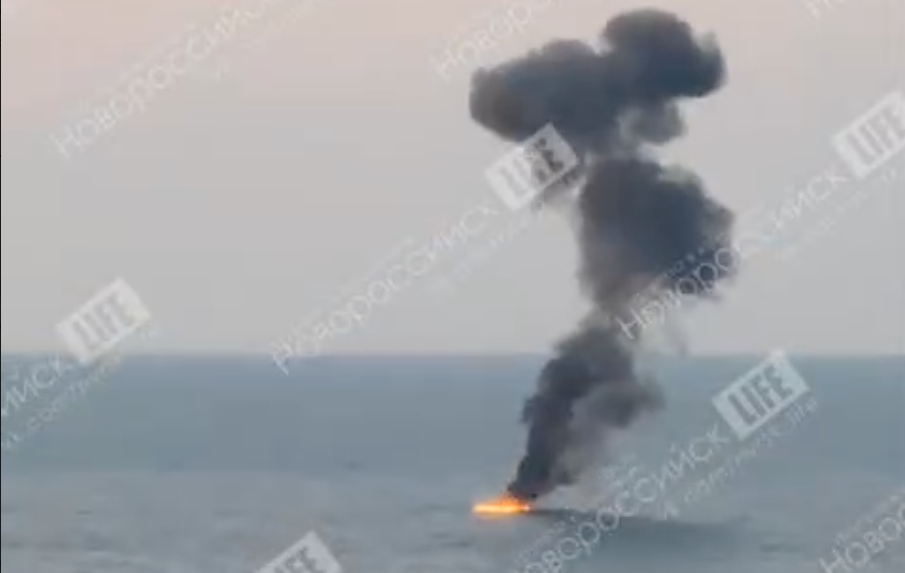
    Drones attacked Russia's Black Sea Fleet at the port of Novorossiysk in Krasnodar Krai overnight on July 6, the Russian media outlet Astra reported.Ukraine has not officially commented on the reported strikes, and the Kyiv Independent could not independently verify the claims.An air alert was sounded in the city for several hours, and air defense was active. The consequences of the attack are still being determined, according to Astra.The media outlet also published footage purportedly showing a
     

Drones reportedly attack Russia's Black Sea fleet

6 juillet 2025 à 10:14
Drones reportedly attack Russia's Black Sea fleet

Drones attacked Russia's Black Sea Fleet at the port of Novorossiysk in Krasnodar Krai overnight on July 6, the Russian media outlet Astra reported.

Ukraine has not officially commented on the reported strikes, and the Kyiv Independent could not independently verify the claims.

An air alert was sounded in the city for several hours, and air defense was active. The consequences of the attack are still being determined, according to Astra.

The media outlet also published footage purportedly showing a burning maritime drone that was allegedly shot down during the attack.

Krasnodar Krai is located east of Crimea, with the Kerch Strait separating them at their closest point.

Ukraine regularly strikes military targets within Russia as Moscow continues to wage its war against Ukraine.

The Russian Defense Ministry claimed that Russian forces downed 120 drones overnight on July 6.

Thirty drones were shot down over Bryansk Oblast, 29 over Kursk Oblast, and 18 over Oryol Oblast, according to the ministry. An additional 17 and 13 drones were reportedly intercepted over Belgorod and Tula oblasts, respectively, the ministry said.

Due to drone attacks in Russia, numerous flights were canceled or delayed at several airports, including Moscow's Sheremetyevo Airport, overnight between July 5 and July 6.

Ukrainian drone strike on Russian airfield hits bomb depot, aircraft
The airfield hosts Su-34, Su-35S, and Su-30SM jets that Russia regularly uses in air strikes against Ukraine, according to the Ukrainian military.
Drones reportedly attack Russia's Black Sea fleetThe Kyiv IndependentOlena Goncharova
Drones reportedly attack Russia's Black Sea fleet
  • ✇The Kyiv Independent
  • Ukrainian-founded Grammarly to acquire AI email app Superhuman
    Grammarly, a company with Ukrainian roots, announced its intent to acquire AI email writing app Superhuman as part of its expansion into an AI productivity platform, the company said in a press release on July 1. Grammarly is the most valuable company with Ukrainian roots, reaching $13 billion valuation as of 2021. Grammarly was founded in 2009 in Kyiv by Oleksii Shevchenko, Maksym Lytvyn, and Dmytro Lider.According to Grammarly's press release, email is Grammarly's top use case, with the platfo
     

Ukrainian-founded Grammarly to acquire AI email app Superhuman

2 juillet 2025 à 07:45
Ukrainian-founded Grammarly to acquire AI email app Superhuman

Grammarly, a company with Ukrainian roots, announced its intent to acquire AI email writing app Superhuman as part of its expansion into an AI productivity platform, the company said in a press release on July 1.

Grammarly is the most valuable company with Ukrainian roots, reaching $13 billion valuation as of 2021. Grammarly was founded in 2009 in Kyiv by Oleksii Shevchenko, Maksym Lytvyn, and Dmytro Lider.

According to Grammarly's press release, email is Grammarly's top use case, with the platform editing over 50 million emails weekly.

Superhuman is an AI email application that the company says helps users respond to emails faster and reduces time spent on email communications.

Users are already sending and responding to 72% more emails per hour after using Superhuman compared to the previous period, according to Grammarly.

"This is the future we've been building toward since day one: AI that works where people work, not where companies want them to work," said Shishir Mehrotra, Grammarly's CEO.

The acquisition follows Grammarly's recent purchase of Coda, a productivity tool company. The combined platforms will allow users to work with multiple AI agents for different tasks within email communications.

Grammarly says that its service is used daily by over 40 million users, generating annual revenue of more than $700 million for the company.

As Russia ramps up missile attacks, US halts promised air defense shipments to Ukraine
Among the items being held back from Ukraine are Patriot air defense missiles, precision artillery rounds, Hellfire missiles, and drones, three sources told Politico.
Ukrainian-founded Grammarly to acquire AI email app SuperhumanThe Kyiv IndependentAbbey Fenbert
Ukrainian-founded Grammarly to acquire AI email app Superhuman
❌