Similar withdrawals from UAE, Jordan, Qatar and Bahrain reported as concerns grow about restart of war on Iran after US midterm electionsThe US state department has ordered some diplomats and the families of US government employees to leave Saudi Arabia as the gulf kingdom faces a barrage of near-daily attacks, with at least three people killed at an airport and oilfield.Attacks on “civilian airports and other critical infrastructure” by the Iranian-supported Houthis in Yemen were highlighted as
Similar withdrawals from UAE, Jordan, Qatar and Bahrain reported as concerns grow about restart of war on Iran after US midterm elections
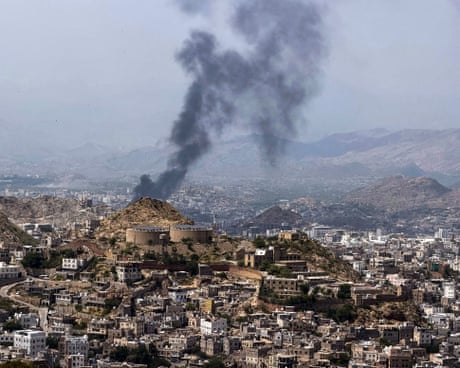
The US state department has ordered some diplomats and the families of US government employees to leave Saudi Arabia as the gulf kingdom faces a barrage of near-daily attacks, with at least three people killed at an airport and oilfield.
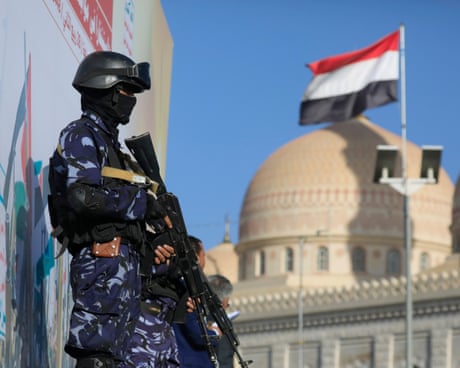
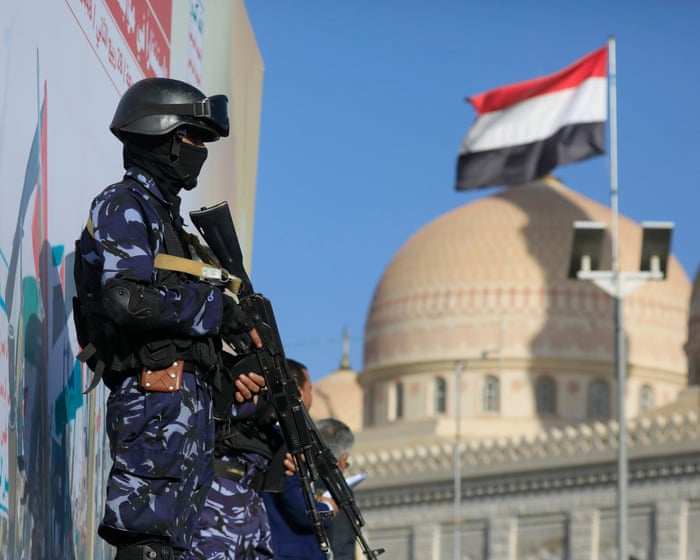
Attacks on “civilian airports and other critical infrastructure” by the Iranian-supported Houthis in Yemen were highlighted as the reason for the drawdown. The state department spokesperson, Tommy Pigott, said: “The safety and security of department personnel and their families remain our highest priority.”
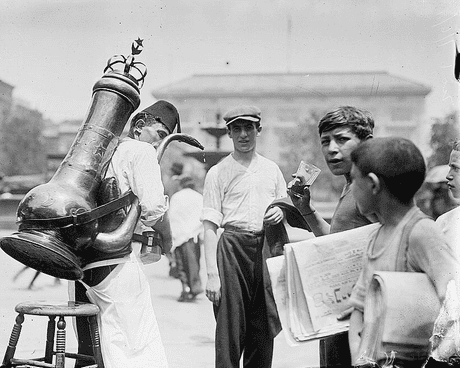
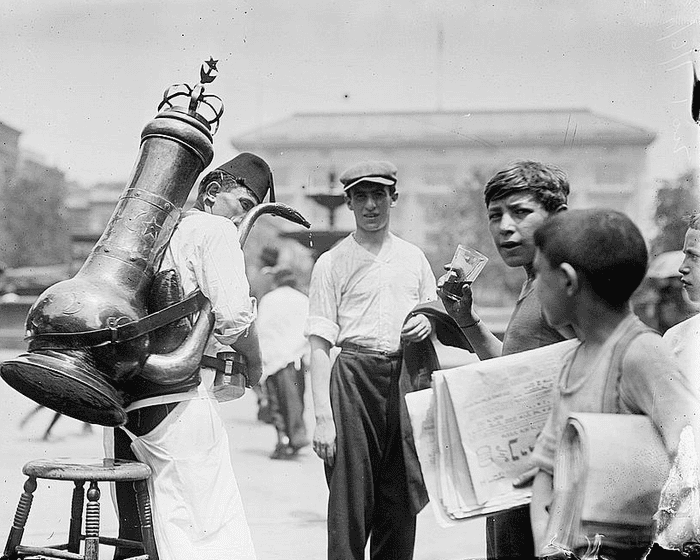
Lebanese officials were furious, claiming the city erased Gibran’s identity. Yet there was a time when Arab immigrants in the US thought ‘we were all Syrians’This is Muslim New York: artists, thinkers and politicos on defining a new era for the cityOn the morning of 30 April, in the shadow of the financial district’s skyscrapers, a gold cloth slid off a bright yellow sculpture of painted stainless steel, 7ft (2 metres) tall, that spells an Arabic word: “al Qalam”, the pen.The monument, Al Qalam:
Lebanese officials were furious, claiming the city erased Gibran’s identity. Yet there was a time when Arab immigrants in the US thought ‘we were all Syrians’
On the morning of 30 April, in the shadow of the financial district’s skyscrapers, a gold cloth slid off a bright yellow sculpture of painted stainless steel, 7ft (2 metres) tall, that spells an Arabic word: “al Qalam”, the pen.
The monument, Al Qalam: Poets in the Park, stands in Elizabeth H Berger Plaza and honors the writers of the vanished neighborhood that New Yorkers once called Little Syria: an Arabic-speaking immigrant community that ran along Washington Street, blocks from where the World Trade Center would later rise. The monument was the first commemorative artwork unveiled under Mayor Zohran Mamdani. Little Syria produced one of the most famous poets ever to live in New York: Kahlil Gibran, author of The Prophet, a book of poetic prose that has never gone out of print. The monument honors the Pen League, the circle of writers Gibran led in Little Syria in the early 20th century.
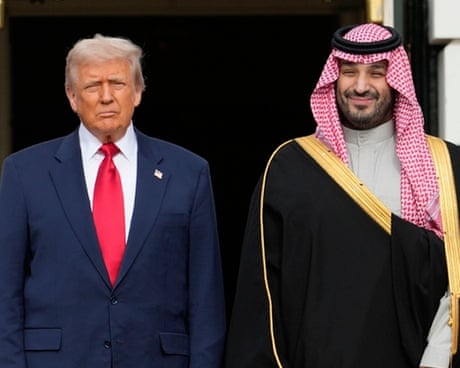
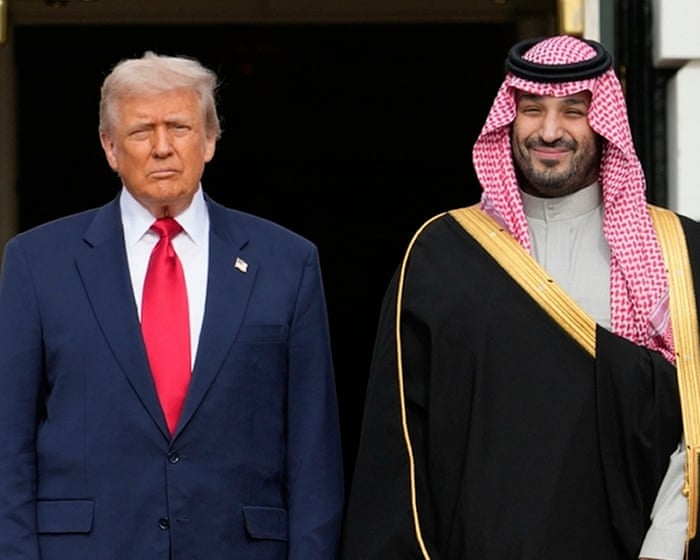
After Houthis escalated their attacks on Saudi Arabia, the US turned down calls from MBS for helpFor years, Saudi Arabia’s crown prince, Mohammed bin Salman, cultivated a close relationship with Donald Trump and his son-in-law and former top adviser, Jared Kushner. The prince understood the president’s transactional approach to power: he signed deals to buy billions of dollars’ worth of US weapons and invested billions more in American companies.Days after Trump returned to the White House in Ja
After Houthis escalated their attacks on Saudi Arabia, the US turned down calls from MBS for help
For years, Saudi Arabia’s crown prince, Mohammed bin Salman, cultivated a close relationship with Donald Trump and his son-in-law and former top adviser, Jared Kushner. The prince understood the president’s transactional approach to power: he signed deals to buy billions of dollars’ worth of US weapons and invested billions more in American companies.
Days after Trump returned to the White House in January 2025, Prince Mohammed pledged to expand investment and trade with the US by $600bn over four years. He later promised to increase that investment to nearly $1tn, although it wasn’t entirely clear how Saudi Arabia would manage to plough a sum close to the kingdom’s entire annual GDP into a foreign economy over a few years.
Mohamad Bazzi is a Guardian US columnist. He is also director of the Hagop Kevorkian Center for Near Eastern Studies and a journalism professor at New York University
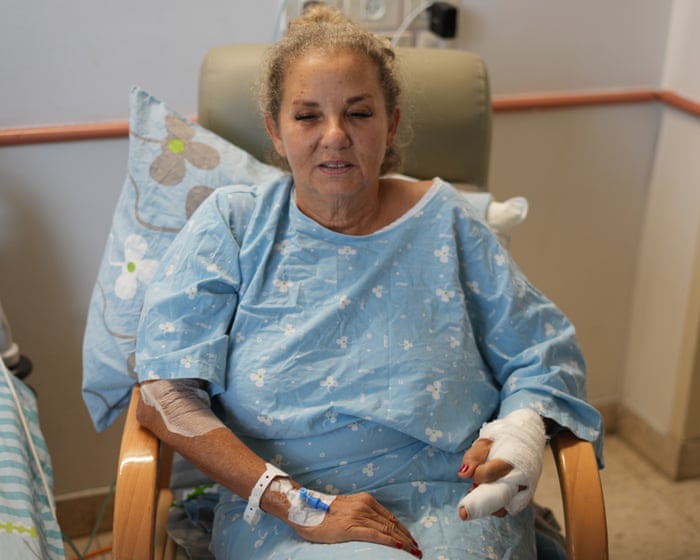
Mike Huckabee calls for arrest and prosecution of those responsible as Heidi Levine, 63, recovers in hospital in IsraelThe US ambassador to Israel, Mike Huckabee, has denounced the settler attack that left the Washington Post photojournalist Heidi Levine badly beaten and needing surgery as a “despicable act of terror” and called for the arrest and prosecution of those responsible.Levine, 63, an award-winning journalist who lives in Israel, was set upon last Friday by masked Israeli settlers who
Mike Huckabee calls for arrest and prosecution of those responsible as Heidi Levine, 63, recovers in hospital in Israel
The US ambassador to Israel, Mike Huckabee, has denounced the settler attack that left the Washington Post photojournalist Heidi Levine badly beaten and needing surgery as a “despicable act of terror” and called for the arrest and prosecution of those responsible.
Levine, 63, an award-winning journalist who lives in Israel, was set upon last Friday by masked Israeli settlers who used clubs and other weapons to attack Palestinian people attempting to harvest their olives in occupied West Bank towns.
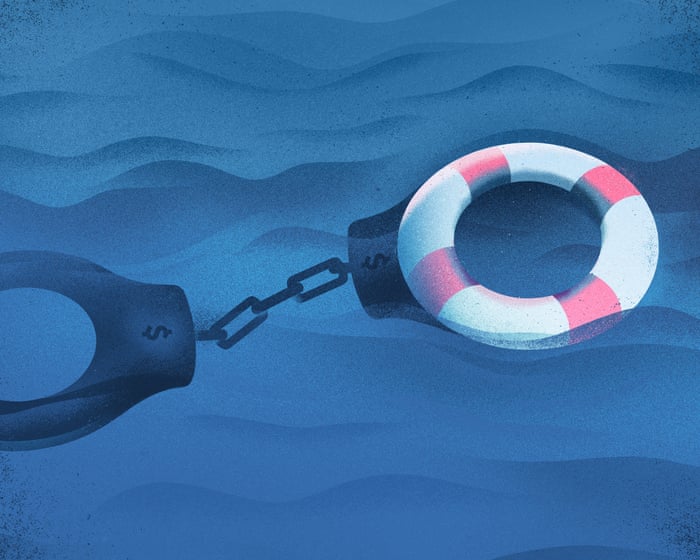
Finance ministers gathering for the IMF annual meeting know the need for multilateral cooperation to deal with many crises. There is little chance of thatNot much has gone right for the global economy this year, and plenty has gone wrong. Two big regional wars are destabilising prices and supply chains everywhere. Businesses and consumers are feeling the effects of a serious energy shock. Rising inflation has made it a lot more expensive for governments to finance their debts. China and the US a
Finance ministers gathering for the IMF annual meeting know the need for multilateral cooperation to deal with many crises. There is little chance of that
Not much has gone right for the global economy this year, and plenty has gone wrong. Two big regional wars are destabilising prices and supply chains everywhere.Businesses and consumers are feeling the effects of a serious energy shock. Rising inflation has made it a lot more expensive for governments to finance their debts. China and the US are at loggerheads over trade.
Yet, so far, the impact has been modest. It is something of a miracle that the finance ministers and central bank governors gathered for this year’s annual meeting of the International Monetary Fund (IMF) in Bangkok are not having to deal with a full-blown crisis. This is not like the autumn of 2008, when the meetings took place during the worst of the global banking meltdown.
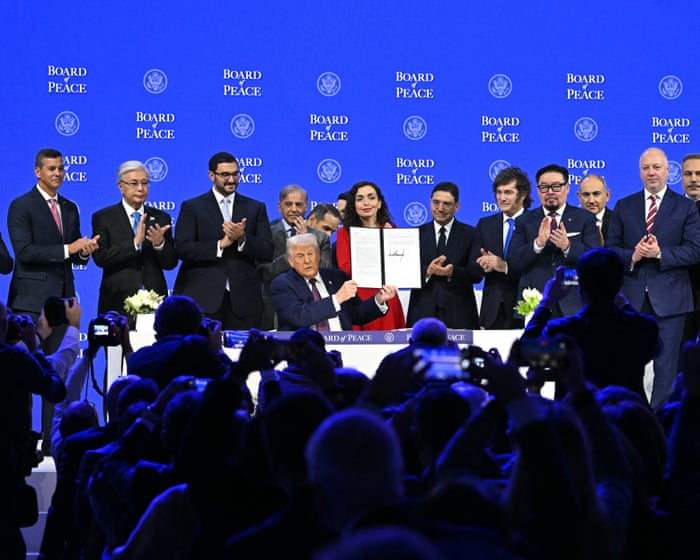
Exclusive: Israel has not permitted US-led project to house 150 international troops to move forwardIsrael is refusing to allow a key military outpost project for Donald Trump’s Board of Peace to proceed in Gaza, the Guardian has learned.In early August, the Board of Peace, the international organization authorized in 2025 by the UN and chaired by the US president, issued its first construction contract for Gaza: Louisiana-based Arkel International would construct a military outpost for 150 inte
Exclusive: Israel has not permitted US-led project to house 150 international troops to move forward
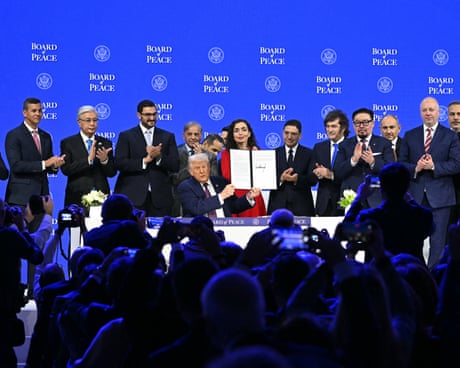
Israel is refusing to allow a key military outpost project for Donald Trump’s Board of Peace to proceed in Gaza, the Guardian has learned.
In early August, the Board of Peace, the international organization authorized in 2025 by the UN and chaired by the US president, issued its first construction contract for Gaza: Louisiana-based Arkel International would construct a military outpost for 150 international troops that would be the vanguard of an international stabilization force.
The latest attack by Houthi rebels on Saudi Arabia may prove to be more calamitous for the region than the world imaginesOn Saturday, Houthi rebels launched a shocking and deadly attack on Saudi Arabia’s capital city, Riyadh. At the time of writing, the missile strike on King Khalid international airport has killed at least 13 people and left 300 injured, marking a significant turn in a regional conflagration that is only getting more intense. It was the single most deadly attack on any Gulf cou
The latest attack by Houthi rebels on Saudi Arabia may prove to be more calamitous for the region than the world imagines
On Saturday, Houthi rebels launched a shocking and deadly attack on Saudi Arabia’s capital city, Riyadh. At the time of writing, the missile strike on King Khalid international airport has killed at least 13 people and left 300 injured, marking a significant turn in a regional conflagration that is only getting more intense. It was the single most deadly attack on any Gulf country since the US and Israel launched their war on Iran in February. In Saudi Arabia, a country that is unaccustomed to such fatalities, the death toll is bewilderingly high and likely to prompt a bloody response.
Over the past year, the Gulf has entered a new era of instability that is not temporary and cannot be reversed. This may feel like an overstatement – casualties have been relatively low, after all, compared with Gaza and Iran – but the gradual erosion of peace and security in places such as Saudi Arabia, Qatar and the UAE has changed the region more dramatically than its leaders would like to acknowledge.
This is no scoffing matter. The accelerating proliferation of advanced nuclear weapons is bringing ‘end times’ closer by the dayHumankind has fearfully and sometimes joyfully anticipated the end of the world ever since it began. The Bible’s Book of Revelation speaks of “end times”, a period of tribulation, war, famine, plague, floods and environmental catastrophe that may seem a less absurd prospect today than perhaps it once did. Islam, too, posits a fateful day of judgment or day of reckoning.
This is no scoffing matter. The accelerating proliferation of advanced nuclear weapons is bringing ‘end times’ closer by the day
Humankind has fearfully and sometimes joyfully anticipated the end of the world ever since it began. The Bible’s Book of Revelation speaks of “end times”, a period of tribulation, war, famine, plague, floods and environmental catastrophe that may seem a less absurd prospect today than perhaps it once did. Islam, too, posits a fateful day of judgment or day of reckoning. Christian evangelicals believe that, in the final rapture, a chosen few – the righteous or the “elect” – will be saved while sinners burn. It’s a minority view. Matthew’s gospel predicts most people will defy, ignore or ridicule warnings of imminent Armageddon. Peter, another of Jesus’s disciples, agreed: “In the last days, scoffers will come, scoffing and following their own evil desires.” Yet such worldly scepticism does not mean a universal cataclysm is less likely. It may make it more probable.
Donald Trump’s blanket denials of the dangers ostensibly posed by artificial intelligence, whose uncontrolled development is seen by some as the latest harbinger of apocalypse, could be interpreted as fulfilling Peter’s prophecy. This US president, the nearest thing the world has to a one-man doomsday machine, is a great one for scoffing and evil desires. In Robert Harris’s 2019 novel, The Second Sleep, a worried scientist lists half a dozen ways the world might end. They include devastating climate change, pandemic disease, a giant asteroid collision with Earth, or some other overwhelming calamity. Few heed the fictional scientist’s fears. In the event, what destroys him and almost everybody else is a disturbingly plausible cyber crash – a global digital and internet meltdown.
Simon Tisdall is a Guardian foreign affairs commentator
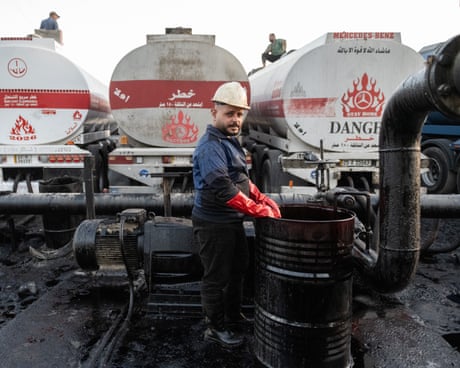
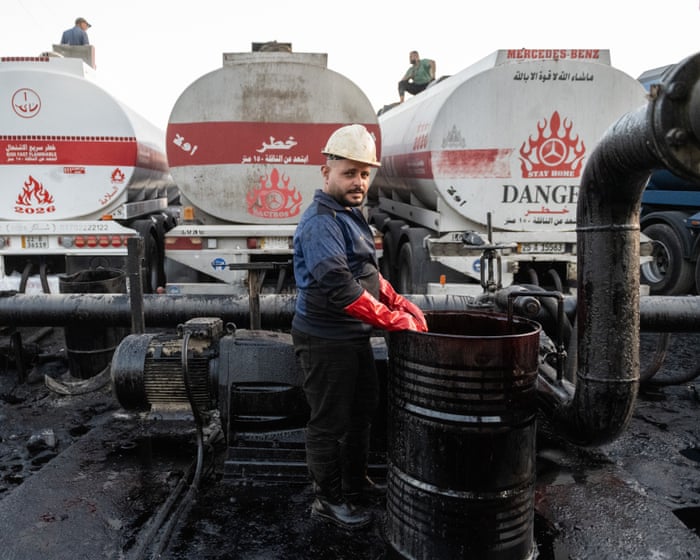
Global bond market sell-off continues and stocks fall amid reports White House has asked to see options for more strikes against IranOil prices have risen sharply amid fears about escalating tensions in the Middle East and a squeeze on production from the threat of a hurricane off the US coast.Brent crude, the international benchmark, rose by 5% to $105.3 a barrel on Thursday, triggering a wave of selling in the global bond and stock markets. Continue reading...
Global bond market sell-off continues and stocks fall amid reports White House has asked to see options for more strikes against Iran
Oil prices have risen sharply amid fears about escalating tensions in the Middle East and a squeeze on production from the threat of a hurricane off the US coast.
Brent crude, the international benchmark, rose by 5% to $105.3 a barrel on Thursday, triggering a wave of selling in the global bond and stock markets.

 Connexion