Chris Mann, a former police officer and prosecutor, defeated Mr. Kobach, a Republican who helped elevate concerns about election fraud to national prominence.
Chris Mann, a former police officer and prosecutor, defeated Mr. Kobach, a Republican who helped elevate concerns about election fraud to national prominence.
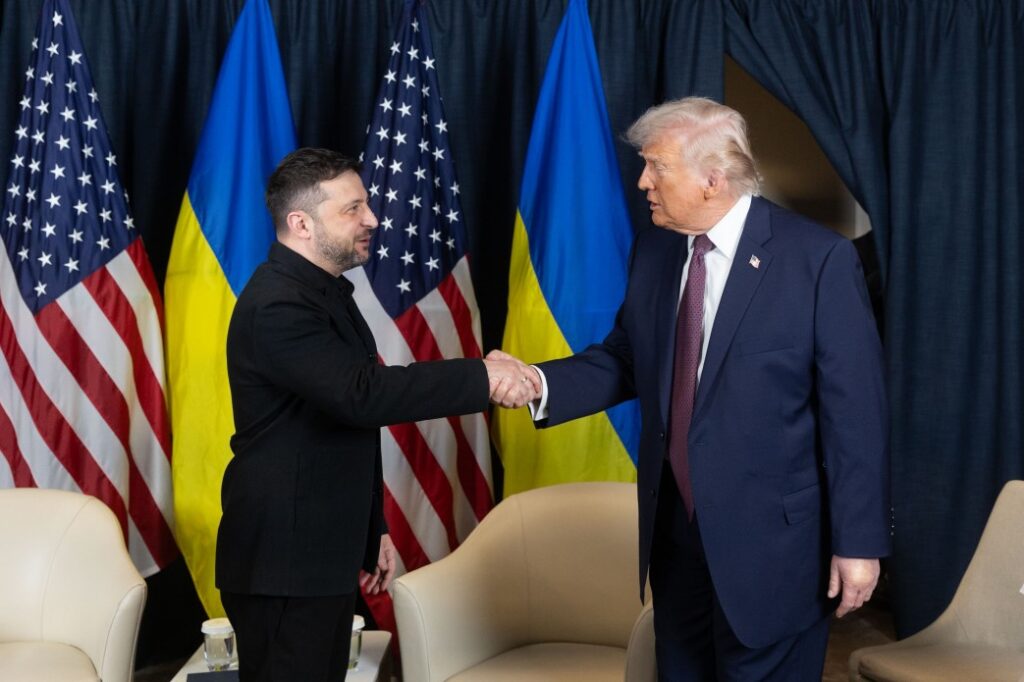
Ukrainian President Volodymyr Zelenskyy has called wartime elections unfair to soldiers who cannot vote and floated online voting as a possible way out, he told German broadcaster ZDF. He also said he had asked Washington to secure a winter ceasefire from Moscow, which would protect power and water and open a window for a vote. At home, critics warn that remote voting carries heavy risks, and Ukrainian law makes no room for it.
Russia is heading into another winter of strikes on Ukraine
Ukrainian President Volodymyr Zelenskyy has called wartime elections unfair to soldiers who cannot vote and floated online voting as a possible way out, he told German broadcaster ZDF. He also said he had asked Washington to secure a winter ceasefire from Moscow, which would protect power and water and open a window for a vote. At home, critics warn that remote voting carries heavy risks, and Ukrainian law makes no room for it.
Russia is heading into another winter of strikes on Ukraine's power plants, substations, and pumping stations. This week, one of its largest barrages on the grid left Kyiv without running water. Washington keeps pressing Kyiv for a vote and a deal, while Moscow's stated price for peace is still more Ukrainian land. Any Ukrainian election therefore depends on a pause that only the Kremlin can grant, and Putin has already rejected a ceasefire on Ukraine's grid.
Why Kyiv calls a wartime vote unfair
Zelenskyy spoke to German satirist Jan Böhmermann on ZDF Magazin Royale, aired on 4 November. A vote under martial law, he argued, would shut out soldiers at the front, about nine million Ukrainians abroad, and millions living under Russian occupation. Under martial law, imposed on 24 February 2022, elections are banned. The troops themselves oppose a vote they could not take part in, he said.
“Allowing elections but not giving soldiers a chance to vote is unfair. It is 100% unfair. We can think about online elections. That may be realistic, but then parliament has to look for and find a solution,” Zelenskyy said, Radio Svoboda reported.
He added that elections split society, and that this is a particular challenge for a country at war.
Explore further
After Trump, Musk tells Ukraine’s president to go. Zelenskyy says he won’t resign and will never accept Ukrainian land as Russian
A winter truce as the window for a vote
Zelenskyy said he had urged Washington to work out a winter truce with Moscow, Kyiv Post reported. He hinted that some in Washington would like him gone, yet said a vote only counts if Ukrainians can actually take part.
“I told the Americans: You can reach an agreement with the Russians for a ceasefire during winter. Then people will have electricity and water, and during that time we can also hold elections,” he said.
Asked why Ukraine would not give up land for peace, Zelenskyy pointed at Moscow. “Putin does not want to end the war. Putin does not accept a ceasefire,” Zelenskyy said, noting that Kyiv had backed ceasefire proposals that Moscow turned down. In excerpts from the interview he posted on Telegram, he said Ukraine would do everything to end the war, “but end it with dignity for us.”
Explore further
US Congress turns blue, Trump keeps the veto—and Ukraine’s balance sheet in Washington gets both wins and losses
The request answers mounting US pressure. On 10 October, US President Donald Trump said it was time for Ukraine to get a new president. Zelenskyy offered elections if Russia agreed to a full 60-day ceasefire. The Kremlin countered with a halt to strikes on voting day alone. US envoys have also pitched Russian gas transit as a reward for an energy truce before winter, and Moscow rebuffed it. Trump has since met Kremlin envoy Kirill Dmitriev and predicted a “big agreement” ahead of US-Russia-Ukraine talks in Abu Dhabi next week.
No legal path to voting from a trench
Ukraine's Electoral Code requires every voter to vote in person, with ballots handed out by election commission members. In February 2025, Central Election Commission head Oleh Didenko said the commission had long dropped electronic voting and called postal voting wide open to interference. Online, it may be hard or impossible to check that a voter casts a ballot in person and without coercion, Radio Svoboda noted. Estonia, which has voted online since 2005, deals with coercion by letting each new vote cancel the last, so citizens can recast their ballot until polls close.
Ballot boxes at a polling station in Ukraine at the start of voting in the presidential election, 31 March 2019. Photo: Tohaomg/Wikimedia Commons
Political scientist Oleksii Koshel went further on Radio NV, saying the president had been “set up.” He warned that online elections would have catastrophic consequences and noted that the Central Election Commission does not support electronic voting. Because Zelenskyy gives so many interviews, Koshel said, it is hard to tell where he meant to send a signal to the West and where he simply said too much. He urged the president's team to cut back his media appearances.
In a direct confrontation with Russia, European NATO states would likely be even more vulnerable than Ukraine to swarms of Russia’s new jet-powered strike weapons, Fabian Hoffmann of the Norwegian Institute for Defence Studies (NIDS) argued in a 20 October op-ed for the Center for European Policy Analysis (CEPA). He calls them low-cost cruise missiles. Just three days earlier, Romania met what it believes were two of them over the Black Sea.
Romanian F-16 fighter jets shot down two jet-
In a direct confrontation with Russia, European NATO states would likely be even more vulnerable than Ukraine to swarms of Russia’s new jet-powered strike weapons, Fabian Hoffmann of the Norwegian Institute for Defence Studies (NIDS) argued in a 20 October op-ed for the Center for European Policy Analysis (CEPA). He calls them low-cost cruise missiles. Just three days earlier, Romania met what it believes were two of them over the Black Sea.
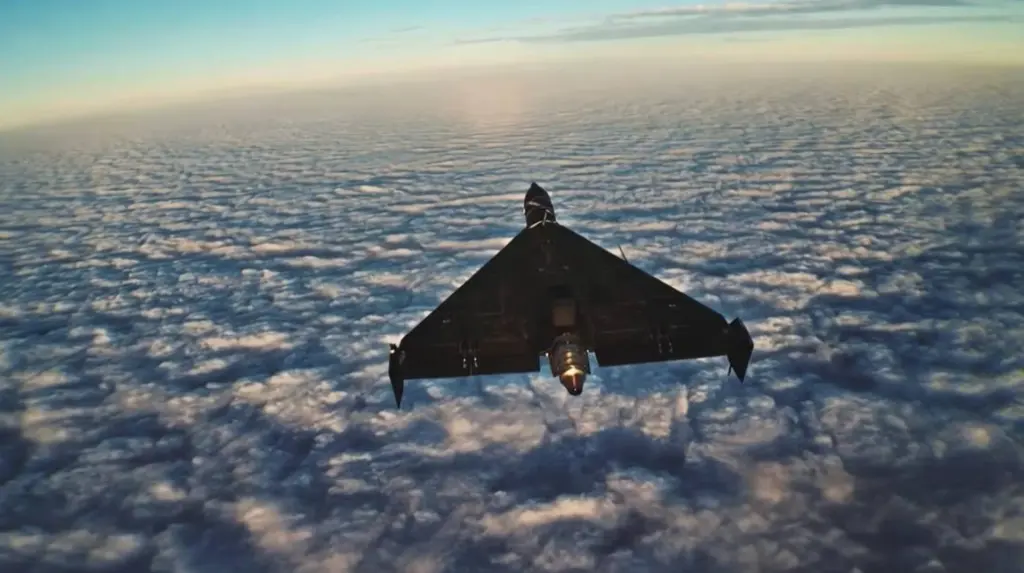
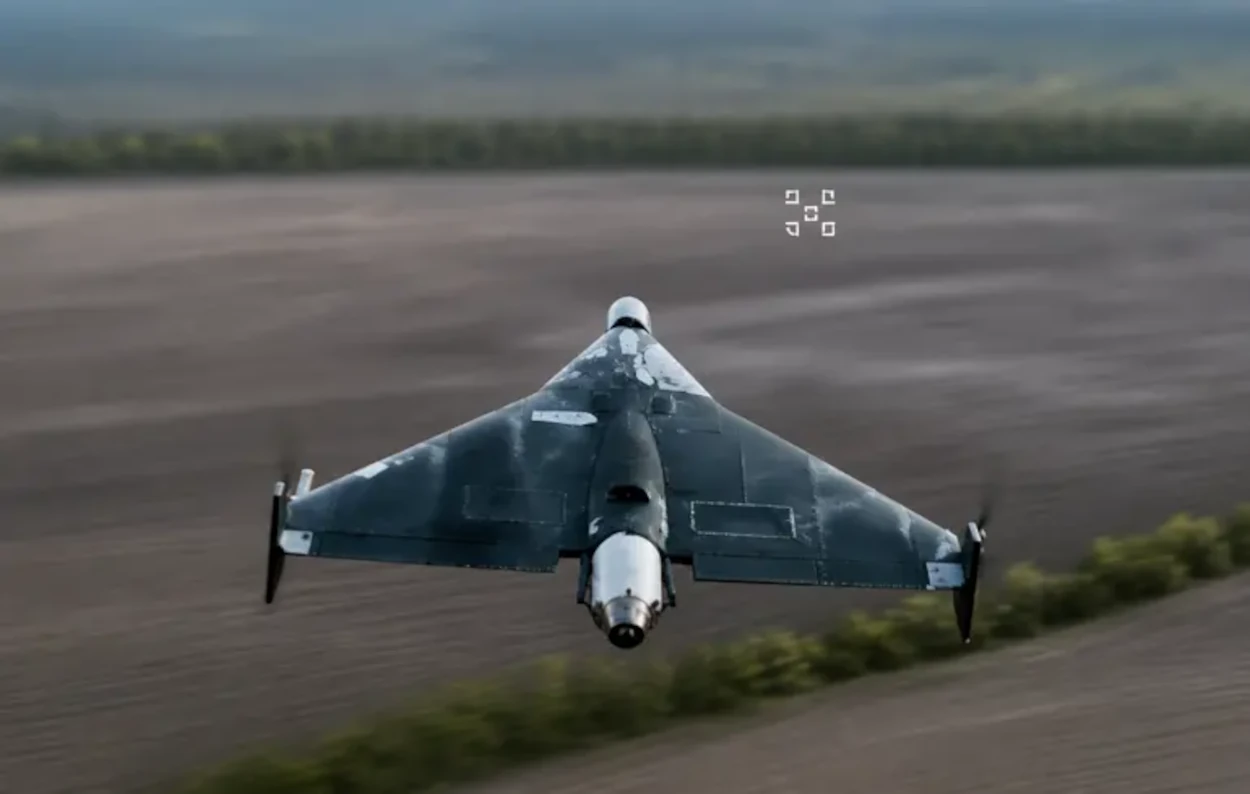
Romanian F-16 fighter jets shot down two jet-powered Geran-family drones over Romania’s territorial waters on 17 October, the Defense Ministry said. Interim Defense Minister Radu Miruță said they flew at about 450 km/h and were likely Geran-4s, the first of that type Romania had downed.
Faster drones for a faster war
Russia began using the Geran-4 in May in response to effective Ukrainian interceptor drones, Ukraine’s military intelligence (HUR) said, adding that it reaches up to 500 km/h. By June, those interceptors were downing about half of slower Shahed-type drones, defense adviser Serhii Beskrestnov estimated.
Hoffmann traces the shift to the Geran-3, a model Ukraine recovered intact in 2025. In his account, a Chinese JT80 turbojet roughly doubled its speed, from 185 to 350 km/h. However, he puts newer models, including the Geran-4, at 600 km/h or more, above HUR’s figure for that model.
By his estimate, each costs $150,000–$250,000, against about $50,000 for a long-range drone. Still, from Russia’s perspective, he wrote, that buys a significantly higher chance of getting through.
Explore further
Ukraine is testing four new drone interceptors as Russia floods its skies with faster Gerans
Engines are the bottleneck
Hoffmann argues defenses must match the threat’s speed, for example with jet-powered interceptor drones. Ukraine already fields some. On 4 October, President Zelenskyy said its Bars interceptors had shown the highest percentage among Ukrainian interceptors, about 30% of targets, according to Militarnyi. One unit destroyed five aerial targets with five Bars interceptors, Defense Minister Yevhenii Khmara later told journalists. He also called aviation one of the most effective tools against jet drones.
Hoffmann’s concern is scale. Jet engines are in short supply, he wrote, because too few European and US suppliers can meet demand. Ukraine’s Defense Industry Council flagged a shortage of such engines for its drones in April. In his view, gun systems and higher-end missile defenses are too scarce or too costly to fill the gap.

 Connexion