Vue normale

Reçu — 14 juillet 2026 Euromaidan Press
  • ✇Euromaidan Press
  • Hungary swapped its pro-Russian prime minister. Yet it is still slowing Ukraine’s path to the EU.
    For four hours on 18 June, Péter Magyar, Hungary’s new prime minister, sat with EU leaders and refused to budge. They wanted to advance Ukraine’s membership talks. Magyar held out until they struck that language from the summit text. He got what he came for. EU accession is a prize Ukraine has pursued since the 2013–14 Euromaidan, when Ukrainians bled for the right to choose Europe: a say in the continent’s decisions, access to EU markets and funds, and a European path
     

Hungary swapped its pro-Russian prime minister. Yet it is still slowing Ukraine’s path to the EU.

14 juillet 2026 à 09:55

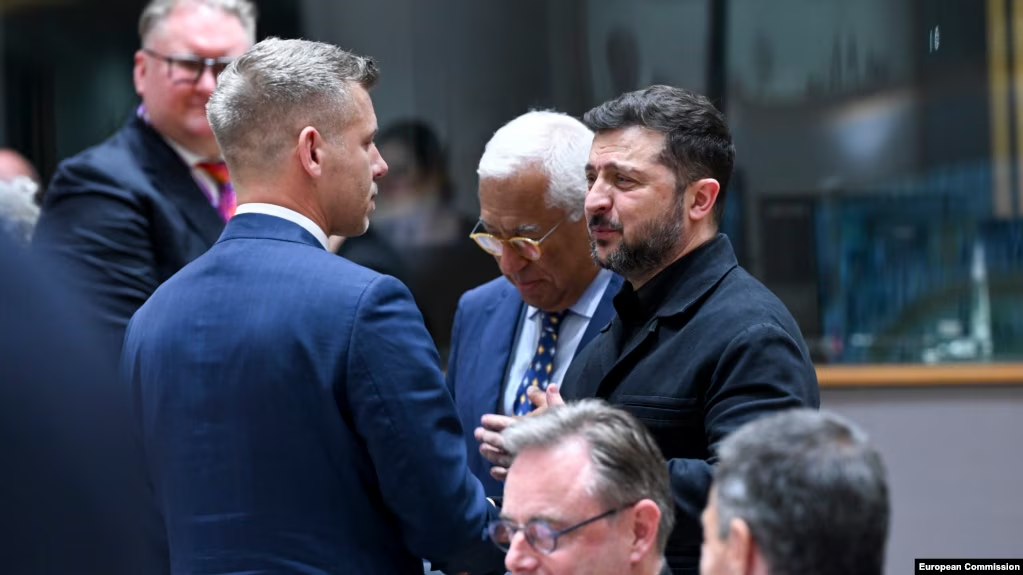
Zelenskyy, Magyar, Tusk, and Costa confer around a table during an EU meeting, with one official in black standing at the center.

For four hours on 18 June, Péter Magyar, Hungary’s new prime minister, sat with EU leaders and refused to budge. They wanted to advance Ukraine’s membership talks. Magyar held out until they struck that language from the summit text. He got what he came for.

EU accession is a prize Ukraine has pursued since the 2013–14 Euromaidan, when Ukrainians bled for the right to choose Europe: a say in the continent’s decisions, access to EU markets and funds, and a European path away from Russia. 

Yet any member state can stall that process. Viktor Orbán, Hungary’s pro-Russian former prime minister, repeatedly did—and Magyar’s government is still holding up Ukraine’s accession. 

Magyar is not Orbán. After Russia struck Zakarpattia Oblast—Ukraine’s westernmost Oblast, home to many ethnic Hungarians—Magyar condemned the attack. His pro-Western foreign minister, Anita Orbán (no relation), summoned Moscow’s ambassador and asked when Russia would end the war. 

For Magyar, however, helping Kyiv could cost votes: more than half of Hungarians oppose restarting talks, and even supporters of Magyar’s own Tisza party—which ended 16 years of pro-Russian Fidesz rule—are split down the middle. 

What Orbán left behind also influences Hungary’s hesitation: a Fidesz propaganda apparatus that has shrunk but whose narratives endure, a minority issue opponents can still weaponize against Magyar, and an energy system tied to Moscow.

Magyar’s caution may be less about what he believes than what Hungarian politics rewards: helping Kyiv still carries more risk than reward at home.

Hungary is not alone: an EU-wide poll found that 41% were opposed to Ukraine joining the EU, even if it met all accession conditions. 

The 18 June confrontation came three days after a brief breakthrough. On 15 June, Hungary helped Ukraine open the first of six negotiating clusters—parts of the EU rulebook Kyiv must work through before joining. Each requires unanimous approval from the EU’s 27 governments. 

On 23 June, Budapest blocked the other five from opening. Hungary later cleared Cluster 6, covering foreign policy. The EU and Ukraine formally opened Cluster 6 on 14 July, leaving four clusters unopened. 

What Hungary is actually blocking

Magyar has repeatedly argued that accelerating Ukraine’s EU talks would be unfair to Western Balkan countries that have waited years to join.

In a recent Substack analysis, Dániel Hegedűs, deputy director of the Institute for European Politics, rejects Magyar's suggestion that opening several clusters quickly would give Ukraine special treatment. 

Other candidate countries have advanced at a similar pace, he said, making Ukraine's request unusual mainly because of the war, not because it breaks EU precedent: Albania opened all six clusters in just over a year, between October 2024 and late 2025. 

For Kyiv, Magyar is harder to read than Orbán. With the latter, Ukraine knew it would not get anywhere with EU accession, as the Fidesz leader would veto every attempt.

As Vitalii Diachuk, an analyst at Ukraine’s Institute for Central European Strategy, stated, Orbán’s veto was “predictable and targeted.” Brussels could counter it with diplomatic pressure, blocking funds, and isolating Hungary’s vote. 
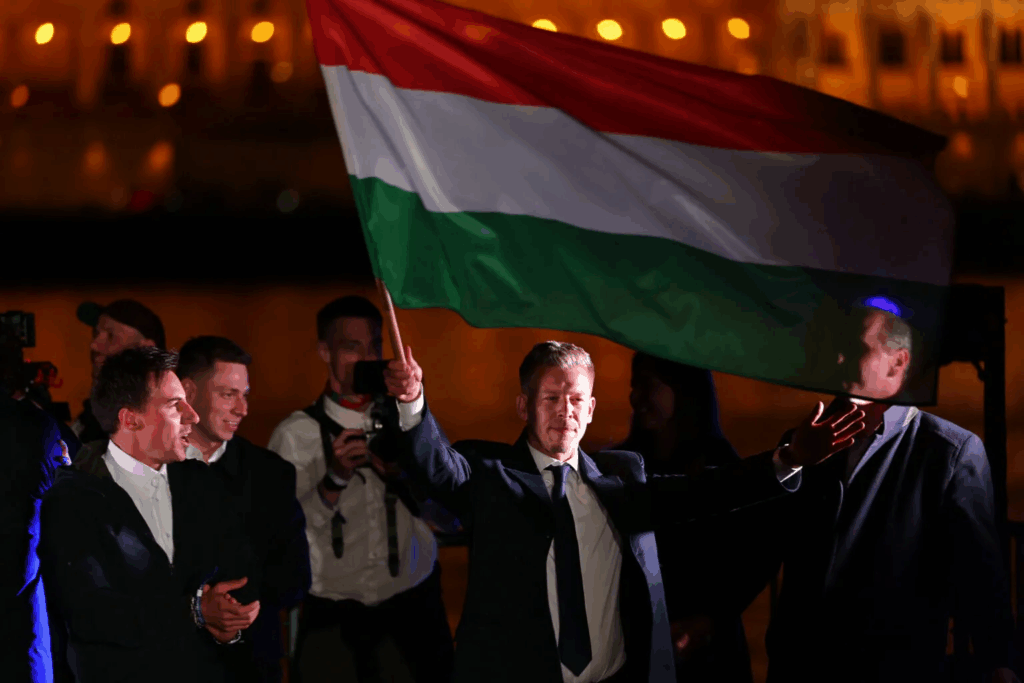
Péter Magyar, leader of Hungary’s Tisza Party, waves a Hungarian national flag at a victory rally in Budapest, Hungary, April 12, 2026. Photo: David Balogh/Xinhua via East News

Unlike Orbán, Magyar did not come to office with a long record of hostility toward Ukraine. But with little track record on Ukraine—Tisza’s manifesto offered few details beyond opposing accelerated accession—his future course is harder to predict.

Soon after taking office, he said Hungary would hold a referendum on Ukraine’s eventual EU membership. Diachuk warned that this would leave Kyiv dependent on Hungarian politics and public opinion years from now: 

“It is unclear what the Hungarian government will look like, how public opinion will be shaped, or whether the referendum will be genuinely democratic rather than another Orbán-style ‘national consultation’ [government mail-in questionnaires criticized for their leading language].” —Vitalii Diachuk

Speaking with Euromaidan Press, Hegedűs argued that Magyar’s Ukraine policy will remain subordinate to domestic political calculations. 

“He will pursue closer rapprochement with Kyiv only if it either brings him a tangible political benefit or does not expose him to vulnerabilities in the domestic political arena,” Hegedűs noted.

Not just a Hungary issue: Europe’s wider doubts on Ukraine’s accession

Hungary is the most visible obstacle to faster talks, but Magyar is not alone: most EU governments also oppose speeding up Ukraine’s accession.

Few want to reject Ukraine outright, Hegedűs said. Yet EU member states favor moving negotiations forward under existing rules while keeping pressure on Kyiv to complete difficult legal, democratic, and economic reforms.

France and Germany have resisted shortening the process, while only the Nordic and Baltic states have pushed to open all six negotiating clusters quickly. Most member states support continued negotiations but do not waive accession requirements or promise membership before Ukraine has met them.

Beyond the halls of power, many EU citizens remain wary of Ukraine’s accession, largely over economic concerns. French farmers pressed Paris to curb Ukrainian food imports, while France’s agricultural minister warned that market disruption could erode public support for Kyiv.

Farther east, a June poll found nearly six in ten Poles opposed Ukraine joining the EU. From 2023 to 2025, Polish farmers repeatedly blocked crossings with Ukraine, claiming that Ukrainian grain meant for global markets was depressing local prices.

Polish farmers’ fears were disproportionate to the broader trade picture: the EU matters far more to Ukraine than Ukraine does to the EU. Still, Brussels struck a temporary compromise, leaving unresolved how accession would reshape farm subsidies and competition.

Same trade flow, opposite weight: what’s central for Ukraine’s economy is marginal for the EU’s. Chart: European Commission / Euromaidan Press.

Concern extends beyond agriculture. András Simonyi—the former Hungarian ambassador to NATO and the US—noted some Europeans fear a war-hardened Ukraine whose defense firms are already “way ahead” in some technologies. Their cheaper, combat-tested systems could undercut established manufacturers and win export contracts.

Le Monde reported unease among French manufacturers, while French experts warned that Ukrainian drone makers could become “formidable competitors.” Simonyi argued that Europe should treat that competition as a catalyst, not a threat.

Janitorial duties: Fidesz’s shadow over Magyar

Domestic priorities have dominated Magyar’s first months in office as his government has focused on restoring the rule of law and securing the release of billions of euros in EU funds frozen under Orbán.

Hegedűs said the “absolute primacy” of domestic affairs would keep the government focused on constitutional reform, removing Fidesz loyalists from state institutions, and pursuing accountability for corruption. 

Simonyi put it more simply:

“Magyar’s focus for now is cleaning up after Orbán.” —András Simonyi

As part of his domestic agenda, Magyar has begun dismantling Fidesz’s propaganda apparatus. After his April victory, he appeared on M1, the state-funded broadcaster aligned with Viktor Orbán, and vowed to shut down its “factory of lies.”  

M1 had echoed Kremlin claims that Russia was defending “the Russian-majority population in Donetsk and Luhansk Oblasts” from “Ukrainian fascism” and that Ukraine persecuted minorities. On 7 July, it suspended news broadcasts for an overhaul intended to restore public-media independence. 

That overhaul could weaken one major source of anti-Ukrainian messaging. But analysts warned that Orbán’s defeat had not erased the wider media ecosystem—or the audience it cultivated. 

“The government’s production line of content and narratives has currently stalled, but public demand and the opposition’s infrastructure remain on standby.” —Vitalii Diachuk

Polling backs Diachuk up. In a post-election ECFR survey, Tisza voters split almost evenly on restarting Ukraine's accession talks—41% for, 43% against. 

On arming Ukraine, though, they were not torn: just 12%—one in eight—backed it. Nationally the mood was colder still—54% opposed reopening the talks at all, and majorities rejected sending Kyiv either money or weapons.
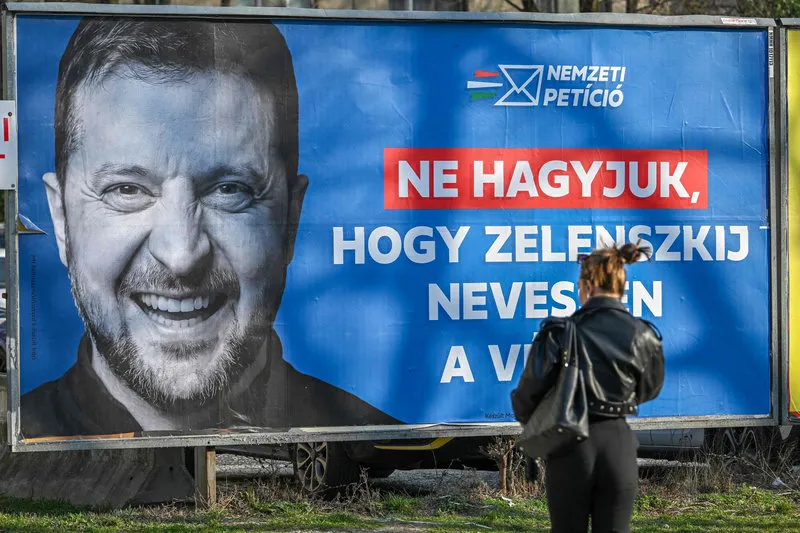
A woman walks past a pro-government billboard featuring a portrait of Ukrainian President Volodymyr Zelensky, with the text reading “Let’s not let Zelensky have the last laugh,” in Budapest on 3 March 2026. Source: Attila KISBENEDEK / AFP via East News

Magyar might therefore be trying not to hand Fidesz political ammunition. As Hegedűs noted, a too-visible rapprochement with Kyiv could expose Tisza to attack and alienate voters beyond its base. 

Magyar’s hesitation may reflect electoral caution more than distrust of Ukraine. The danger is that a temporary tactic becomes lasting policy whenever supporting Kyiv carries a domestic cost. 

The threat of Russian influence also lingers. The Carnegie Center notes that Fidesz remains embedded in transnational illiberal networks that carried Kremlin talking points and could survive Orbán’s loss of power. 

“He cannot appear less sensitive than Orbán”: The minority question

The Hungarian minority in Zakarpattia remains a potential flashpoint for bilateral relations—and Ukraine’s EU bid. Ukraine’s westernmost region is home to roughly 150,000 ethnic Hungarians, before war and emigration substantially reduced the community. Under Orbán, Budapest deployed intelligence agents there, stoked interethnic tensions, and amplified claims of persecution through state media. 

Magyar has taken a different approach. Within three weeks of taking office, his government struck a deal to restore Hungarian-language schools and expand language rights in education and public services. Ukraine also agreed to write those commitments into law and its EU-required minority-rights action plan. 

Diachuk said the contrast between Magyar and Orbán was night-and-day: 

“Orbán and Szijjártó [Orbán’s foreign minister] used demands [connected to the Hungarian minority] to block Ukraine’s EU path, regardless of Kyiv’s progress, because an agreement would have cost them leverage. Péter Magyar, by contrast, sought and reached an agreement.” —Vitalii Diachuk

There is a catch. Magyar has prioritized disputes he can resolve quickly and present to voters as proof he can fix what Orbán left behind, as Hegedűs noted

Future disputes over the Hungarian minority in Zakarpattia Oblast could still become politically combustible. Diachuk noted that “demand for narratives about protecting Zakarpattia's Hungarians is genuine and exists independently of Fidesz narratives.”

Recent events show why Hungarian politicians continue to treat the issue so carefully. Magyar framed the June agreement as restoring “fundamental rights” to 100,000 Hungarians. 

His deeper concern is domestic: Magyar wants to avoid criticism from Fidesz and the far-right Mi Hazánk party for looking “too soft on Ukraine,” Hegedűs told Euronews. 

New disputes could therefore become a test of whether Magyar is defending ethnic Hungarians abroad—and hand his opponents an opening to accuse him of yielding to Kyiv. 

“Magyar cannot appear to be less sensitive to the minority question than Orbán. But he can take the initiative, get it out of the way and not allow others to hide behind Hungary,” Simonyi noted.

The harder break with Moscow lies in energy

In the April election, VSquare reported that Russian operatives campaigned hard for Orbán and cast Magyar as a Brussels puppet. It failed, and "Russians go home" became a prominent slogan of the opposition. 

“Russia failed in Hungary. Hungarians, and especially the Magyar government, will be vigilant and unmask any Russian effort to interfere in Hungarian politics.” —András Simonyi

Magyar’s subsequent actions support that assessment. On 4 May, his government expelled SVR agent Artur Sushkov, whom Orbán had shielded months earlier. In June, Budapest dismissed every Orbán-era intelligence chief and appointed Péter Buda—a critic of Orbán’s pro-Russian course—to overhaul the security services.

Nevertheless, Russia’s presence remains pronounced in Hungary’s energy sector. Russian crude accounted for 93% of Hungary’s oil imports in 2025, while Magyar has pledged to end dependence on Russian energy only by 2035—eight years after the EU’s planned phaseout. 
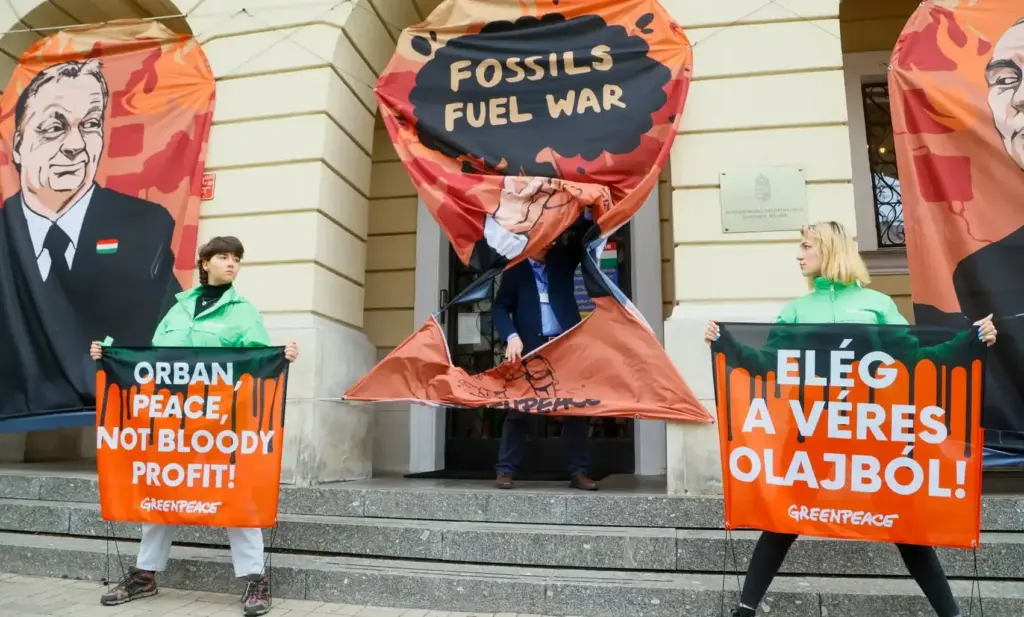
Warsaw, 25 May 2022. Greenpeace protest in front of the Hungarian Embassy. Source: Pawel Wodzynski/East News

Diachuk noted Magyar inherited an energy system deeply tied to Russia—long-term contracts, infrastructure built around Russian fuel, the Russian-built Paks II project—dependencies no single decision can undo.

The difference is visible in how each leader uses the same vulnerability. Orbán held up a €90 billion EU loan for Ukraine until Russian oil resumed through the Druzhba pipeline; Magyar has instead sought French nuclear cooperation to diversify Hungary’s supply. 

“Magyar treats energy dependence not as leverage over Brussels, but as a problem Hungary must gradually resolve,” Diachuk said.

That difference matters, but it does not settle how Magyar will act when supporting Ukraine becomes costly at home. 

Diachuk said the coming weeks would determine whether the opening becomes durable. “This is a real window of opportunity, but it’s quite small.”

This material was produced as part of a project by the Institute of Mass Information with the support of the Ministry of Foreign Affairs of the Netherlands. The content of this publication does not reflect the official position of the IMI or the Kingdom of the Netherlands.

The US Army’s former commander in Europe is “withholding applause” for Trump’s Patriot pledge—and expects no interceptors before winter.

14 juillet 2026 à 09:02

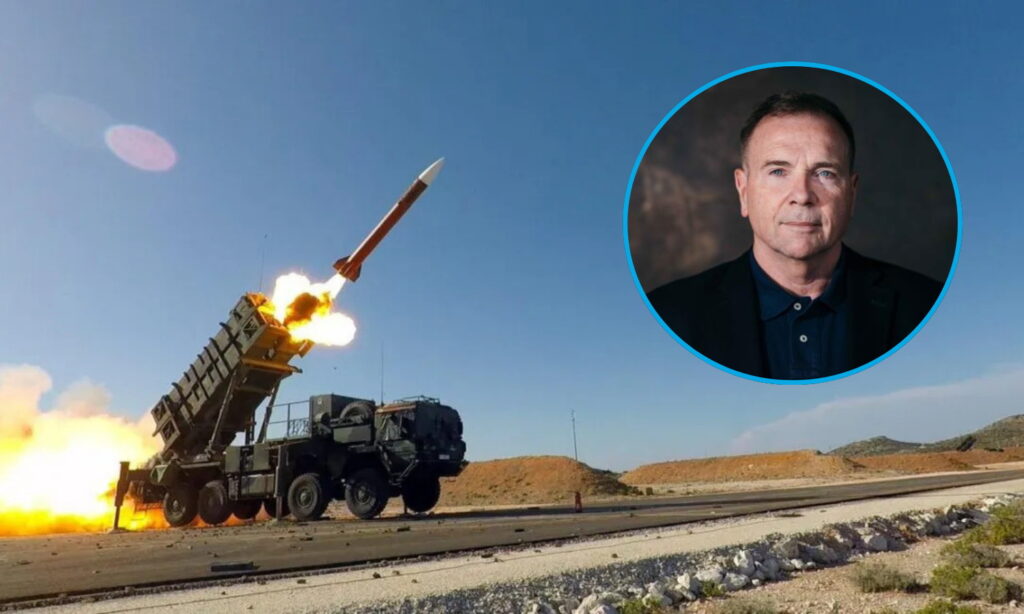
A US Patriot air-defense launcher fires an interceptor beside an inset portrait of retired US Lieutenant General Ben Hodges.

On 8 July, US President Donald Trump promised at NATO's summit in Ankara to let Ukraine build Patriot interceptors. 

He left out one detail: whether Ukraine would produce any by winter—before renewed Russian attacks on Ukraine’s power grid leave civilians without heat.

Ukraine has no reliable answer to Russia's ballistic-missile attacks, and Trump's pledge will not provide one this winter. During Russia’s 6 July barrage on Kyiv, Ukraine intercepted none of 29 ballistic and hypersonic missiles. The attack killed at least 28—four days after another strike killed at least 30.  

On 7 July, Ukraine’s Defense Ministry said Ukraine had effectively run out of Patriot interceptors. 

Trump’s Patriot promise remains just words. He had not even consulted Lockheed Martin or RTX—which build the interceptors—before making the pledge. 

Speaking to Euromaidan Press, Ben Hodges—former US Army Europe commander and NATO senior logistics mentor—said Ukraine would not build any interceptors soon: “I am pretty certain it will not produce anything in the next three to six months.”

Outside estimates run longer: two expert groups advising the UK Defense Ministry judged production unlikely within a year, while other experts put the first interceptor about two years away.

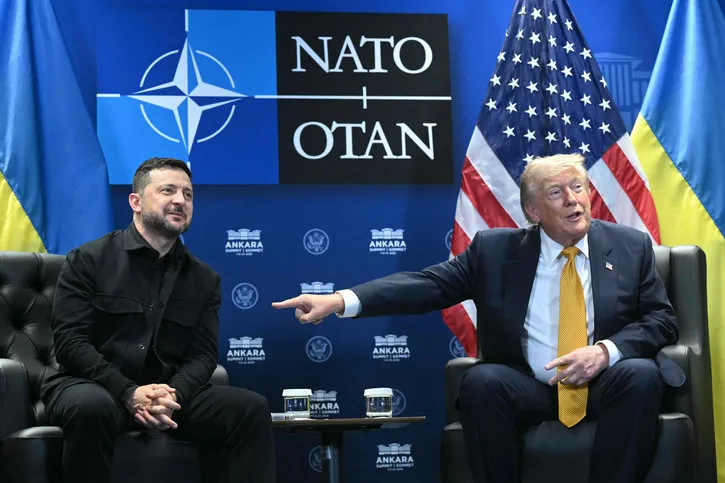
Ukrainian President Volodymyr Zelenskyy (left) meets US President Donald Trump (right) on the sidelines of the NATO summit in Ankara on 8 July 2026. Source: SAUL LOEB / AFP via East News

Hodges thinks Ukraine could beat that two-year timeline. Russia’s invasion, he said, has forced Ukraine’s defense industry and workforce to innovate faster than peacetime timelines assume.

Until allied supplies or Ukrainian production catch up, Hodges said, Kyiv’s best defense may be to strike Russia’s missile factories—to "kill the archer" rather than stop every arrow.

Hodges' hope does not extend to Trump’s administration. He is “withholding applause” until he sees “concrete actions," citing the administration’s refusal to recognize Russia as the aggressor and Vice President JD Vance’s description of halting US aid as “one of his proudest achievements.”

That record, Hodges noted, makes it “hard to be confident” that Trump’s approach has changed.

Interview edited for length and clarity.

What Trump’s Patriot pledge would actually require 

Daniel Thomas: When Trump said Ukraine could produce Patriot interceptors under license, what did he actually commit the United States to—and was it real policy or mainly a political announcement?

Lieutenant General Ben Hodges: I was pleased that Trump made the pledge, but I remain very skeptical until I start seeing actual movement.

For now, it is a pledge, and he has made many pledges about Russia and Ukraine that he has not followed through on. So I am cautiously optimistic, but it is not yet a certainty.

If the plan moves forward, Lockheed Martin—the main contractor for the PAC-3, the Patriot interceptor Ukraine relies on to stop ballistic missiles—would have to be involved. Commercial arrangements would have to protect its technology and intellectual property, with the US government likely providing some form of support or guarantees.

Trump said the company did not know about it. I doubt that.

Why Trump cannot start Patriot production on his own

Thomas: Once political approval is given, what must happen before Ukraine can actually begin producing Patriot interceptors? 

Hodges: Lockheed would have something to say. We are not in a system where the government owns the company and can simply direct it to begin production. This is a commercial enterprise with a board and shareholders, so the relevant laws and agreements would have to be sorted out.

The Departments of Commerce, Defense, State, and Treasury would all have a say, and Congress would probably need to be notified. If this is a genuine policy decision with a disciplined process behind it, much of that coordination should already have begun. And if those authorities have already been lined up, that part could move quickly.

Trump's administration is not famous for that, but I hope they already have the ball rolling.

Then come the harder, practical challenges. Patriot systems are sophisticated weapons, not hammers and nails. Ukraine would need trained workers and the right tools. Components would have to come together through a complex supply chain. And Russia would try to strike the facility before it became operational, making its location and protection critical.

What can Ukraine build on its own—and what does it still need from elsewhere?

Thomas: What would Patriot production in Ukraine initially involve: building complete interceptors, assembling imported components, or making selected parts? And could that shift toward full interceptor production over time?

Hodges: One possibility is that subassemblies would be sent to Ukraine, given the supply chain's complexity. Components come from different places before being assembled into a PAC-3 interceptor capable of countering ballistic missiles. But I do not know whether that model has been selected.

Whatever Ukrainian company took part would have to work with Lockheed, and its personnel would need training. They might go to the United States, where the interceptors are made, or a team might come over to train them. All of this is doable.

I have also seen people speculating that Ukraine will work it out with Poland or Germany, or somewhere else, to actually do this. That could be the case.

Has Trump’s Ukraine policy actually changed?

Thomas: Does Trump’s Patriot pledge signal a real shift in his Ukraine policy, or is it too early to tell?

Hodges: I am withholding applause until I see concrete actions showing that the president has directed this to happen.

I hope it does. But his approach has been to push Russian talking points and pressure Ukraine to give up land for the sake of stopping the fighting. The administration has shown little concern about the origin of the war and has struggled even to identify Russia as the aggressor.

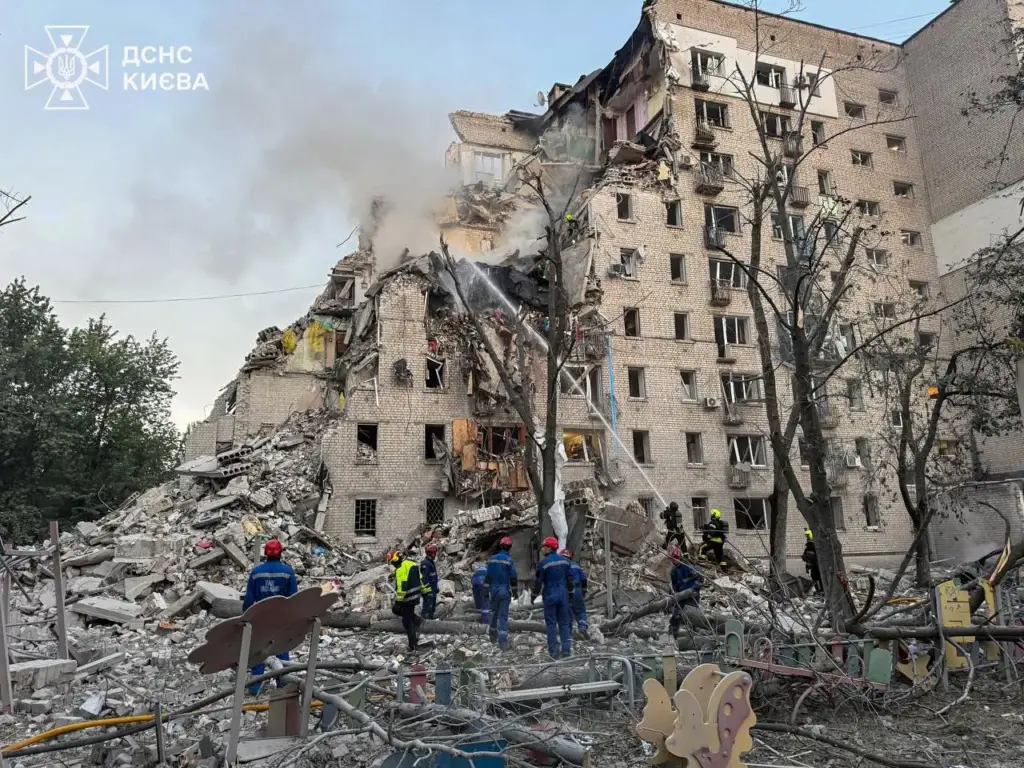
The aftermath of the Russian attack on Kyiv on 2 July 2026. Credit: DSNS

Remember, Vice President Vance said one of his proudest accomplishments was stopping the flow of aid to Ukraine. What the hell is that? 

It is therefore hard to be confident that the Trump White House’s overall view has changed. Washington treats this as a transaction: Germany or other countries can buy American equipment and give it to Ukraine, rather than the United States providing direct aid because it wants Ukraine to win. 

I take the president at his word that he wants the killing to stop. These ballistic missiles are blowing up apartment buildings. But I have not seen him put meaningful pressure on Russia.

How quickly could Ukraine build Patriots? 

Thomas: Even if everyone moved quickly, how soon could Ukraine produce usable Patriot interceptors—and could they affect this war immediately, or would they mainly be a longer-term investment?

Hodges: Maybe a little bit of both. I have heard estimates of about two years before the first Patriot interceptor could be produced, although people may all be repeating the same initial report.*

That sounds like a normal timetable. Ukraine works at a different speed because it is fighting for survival and has a technologically capable, educated workforce. I would not automatically apply the same timeline used for other countries. 

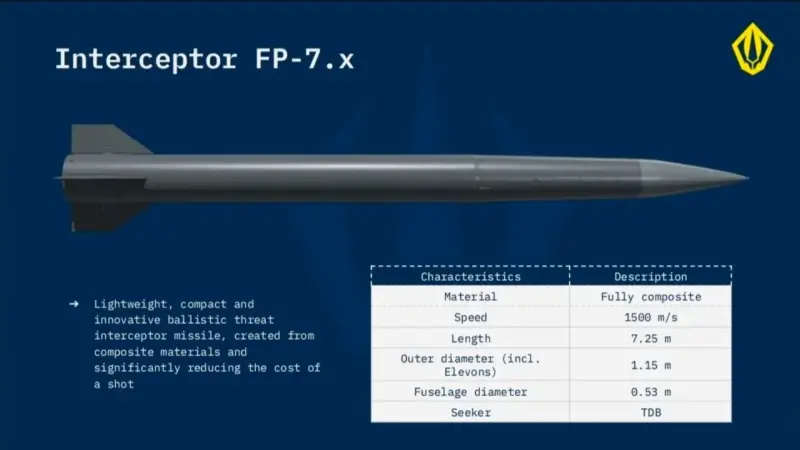
Freya system missile. Fire Point art.

It might not necessarily take Ukraine two years once the process starts, but I am pretty certain it will not produce anything in the next three to six months.

Ukraine may also learn things that help it improve or develop other systems. It does not have to be a Patriot interceptor; it needs a weapon capable of intercepting a ballistic missile moving at tremendous speed and altitude. Ukraine is trying with Freya but we will see what happens.**

* Japan took about two years to establish licensed Patriot production but still imports key US components. Ukrainian experts estimate that Ukraine’s first PAC-3 missile could emerge no earlier than 2029.

**Freya is Fire Point's ballistic interceptor, which Ukraine hopes to build within the next 12 months.

What Patriot production would not fix

Thomas: In military terms, how much could Ukrainian Patriot production shift the strategic balance—or would it mainly ease a critical shortage?

Hodges: It would fill a gap. Ukraine has changed the momentum of the war in several areas. It has had significant success in the Black Sea, stopped Russia from making meaningful progress on the ground, and developed long-range precision-strike capabilities against Russian oil and gas infrastructure.

The one thing Ukraine has not been able to stop consistently is Russia's ballistic-missile attacks against its cities. So this effort is primarily about protecting Ukrainian civilians from those missiles.

Thomas: But Ukrainian-produced interceptors will not be available for this winter. How do you assess that immediate gap?

Hodges: It will be a rough winter. But the resilience of Ukrainian society is something we will marvel at for decades. That does not make it any easier, but what Ukrainians have withstood is incredible.

I imagine—and certainly hope—that Ukraine is finding ways to disrupt Russia’s ballistic-missile production. Its long-range weapons can now reach almost any relevant factory, and it recently struck a plant that produced components for those missiles.

"It is better to kill the archer than to try to intercept all the arrows."

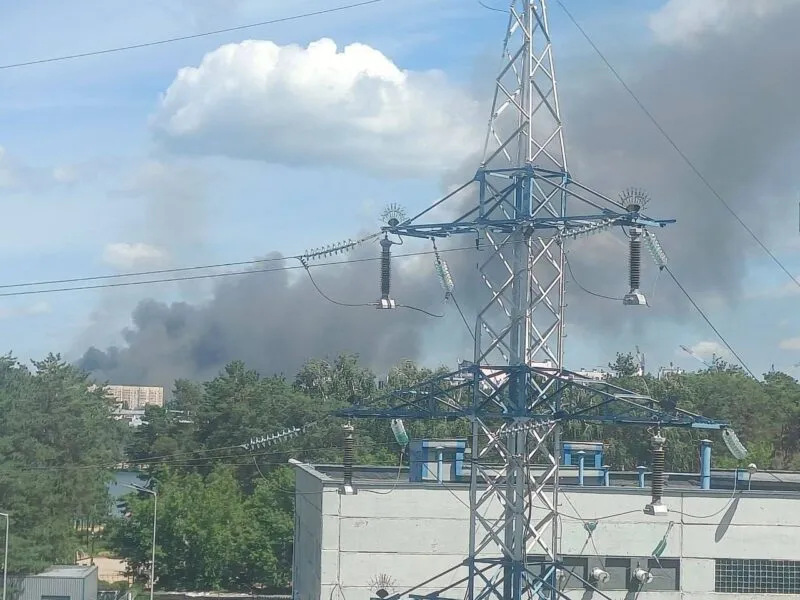
Black smoke rises over Voronezh, Russia, after a reported Ukrainian missile strike on the VZPP-S semiconductor plant, 22 June 2026. Photo: Exilenova+

Thomas: Can Patriot ever "close the skies" over Ukraine? What scale of deployment would that take?

Hodges: What Ukraine needs is integrated air and missile defense.***

Russia is launching hundreds of drones, a couple dozen ballistic missiles, and other weapons in these attacks. Its aim is to overwhelm Ukrainian defenses. Ukraine may shoot down 90% or 95%, but that still leaves dozens of drones and missiles getting through.

***This could entail cheap interceptors for the drones, medium-range systems for cruise missiles, Patriot for the ballistics, all fed by a shared radar network.

“We are absolutely not prepared”: NATO could not stop the kind of attack Kyiv faces nightly 

Thomas: Ankara did not address European air defense for Ukraine. Setting Ukraine aside, could Europe defend itself against the kind of attack Kyiv faces on an ordinary night?

Hodges: My biggest concern for years has been the lack of adequate air and missile defense for Europe.

If the sort of attack that happens against Kyiv on a typical night were to happen against Bremerhaven, or Gdansk, or some of Europe’s other major seaports or airports, we would not be able to stop it. We are absolutely not prepared.

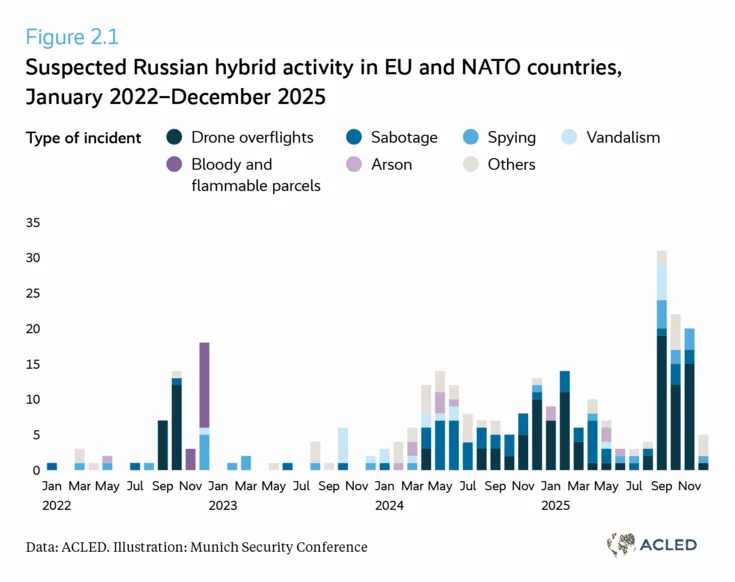
Graph showing the increase in Russian hybrid warfare attacks on Europe since the start of Russia's full-scale invasion in 2022. Note the spike in hybrid warfare attacks since September 2025. Source: Armed Conflict Location and Event Data via the Munich Security Report 2026

It is a combination of capabilities, but it is also that we have not done the exercises. We have not done large-scale, multinational, joint exercises, going against an attack like the ones Ukrainians deal with, in a heavily contested electronic warfare environment. We have not practiced that to scale.

So people know there is a requirement. But it is also a requirement you have to exercise. You have to practice in the most rigorous conditions to sort out who shoots at what, where the sensors are, what the priorities are for what gets protected.

You can never, ever protect everything. There is always a prioritization made by commanders and by civil authorities.

Not everybody is going to be under some famous shield. It does not exist.

This material was produced as part of a project by the Institute of Mass Information with the support of the Ministry of Foreign Affairs of the Netherlands. The content of this publication does not reflect the official position of the IMI or the Kingdom of the Netherlands.

  • ✇Euromaidan Press
  • Hungary votes to remove Orbán-loyal president as Magyar dismantles Fidesz system 
    Hungary’s parliament voted on 13 July to remove President Tamás Sulyok. Elected president in 2024, Sulyok held a largely ceremonial office but could sign legislation.  Sulyok’s removal forms part of the sweeping 17th amendment to Hungary’s constitution, Politico reported. Lawmakers approved the constitutional amendment by 139 votes to six, while Fidesz boycotted the session. The package also introduces a 12-year limit for lawmakers. Sulyok's removal is not yet fi
     

Hungary votes to remove Orbán-loyal president as Magyar dismantles Fidesz system 

14 juillet 2026 à 08:17

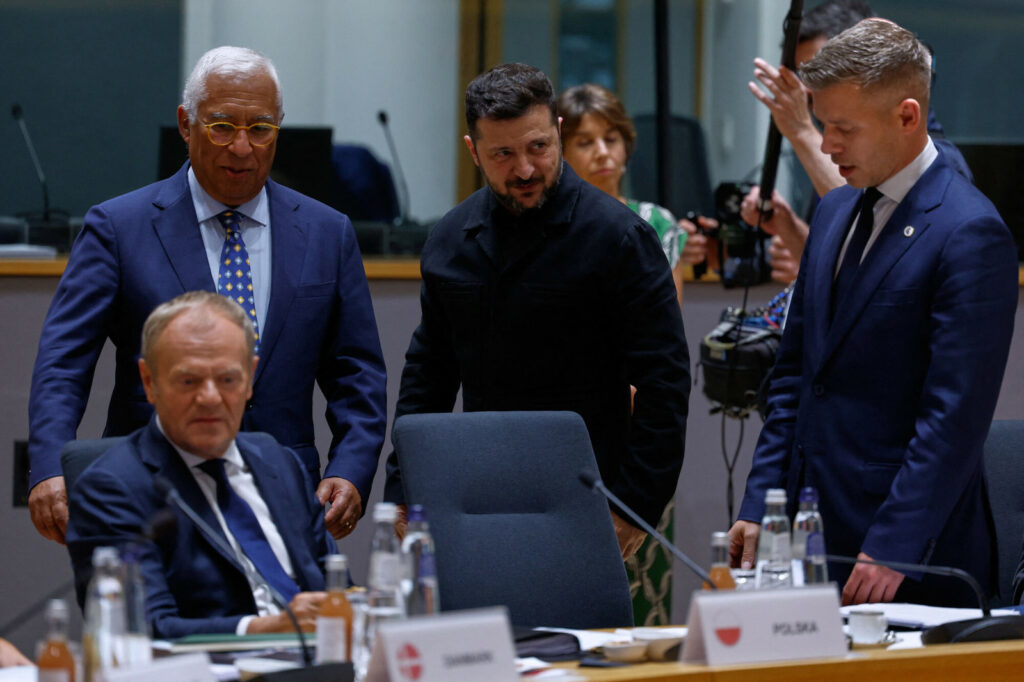
Hungarian Prime Minister Péter Magyar speaks with Ukrainian President Volodymyr Zelenskyy before an EU leaders’ meeting in Brussels.

Hungary’s parliament voted on 13 July to remove President Tamás Sulyok. Elected president in 2024, Sulyok held a largely ceremonial office but could sign legislation. 

Sulyok’s removal forms part of the sweeping 17th amendment to Hungary’s constitution, Politico reported.

Lawmakers approved the constitutional amendment by 139 votes to six, while Fidesz boycotted the session. The package also introduces a 12-year limit for lawmakers.

Sulyok's removal is not yet final. He has five days to sign the constitutional amendment, and Tisza lawmakers have vowed to launch impeachment proceedings if he refuses.

Prime Minister Péter Magyar accused him of consistently siding with his former political patrons.

“Whenever he has had to choose between constitutional principles and the interests of Fidesz, Tamás Sulyok has time and again chosen the interests of Fidesz, and continues to do so to this day,” Magyar said according to Politico.

The vote marks another step in Magyar’s effort to dismantle the political system built during Viktor Orbán’s 16 years in power. Magyar won April’s election after promising to restore the rule of law, curb corruption and end Hungary’s role as Russia's closest partner inside the EU.

What Magyar has changed for Ukraine—and what he has not

For Kyiv, Magyar’s record is an improvement over Orbán’s, but not a clean break.

His government ended Hungary’s two-year veto on EU reimbursements for weapons sent to Ukraine, releasing €6.6 billion and clearing a path for more than €40 billion in delayed claims.

But Magyar has also predicted that Europe will return to buying Russian gas after the war, all while hesitating to commit to a complete decoupling of Hungary from Russian energy.

Still, Magyar’s government also dismissed every Orbán-era intelligence chief and placed Russia hybrid-warfare expert Péter Buda in strategic oversight, seeking to remove pro-Russian influence from services that Hungary’s allies had come to distrust

Hungary still slows Ukraine’s EU accession

Magyar has not fully ended Budapest’s obstruction of Ukraine’s membership bid. In June, Hungary blocked a joint EU letter needed to advance accession talks, threatening Kyiv’s goal of opening all six negotiating clusters by mid-July.

Budapest later dropped its veto on Cluster 6, covering external relations and security policy, which the EU opened on 14 July. By then, however, only two of the six clusters had opened—indicating that Magyar has eased Orbán-era obstruction without entirely abandoning Hungary’s cautious stance on Ukraine's membership.

❌