❌

Vue normale

Ex-soldier recruited by Russia’s GRU was caught meters from a bomb meant for Ukrainian special forces commander, SBU says

25 novembre 2026 à 08:53

SBU officers detain the alleged Russian military intelligence (GRU) agent in Khmelnytskyi

Ukraine's Security Service (SBU) detained an alleged Russian military intelligence (GRU) agent in Khmelnytskyi who tried to blow up the commander of a Special Operations Forces unit, the agency reported on 25 November. Officers caught him a few meters from the planned blast site as he was about to press the remote-control button, the SBU said.

The Khmelnytskyi plot is at least the third the SBU has reported this year in which Russian services recruited someone to kill a target far from the front. A Balkan resident recruited by Russian intelligence tried to shoot a senior Navy officer in Odesa, the SBU said in April. An FSB recruit planted a bomb in a defense company head's car in Kyiv Oblast, the SBU said in August.

How the bomb was set up

The suspect fitted a crossover he had driven from Kharkiv with a car door that already held a homemade bomb, then parked it by the entrance of the commander's apartment block, the SBU said. The device held about half a kilogram of plastic explosive with metal balls, bearing rollers, and lead. The suspect was to set it off from an ambush as the commander walked past. A second car nearby carried a dashcam the GRU could access remotely, set to record the blast for use in psychological operations aimed at destabilizing Ukraine's internal situation, the SBU said.

To prepare, the suspect had rented an apartment nearby and mounted another dashcam on its balcony. Using a disguised device, he tracked the commander's daily routine and movements, the SBU said.

Spotted on Telegram, promised Russian citizenship

The suspect is a former contract serviceman from Kharkiv who left the military in 2024 for health reasons. Russian intelligence spotted him while he was looking for quick money in Telegram channels and then recruited him, the SBU said.

First came a test task: scouting backup command posts and parking spots for Defense Forces vehicles in a regional center. If he killed the commander, his handlers promised to get him to Russia through third countries and grant him citizenship, the SBU said.

SBU investigators notified the suspect of suspicion of high treason committed under martial law. He is held without bail and faces life imprisonment with confiscation of property, the SBU said.

160+ Starlinks for Russian troops got onto Ukraine’s whitelist in Ukrainians’ names—Ukraine has detained the two men suspected of registering them

20 novembre 2026 à 07:33

Security Service of Ukraine officers detain a man suspected of registering Starlink terminals for Russian forces, in a photo released on 19 November 2026

Ukraine's Security Service (SBU) has detained two men suspected of registering Starlink satellite terminals for Russian troops, the agency reported on 19 November. The men allegedly signed the terminals up under other Ukrainians' names and a paper company. That got them past the checks Ukraine uses to keep Russian forces off the network.

Russia keeps up its full-scale war against Ukraine on the ground and with strikes on Ukrainian cities, and both armies have come to depend on Starlink for communications at the front and for drones. In February, Ukraine's defense minister said Starlink would work in the country only on verified terminals, a whitelist meant to cut off terminals Russian forces had used without authorization. To get back on the network, Russia pays Ukrainians to register terminals under real identities, and one earlier recruit in Dnipro verified more than 1,000 that way, the SBU said in July.

Recruited on Telegram, paid per terminal

The two men worked separately, in Mykolaiv and Dnipro, and between them registered more than 160 terminals for Russian forces, the SBU said. Both came to the attention of Russian handlers while looking for easy money in Telegram channels. Both allegedly registered the terminals in other people's names, using services offered by private postal operators.

In Mykolaiv, a 20-year-old man from Odesa allegedly registered terminals from August to October 2026 using local residents' passport data, including that of minors, Ukraine's Prosecutor General's Office said. He got $150 per device from his Russian handler and passed part of it to the people whose names he used, without telling them what the terminals were for. Prosecutors put his tally at more than 100 terminals, the SBU at almost 100.

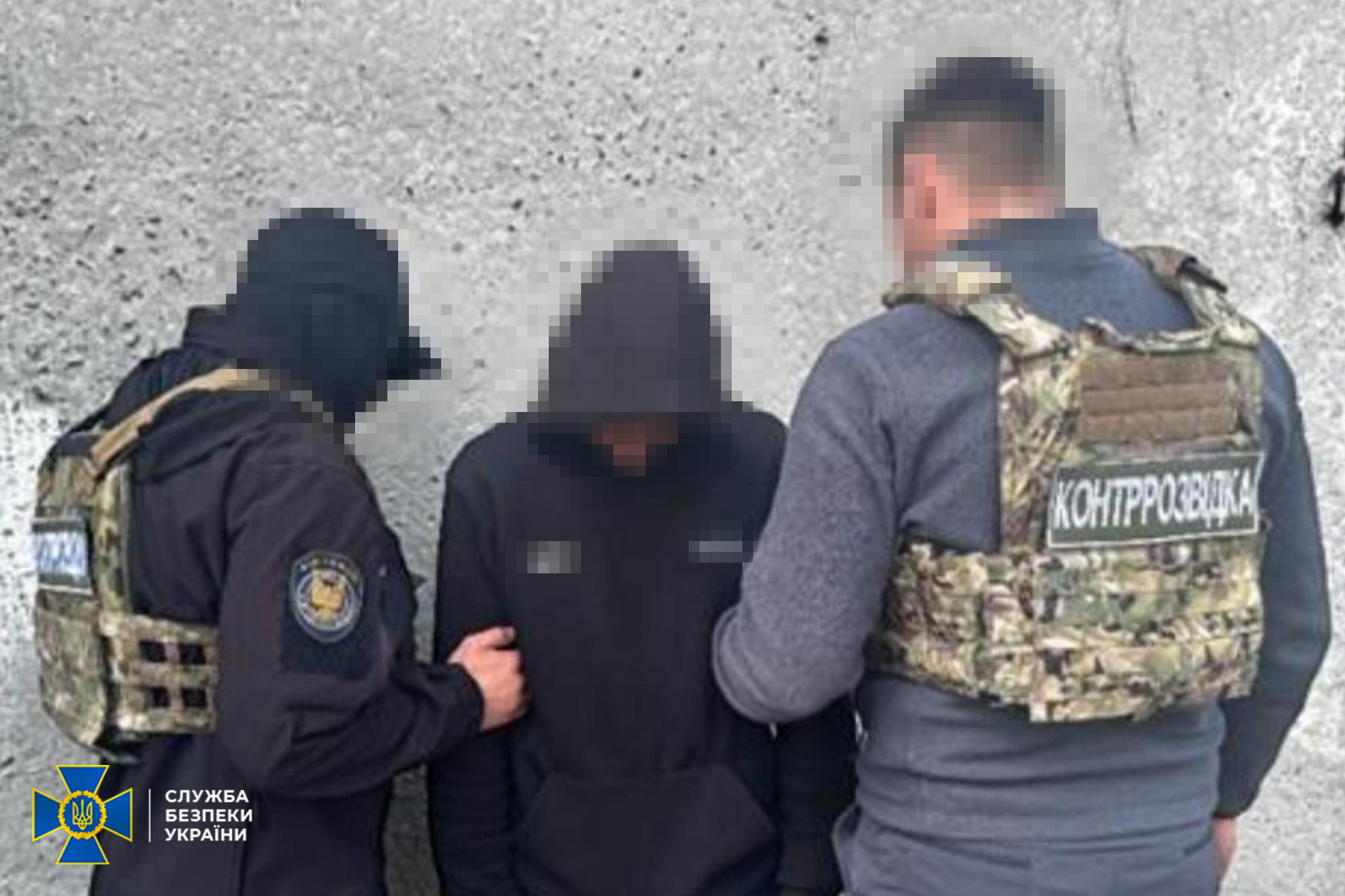
A man suspected of registering Starlink terminals for Russian forces stands between Security Service of Ukraine officers, in a photo released on 19 November 2026
A man suspected of registering Starlink terminals for Russian forces stands between Security Service of Ukraine officers, in a photo released on 19 November 2026. Photo: Security Service of Ukraine

In Dnipro, the suspect is a local mobilized soldier who left his unit without leave, the SBU said. The man, 33, registered more than 60 terminals from February to May 2026, prosecutors said. He allegedly set up a company on paper and gave his handler its electronic signature key, so the terminals could be registered in a Ukrainian firm's name. He got $200 for each verified terminal, prosecutors said.

Terminals blocked, both suspects in custody

The registrations gave Russian forces satellite links in occupied parts of Ukraine, including for coordinating combat operations and controlling strike drones, prosecutors said. The SBU blocked all the terminals and, during searches, seized the suspects' phones with evidence of their work for Russia, the agency said.

SBU investigators served the Mykolaiv suspect a notice of suspicion of treason under martial law and the Dnipro suspect a notice of suspicion of aiding the aggressor state, according to prosecutors. Both are in custody. Under the two articles of the Criminal Code, the penalties range from 12 years to life in prison, the SBU said.

A soldier of Ukraine's Support Forces installs a Starlink terminal, 21 July 2022
A soldier of Ukraine's Support Forces installs a Starlink terminal, 21 July 2022. Illustrative photo: Support Forces of Ukraine Command

The same scheme, case after case

The SBU has announced a string of such cases since the whitelist took effect. In August, it broke up two schemes in Dnipro and Zhytomyr, where suspects drew in acquaintances to register more terminals. In each scheme, a woman had first registered a terminal in her own name.

ukraine detains six suspected russian agents including teen arsonist one russian-paid detained sbu fsb saboteur arrested says suspects were recruited telegram ordered target railway military infrastructure 22 security service (sbu)
Explore further

From “easy money” to murder: Russia escalates recruitment of Ukrainians for terrorist attacks inside Ukraine, police warn

Russia has also leaned on prisoners' families. In February, Russia was threatening relatives of captured Ukrainians into registering terminals in their own names, Ukraine's Coordination Headquarters for the Treatment of Prisoners of War said.

Spotters, saboteurs, and arsonists in three days of SBU cases

The Starlink case is one of several the SBU announced between 18 and 20 November. On 18 November, the SBU said it had detained a man near the front line in Donetsk Oblast suspected of directing Russian fire at Ukrainian combat positions, mainly drone command posts. The same day, it said a court had sentenced two agents of Russia's Federal Security Service (FSB) to 15 years each. In December 2024, they blew up a railway track in front of an approaching freight train in Khmelnytskyi Oblast.

On 19 November, the SBU said it had detained a woman suspected of spotting targets in Kherson for Russian strikes from her own yard. On 20 November, it said it had detained, with the National Police, five people suspected of setting fires for Russia in Kyiv, Kropyvnytskyi, Odesa, and Ivano-Frankivsk. Each of the four announcements says Russia found its recruits through Telegram.

❌