Vue normale

  • ✇Euromaidan Press
  • Russia’s Arctic bases sit near-naked as air defenses vanish to guard Moscow and refineries burning inland
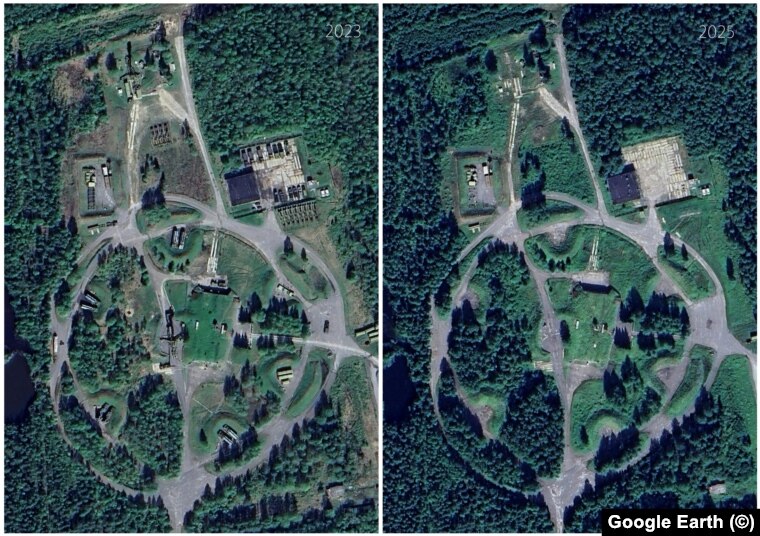
    Russia has stripped much of the air defense from its far-north bases, satellite imagery sourced by RFE/RL shows. Some units appear to have shifted toward areas Ukraine's drones can now reach. One analyst ties the shift to a war that forces Moscow to guard more ground with fewer launchers and crews. Ukraine's long-range drones now reach ever deeper into Russia, turning places once treated as safe into potential targets and stretching a finite pool of defenses across an enorm
     

Russia’s Arctic bases sit near-naked as air defenses vanish to guard Moscow and refineries burning inland

15 juillet 2026 à 04:55

russia's arctic bases sit near-naked air defenses vanish guard moscow refineries burning inland · post defense site near severodvinsk northwestern russia 2023 (left) 2025 (right) its missile systems removed satellite

Russia has stripped much of the air defense from its far-north bases, satellite imagery sourced by RFE/RL shows. Some units appear to have shifted toward areas Ukraine's drones can now reach. One analyst ties the shift to a war that forces Moscow to guard more ground with fewer launchers and crews.

Ukraine's long-range drones now reach ever deeper into Russia, turning places once treated as safe into potential targets and stretching a finite pool of defenses across an enormous territory. Moscow appears to add cover in one region by thinning defenses in another. As long as Ukraine keeps destroying Russian air defenses in occupied Crimea, that trade only tightens, and the far north looks like the ground Russia is most willing to leave open.

Russia's Arctic missile sites emptied out

Around the Rogachevo air base on Russia's Novaya Zemlya islands, most air-defense equipment has disappeared from a missile site operating there since at least August 2015. A 6 July image records the change. Launchers and radars stood there in September 2019. By this July, the site read close to bare.
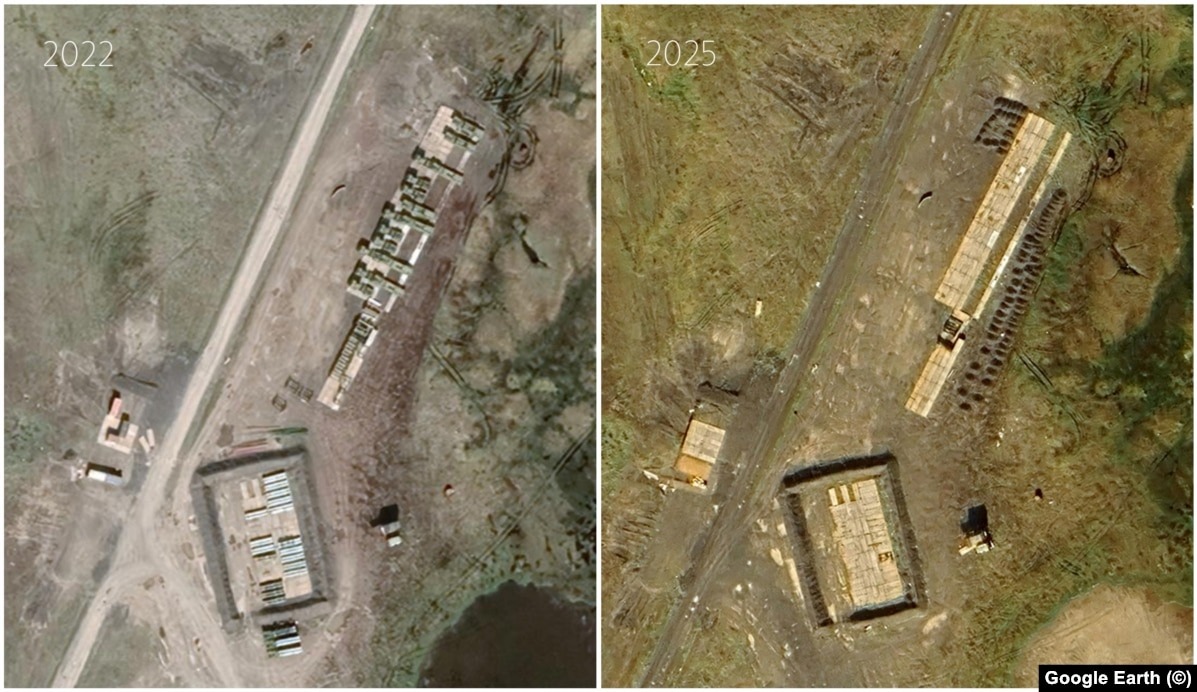
russia's arctic bases sit near-naked air defenses vanish guard moscow refineries burning inland · post fleet transporter vehicles missile storage revetment near rogachevo base novaya zemlya archipelago 2022 (left) 2025
A fleet of transporter vehicles and a missile storage revetment near the Rogachevo base in Russia's Novaya Zemlya archipelago, in July 2022 (left) and August 2025 (right). Satellite image: Google Earth via RFE/RL

The submarine city lost much of its shield

In Severodvinsk, on the White Sea, Russia builds and repairs its nuclear submarines. Several decades-old air-defense positions around the city now appear vacant. Satellite images show roughly 24 S-300 and S-400 launchers gone from specialized positions around the city.

The Barents Observer said the death of an S-400 commander offered a possible clue that personnel from Severodvinsk had deployed elsewhere. Lieutenant Colonel Vladimir Spiridonov was killed in occupied Crimea in April 2024. His remains went home to the far north, where he was buried.

At least some of the missing launchers appear to have been redeployed. New batteries have appeared beside likelier targets. 
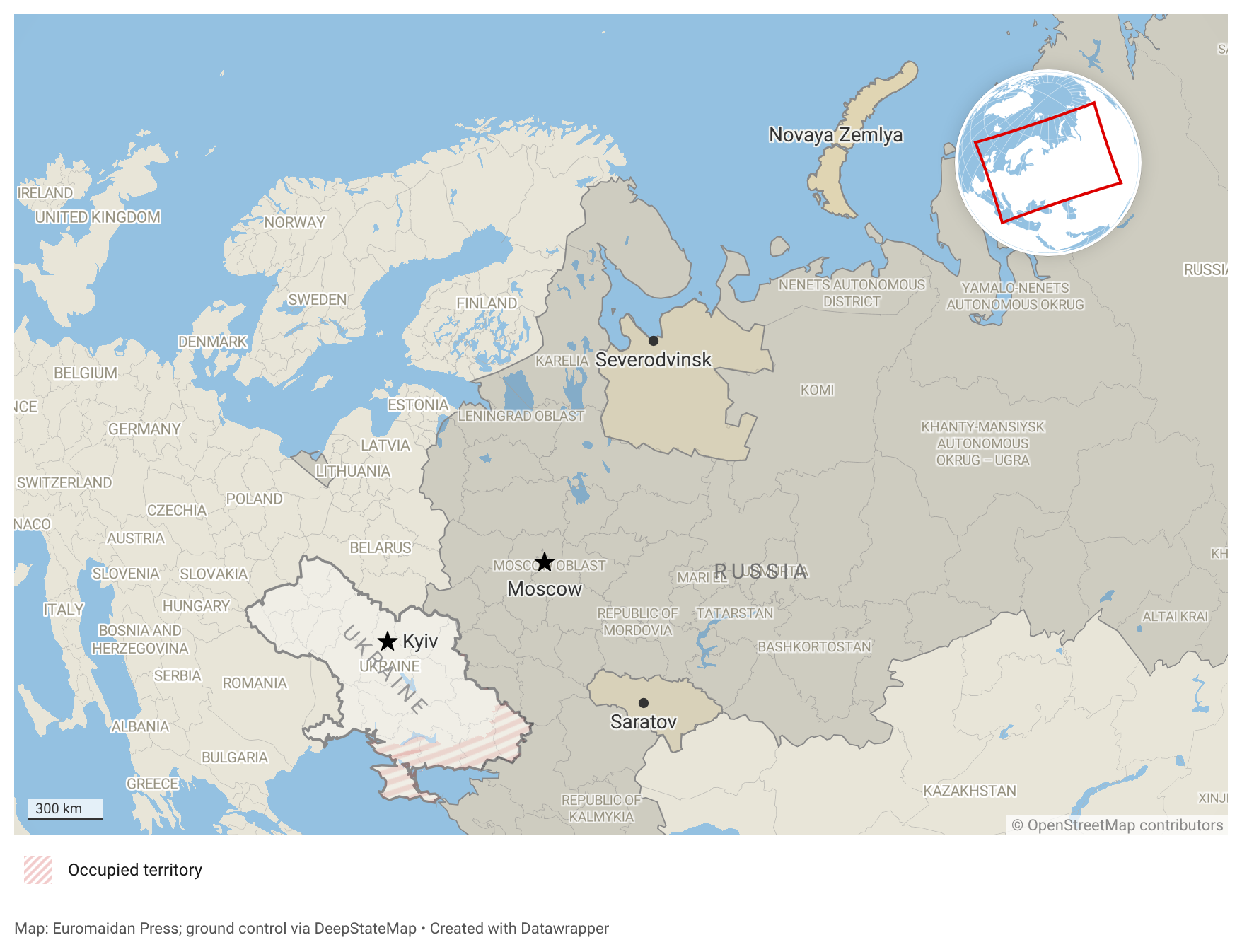
By the Saratov refinery in Russia's southwest, an empty field filled with launch vehicles, their tubes raised. Drones have struck that refinery repeatedly since early 2025. In Moscow, crews have seized park land in the capital to host S-400 batteries these past weeks.
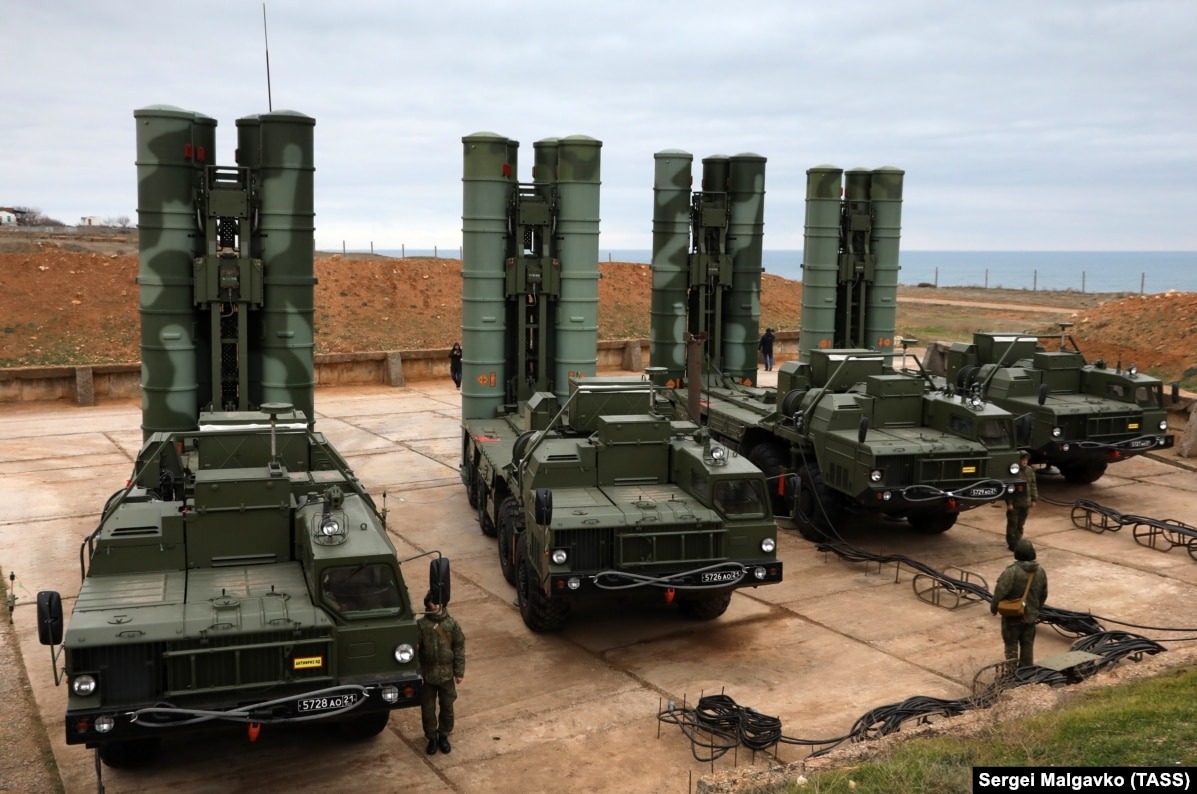
russia's arctic bases sit near-naked air defenses vanish guard moscow refineries burning inland · post s-400 defense missile launcher vehicles 2018 file sergei malgavko/tass rferl ukraine news ukrainian reports
S-400 air defense missile launcher vehicles in a 2018 file photo. Illustrative photo: Sergei Malgavko/TASS

Open-source investigations estimate that about 60% of Russia's S-300 and S-400 systems have left their pre-2022 positions. Air defense has mostly stayed around the country's nuclear silos and its long-range bomber bases.

professor at the Norwegian Institute for Defense Studies, Katarzyna Zysk, reads the far-north drawdown as "a growing mismatch between the targets Russia must protect and its available launchers, interceptors, and trained personnel." The pullback suggests Moscow sees no big strike coming against the far north, and judges it can cut protection there without unacceptable risk.

❌