❌

Vue lecture

Ukraine’s bomber drones, ones that dropped ground robots in its recent Donetsk counteroffensive, are getting 2.4-kilogram jammer to shield them from FPVs
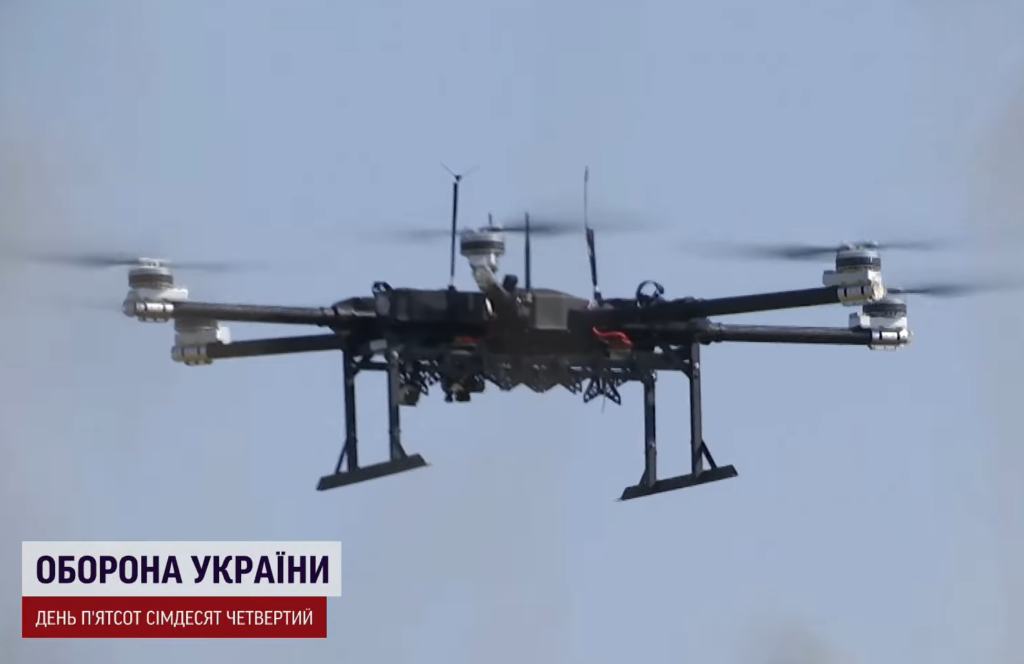
A Ukrainian firm is testing a jammer light enough to ride on a heavy bomber drone and shield it from the enemy FPVs that hunt it. Aura-Ukraine has begun final tests of the system, called Aura 3K mini, the Dignitas Fund, a charity developing it with the manufacturer, Oboronka reports.

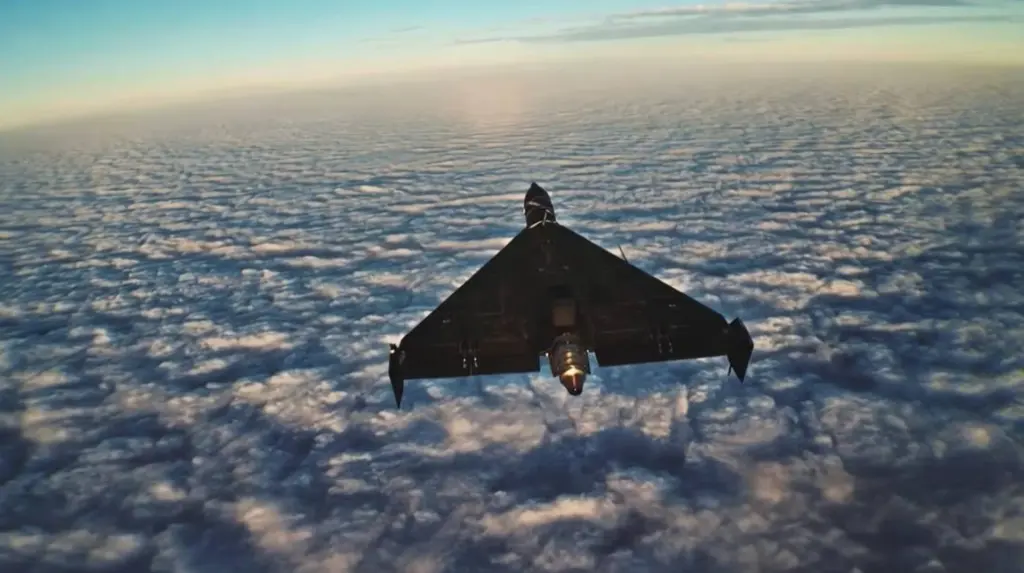
The bombers it is built to protect have become some of Ukraine's most valued drones. In the Donetsk operation last month, heavy bombers dropped kamikaze ground robots more than 10 kilometers behind Russian lines. The same weapon has been fitted with guided bombs that strike at long range with high precision.

At the same time, heavy bombers are large, making them prime targets for Russia. Keeping them in the air, and out of enemy hands, is the point of the new shield.

Two jammers cover 360 degrees

Aura 3K mini wraps the drone in a spherical, 360-degree cover using two broadband jammers, the fund says. Two emitters, not one, close the blind angles a single jammer would leave.

They work across the 2.1 to 2.8 GHz band, enough to disrupt FPV drones without cutting the bomber's own Starlink link. The whole device weighs about 2.4 kilograms.

"Radiation-pattern tests start on the front line in the coming days," the fund's press service says, and if they succeed, the system is set for serial production.

The fund moves to automate it

The next step is to make the jammer smarter, the fund says. It wants an auto-on function that fires only when a threat is detected, so the bomber does not give away its position with constant emission.

The team also plans to adapt Aura 3K mini to Vampire-type bombers, the heavy night drones that Russian troops nickname "Baba Yaga". That would widen the shield's reach across more of Ukraine's bomber fleet.

Russia hunts the Baba Yaga

The nickname points to a fairytale Slavic witch who flies by night. The real thing has been hard for Russia to counter: in 2024, a Ukrainian night bomber was often impossible to jam and, by one account, could be destroyed only with a flamethrower. By 2025, Russia was offering its soldiers 10 days' leave for capturing a Baba Yaga it could not build itself.

  •  

Ukraine’s top general wants to end Soviet rules in army. But president’s wartime headquarters may still hold reforms, commander says

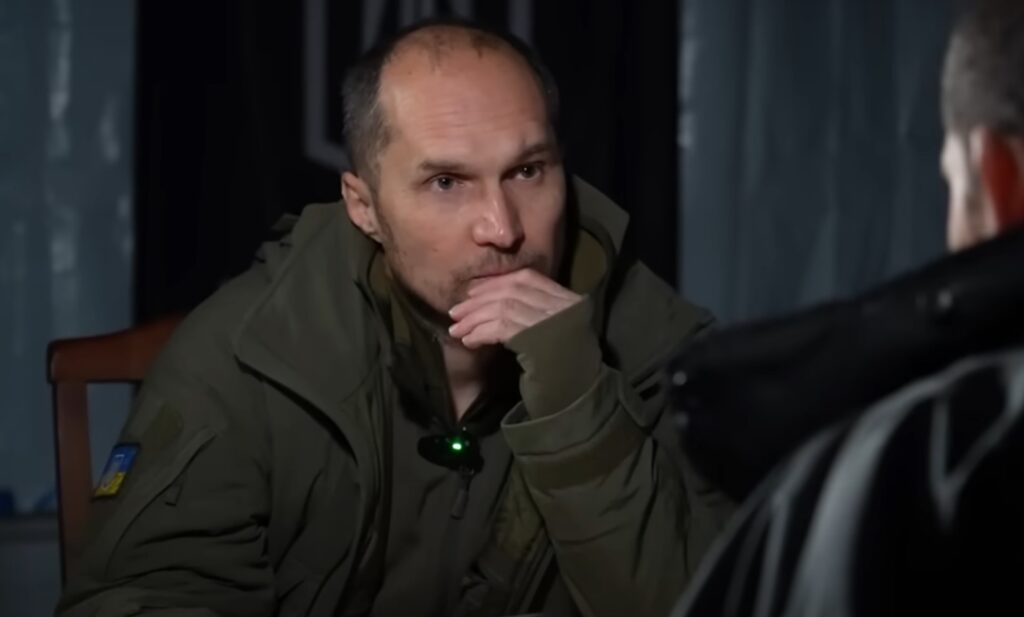
Ukraine's top general is held responsible for the entire army but cannot freely choose the people who run it, says drone company commander Yurii Butusov, according to Radio NV. Commander-in-Chief Mykhailo Drapatyi still lacks full power to form his own command team, with key appointments controlled by the president's wartime lead, which unbalances the force, he believes.

Drapatyi was named a commander-in-chief in July. Since then, he has moved fast where he can: cutting more than 30 obsolete, Soviet-era General Staff orders, pressing to give combat-tested sergeants real authority, and opening a review of the officer corps to weed out those without combat experience.

For the reform of the force, Butusov argues, he has to be able to build his own team, and that is just what he is not being allowed to do. Key appointments, from the Air Force to the Air Assault Forces, stay under the direct control of the Supreme Commander's headquarters.

The headquarters keeps control

"One person should be responsible for managing the General Staff. It is Mykhailo Drapatyi, if he is given the chance to really be the sole commander-in-chief," Butusov says.

Any leader, he continues, has the right to build a structure to his own standards. But when people are slotted into the chain of command without the commander's knowledge, it breeds dysfunction.

"If there are political appointments to the General Staff without his knowledge, to the commanders of the branches without his knowledge, there will be problems, opposition, internal conflicts," he says, the kind that have dogged the army for years.

One deputy stays 'acting'

The limits show in Drapatyi's own inner circle, Butusov says. One of his first moves was to name Serhii Sobko deputy chief of the General Staff, yet Sobko remains only "acting", the prefix never lifted.

Only the president, as supreme commander, can finalize such appointments, he notes, and the delay points to "artificial restraints." Drapatyi has been allowed to shape the Ground Forces, by his account, while other structures remain under the headquarters' control.

Blame outruns the power

The result, in Butusov's words, is a commander-in-chief who carries the responsibility without the authority: the public and leadership hold him answerable for an army he cannot fully command.

  •  

“No alien quantum modems”: 1 to 3 concealed devices in Kyiv may be why Russian drones keep hitting so precisely, Ukraine’s top tech adviser says

ukraine spent three years learning catch russian drones—so russia made fly faster · post geran-3 jet-powered attack drone wild hornets c1c840787fca380485636007cf683d71 news ukrainian reports

A few hidden transmitters may be sitting somewhere in Kyiv, switching on just long enough to steer Russian drones onto their targets. Presidential adviser Serhii Beskrestnov, known as Flash, says one to three concealed enemy repeaters may be operating in the capital, giving Russia a brief online channel to guide jet-powered Gerans onto precise targets.

He calls the devices MESH repeaters, compact modems that relay a short control signal to a Geran at the moment of attack, a channel Ukraine has been testing electronic warfare against for months. As long as they operate, he warns, sealing the city with jammers will not work.

Flash makes the case

"I now insist that the enemy's MESH radio repeaters are being switched on in Kyiv, providing a temporary, short-term control channel for jet-powered Gerans to adjust strikes," Flash says.

He keeps the number low: "Maybe 1 to 3. Such repeaters are hard to find, but we have to search." As evidence, he points to the guided strike on the headquarters of Ukraine's Security Service. A Russian agent, he said then, likely switched on a MESH relay within five kilometers of the target for the length of the attack.

The wreckage shows no other hidden link, he adds: "No LTE, no Rassvet, no alien quantum modems."

Jamming alone won't shield Kyiv

The stakes, in his telling, run past the bridges.

"As long as online control of the drones exists, not only the bridges but the air-defense assets on them will be under threat," Flash explains, noting that a Gepard anti-aircraft gun on a bridge crossed by tens of thousands a day cannot be hidden.

Without a stable channel right up to the impact point, he argues, a drone cannot strike a bridge pier or cable precisely. He leaves room for doubt, ending, "Let me be wrong about the repeaters." Yet in the whole war, he adds, he has "never once been wrong" in his technical reads of the enemy.

  •  

Ukraine’s $33 veterans’ gym subsidy drew 800,000 uses. Now it is gone, squeezed by war and stalled reforms, holding up $20 billion in aid

rehab-center2

Ukraine has stopped paying veterans to go to the gym because of the economic crisis looming in the country, the war, Russian strikes, and the lack of reforms needed to receive extra funds from the EU. The Veteran Sports program, which provided veterans and combat participants with about $33 per quarter toward a nearly monthly gym membership, was suspended on 1 October after the state found no funds for it, the Ministry of Veterans Affairs said.

The suspension is a telling sign of Ukraine's budget squeeze, and the ministry puts it plainly: defense comes first, so the money for everything else runs short. It fits a wider government decision to freeze non-essential spending and fund only the army, pensions, and public wages.

The program proved far more popular than planned, drawing more than 800,000 users and costing over double its budget.

Defense takes the money

"The main priority of state spending remains the country's defense. Under these conditions, the state budget's ability to finance other areas is limited," the ministry said.

Launched in 2026 with about $13 million for an expected 100,000 recipients per quarter, and roughly 300,000 applications over three, the program instead saw more than 800,000 uses. Payments passed $27 million, more than twice what was set aside.

The crisis runs deeper

The squeeze has two main drivers. Russia's intensifying strikes on Ukraine's energy and infrastructure are pushing the war's cost higher and battering the economy.

And billions in Western money sit on hold: Kyiv has struggled to complete the reforms the EU set out before releasing roughly $20 billion in aid, and the prime minister has admitted that part of it is late because Ukraine missed commitments to its partners.

The ministry plans a 2027 restart

Ukraine intends to bring the program back in 2027, this time for good, said Deputy Veterans Minister Ruslan Prykhodko.

"We have to account for real demand, fix the shortcomings we saw this year, and make the use of funds more targeted," he said.

In next year's budget, Ukraine would provide significantly more funds, he added. In the meantime, the ministry says it is talking to the sports community and businesses about covering the gap for veterans, with concrete proposals to come.

  •  
❌