❌

Vue lecture

Ukraine shoots down Russian drones by hundred thousand: 350,000 this year, filmed and verified hit by hit in DELTA
money engineering what stands between ukraine russia's fastest drones zelenskyy says · post russia’s new “geran-4 seeker” shahed variant geran-4 news ukrainian reports

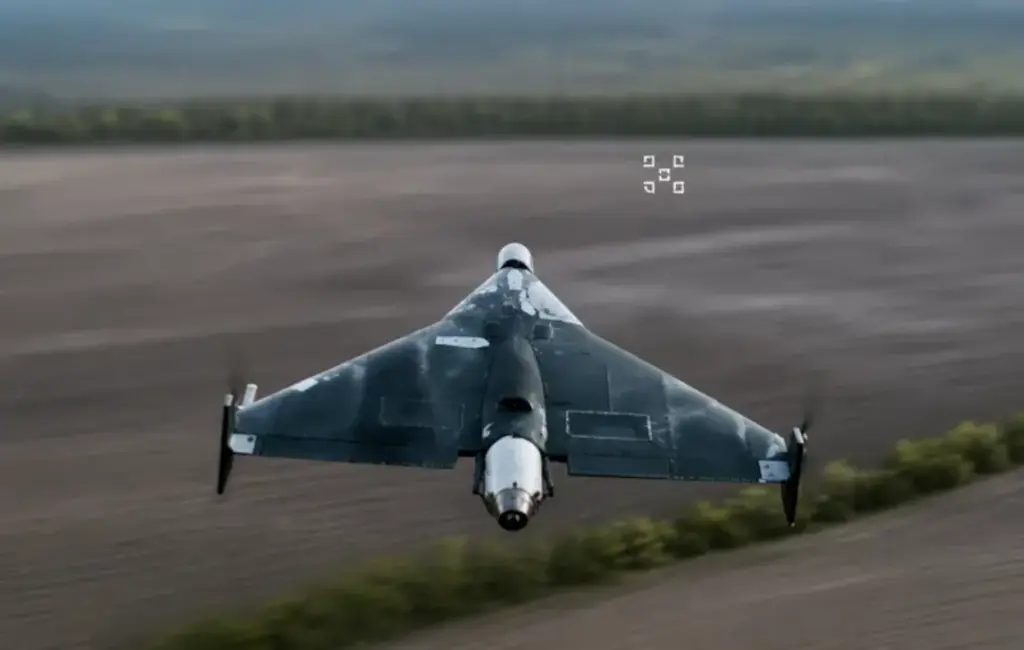
Ukraine's forces have shot down more than 350,000 Russian drones since the start of the year. The count, some 220,000 fixed-wing drones, 100,000 quadcopters, and 31,000 long-range Gerans, was filmed hit by hit in the DELTA combat system and verified by the Brave1 defense-innovation cluster, the Defense Ministry said.

Meanwhile, Russia is now threatening NATO countries directly, its drones probing Polish and Baltic skies, and those countries manage to down only a small fraction of what crosses their borders. In one incursion, Poland shot down just four of about 19 Russian drones.

Ukraine's 350,000 is the record of a force that has had to master drone defense at an industrial scale, night after night.

The tally runs to hundreds of thousands

Most of the kills belong to the Defense Forces' unmanned-systems units, which downed more than 320,000 Russian fixed-wing and copter drones. Those units, together with mobile fire groups and army aviation, also brought down faster Geran-type attack drones.

The pace has been relentless: in August alone, Ukraine destroyed some 35,000 fixed-wing drones and nearly 24,000 copters, the ministry said.

DELTA verifies every hit

Every downing is logged and confirmed in DELTA, the digital system Ukraine uses to run the battlefield, and which the ministry calls a key to its edge over Russia. Filming and verifying each kill lets commanders study how it was done and scale up whatever works.

The purpose is concrete: knocking down fixed-wing drones blinds Russian reconnaissance, and blunts strikes on cities and critical infrastructure, while downing copters keeps Russia from finding and hitting front-line positions. Each drone stopped, the ministry says, is potentially the life of a Ukrainian soldier or civilian saved.

The same threat now shadows NATO

That threat is spreading. Prime Minister Donald Tusk told Poland's parliament that intelligence points to Russian plans for drone and missile strikes on countries backing Ukraine.

The allies being warned are the ones that have struggled to stop even a handful of drones, while Ukraine, out of necessity, has learned to bring them down by the hundred thousand.

  •  

Ukraine shut down this Samara refinery in June—now its drones are back, and both distillation units are burning again

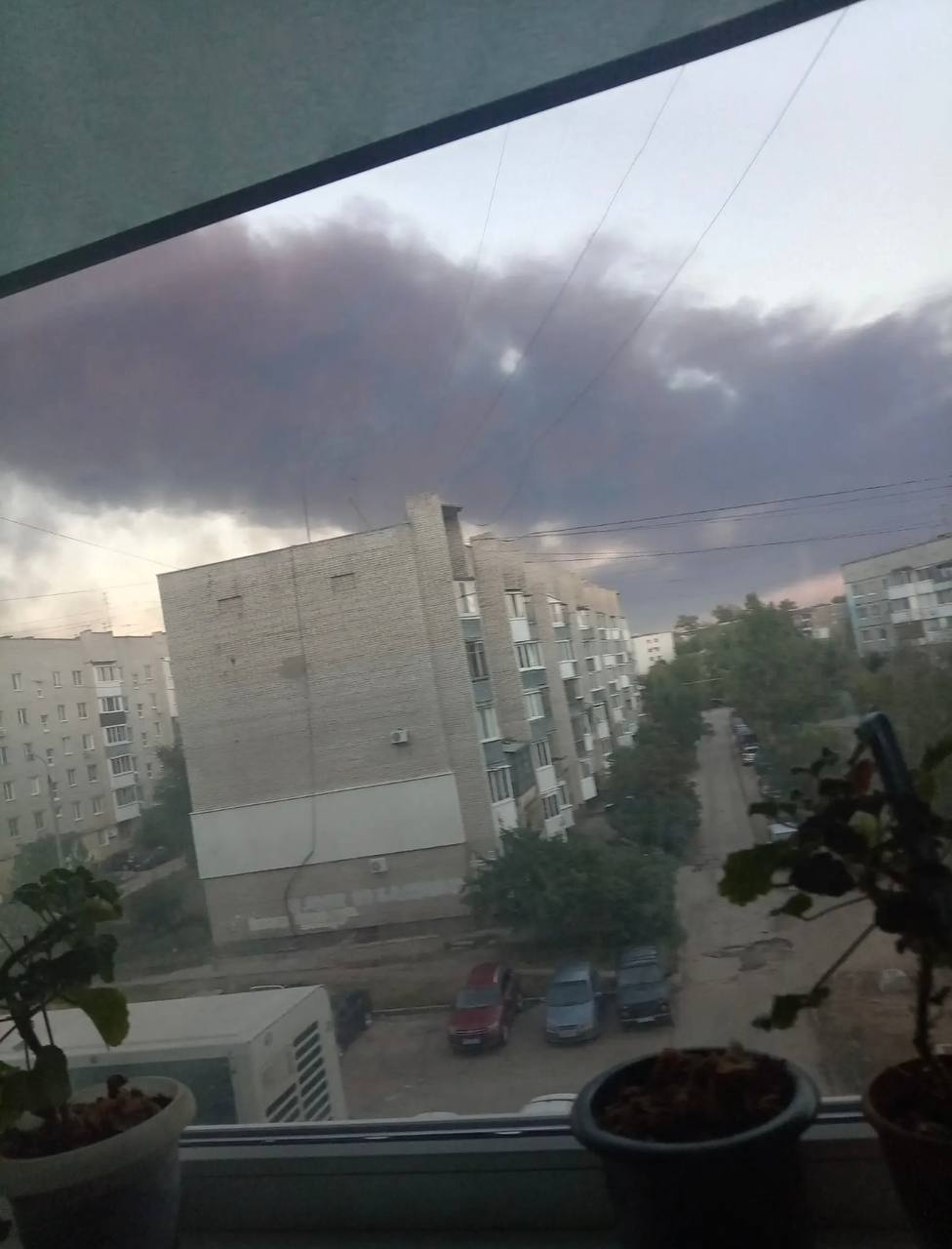
one refinery night moscow ufa now samara—ukraine working through russia's fuel chain · post smoke plume burning kuibyshev stretching across samara skyline 22 2026 exilenova 5877644049043362820 ukraine news ukrainian reports

Ukrainian drones struck Rosneft's Kuibyshev refinery in Samara overnight on 22 September, hitting two primary crude-processing units and triggering a large fire, Ukrainian drone and missile maker Fire Point confirmed. The strike is part of Ukraine's ongoing campaign against the fuel infrastructure that sustains Russia's war—the same plant had to halt crude processing after a drone attack in June. The attack came one day after US President Donald Trump for the second time in a week urged Ukraine's leader, Volodymyr Zelenskyy, to stop the refinery campaign.

Ukraine strikes Russian refineries to degrade the fuel supply that funds and sustains Russia's invasion—every barrel of diesel or aviation fuel that never leaves a wrecked distillation column is a barrel that cannot power Russian tanks, aircraft, or export revenue. With nearly half of Russia's refining capacity now offline, the campaign has become one of Ukraine's most effective tools for raising the economic cost of the war. 

FP-1 drones hit both primary processing units

Fire Point said its FP-1 drones struck the Kuibyshev refinery, hitting the AVT-4 and AVT-5 atmospheric-vacuum distillation units—the plant's primary crude-processing installations. A large fire broke out on the refinery grounds. The Kuibyshev refinery is part of Rosneft and has a designed processing capacity of about 7 million tons of crude oil per year. It is located more than 900 km from the war zone in Ukraine.

one refinery night moscow ufa now samara—ukraine working through russia's fuel chain · post smoke kuibyshev fire seen residential neighborhood samara 22 2026 exilenova 5877644049043362825 ukraine news ukrainian reports
Smoke from the Kuibyshev refinery fire seen from a residential neighborhood in Samara, 22 September 2026. Photo: Exilenova+
In 2024, the plant processed 4.7 million tons of crude and produced about 800,000 tons of gasoline, 1.4 million tons of diesel, and 1.3 million tons of fuel oil.

Samara, moment of attack pic.twitter.com/U47yrene3z

— Exilenova+ (@Exilenova_plus) September 22, 2026

Ukrainian Telegram channel Exilenova+ began reporting explosions and air defense activity in Samara Oblast at 3:50 a.m. By 4:24 a.m., the channel posted videos showing a night fire at the refinery. OSINT channel World Militaries identified the AVT-5 unit as the initial fire site.

one refinery night moscow ufa now samara—ukraine working through russia's fuel chain · post geolocation samara fire worldmilitares / telegram osint tg 5010492582932450907 ukraine news ukrainian reports
Geolocation of the Samara fire. Source: world.militares / Telegram

Russian news Telegram channel Astra separately confirmed the fire at the Kuibyshev refinery.

By morning, the fire was still burning. The smoke plume stretched about 100 km across Samara Oblast, Exilenova+ reported.

Smoke from the Kuibyshev Oil Refinery in Samara has already stretched for 100 km across Russian territory. pic.twitter.com/U5KQ0v1eTW

— Exilenova+ (@Exilenova_plus) September 22, 2026

The Kuibyshev refinery stopped processing crude in June 2026 after Ukrainian drones hit its AVT-4 and AVT-5 units—the same pair now struck again. Each unit processes about 10,000 tons of crude per day, or roughly 73,000 barrels. The refinery had also suspended operations after a drone attack in August 2025.

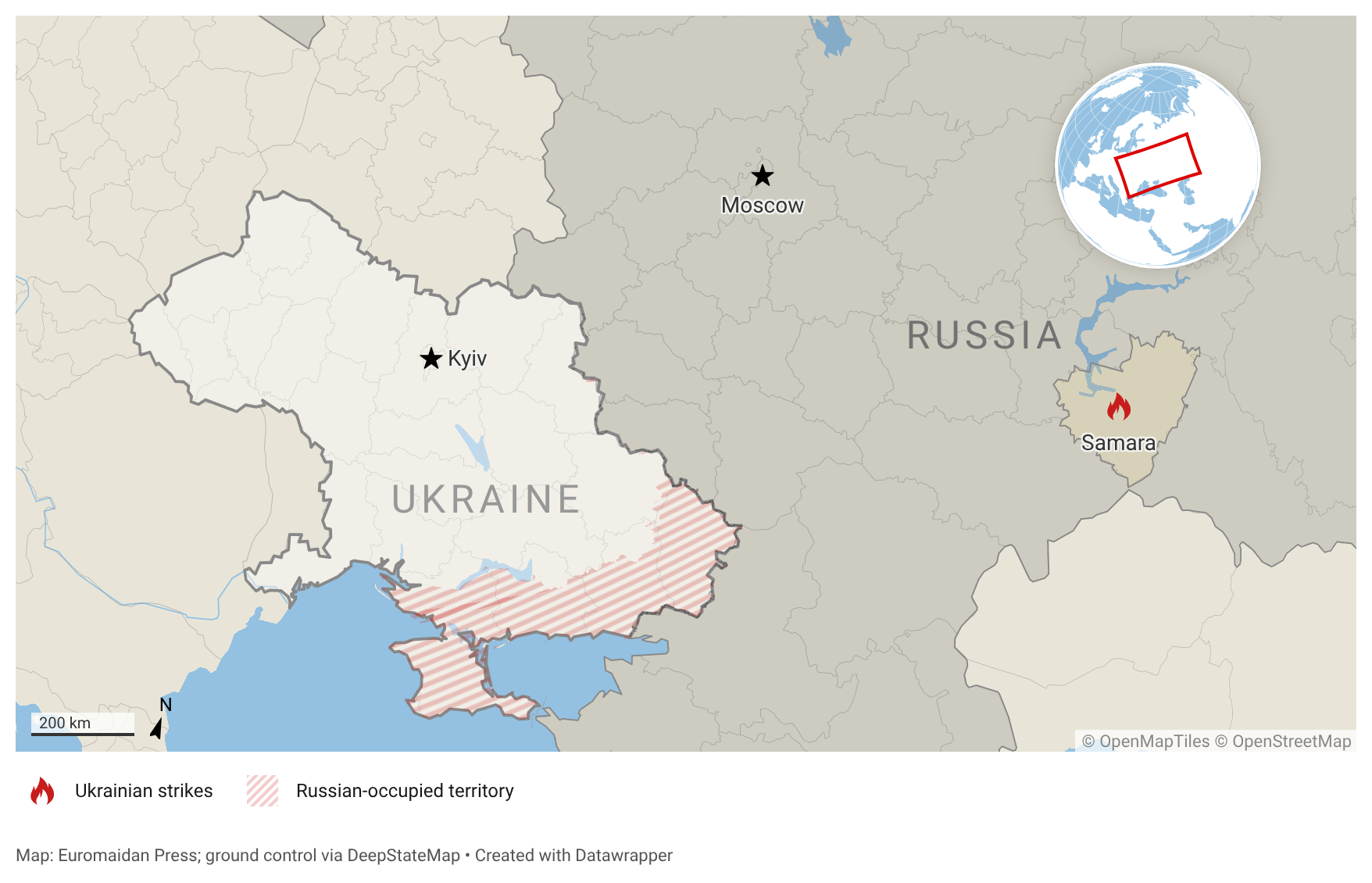
Samara on the map reusable

Other targets in the overnight wave

Exilenova+ also reported that Ukrainian forces struck a military base in the city of Pochep in Bryansk Oblast overnight, with fire observed at the site. Residents of Tolyatti in Samara Oblast reported explosions, and witnesses suggested the Tolyattikauchuk synthetic rubber plant had been hit, Suspilne reported.

Samara Oblast Governor Vyacheslav Fedorishchev confirmed the attack, claiming Russian air defenses intercepted "dozens of drones." He said drones "targeted industrial enterprises" but did not name which ones. Russia's Defense Ministry claimed 297 Ukrainian drones were intercepted over 14 oblasts and occupied Crimea.

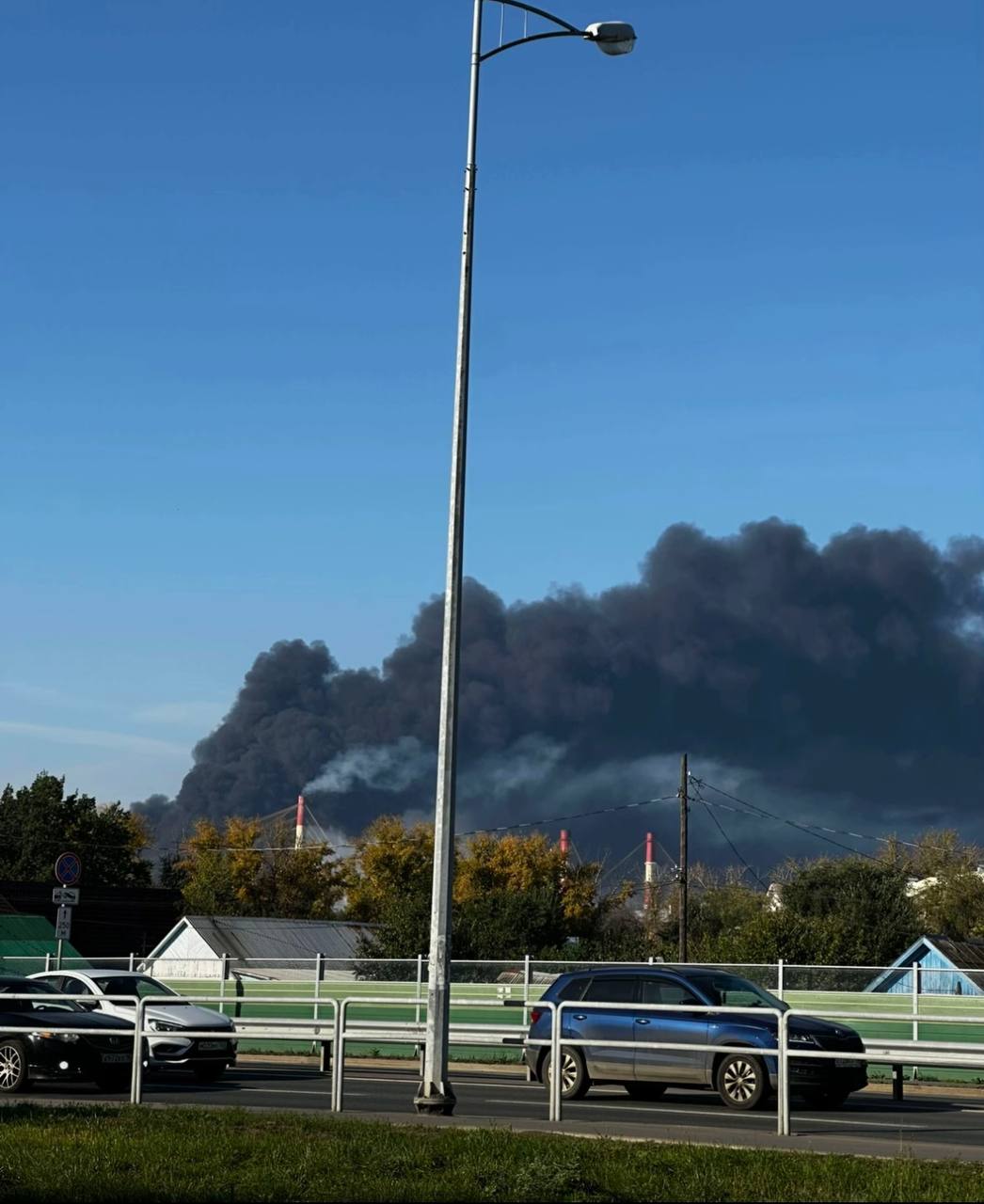
one refinery night moscow ufa now samara—ukraine working through russia's fuel chain · post black smoke kuibyshev fire seen highway near samara 22 2026 exilenova 5877644049043362821 ukraine news ukrainian reports
Black smoke from the Kuibyshev refinery fire seen from a highway near Samara, 22 September 2026. Photo: Exilenova+

Part of an ongoing campaign against Russian fuel infrastructure

Ukraine's General Staff confirmed strikes on both the Bashneft-UNPZ refinery in Ufa and the Kuibyshev refinery in Samara, with fire observed at both sites. Ukraine has been striking Russian refineries continuously for months—hitting targets in Saratov and Volgograd on 11 September, Slavyansk-na-Kubani on 14 September, Syzran on 15 September, Yaroslavl on 17 September, and Ufa on 21 September, the night before the Kuibyshev strike. Earlier, the General Staff said the campaign has disabled 45% of Russia's oil-refining capacity. The strikes have also pushed Russia's fuel crisis into Central Asia, where shortages forced Kazakhstan to seek emergency supplies.

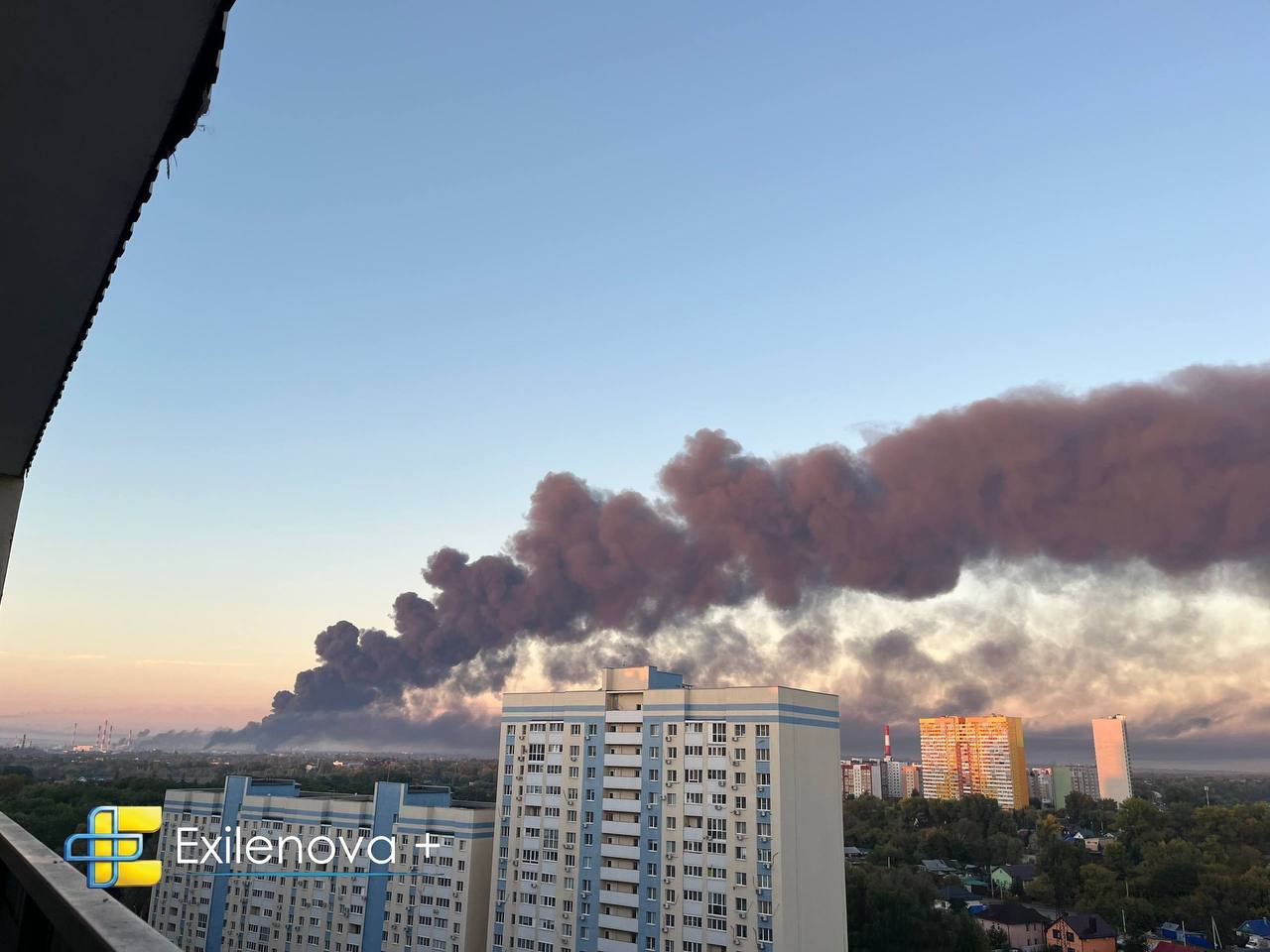
one refinery night moscow ufa now samara—ukraine working through russia's fuel chain · post smoke plume kuibyshev fire seen high-rise samara 22 2026 exilenova 5877644049043362770 ukraine news ukrainian reports
Smoke plume from the Kuibyshev refinery fire seen from a high-rise in Samara, 22 September 2026. Photo: Exilenova+

Trump urged Zelenskyy to stop the campaign for the second time in a week during their 21 September call, telling him "don't hit diesel fuel" and blaming Ukrainian strikes—not the Iran conflict—for rising US diesel prices.

Each plant hit again after a previous shutdown means Russia's repair cycle cannot keep up—the forced downtime compounds, diesel exports are already banned, and gasoline production is falling faster than alternative supply from Kazakhstan or anywhere else can replace it.
  •  

Russia’s mercenaries brought a Ukraine-war drone to Mali. It came down near al-Qaeda’s fighters

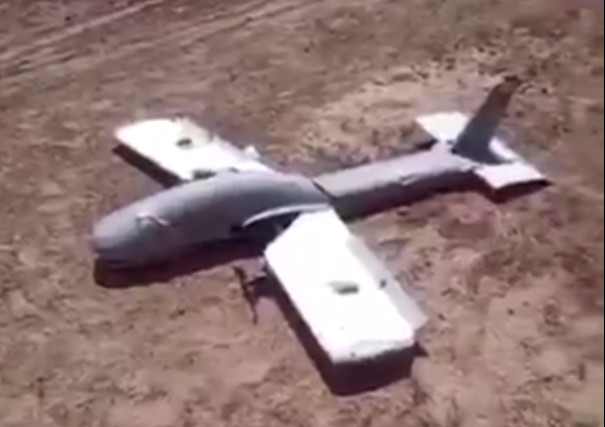
Molniya UAV in Mali

Russia's Africa Corps deployed a Russian-made kamikaze drone against al-Qaeda-linked insurgents in central Mali before losing the aircraft, Ukrainian defense outlet Militarnyi reported. A local monitoring account says fighters brought it down as the mercenaries pulled back from the Dioura area after more than a week under siege.

Moscow's mercenary arm in Africa answers to the same Defense Ministry that runs its war on Ukraine, and its military supply line into Africa keeps expanding. This lands now because Ukrainian drone crews are helping the forces fighting Russia there, so tactics both sides honed in Ukraine are now surfacing in the Sahel.

A Russian war drone over the Sahel

The monitoring account Alerte Sahel reported that Africa Corps troops, encircled in their camp for over a week, fired the drone at positions of JNIM—the al-Qaeda-linked Group for the Support of Islam and Muslims—before breaking out and fleeing. The published video shows a damaged fixed-wing drone with an elongated fuselage and a straight wing. Alerte Sahel first called it an Orlan-10. Militarnyi identified it by its shape as a Molniya. The footage shows the aircraft only after it fell and does not reveal how it went down, so the shootdown claim rests on Alerte Sahel's account—which adds that the jihadists are "increasingly developing skills in mastering attack drones."

The Molniya is a cheap, simple fixed-wing kamikaze drone with a range of about 30-40 km. It carries a warhead of up to 7 kg and also flies reconnaissance and artillery-spotting runs.

Fighting around Dioura

Combat near Dioura, in Mali's Mopti region, has run since 10 September 2026, when JNIM struck Malian army positions. Mali's General Staff said it launched air-ground operations in response. It later reported on 17 September that its units, backed by partners, kept up their operations around the town. On 8 September, JNIM had ambushed an Africa Corps and Malian convoy near the village of Kaka in the same region, killing 13 Russian and Malian troops between them.

  •  
❌