Hiker Dies After Lightning Strikes ‘Tin Shack’ on Utah Mountain

© Universal Images Group, via Getty Images

© Universal Images Group, via Getty Images

© Jeff Chiu/Associated Press

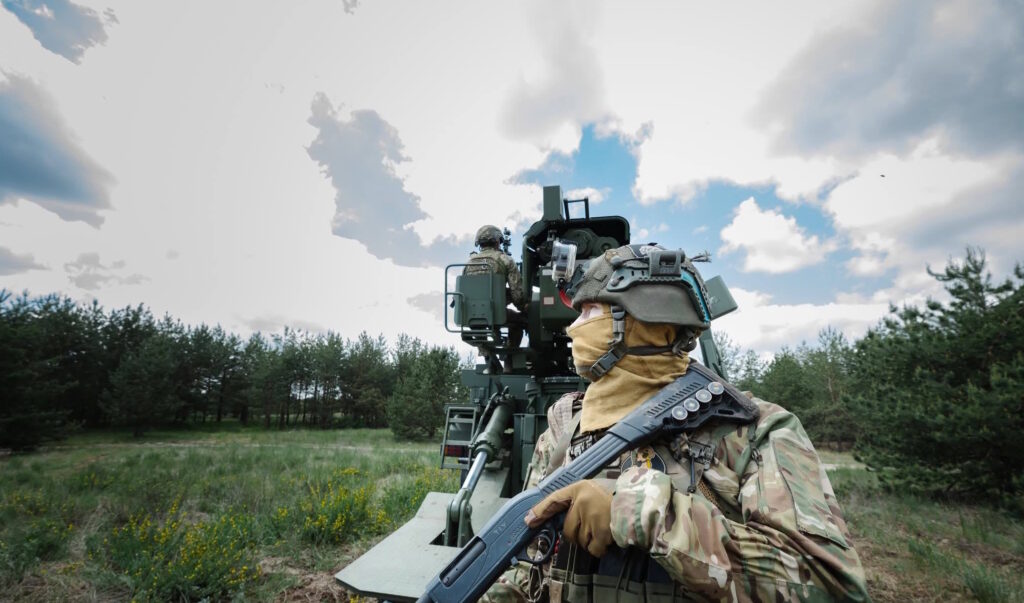
Ukrainian engineers near the front rewrite their drones' software every couple of days. A NATO army needs about six months to push the same update. That gap in speed is the central challenge for the Western trainers working with Ukrainian troops in Poland, who say Ukraine's wartime tempo is exposing how slowly the West moves in peacetime, the Business Insider reports.
Russia's war forces the Ukrainian Army to buy, train, and adapt at a pace peacetime armies are not built for, and its experience is pushing NATO to confront how much its own bureaucracy slows it down.
The alliance has studied that experience without yet fully absorbing it: in an Estonian war game last winter, a ten-person Ukrainian drone team wiped out two NATO battalions in a day.
Now NATO Secretary General Mark Rutte is calling for a large-scale transformation of the West's defense industry so its armies can react faster.
Two speeds meet in Poland
The place where those speeds collided was Camp Jomsborg, a base Norway built in an eastern Polish forest in a matter of months. There, under an operation called Legio, trainers from across northern Europe drill Ukrainian soldiers while the Ukrainians hand their front-line lessons back to NATO.
The camp sits, as its operations officer, a major identified only as John, put it, at "the mental and geographical middle point between war in the east and peacetime mechanism in the West."
A drone update tells the story
Brigadier General Atle Molde, who commands the task force, put the gap in numbers. If a Western drone needs new software, he said, "you have to send it to a Western country or a company, and an update takes six months."
In Ukraine, "they have the engineers sitting close to the front updating every two days, every two weeks, developing software, adapting it to genuine situations."
Molde said he wants to see greater initiative in innovation within Western armies, but to achieve that, "it has to be some major changes that have to be done on all levels when it comes to legislation."

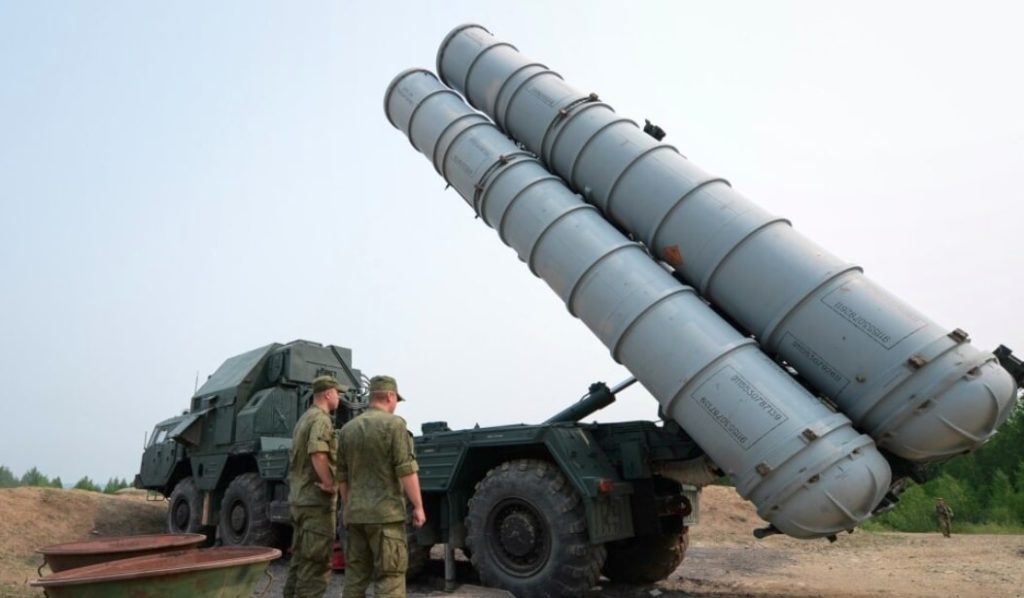
The US is preparing to sell Ukraine something unusual: American-made missiles for its Soviet S-300 air-defense systems. The missiles, labeled "S-300 Clone" in the paperwork, are part of a $2.68 billion package that the State Department approved on 18 September, financed by European partners and unused US military aid, Defense Express reports.
Ukraine has plenty of Soviet-era S-300 launchers but not the missiles to feed them. Russia will not sell more, and an earlier Ukrainian attempt to build its own went nowhere, according to Defense Mirror.
Not a Soviet 5V55 replica
At the same time, the missile itself is not actually a "clone" or replica of the Soviet 5V55. According to Defense Express's own information, this is a new development with enhanced characteristics and a different, more modern targeting guidance principle.
At the same time, the American side did not disclose the index, characteristics, or manufacturer of the missiles mentioned in the State Department's statement.
In September 2024, then-US Defense Secretary Lloyd Austin announced at the Ramstein contact group that Washington, in partnership with several European companies, was working with Ukraine to "design and build a substitute" for the Soviet S-300 and the R-27 air-to-air missile used by fighter jets, Newsweek reports. He never spelled out what that substitute would be.
Anti-radar missile project from the 1950s
The package will also include GAM-67. As for the GAM-67, despite the existence of an unrealized American anti-radar missile project from the 1950s, this is also a new development. It is intended for medium-range systems, both existing ones, including Soviet ones, and future ones.
The package also provides for modernization and maintenance: spare parts, consumables, and accessories, support during repair and return, software, transportation support, engineering, technical, and logistical services from the US government and contractors, and other related elements of logistical and program support.

© Shelby Tauber for The New York Times

© Jacques Boissinot/The Canadian Press

© Sue Ogrocki/Associated Press

© Uma Bista for The New York Times