Vue lecture

EU pledges €3.3 billion for Ukraine, von der Leyen says “more is coming” as Russia’s escalating air war makes life in Ukrainian cities increasingly difficult
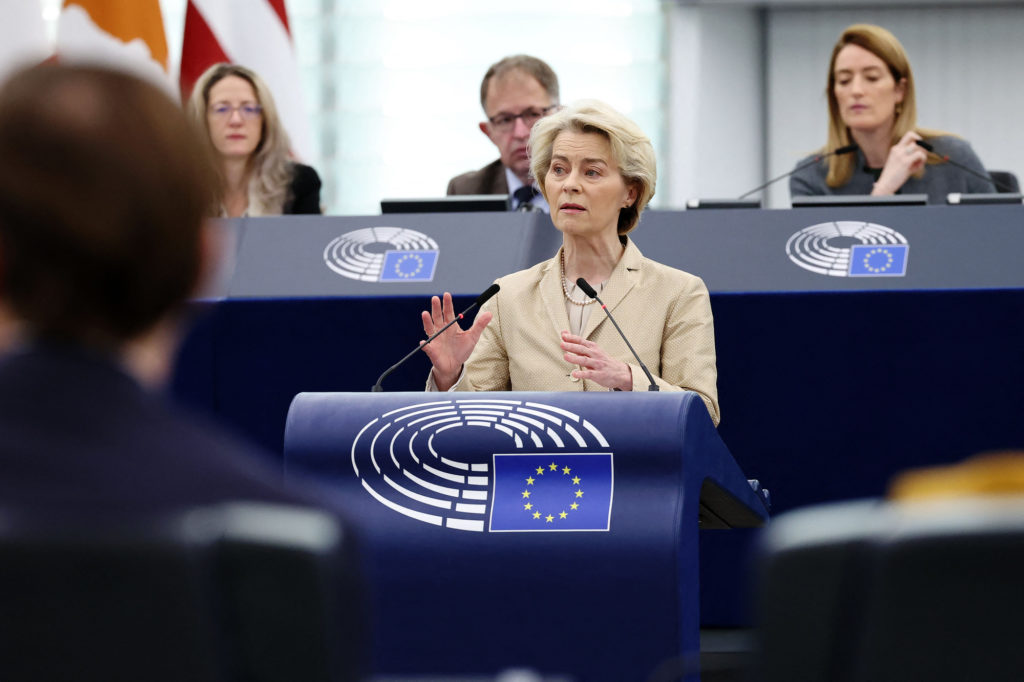
EU Commission President Ursula von der Leyen says Europe will provide Ukraine with another €3.3 billion for missiles and drones as Russia intensifies attacks on Kyiv and seeks to make daily life in Ukraine's cities impossible.

Ukraine has repeatedly appealed to its partners for more air defense as Russia develops increasingly sophisticated ways to attack Ukrainian cities, while Ukraine’s stocks of air-defense interceptors have fallen to critically low levels.

Following a call with President Volodymyr Zelenskyy, von der Leyen said the EU would disburse the funds on 18 September. She also said the EU had approved funding for Patriot air defense systems through its Ukraine Support Loan.

Ukraine needs more air defense

Russia has increasingly combined large numbers of attack drones with ballistic and cruise missiles, forcing Ukraine to defend vast areas while facing shortages of high-end interceptors.

The most difficult targets are Russia’s ballistic missiles, which can reach Ukrainian cities within minutes and require specialized systems such as Patriot to intercept. Ukraine has repeatedly called for more Patriot batteries and interceptors as Russia increases missile attacks.

Ukraine also needs additional air defense capabilities to counter Russia’s increasingly sophisticated drone attacks. Russia is deploying faster, more advanced Geran-type drones that are more difficult to intercept, increasing pressure on Ukraine’s already limited air-defense stocks.

Von der Leyen said the EU had approved funding for Patriot systems last week, but acknowledged that “clearly more is needed.”

The new €3.3 billion package will fund the procurement of missiles and drones for Ukraine, strengthening its ability to defend against Russian attacks.

I just had a phone call with President @ZelenskyyUa.

Tomorrow we will disburse €3.3 billion for missile and drones in Ukraine.

Full read-out ↓https://t.co/UYDT9vn3zC

— Ursula von der Leyen (@vonderleyen) September 17, 2026

Europe proposes joint air defense development

Von der Leyen also announced that the EU is prepared to use remaining funds from its Security Action for Europe (SAFE) program to launch a new joint EU-Ukraine defense initiative.

The proposed program would focus on developing a European air and missile defense system, building on the jointly developed anti-ballistic Freya system.

The goal is to combine Ukraine’s battlefield experience and defense innovation with European technology and industrial capacity, according to von der Leyen.

The announcement comes as Ukraine is trying to strengthen its air defenses ahead of another winter of Russian attacks, when strikes against energy and other critical infrastructure could have an especially severe impact on civilians.
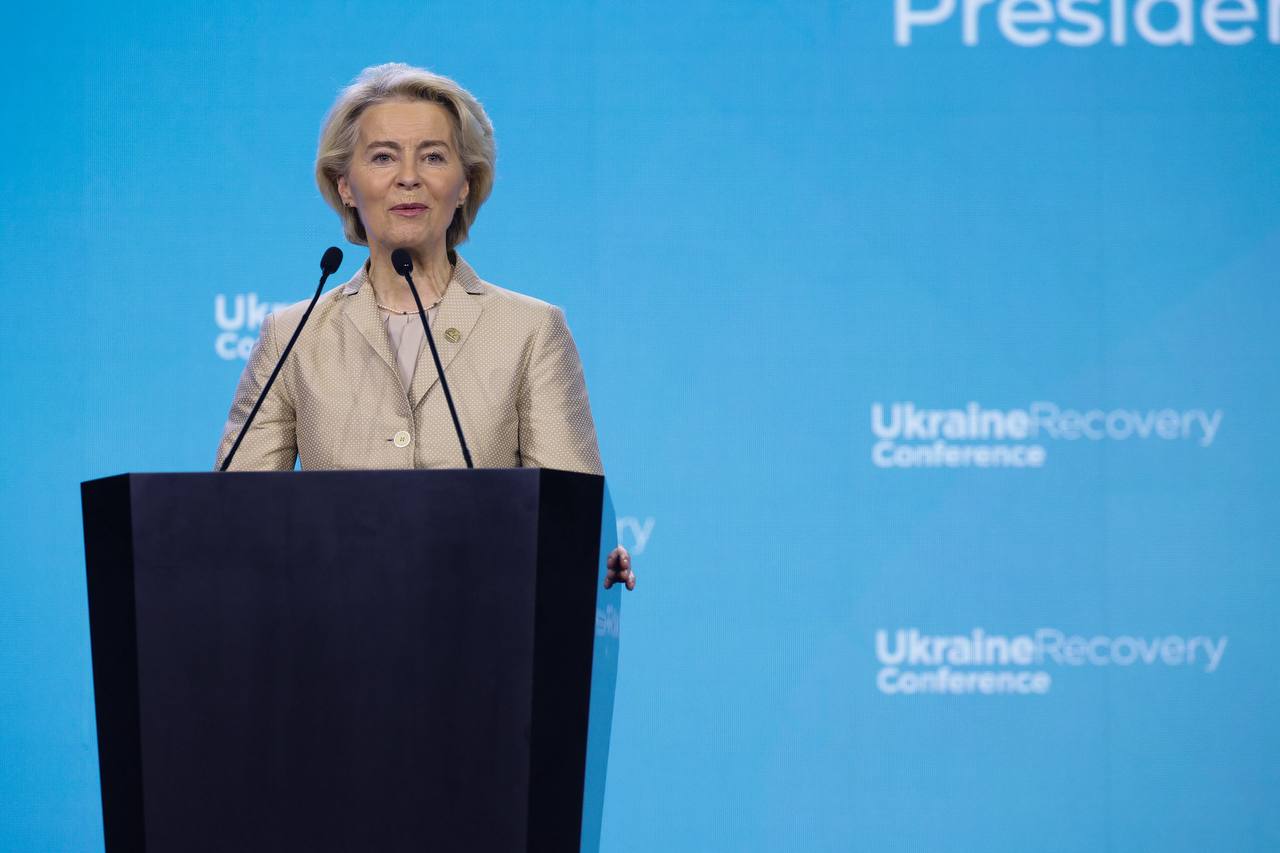
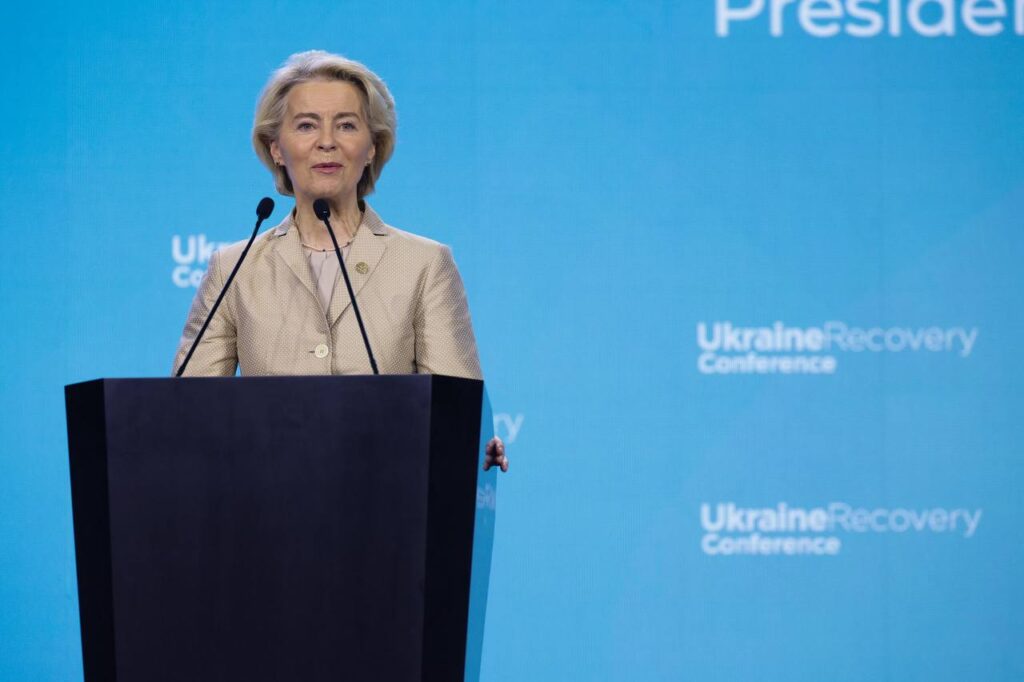
title · post ursula von der leyen during ukraine recovery conference gdańsk poland 2026 news ukrainian reports
Explore further

The EU has billions in unspent defense funds. It wants to use them for projects with Ukraine

Von der Leyen calls for broader support

Von der Leyen said the EU has already mobilized nearly €15 billion for Ukraine in 2026, with additional support planned. She added that “more is coming.”

She also said Ukraine needs to complete reforms in the Verkhovna Rada to unlock further funding and continue its path toward EU membership.

“Europe is stepping up,” von der Leyen said. “Now others must step up their support too.”

  •  

The Guardian view on EU-Canada relations: strategic ambition with lessons for Britain | Editorial

Par : Editorial

Mark Carney’s response to the challenges posed by an unreliable US president contains a clarity of vision that is lacking in post-Brexit Britain

There is no “associate membership” of the European Union, nor any blueprint for what such a thing might involve. It is a political hypothesis, describing a relationship of intimate strategic alignment with the EU, stopping short of actual membership, in ways that are significant but undefined.

This week, Ursula von der Leyen, the European Commission president, invited Canada to be the first country to enjoy this putative status. In her state of the union speech, she spoke of a future relationship elevated “to the highest level possible”, reflecting an affinity of interests and values. Mark Carney, the Canadian prime minister, reciprocated the sentiment in a speech on Wednesday. Addressing the European parliament, he said the two sides should secure “strategic autonomy through deep cooperation” across a broad spectrum of interests: trade, defence, industrial capacity, science, space and AI. He proposed Canadian participation in the EU’s Erasmus student exchange programme and Horizon research scheme.

Do you have an opinion on the issues raised in this article? If you would like to submit a response of up to 300 words by email to be considered for publication in our letters section, please click here.

Continue reading...

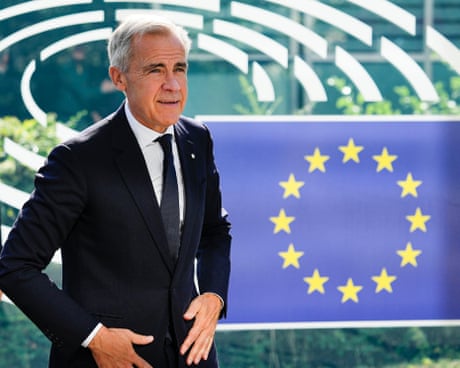
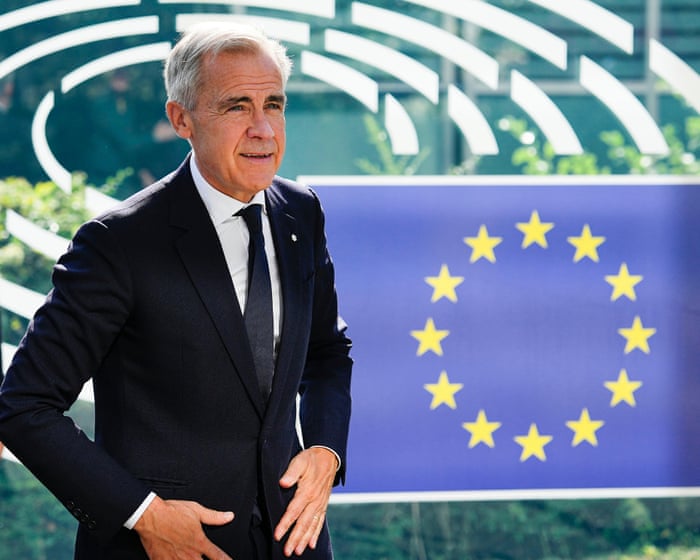
© Photograph: Justin Tang/The Canadian Press/AP

© Photograph: Justin Tang/The Canadian Press/AP

© Photograph: Justin Tang/The Canadian Press/AP

  •  

Carney Calls for E.U.-Canada Pact Amid ‘Ferocious Storm’

Prime Minister Mark Carney told European lawmakers that an alliance would help to secure sovereignty and independence for his country. The moves come amid a historic low for U.S. ties with Canada.

© Yves Herman/Reuters

Prime Minister Mark Carney of Canada addressing the European Parliament in Strasbourg, France, on Thursday.
  •  

The EU has billions in unspent defense funds. It wants to use them for projects with Ukraine

title · post ursula von der leyen during ukraine recovery conference gdańsk poland 2026 news ukrainian reports

The EU plans to use money remaining under its €150 billion Security Action for Europe (SAFE) program to create a new program for joint projects with Ukrainian companies, European Commission President Ursula von der Leyen said on 16 September. She announced the plan during her State of the Union address to the European Parliament in Strasbourg.

Russia's full-scale war against Ukraine has pushed the EU to spend more on defense and build up its own weapons industry. SAFE was created as part of that effort, giving EU member states €150 billion in loans for defense spending. Ukraine is also facing heavy defense costs, with President Volodymyr Zelenskyy putting its additional defense funding gap for 2026 at $27 billion.

"Using the remaining funds from SAFE, we will be setting up a new programme for joint projects with Ukrainian companies," von der Leyen told the European Parliament.

EU Defense Commissioner Andrius Kubilius estimated that the unused portion of SAFE could amount to €10 billion to €20 billion, UNN reported. The exact sum will be known only after member states report on their SAFE projects by the end of October. The announcement caught several governments off guard: Poland and other capitals say the Commission never discussed it with them, and Warsaw had been counting on taking up the funds other countries declined for its own projects.

The proposal would allow unused money from member states' SAFE allocations to be redirected to joint projects with Ukrainian firms. One likely destination is Freya, the joint European-Ukrainian air and missile defense system meant as a cheaper answer to the American Patriot, which von der Leyen described as the start of the collaboration rather than the end of it.

In 2025, Ukraine gained associate partner status in SAFE and access to the EU's European Defense Fund, allowing Ukrainian companies to compete for contracts and co-develop military systems with European firms.

Fifteen member states have since said they plan to buy Ukrainian weapons through the program, and Canada joined it in December 2025 as the first non-European partner. Bulgaria agreed SAFE-funded joint weapons production with Ukraine in March 2026.

The war is costing Ukraine more every year, the government says. Its draft 2027 budget proposes ₴4.885 trillion ($110 billion) for defense needs, nearly 44% of GDP.

  •  
❌