
 Connexion
He had survived Mariupol, Russian captivity and took over Ukraine’s Azov grouping in Donetsk. Now Brigadier General Prokopenko warns Russia may mobilize up to 600,000 for its next offensive
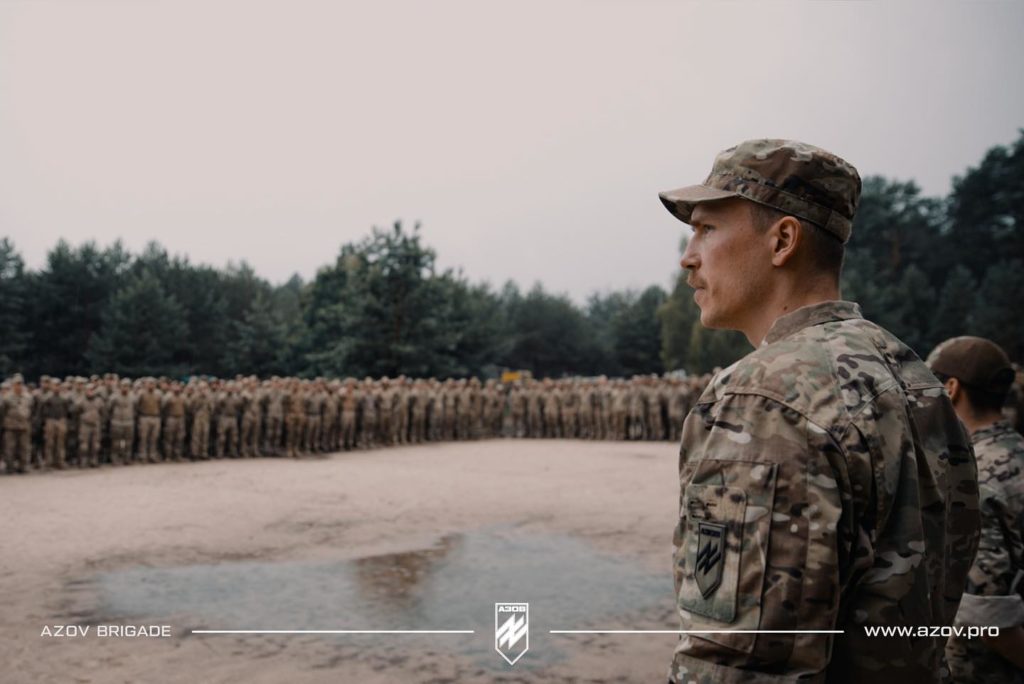
Russia may call up as many as 600,000 troops for its next offensive, one of Ukraine's most battle-hardened commanders warns. Brigadier General Denys Prokopenko, who commanded the Mariupol defense, survived Russian captivity, and, on 13 September, took charge of the newly formed Azov grouping fighting in Donetsk Oblast, said covert recruitment is already underway and that open mobilization could begin after Russia's elections, in late September or early winter, Novyny.LIVE reported.
Prokopenko is forecasting the war on the ground he now defends. He commands the Azov grouping, one of two forces Ukraine has assembled to hold the Donetsk front, the sector where Russia is pushing hardest toward the fortress-city belt. That gives his reading the weight of a commander answerable for the line, not a distant analyst.
He expects a Russian mobilization of up to 600,000, double the 300,000 fall call-up reported earlier, all aimed at Russian President Vladimir Putin's declared goal of seizing every inch of Donetsk and Luhansk oblasts.
Russia eyes the fortress cities and the north
By the end of the fall campaign, Prokopenko said, Russia will try to gain a foothold in one of the Donbas strongholds, Dobropillia, Kostiantynivka, Druzhkivka, Kramatorsk, Sloviansk, or Sviatohirsk, to use as a springboard, though he insisted Ukraine will not let it.
He also warned of a second front in the north. Part of the reserve massed by early winter, he said, could be thrown at Sumy and Chernihiv oblasts, according to UA.News.
"The aim is to create a buffer zone in the Sumy and Chernihiv regions and continue the terror against our capital," he told the Yalta European Strategy forum, forcing Ukraine to keep reserves pinned there rather than sending them east.
October forces a tactics shift
September will bring the peak of Russia's summer offensive, Prokopenko said, because the attackers need a result to show for it. October will bring a change, driven by rain, fog, and shorter days.
"Russian forces will be forced to move from small infantry-group tactics to heavy armored vehicles and to attempt mechanized breakthroughs into the depth," he said.
That approach failed before, he argued, and will fail again.
