❌

Vue lecture

A Ukrainian strike drone that quietly hit 450-plus Russian targets steps out of the shadows
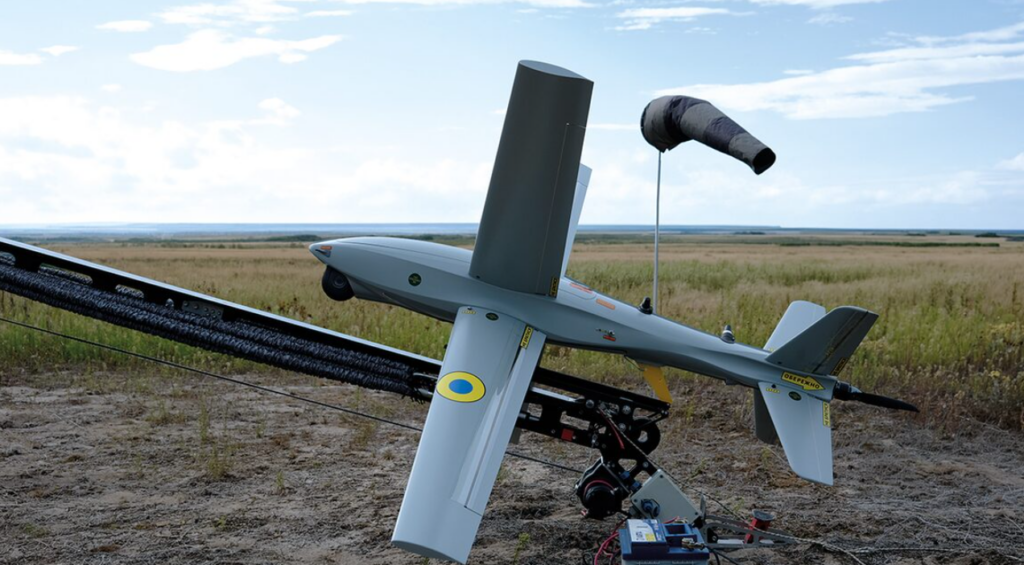
Ukraine's RAM-2X, an X-winged loitering munition. Source: Ukrspecsystems

A Ukrainian strike drone that quietly hit hundreds of Russian targets, with air-defense systems among them, has come out of the shadows. Ukrspecsystems publicly unveiled the RAM-2X, an X-winged loitering munition long used at the front but kept classified, at the MSPO defense expo in Poland, dev.ua reports.

Its relay capability allows the strike drone to operate in tandem with reconnaissance platforms such as the SHARK-M. In this configuration, the reconnaissance aircraft provides target designation, enabling the strike drone to more effectively counter Russian electronic warfare (EW) systems.

A proven drone steps into the open

To mark the reveal, the company opened an "X-Archive" of declassified combat video, starting with strikes on Russian surface-to-air missile systems and radars — the hardest targets a strike drone faces, since they are built to shoot drones down.

RAM-series loitering munitions are now credited with more than 450 target engagements, over 400 of them against air defenses, according to the manufacturer, which cleared the footage with the units involved before releasing it.

A scout and a striker hunt together

The pairing is the point of what Ukrspecsystems calls its "system of systems."

"Those who operate our reconnaissance equipment can add a strike component that works on the same antennas and stations," the company said.

This closes the reconnaissance-strike loop with its own forces. Built on shared components, a common ground station, and a single software, the RAM-2X supports several radio bands and Starlink terminals, so a jammer that blocks one link does not blind the drone.

The specs reach deep behind the front

The RAM-2X operates at the operational-tactical level, remains airborne for more than two hours, and carries a high degree of automation, with the option to run AI assistants on board. Its warhead is an explosively formed penetrator weighing 2.7 or 3.5 kilograms.
  •  

Ukraine shows a home-built missile designed to hit ballistic targets for the first time, the Koral, at Poland’s MSPO

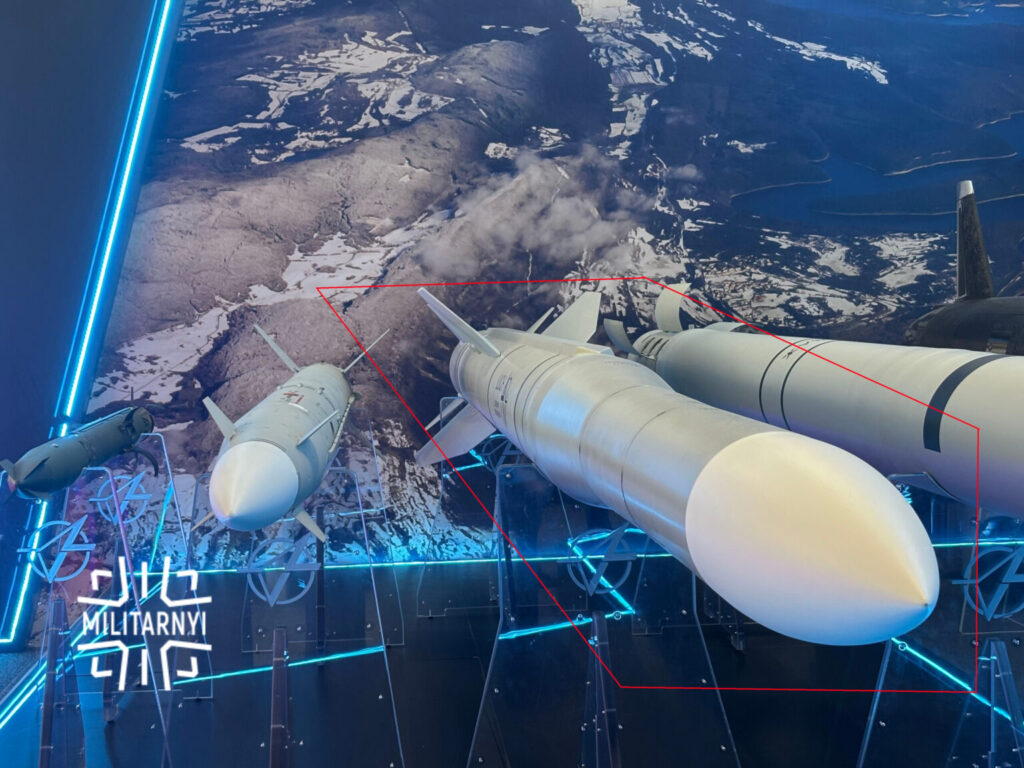
A display model of the "Koral" short-range anti-aircraft missile at the MSPO 2026 international defense exhibition. Source: Militarnyi

Ukraine has shown off, for the first time, a home-built missile designed to shoot down ballistic targets. The Koral surface-to-air missile appeared at the MSPO defense expo in Poland, in an Ukroboronprom image showing a launch from a self-propelled launcher on a Czech Tatra truck chassis, Militarnyi reports.

Ukraine's "Koral" short-range anti-aircraft missile. Source: Militarnyi

It is unclear what is meant by “ballistic targets.” Russia has a wide range of ballistic weapons, from Iskander ballistic missiles to Kinzhal air-launched ballistic missiles.

More broadly, the term “ballistic target” can refer to an object following a ballistic trajectory after the powered phase of its flight has ended, with its subsequent motion governed primarily by gravity and aerodynamic drag. This category can also include rockets fired by multiple-launch rocket systems (MLRS), such as the Grad and Smerch.

Evolution of the Koral

The missile weighs 450 kg, including a 36-kg warhead. Its guidance system combines inertial navigation, radio correction, and an active radar homing seeker. The missile is 4.8 meters long and has a diameter of 230/300 mm.

At the initial stage, the “Koral” was advertised with significantly more modest specifications: an engagement range of up to 30 km, an engagement altitude of up to 10 km, a weight of around 300 kg, and a 25-kg warhead. The missile was 4.33 meters long and had a diameter of 230/260 mm. At the same time, the designers emphasized that the specific specifications could vary depending on the customer’s requirements.

History of the developement

Development of the “Koral” began as early as 2016. Initially, the project was conceived as part of a ship-based surface-to-air missile system. In 2021, the Luch State Design Bureau unveiled a full-scale mock-up of the missile for the first time at the “Arms and Security” exhibition.

At the time, the “Koral” was presented as a unified, modular missile for both land-based and shipborne SAM systems, with potential applications as an air-to-air missile as well.

  •  

Brussels cleared Ukraine to spend EU loan money on American Patriot missiles for the coming winter of Russian attacks

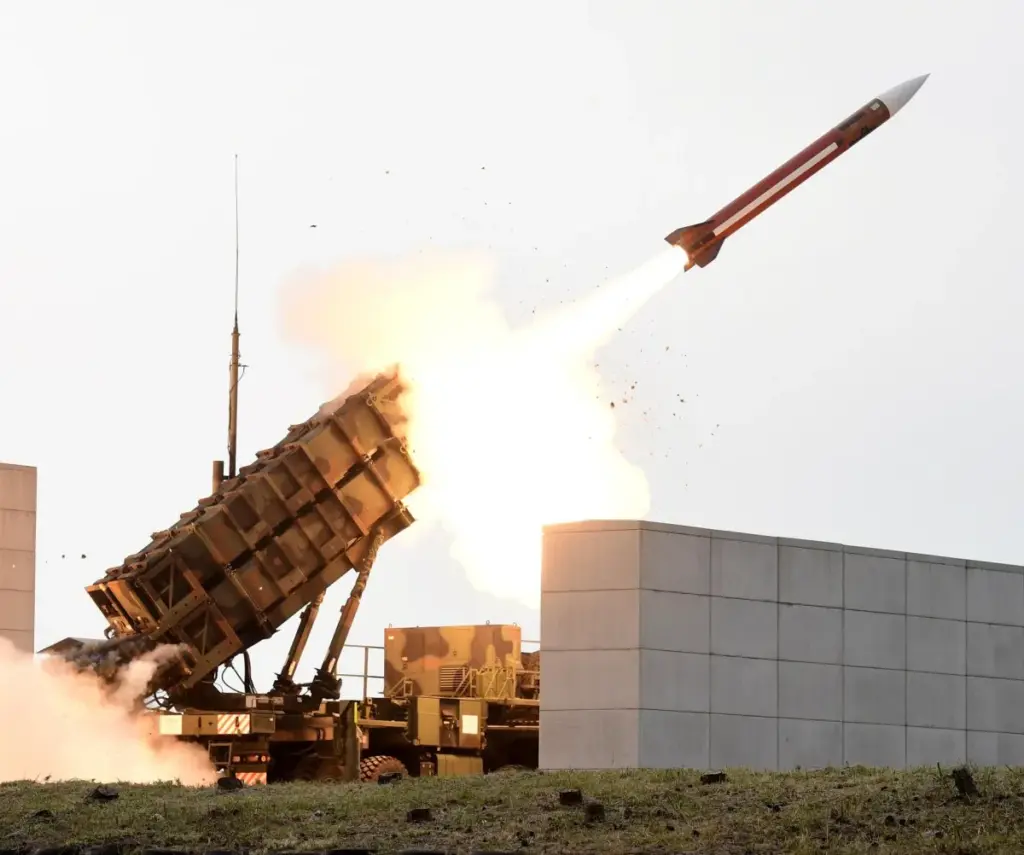
brussels cleared ukraine spend eu loan money american patriot missiles get through upcoming winter russian attacks · post pac-2 missile launch yonhap пуск ракети illlustrative militarnyi news ukrainian reports

The European Commission has approved Ukraine's request to buy US-made Patriot interceptor missiles with money from the European Union's €90 billion ($105 billion) loan, an EU official told Suspilne. Kyiv filed the application four days earlier and asked for more than €2 billion ($2.3 billion). The decision settles who pays, not when the missiles arrive.

Russia has been firing ballistic missiles at Ukrainian cities faster than the country's air defense can destroy them, and the interceptors that stop that class of missile come off one production line in one country. Currently, most of Russia's ballistics reach their targets.

Brussels signed off four days after the request

Ukraine submitted the application on 3 September under the Ukraine Support Loan program. The Commission said at the time it was working to clear it in the shortest possible period.

Kyiv asked for the money to buy interceptors, and it falls under the EU credit line for 2026 and 2027. That sum can buy anywhere from about 190 to 580 interceptors, depending on the price Washington sets.

envoys left russia opened one weapon ukraine still cannot stop · post fire inside damaged building after russian strike kyiv 8 2026 5258162988747793192 news ukrainian reports
Explore further

Trump’s peace envoys left, and Russia hit Kyiv with ballistics—the one thing Ukraine still struggles to stop

What the €90 billion covers

The European Council decided to create the loan in December 2025, and the Council of the EU finalized the financing mechanism in April 2026. Hungary's veto held the package up for months before it cleared, and Ukraine's parliament then accepted a wartime tax overhaul to unlock the first tranche.

About €30 billion ($35 billion) of the total goes to economic support and €60 billion ($70 billion) to military needs and defense capabilities. The EU raises the money by borrowing on international capital markets against guarantees from its own budget.

Why European money buys American missiles

The military half of the program funds arms purchases, Ukrainian and European defense industry in particular. It also allows purchases outside the bloc when European producers cannot supply enough of what Ukraine needs.

On 6 August the Commission confirmed Ukraine may use loan money for interceptors, noting that Kyiv defines its own requirements and files the applications. That opened the door to non-European weapons. Nothing in Ukraine's inventory stops Russian ballistic missiles without Patriot interceptors, as Russia showed in August by hitting Kyiv and the Boryspil airport hub twice inside a day.

A Ukrainian Patriot MIM-104 air defense system in the field
A Patriot MIM-104 air defense system in service with a unit of Air Defense Forces West, 10 April 2026. Photo: Air Command West, Ukrainian Air Force

Ukraine's interceptor arithmetic

Zelenskyy has said Ukraine agreed with the US on monthly interceptor deliveries, while calling the volumes short of what the country needs. He put the winter requirement at no less than about 5% of American output of these missiles.

A shortage of allied Patriot missiles, combined with heavier Russian strikes, made July the deadliest month for Ukrainian civilians since April 2022, according to UN figures.

  •  
❌