Vue lecture

Fired Ukraine defense chief Fedorov launches defense-tech company with Palantir CEO backing

Former Ukrainian Defense Minister Mykhailo Fedorov and Palantir CEO Alex Karp announce the launch of Fedorov’s new defense technology company. Screenshot from video: Mykhailo Fedorov

Former Ukrainian Defense Minister Mykhailo Fedorov has announced the launch of a new defense technology company, with Palantir CEO Alex Karp set to become its first major investor.

The venture comes after Fedorov’s five months as defense minister ended with his dismissal in July, a decision that triggered weeks of protests demanding his return. He is now taking his focus on drones, AI and other military technologies into the private sector, while partnering with a company whose growing role in warfare and government data has also drawn criticism.

Fedorov announced the venture on X on 1 September with little other information, saying more details would be released soon.

In a video released alongside the announcement, Karp said he and Fedorov had worked together for five years and that he was excited to help turn Ukraine’s experience of modern warfare into products for allied countries.

“Our ambitious new project will strengthen Ukraine and help build a safer future for the entire world,” Fedorov wrote.

From digital minister to defense reformer

Fedorov, 35, became one of the most prominent figures in Ukraine’s drive to use technology to transform its military during the full-scale war. Before becoming defense minister, he served as minister of digital transformation, where he helped build Ukraine’s digital government infrastructure and became closely associated with the country’s rapid adoption of drones and other military technologies.

He became defense minister in February 2026 and spent roughly five months in the post before President Volodymyr Zelenskyy dismissed him on 15 July as part of a broader government reshuffle. The dismissal reportedly followed a prolonged conflict between Fedorov and then-Commander-in-Chief Oleksandr Syrskyi over the direction of Ukraine’s military. Zelenskyy later said the relationship between the two had broken down.

Fedorov had pushed for a more technology-driven military, including greater use of drones, robotics, artificial intelligence and data-based decision-making. During his tenure, his team also pursued changes to defense procurement and logistics.

His dismissal triggered rare wartime protests across Ukraine. Demonstrators in Kyiv and several other major cities demanded his reinstatement, arguing that his removal threatened the military-technology reforms they credited with improving Ukraine’s ability to fight Russia.

The protests continued for roughly a month but failed to reverse the decision. Parliament approved Yevhenii Khmara as defense minister on 19 August.

The movement later lost momentum after Fedorov called for wartime elections, a position that protesters rejected amid the ongoing war. The episode nevertheless made his dismissal an unusually public political dispute, with supporters defending his record while Zelenskyy and others pointed to disagreements over military leadership and policy.

A column of protesters demanding reinstatement of Mykhailo Fedorov as Defense MInister walks in vul. Khreschatyk in Kyiv, 1 August 2026. Photo: Serge Kostezh/Kyivpost
Explore further

The Fedorov protesters lost. But they backed a man for what he built, not what he promised—and that may be new in Ukraine.

What Fedorov did after leaving office

Since leaving the Defense Ministry, Fedorov has remained focused on defense technology rather than returning to another Ukrainian government position.

In late August, Italian Defense Minister Guido Crosetto said he had offered Fedorov a position as an adviser on modern warfare and defense innovation. Fedorov agreed to provide advice remotely and on a non-staff basis, while keeping his main work focused on Ukraine’s defense-tech sector.

Fedorov has also been working to establish a defense-tech investment fund and has been seeking US investors for it. During a working trip to Washington in August, he pitched a fund that would not only invest in existing Ukrainian defense-tech companies but also build new ones around technologies he considers critical to the war.

He identified three priorities: battlefield robots that can replace soldiers in the most dangerous positions, jet-powered interceptor drones capable of countering Russia’s faster attack drones, and inexpensive AI-enabled missiles.

Fedorov also proposed helping the United States develop an attack-drone fleet in exchange for additional Patriot interceptor missiles for Ukraine. He described the idea as a potential trade, but it is his own proposal rather than an agreement with the US government, and he no longer holds a government position that would allow him to negotiate such a deal.

In a recent Reuters interview, Fedorov also emerged as a more outspoken critic of Ukraine’s wartime trajectory, saying that “it looks as though we’re gradually, slowly losing.” His comments came after his dismissal and amid his continuing disagreements with the military leadership over the direction of Ukraine’s war effort.

The new company announced on 1 September appears to build on this work, moving from plans to invest in and create defense-tech companies toward establishing a company of Fedorov’s own.

Why Palantir matters

Karp’s involvement connects Fedorov’s new venture to one of the world’s largest defense and intelligence technology companies.

Palantir develops software for large-scale data analysis, artificial intelligence and military and government operations. Its products are used to integrate data from different sources and support operational planning and decision-making. Palantir has also worked with Ukraine during the full-scale war, including on AI and data-analysis initiatives.

The company has become increasingly involved in military technology, while also facing criticism over its work with governments and armed forces. Its ties to Israel and its role in military applications, particularly in relation to the war in Gaza, have generated protests and scrutiny over the use of AI and data technologies in warfare.

Palantir has faced separate concerns in the UK over its access to sensitive government and health data, with critics questioning how effectively safeguards around such information can be independently verified.

For Fedorov, the partnership marks a shift from trying to change Ukraine’s military from inside government to building defense technology outside it. For Karp and Palantir, the investment offers a direct connection to a former Ukrainian defense minister whose team worked on military technologies during a war that has rapidly changed how drones, AI, robotics and data are used on the battlefield.

  •  

Ukraine spent three years learning to catch Russian drones—so Russia made them fly faster

ukraine spent three years learning catch russian drones—so russia made fly faster · post geran-3 jet-powered attack drone wild hornets c1c840787fca380485636007cf683d71 news ukrainian reports

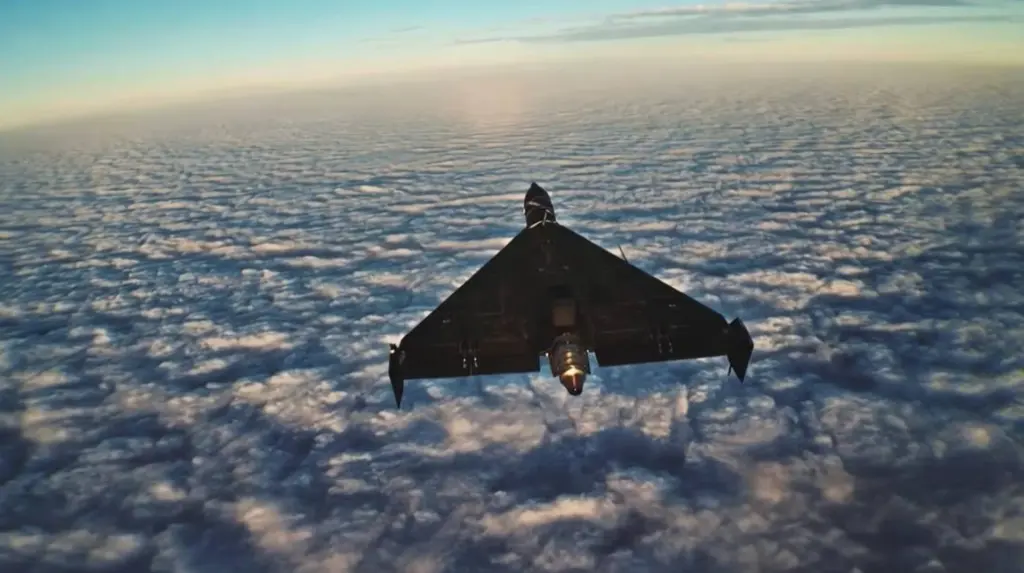
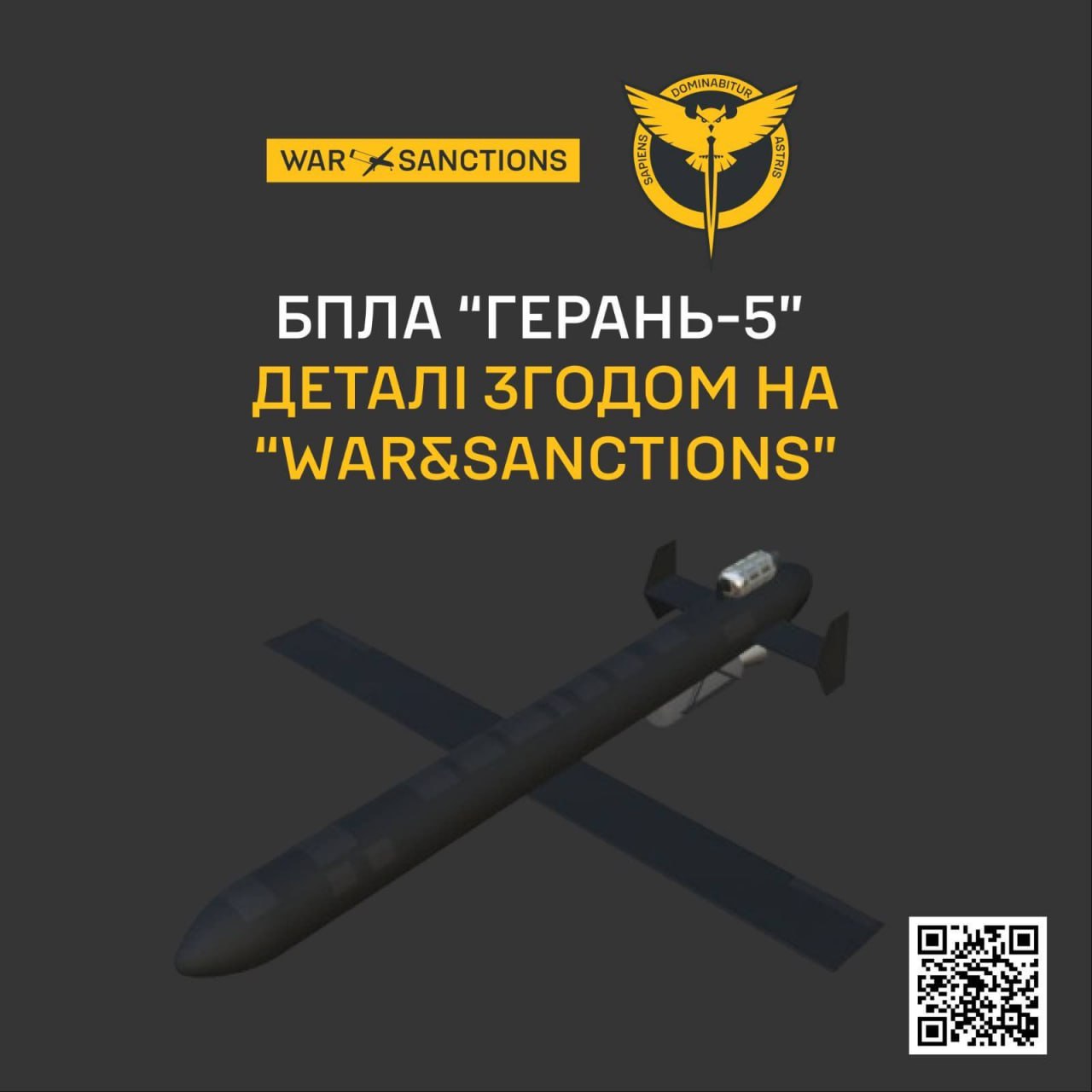
Russia is sending jet-powered drones against Ukrainian cities in growing numbers—no longer only the Iranian Shahed-238 it fields as the Geran-3, but the newer, faster Geran-4 and Geran-5. The fear everyone voices is their speed, but speed breaks the cheap layer, not the missiles.

Ukraine's expensive air-defense missiles already routinely shoot down cruise missiles, and to them, a fast drone is just one more target. The strain falls on the cheap layer instead—the interceptor drones Ukraine built to down thousands of Shaheds a month for a few thousand dollars each, a fraction of a missile's price.

Those were designed to catch slow drones, and against jet speed, they struggle. If that layer breaks, the cost of defending Ukraine's skies climbs—and the Defense Ministry has already started paying to keep it from breaking.

The shift is not marginal, and it continues to accelerate. Russia had sent more than 2,500 jet-powered Shaheds against Ukraine by 30 August, against roughly 1,500 in July, informal presidential adviser Serhii "Flash" Beskrestnov wrote—the drones, he noted, were launched practically straight from the factory. Russia fired roughly 1,400 jet-powered drones since the start of 2026 to June, and air defenses recorded about 180 in all of 2025, Colonel Oleksandr Zaruba of Ukraine's State Research Institute said.

Geran-5 (Above) and Geran-4 (Below)
Geran-5 (above) and Geran-4 (below). Image: TurDef

A record month, and the weapon built to beat it

Ukrainian interceptor drones destroyed more than 33,000 Russian drones of all types in March 2026—roughly double the February total and a record for the cheapest layer of Ukraine's air defense, then-Defense Minister Mykhailo Fedorov said.

Russia sent Shaheds—cheap, propeller-driven, long-range, lumbering in at about 185 kilometers per hour (115 mph)—in mass raids meant to swamp Ukraine's defenses. Ukraine adapted, with mobile fire teams, electronic warfare, and layered engagement, then added interceptor drones that destroy incoming drones for a fraction of a surface-to-air missile's cost.

As Ukraine got better at catching propeller drones, Russia reached for speed—jet-powered versions that fly more than three times faster than the Shaheds Ukraine spent three years learning to intercept.

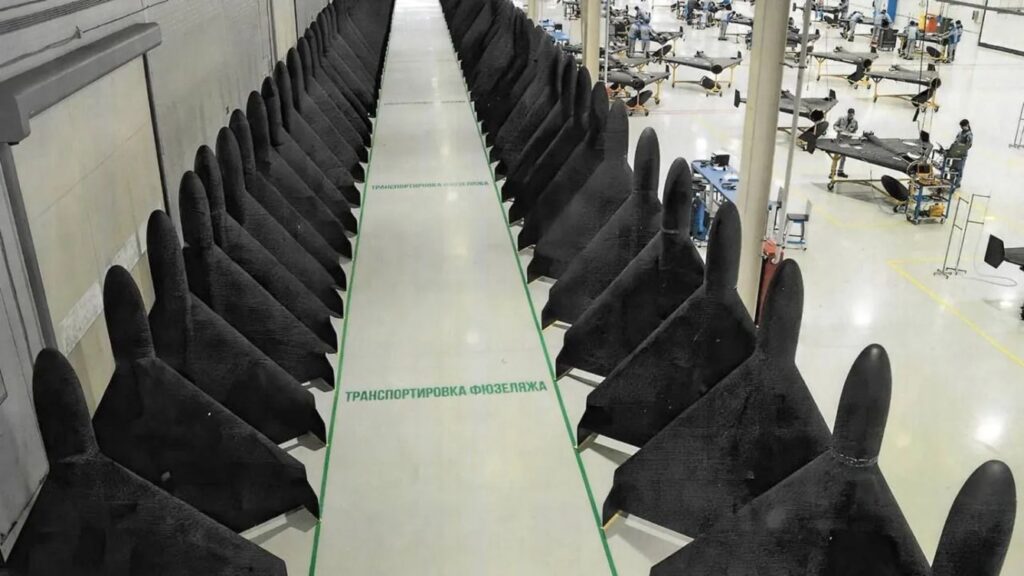
Iranian-designed Shahed-136 drone hulls at a Russian drone factory
Iranian-designed Shahed-136 drone hulls at a Russian drone factory. Photo via TWZ

By August, Ukraine's military intelligence said Russia had stopped building the Geran-3 and shifted to the newer jets, producing roughly 3,000 of them a month.

Conventional air defense already handles this

The worry centers on velocity: a jet drone flies several times faster than a propeller-driven or electric one, reducing the time defenders have to detect, identify, and hit it. But the fear aims at the wrong place, said Oleksii Kolesnyk, director of the Ukrainian firm Reactive Drones.

"A jet-powered UAV is, in many ways, similar to a cruise missile. For conventional air defense, jet-powered drones are simply another aerial target," he told Euromaidan Press.

Ukraine's surface-to-air systems routinely intercept cruise missiles. A fast drone is standard work for them—though Zelenskyy said in late August that the jets are the hardest to intercept, and that combat aircraft now mainly protect against them.

The strain lands on the interceptor drones

An interceptor drone, unlike a ground-launched missile, has to chase its target down and ram it, which worked against slow Shaheds. Against something near cruise-missile speed, the geometry breaks.

The problem exists almost only for interceptor drones, Kolesnyk said—they were never designed for these speeds. At jet velocities, guidance, target tracking, and the final homing onto the target all hit technical ceilings, and faster interceptors alone will not fix it.

"New technical solutions will be needed," he said.

Interceptor drones are why Ukraine can answer mass raids without firing a missile worth hundreds of thousands of dollars at each incoming drone. Break that math, and the affordability of Ukraine's whole air defense shifts.

The Defense Ministry's answer

Through the defense-tech accelerator Brave1, Ukraine backed 12 technologies under the EU4UA Defence Tech grant program, offering up to €150,000 each for high-speed interceptors capable of reaching 450 kilometers per hour (about 280 mph) or more.

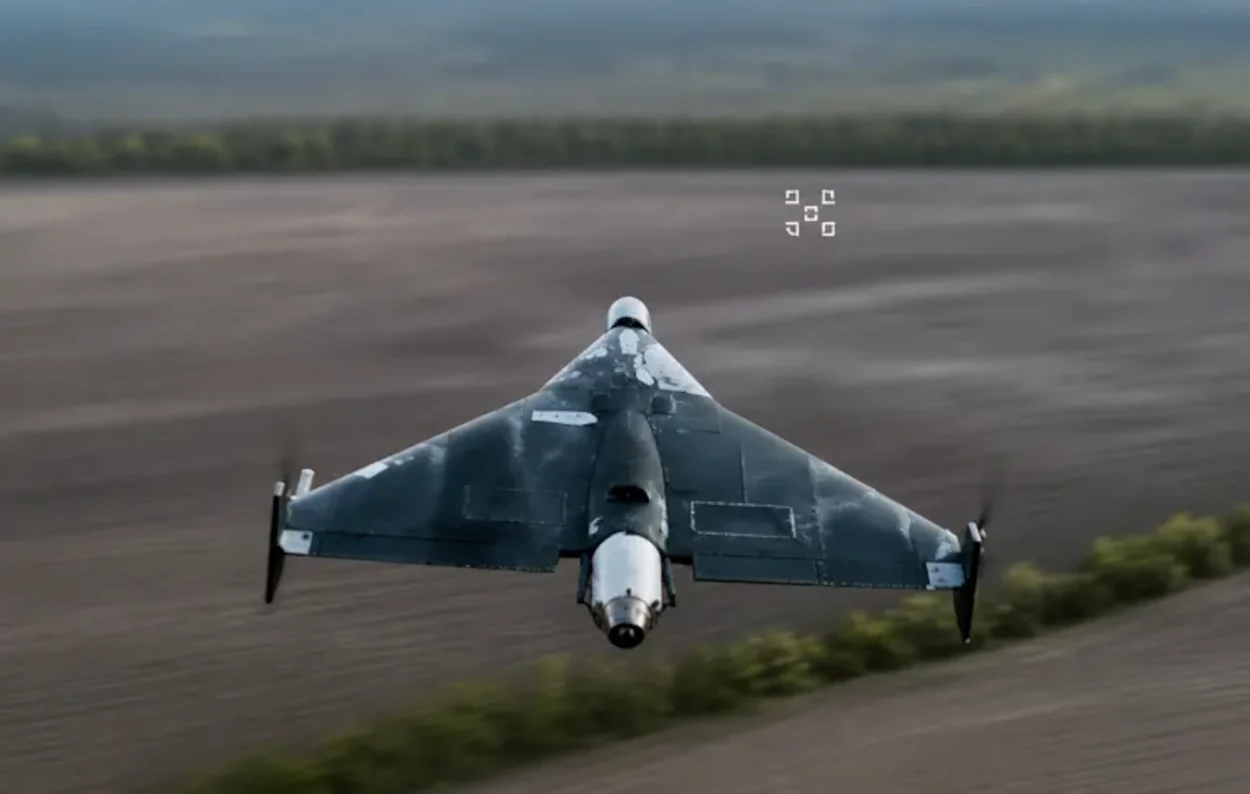
Russia’s new “Geran-4 Seeker” Shahed variant uses machine-vision AI for targeting. Source: Dyki Shershni
Explore further

Ukraine is testing four new drone interceptors as Russia floods its skies with faster Gerans 

That push has since produced candidates. By late August, Ukraine had four interceptor systems built to run down the jets, all already in field testing, Defense Minister Yevhenii Khmara said, and the Alexa Spatium had entered service. Ukraine now wants to bring them up to standard and build them in the thousands.

Not a revolution, but an evolution with a long history

Colonel Oleksandr Saienko, a former Ukrainian brigade commander, rejected the idea that any of this is new.

"This is better described as an evolution of unmanned systems rather than a completely new stage of warfare," he said.

Jet drones long predate this war. "The first jet-powered UAVs appeared back in the 1970s," he said, pointing to Soviet reconnaissance drones beginning with the Tu-143 and continuing with the Tu-141 and Tu-243—platforms Ukraine itself later flew in the Donbas war and the full-scale invasion. What has changed is scale, and the problem the drones now solve: arriving before the defender can react.

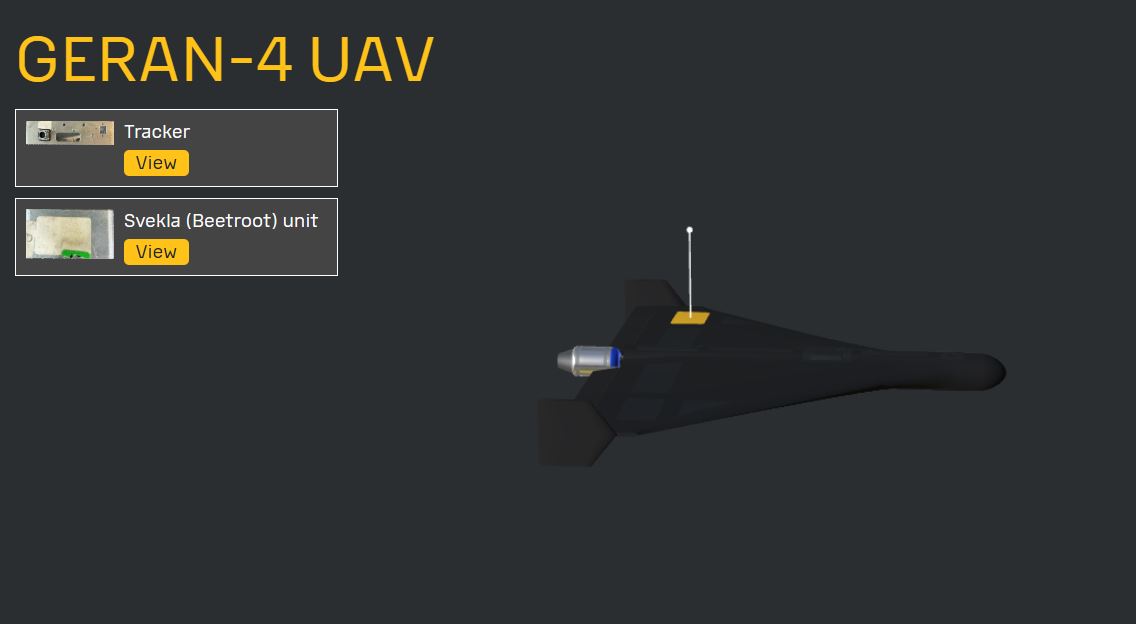
ukrainian intelligence russia's new jet-powered geran-4 attack drone runs chinese turbojets · post interactive 3d model jet powered telefly turbojet engines published ukraine's main directorate (hur) war-sanctionsgurgovua capture revealed agency
Explore further

Ukrainian intelligence: Russia’s new jet-powered Geran-4 attack drone runs on Chinese turbojets

Saienko's warning points past the engine.

"The decisive advantage will not belong to whoever simply has a jet engine. It will belong to whoever integrates these platforms into an effective reconnaissance-strike system, protects them against electronic warfare, manufactures them at scale, and keeps costs manageable," he said.

His frame is the kill chain—detect, identify, decide, engage—and every gain in speed compresses that cycle. "If a target is flying at 500 to 700 kilometers per hour, even a delay of several dozen seconds may make interception impossible," he said, adding: "Radars must see sooner, command systems must classify automatically, and operators get less time—until automation becomes a requirement."

Why hasn't every drone gone jet-powered

Speed solves one problem and creates several. "They are simply another category of strike UAV," Kolesnyk said.

"One solution does not replace another."

Oleksii Kolesnyk, Reactive Drones.

Compact turbojets are expensive and hard to source for smaller drones. Bigger airframes have to be reinforced to take the loads and vibration, which adds weight and cost. Fuel burn climbs far above that of the electric or piston drones built for endurance, and higher speed leaves less room for navigation errors.

So, jet drones fill a niche rather than taking over the whole strike fleet. "They are most effective at ranges of roughly 200 to 600 kilometers," Kolesnyk said—fast strikes on high-value or time-sensitive targets, where getting there quickly matters more than flying cheaply or far.

Explore further

Russia unleashes its Geran-5 air defense killer on Ukraine, equipped with British Raspberry Pi microcomputer tracker

Ukraine didn't drop first-person-view (FPV) drones when fiber-optic ones arrived, and jam-resistant drones didn't replace the rest. Each capability added a layer rather than erasing the previous one. Saienko expects the same. "The emergence of jet aviation did not eliminate piston-engine aircraft. The same principle applies," he said. Cheap propeller drones are ideal for mass attacks, while jet platforms handle speed.

The next fight is over reaction time

Jet drones force defenders to decide faster, and that is the harder demand. A slow propeller drone is a wasteful target for an expensive missile. A cruise missile demands an instant answer. A jet drone sits in between—and an operator has to sort which weapon meets which target in seconds, while holding scarce interceptors back for the worst threats. Every misjudgment costs something.

"The challenge is no longer only interception—it is detecting, identifying, and assigning the target quickly enough," Saienko said.

Both experts reach the same conclusion from opposite ends: Kolesnyk through the technical limits of the interceptor drone, Saienko through the entire defensive network. Both land on automation—AI-driven target recognition, distributed sensors, and fast data sharing to shrink the gap between spotting a target and hitting it. The winner won't necessarily fly the fastest aircraft. It will process information faster than its opponent.

Over four days at the end of August, Russia fired about 800 jet drones at Ukraine, Ukraine's president said—a type most of Ukraine's cheap interceptors still cannot catch. And the problem won't stay Ukraine's alone. Drones from the same broad Shahed family have already strayed into NATO airspace and turned up in other wars. The interception race Ukraine is running now is one everyone will eventually run.

  •  

Pour la troisième fois, la française Sophie Adenot sort dans l'espace avec une équipe 100 % féminine

Par : FRANCE 24
À bord de l'ISS, l'ingénieure et ancienne pilote d'essai, Sophie Adenot, âgée de 44 ans, va effectuer sa troisième sortie dans l'espace en moins de deux semaines. Avant elle, seuls quatre Français avaient effectué des sorties extravéhiculaires dans le vide spatial, le dernier en date étant Thomas Pesquet.

  •  

120 secondes de Tech / 1er sept 2026 

🎧 Édition du 1er sept 2026 :– John Ternus prend les commandes d’Apple– L’Europe resserre les règles pour ChatGPT, Reddit et Roblox– Amazon menacé d’une poursuite sur la publicité– Sony ajoute la télé gratuite sur PS5– MapQuest profite du débat sur Lake America « 120 secondes de Tech », un regard sur le quotidien de l’actualité numérique proposé […]
  •  
❌