Vue lecture

Ukraine has knocked out seven of Russia’s 10 biggest warehouses as its air defenses fall short, ISW says
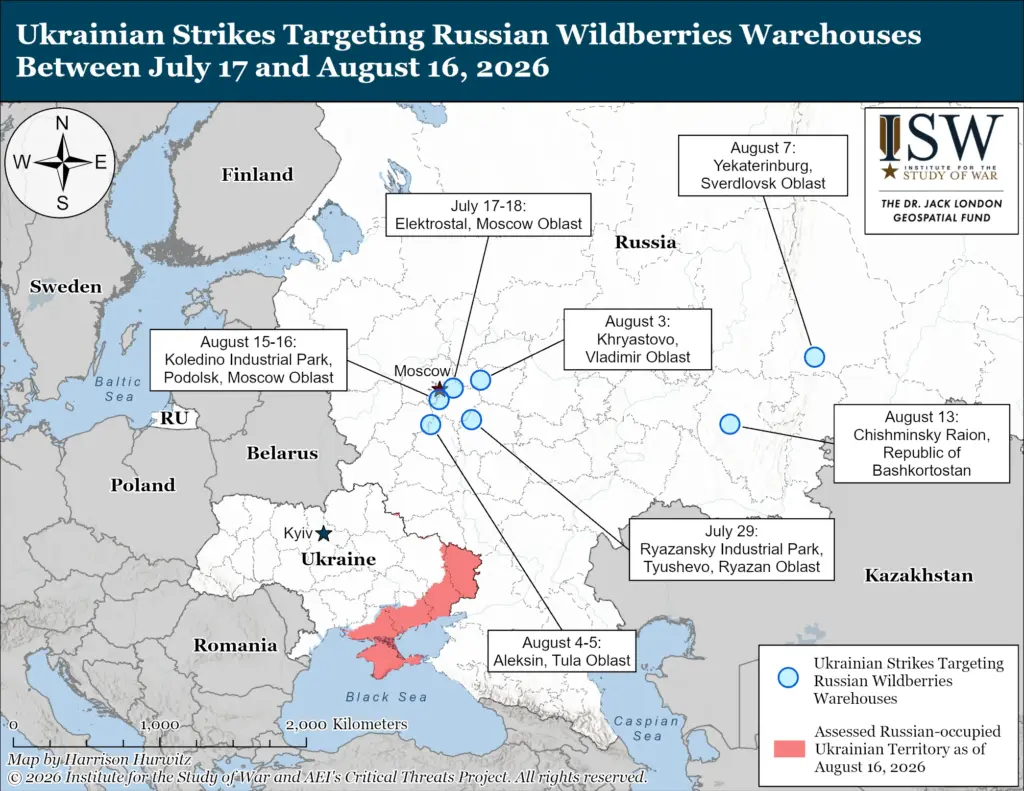
ukraine has knocked out seven russia's 10 biggest warehouses its air defenses fall short isw says · post ukrainian strikes targeting russian wildberries between 17 16 2026 ukrainian-strikes-targeting-russian-wildberries-warehouses-between-july-17-and-august-16-2026 news reports

Ukraine has knocked out seven of the 10 largest logistics hubs run by Russia's biggest online retailer, the US-based Institute for the Study of War assessed. The strikes are part of a campaign to wear down Russia's defense industry and the dual-use supply lines that feed its war. The newest raids hit two warehouses near Moscow overnight.

Ukraine has pushed its long-range drone war deep into Russia, hunting the oil, freight, and factory sites that keep Moscow's invasion supplied. Each strike that lands far from the front tests how much of its own territory Russia can actually defend. ISW assessed that the campaign is squeezing both Russia's economy and its overstretched air defenses, with no sign the retailer's biggest depots are getting any safer.

Two hubs near Moscow burned overnight

On 15-16 August, Ukrainian drones struck Wildberries' single largest hub, a 250,000-square-meter depot in the Koledino Industrial Park in Podolsk, Moscow Oblast. Ukraine's Defense Ministry reported the hit, about 420 kilometers from the border.
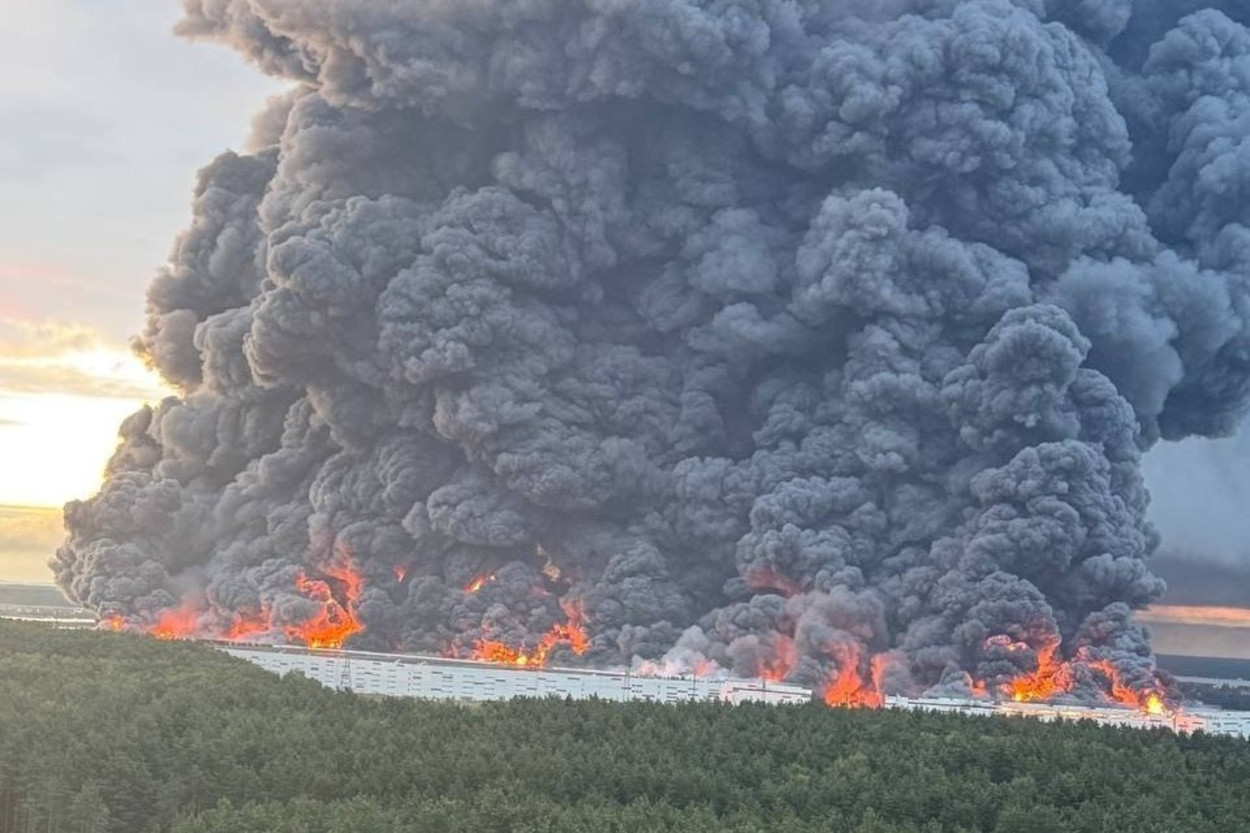
Wildberries warehouse burning in Russia's Koledino following a Ukrainian drone strike, 16 August 2026. Photo: Exilenova+
Explore further

“One of the most massive” Ukrainian drone attacks hits Moscow Oblast: two major warehouses ablaze

Wildberries confirmed the fire and said it had to reorganize its supply chains. Moscow Oblast Governor Andrei Vorobyov acknowledged the strike, and geolocated footage showed the depot ablaze.

Drones also hit a second warehouse the same night, in Domodedovo, roughly 430 kilometers from the border. Footage showed a fire at the Severnoye Domodedovo complex.

Why the warehouses are targets

Ukrainian officials say Wildberries helps supply the Russian military, moving drone components and navigation gear. Kyiv folded the retailer into a deep-strike campaign that began in mid-July.

The company is Russia's answer to Amazon, its largest online marketplace. Its sprawling depots make broad, hard-to-defend targets.
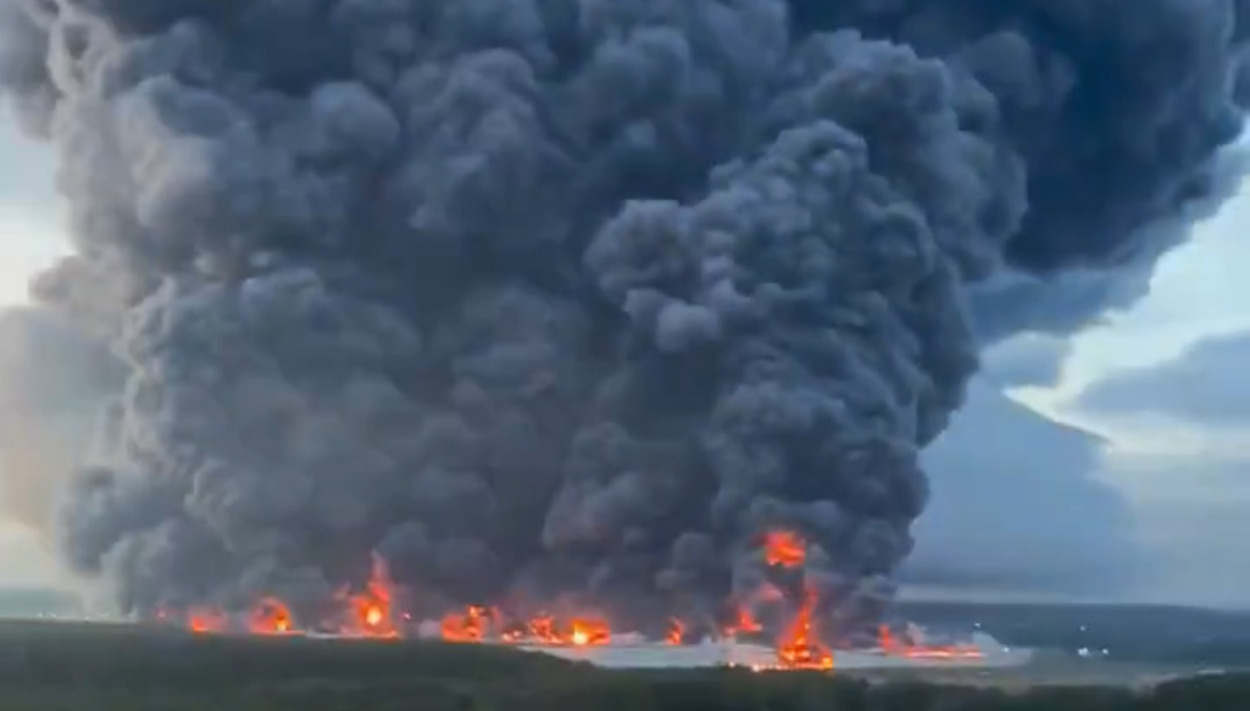
Wildberries warehouse burning in Russia's Koledino following a Ukrainian drone strike, 16 August 2026. Screenshot from video: bayraktar_1love

The damage keeps growing

By early August, the strikes had destroyed at least 1.18 million square meters of Wildberries storage, about a fifth of its capacity, ISW noted. The toll has climbed since.

The losses ripple outward to independent sellers who rent space in the hubs. Many have watched their stock burn with no compensation.

  •  

Nearly 500 Africans recruited into Russia’s army have died, Ukraine says

A Kenyan man holds two printed photographs of his son killed fighting for Russia.

486 Africans recruited into Russia’s armed forces are dead, while Ukraine is holding 35 citizens from 17 African countries as prisoners of war, Ukraine’s Ministry of Foreign Affairs (MFA) told Ukrainian public broadcaster Suspilne in findings published on 16 August 2026. Its overall tally rose only slightly from May, climbing from 2,965 recruits from 36 countries to at least 2,982 from 37.

Russia’s recruitment in Africa is part of a broader effort to enlist foreigners for its war. A joint human-rights investigation found that Russia had recruited at least 27,000 people from more than 130 countries since 2022. The system helps Moscow replenish its forces while shifting battlefield risk onto foreigners, many of whom are drawn in by financial pressure, deception, or coercion.

The largest groups of recruits came from Kenya, Egypt, Cameroon, Ghana, Nigeria, Uganda, Algeria, and Mali, the ministry told Suspilne.

Russia’s wider recruitment pipeline in Africa

Russian security services use a “broad arsenal of manipulative methods,” the Ukrainian MFA said. Recruiters promise civilian jobs, education, high salaries, Russian citizenship, or migration benefits. In many cases, foreigners must sign Russian-language military contracts under threat of deportation or imprisonment.

The FIDH–Truth Hounds–KIBHR report found recruiters using social media and intermediaries to advertise civilian jobs. Of 16 foreign POWs interviewed, 13 said they had been promised they would not fight. Most reached combat positions within weeks.

The human toll on African recruits

Kenyan engineer Francis told journalist Dmytro Karpenko, who interviews prisoners captured while fighting for Russia, that he thought he had accepted a security job. In Russia, he received a military uniform instead. After two weeks of training, he reached the front and was captured.

Nigerian recruits Hamzat Kazeen Kolawole and Mbah Stephen Udoka died in an assault after receiving little or no training, Ukrainian military intelligence said. Botswana reported “heartbreaking calls” from its citizens describing “perilous conditions” at the front.

Ukraine’s response to Russia's recruitment campaign

Ukraine’s diplomatic missions regularly inform African officials about the recruitment of their citizens and run awareness campaigns, according to the ministry.

The MFA and Ukraine’s POW Coordination Headquarters also launched Stop Russian Recruiters, a website that explains recruitment methods, shares victims’ accounts, advises people at risk and their families, and accepts reports about recruiters.

  •  

Russia’s strikes across 10 Ukrainian regions kill at least eight in 24 hours

least eight people were killed dozens more wounded russia strikes 10 ukrainian regions over 24 hours · post fire chernihiv oblast broke out result russian shelling 17 2026 chernihiv_16_08 ukraine

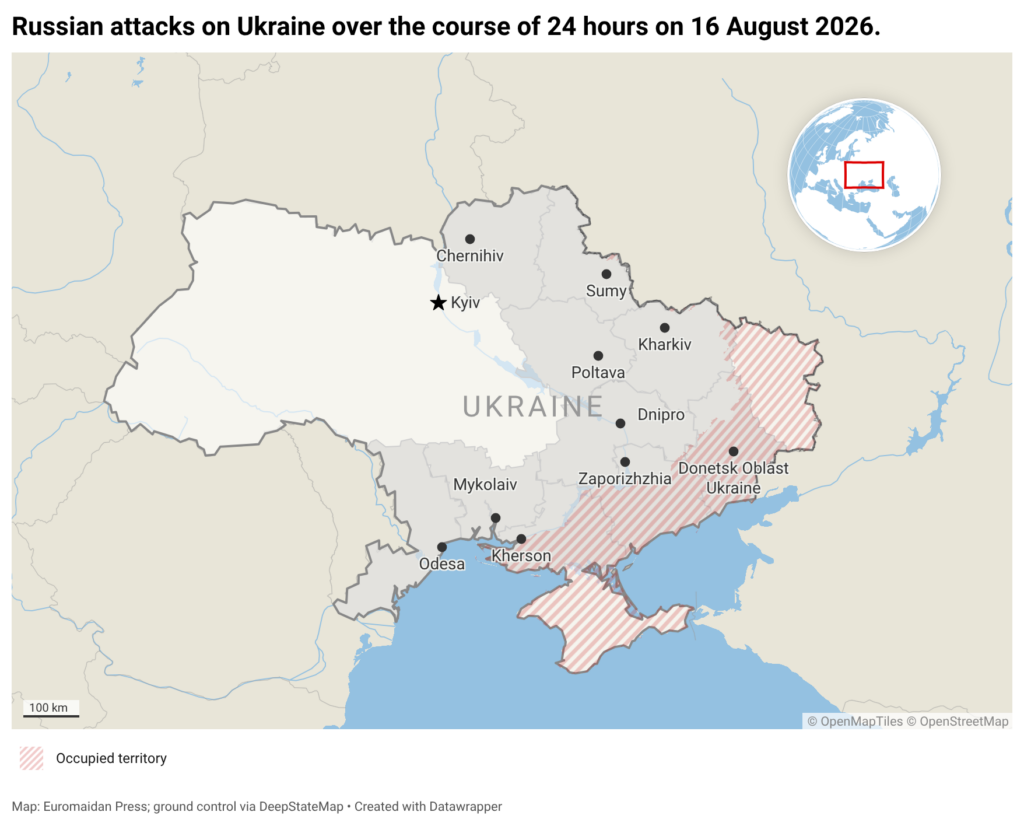
Russian forces shelled and struck front-line and border regions across northern, eastern, and southern Ukraine over the past 24 hours, killing at least eight civilians and wounding more than 40, regional authorities reported on 17 August. Sumy, Donetsk, Kherson, and Zaporizhzhia oblasts reported deaths, while people were wounded in Kharkiv, Kherson, Dnipropetrovsk, Chernihiv, and Odesa Oblasts.

Russia's daily strikes have hit populated areas and civilian infrastructure both near the front line and far behind it. President Volodymyr Zelenskyy said that 13 regions had come under attack over the past week, with more than 1,550 attack drones, nearly 1,560 guided aerial bombs, and 62 missiles, most of them ballistic, launched at Ukraine.

Map: Euromaidan Press

North: FPV drone attacks firefighters’ vehicle

In Sumy Oblast, Russian forces carried out more than 50 strikes on 24 settlements across 11 communities. A drone strike in the Sumy community killed a 75-year-old man and a 72-year-old woman and wounded another civilian, the Sumy military administration said. It also said two more people were wounded in the Seredyna-Buda community. A mass drone attack on Sumy caused large fires and wounded at least one person, Sumy city military administration head Serhii Kryvosheienko said.

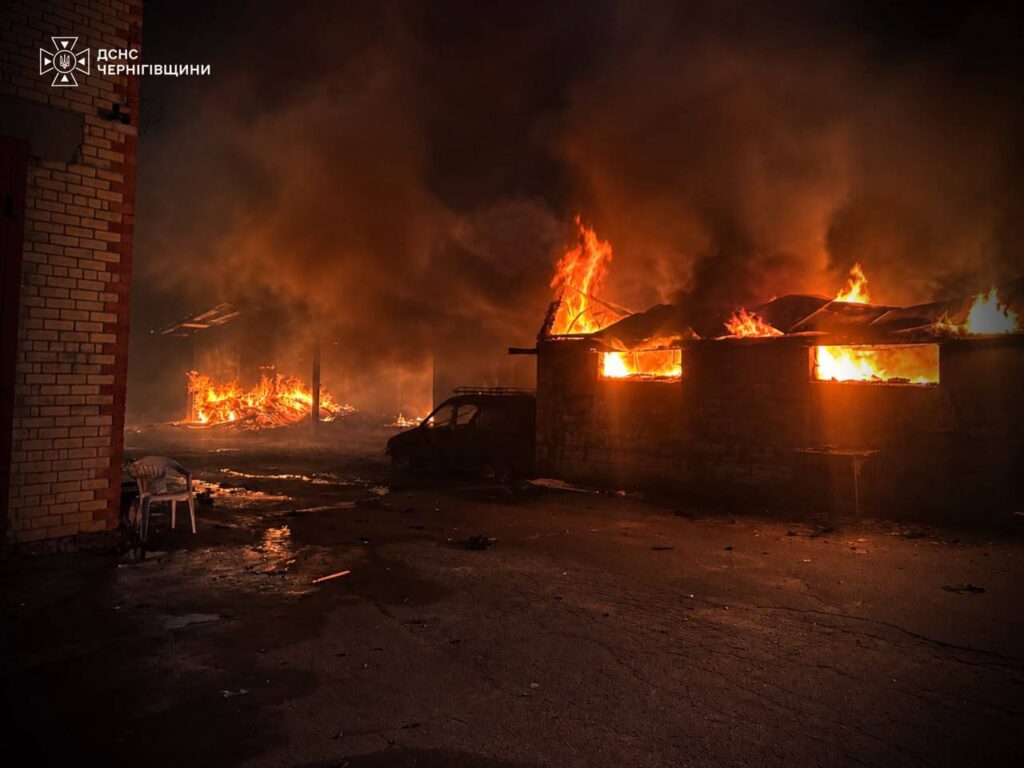
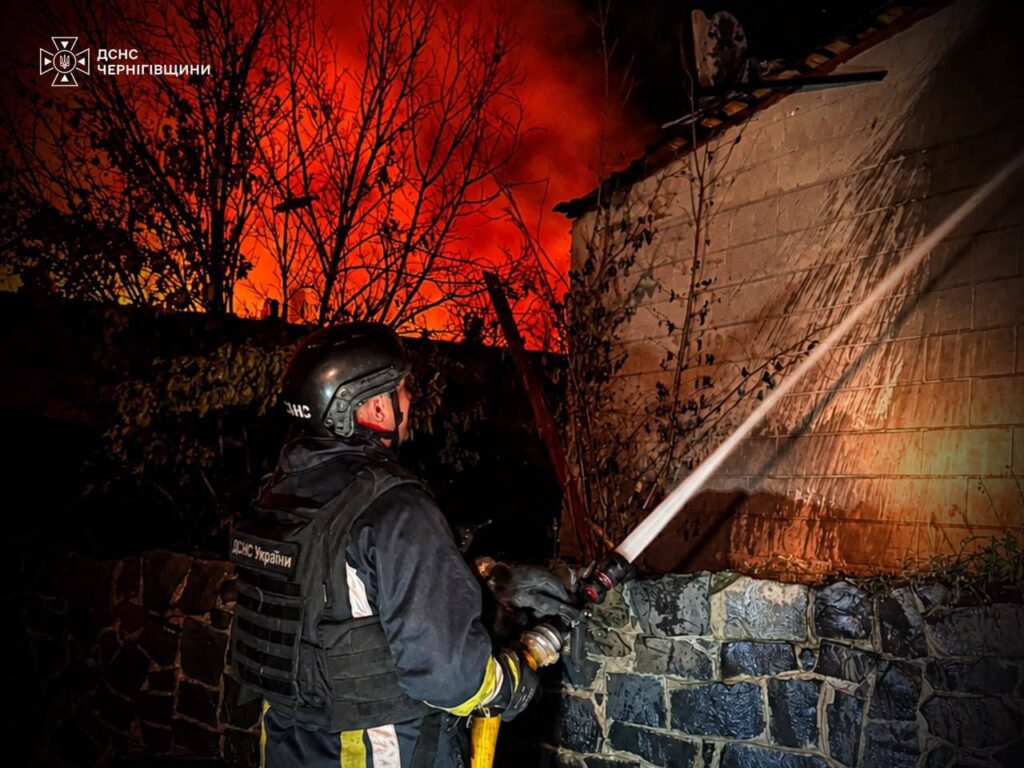
In Chernihiv Oblast, a 41-year-old man was wounded in a Geran drone strike on the Kozelets community, Head of the Regional Military Administration Viacheslav Chaus said. He added that Gerbera drones destroyed a hangar and farm equipment in the Kholmy community. In a border village in the Horodnia community, an FPV drone struck a yard, and a second FPV drone hit a firefighters' vehicle that had arrived at the scene. A house later caught fire. A critical infrastructure facility was also hit.

Firefighters put out a fire in Chernihiv Oblast that broke out as a result of Russian shelling. Approximately, morning of 17 August. Photo: Chernihiv Oblast State Emergency Service

In Kharkiv Oblast, six people were wounded in strikes on Kharkiv and nine other settlements. The heaviest damage was reported in Izium, where 19 houses and four apartment blocks were damaged, head of the Regional Military Administration Oleh Syniehubov said.

East: Russian strikes destroy 30 stalls

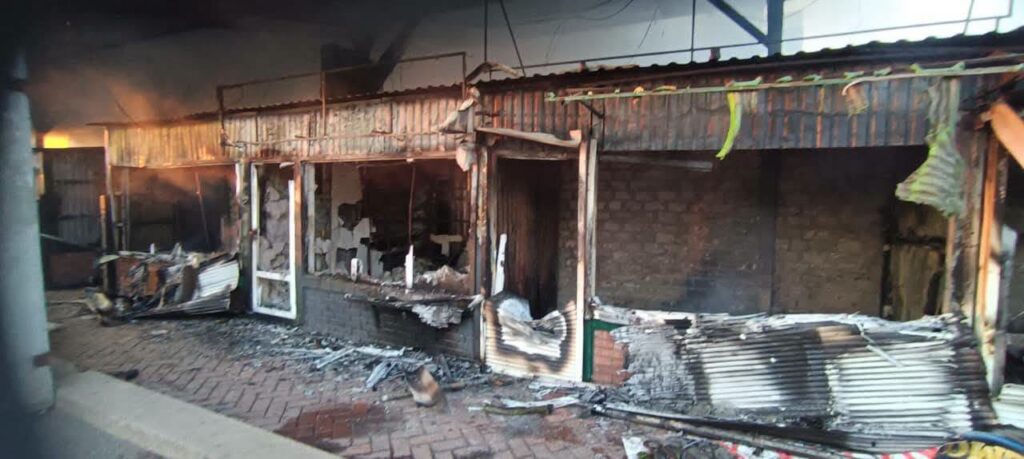
In Donetsk Oblast, Russian forces killed two residents of Kramatorsk and wounded 18 people across the region, Head of the Regional Military Administration Vadym Filashkin said. In Sloviansk, round-the-clock strikes damaged critical infrastructure and destroyed 30 stalls at the Lisnyi market, Sloviansk City Military Administration Head Vadym Liakh said.

Consequences of Russian strikes on Sloviansk on 16 August and overnight into 17 August. Photo: Vadym Liakh


In Poltava Oblast, two industrial facilities were hit, causing fires, and drones also attacked another industrial facility in Myrhorod district, Head of the Regional Military Administration Vitalii Diakivnych said. No casualties were reported.

In Dnipropetrovsk Oblast, Russian forces attacked four districts nearly 20 times from the evening of 16 August, wounding five people, Head of the Regional Military Administration Oleksandr Hanzha said. He added that houses and outbuildings caught fire in Pavlohrad and Nikopol district.

In Zaporizhzhia district, two people were killed and three wounded, Head of the Regional Military Administration Ivan Fedorov said. He also reported 1,217 strikes on 60 settlements across the oblast, including 20 air strikes, about 846 drone attacks, and 350 artillery strikes.

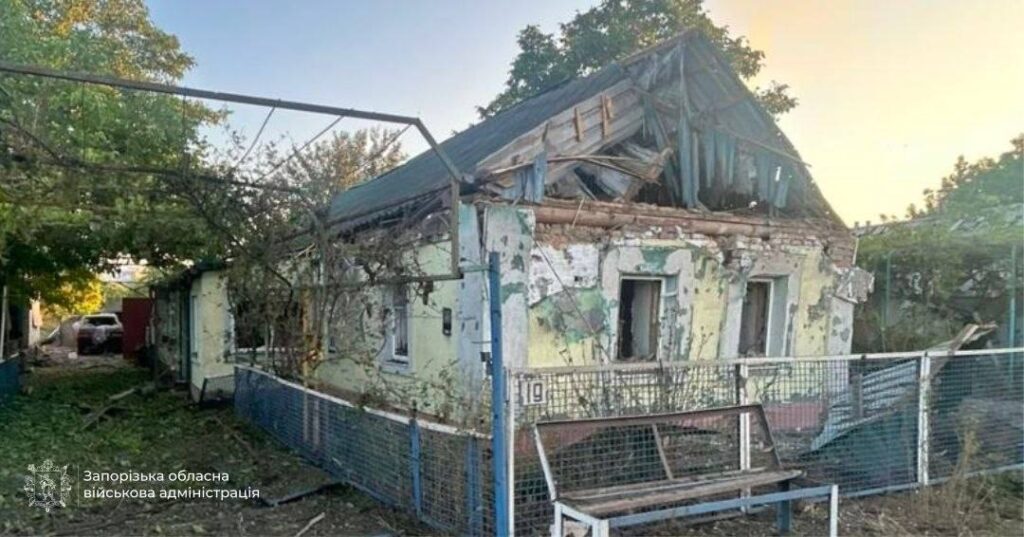
Consequences of Russian strikes on Zaporizhzhia Oblast on 16 August. Photo: Zaporizhzhia Regional Military Administration

South: strike damages civilian vessel flying the flag of Togo

In Odesa Oblast, a night-time strike on port infrastructure damaged a civilian vessel flying the flag of Togo and wounded four people, one of them seriously, Head of the Regional Military Administration Oleh Kiper said.

In Kherson Oblast, in the early morning, Russian forces killed two residents of the village of Novokayiry in the Mylivska community, – Head of the Kherson Regional State Administration Oleksandr Prokhudin said. Also russian forces attacked 52 settlements, including the regional capital. Six people were wounded, while 11 apartment blocks and 15 private houses were damaged, Prokudin said.

In Mykolaiv Oblast, Russia attacked with Shahed and Gerbera drones, but no casualties were reported, acting Head of the Regional Military Administration Heorhii Reshetilov said. He added that the roof of an agricultural enterprise building was damaged in the Horokhivska community.

  •  
❌